What if 3I/ATLAS really turns out as an alien mothership? Here’s how humans could defend Earth

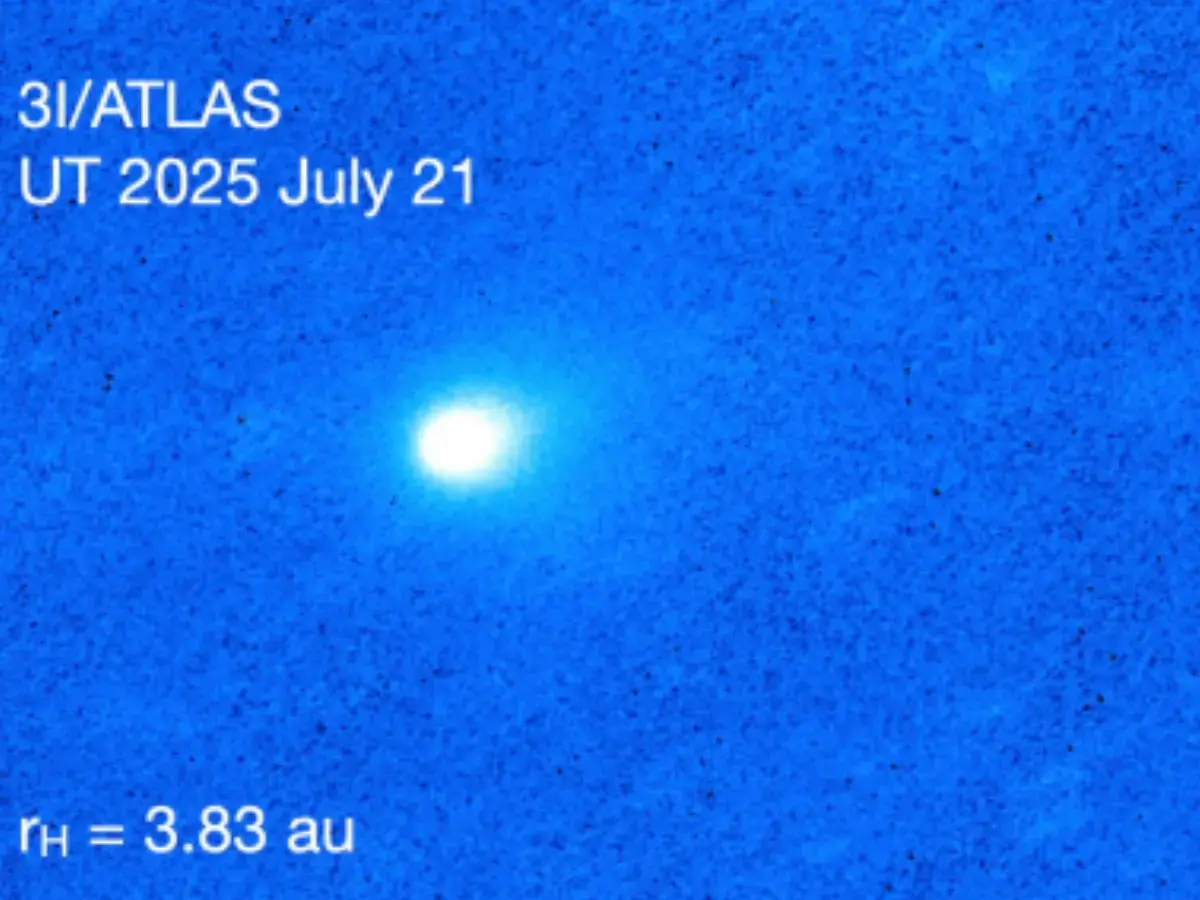
3I/ATLAS is an interstellar object speeding through our solar system. Some wondered what if it is an alien mothership? While scientists mostly agree it is a natural object, imagining it as an alien craft raises an important question: how would humans defend Earth against such a threat?
Immediate Threat Assessment
If 3I/ATLAS were a mothership, its vast size and advanced technology would pose a unique challenge. The first step would be to track its path precisely with satellites and telescopes to predict when and where it could approach Earth. Early warning systems, already used for asteroids, would help give time to prepare defences and protect people.

Space-Based Defence Systems
Earth’s best defence would come from space. Anti-missile systems like the American THAAD and Russia’s A-135 could be adapted to target the mothership’s approach through the atmosphere. High-altitude interceptors could strike when the alien craft is vulnerable due to extreme heat and speed during atmospheric entry, possibly damaging or slowing it down.
Using Directed Energy Weapons
Powerful laser weapons and railguns on satellites or space stations could be deployed to strike the alien ship from a distance. These weapons can deliver continuous energy beams to burn or destabilise the hull of the mothership. Combined attacks from multiple platforms would increase chances of weakening its defences.
Ground-Based Electronic Warfare
Earth’s defence would also include disrupting the alien ship’s communication and control systems using electronic warfare. Jamming or hacking technologies could confuse or disable the mothership’s internal systems, making it harder for aliens to coordinate. This tactic buys time for counterattacks and civilian evacuation.

Naval and Air Force Countermeasures
If the mothership lands or releases smaller crafts, Earth’s navy and air force would play a crucial role. Advanced fighter jets armed with missiles and fast-response surface ships would engage alien fighters and protect key locations. Existing missile defence shields would be expanded to handle aerial threats.
Global Coordination and Civil Defence
A threat of this scale would require cooperation between nations. The United Nations and space agencies worldwide would coordinate efforts to share intelligence and resource allocation. Civilians would be educated on emergency protocols, and shelters would be prepared to protect people from potential impacts or invasions.

Final Defence: Nuclear Deterrent
If all else fails, Earth might rely on its nuclear arsenal as a last resort. Although dangerous, detonating nuclear weapons near or on the mothership could cause critical damage or deter alien forces from attacking. Such a move would be taken carefully, considering the risks to Earth’s environment and people.
)
)
)
)
)