Voyager 2 and Jupiter’s Great Red Spot: Inside the massive storm bigger than Earth

Voyager 2’s flyby offered the first opportunity to study this storm up close, revealing a dynamic system that continues to challenge our understanding of planetary atmospheres.

Introduction
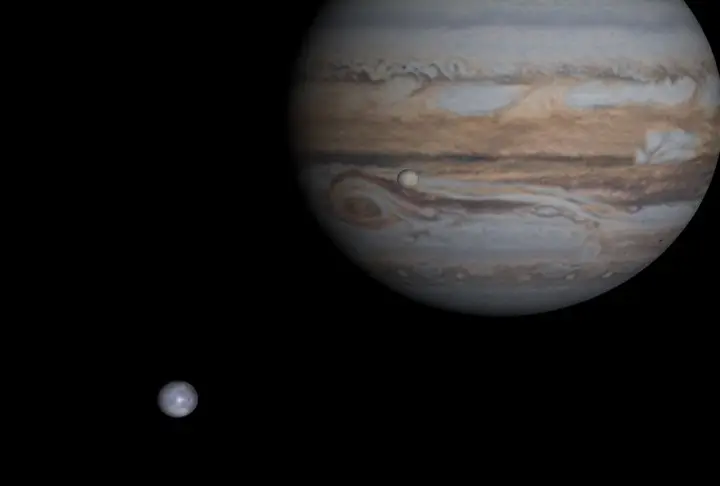
When Voyager 2 approached Jupiter in July 1979, it provided humanity with its first detailed view of the planet’s most famous feature: the Great Red Spot. A storm so vast that it could engulf the Earth, the Great Red Spot had been observed from Earth for centuries, but its size, structure, and persistence remained a mystery. Voyager 2’s flyby offered the first opportunity to study this storm up close, revealing a dynamic system that continues to challenge our understanding of planetary atmospheres.
The Nature of the Great Red Spot
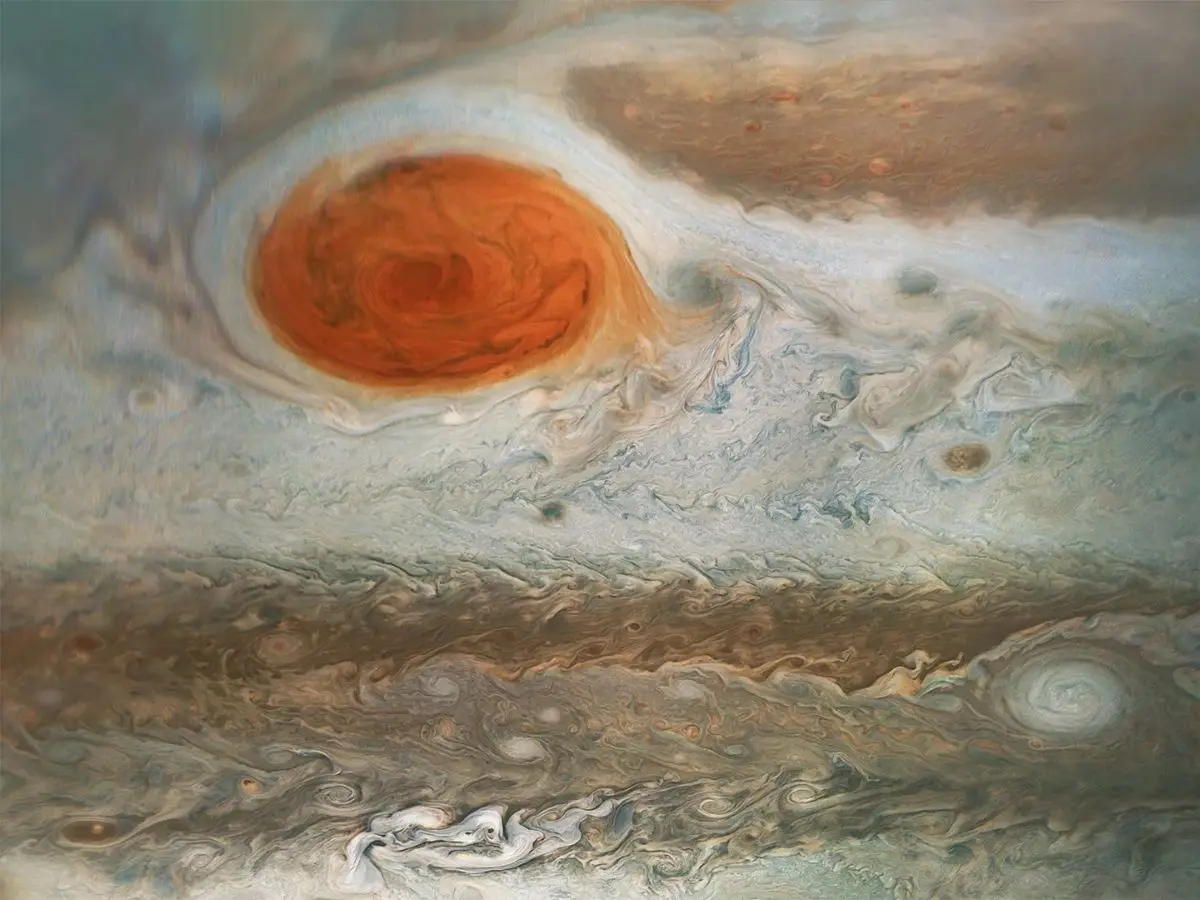
The Great Red Spot is a persistent anticyclonic storm in Jupiter’s southern hemisphere. Estimates suggest it has been active for at least 350 years, possibly longer. Its distinctive red hue varies over time, and wind speeds within the storm reach up to 680 kilometres per hour. The storm rotates counterclockwise, with cloud tops rising tens of kilometres above Jupiter’s surrounding atmosphere. Its sheer scale, approximately 16,000 kilometres wide at the time of Voyager 2’s encounter, makes it more than 1.3 times the diameter of Earth.
Early Observations From Earth
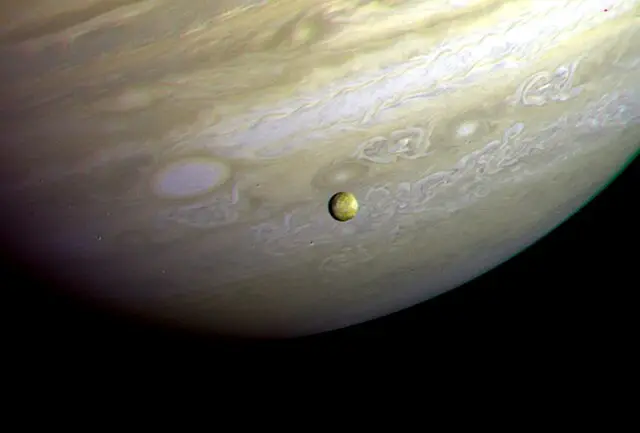
The storm was first recorded by Giovanni Cassini in 1665, and later by English astronomer Samuel Schwabe in the 19th century. Observations from Earth telescopes could only capture its general shape and colour, leaving critical questions about its structure, rotation, and longevity unanswered. The Great Red Spot became an enduring subject of astronomical fascination, representing one of the few visible and consistent features on a planet dominated by rapid atmospheric motion.
Voyager 2’s Historic Flyby
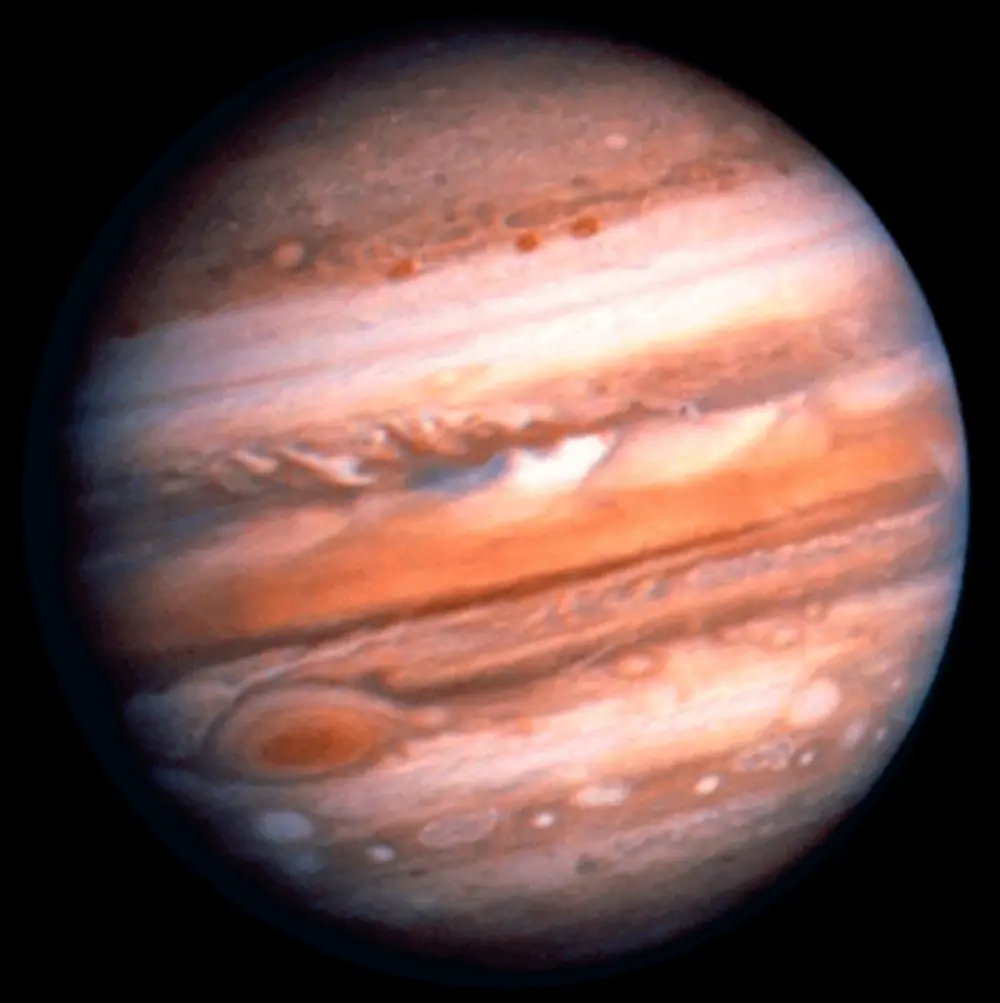
Launched in 1977, Voyager 2 followed a trajectory that allowed it to study Jupiter in detail before continuing to the outer planets. During its 1979 encounter, the spacecraft’s imaging system captured high-resolution photographs of the Great Red Spot. These images revealed intricate cloud patterns, smaller surrounding vortices, and the three-dimensional structure of the storm. Voyager 2’s data enabled scientists to measure the storm’s rotation rate and wind speeds for the first time, providing empirical evidence of its extraordinary scale and longevity.
Tracing the Storm’s Dynamics
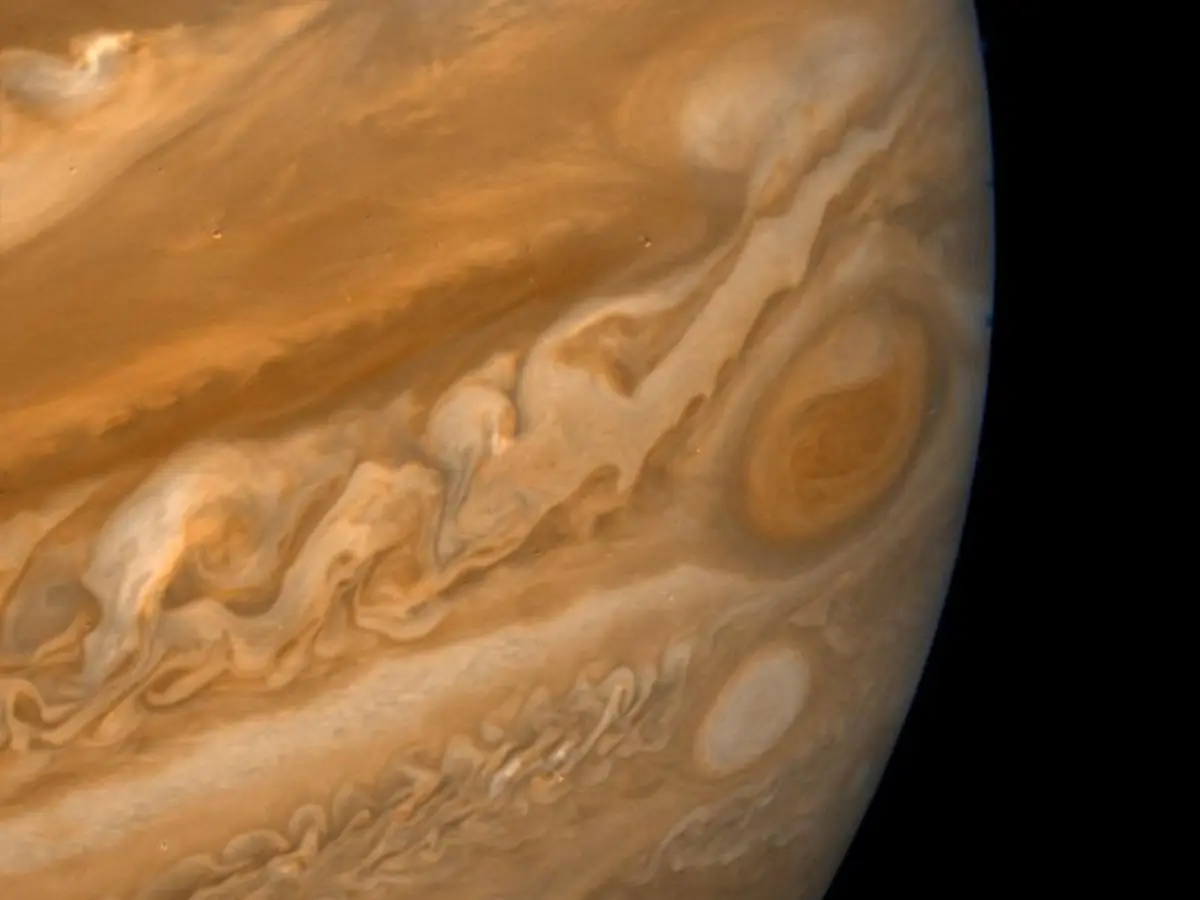
Voyager 2 allowed researchers to track cloud motions and atmospheric flow in unprecedented detail. The flyby confirmed the anticyclonic nature of the storm and highlighted smaller storms interacting at its periphery. Observations also revealed variations in colour intensity, suggesting changes in chemical composition or temperature. These insights offered a new understanding of how such a massive storm could persist in Jupiter’s highly turbulent atmosphere for centuries.

The Legacy of Voyager 2
Voyager 2’s observations transformed planetary science. For the first time, astronomers could study the Great Red Spot as a three-dimensional, evolving system. The data laid the groundwork for future missions, including Galileo and Juno, which have continued to explore Jupiter’s atmosphere. Voyager 2’s contribution remains a benchmark in planetary exploration, providing the first detailed account of the storm’s scale, structure, and motion.
Continuing Mysteries
Despite decades of study, the Great Red Spot continues to shrink and change colour, and its ultimate fate remains uncertain. Voyager 2’s flyby established the baseline for monitoring these changes, confirming the storm’s extraordinary size and power.
)
)
)
)
)