USS Abraham Lincoln vs Fujian: Comparing the US and China’s aircraft carriers' muscle in the ocean

China’s Fujian, Asia’s largest carrier, marks a leap with CATOBAR launch systems, indigenous design and a growing air wing for power projection. The USS Abraham Lincoln, a nuclear-powered Nimitz-class carrier, offers unmatched endurance, global reach and a larger, battle-tested air fleet.
Significant
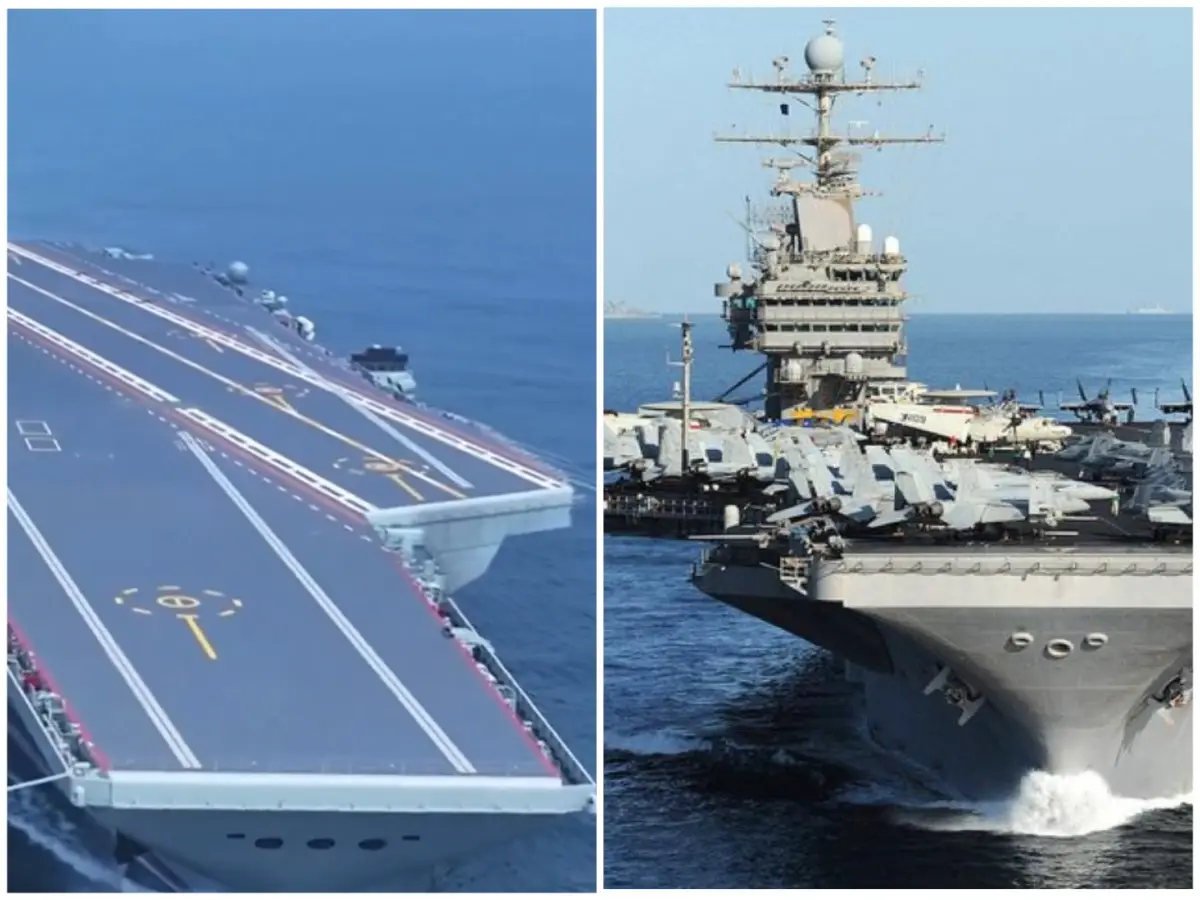
The Fujian is the largest warship ever built in Asia and the world’s biggest conventionally powered carrier. It was under construction for several years, and its CATOBAR (Catapult-Assisted Take-Off But Arrested Recovery) system is a first for China, replacing the ski-jump ramps used on its earlier carriers.
Meanwhile, USS Abraham Lincoln (CVN‑72), the fifth Nimitz-class nuclear-powered aircraft carrier commissioned in 1989, projects US power worldwide with 90+ aircraft, 5,000 crew and nuclear propulsion for 20+ years without refuelling. Deployed to the Middle East and Indo‑Pacific in 2026, it deters Iran and China, supports allies and enables sustained strikes without land bases.
Indigenous design
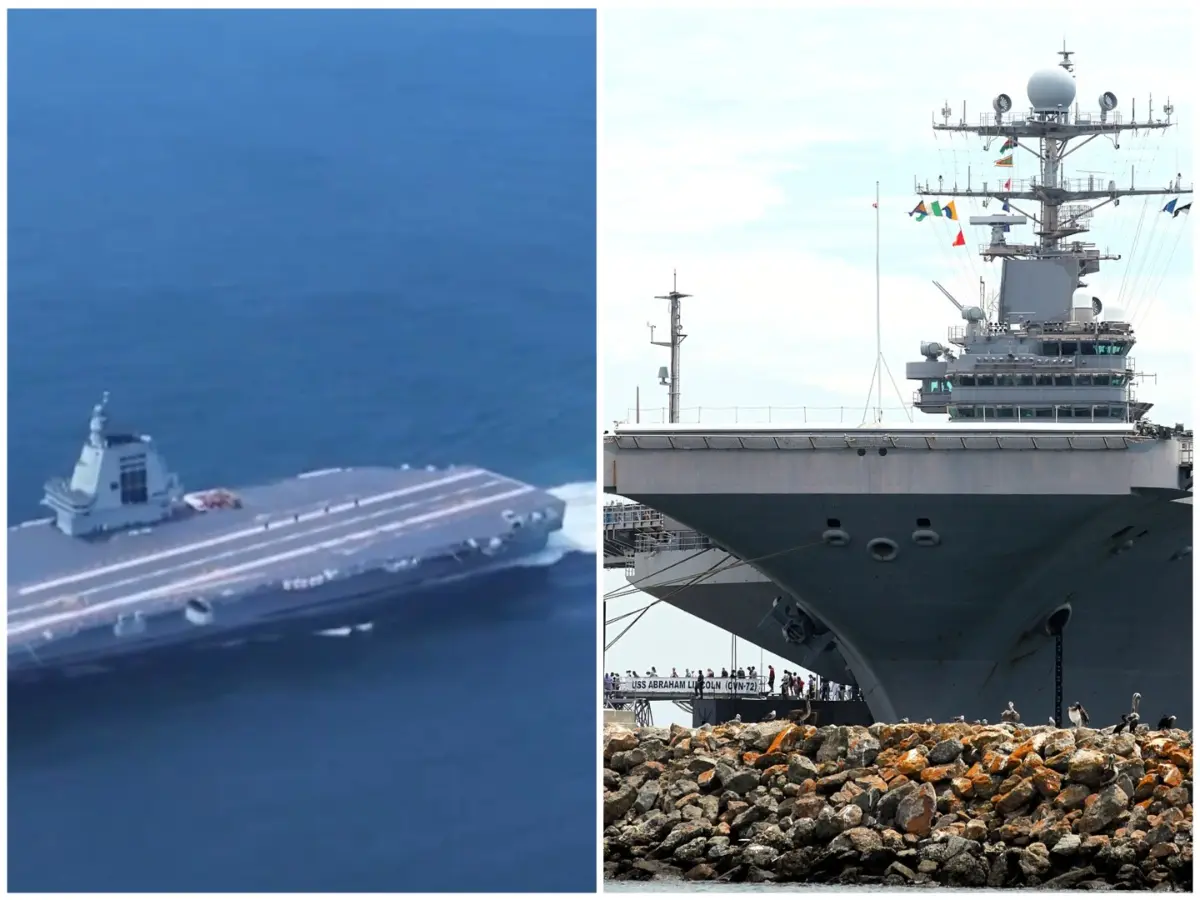
The Fujian is the third and largest aircraft carrier of the PLAN, and its first to be fully indigenously designed and built. It surpasses both the Liaoning and Shandong carriers in size, sophistication and operational potential, displacing roughly 80,000 to 85,000 tonnes and measuring about 316 metres in length.
However, USS Abraham Lincoln is not fully indigenous. Built by Newport News Shipbuilding (now Huntington Ingalls) using U.S. designs, Westinghouse A4W reactors and steam catapults, it reflects American engineering with global supply chains. Mid‑life refuelling (RCOH) in 2017 upgraded it for F‑35C compatibility, but it remains quintessentially US.
Capability
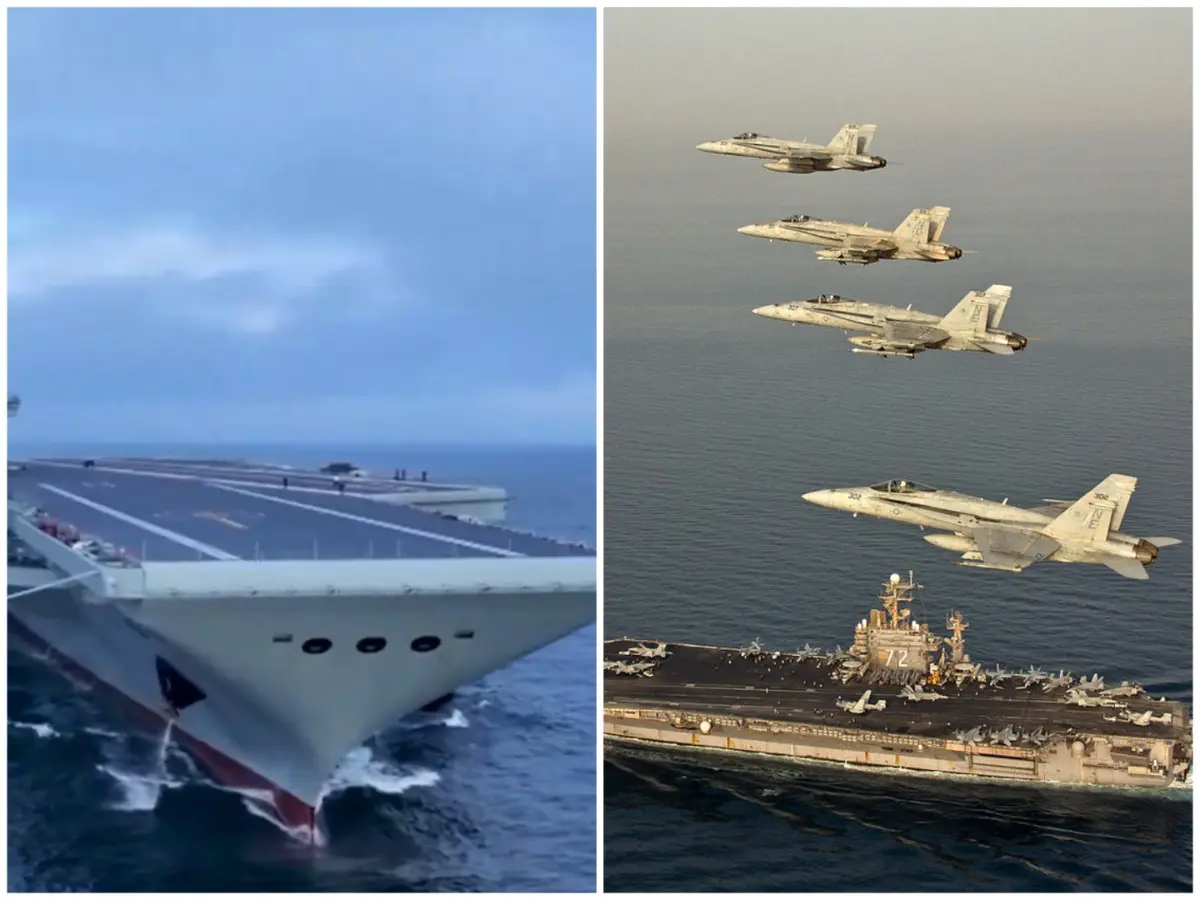
The ship has three electromagnetic catapults, similar in concept to the US Navy’s EMALS system on the Gerald R Ford-class carriers. These catapults allow the Fujian to launch heavier and fully fuelled aircraft, dramatically improving sortie rates and mission flexibility. In 2025, China also launched the J-15T multirole fighter, the stealth J-35, and the KJ-600 airborne early-warning aircraft, demonstrating the carrier’s combat readiness.
USS Abraham Lincoln has four steam catapults that handle heavier jets like F/A‑18 Super Hornets (30 tons takeoff) and F‑35C Lightning II (31 tons), plus C‑2 Greyhounds and E‑2 Hawkeyes. The Electromagnetic Aircraft Launch System (EMALS) was added during RCOH, enabling precise launches of diverse payloads up to 100,000 pounds total displacement.
Total aircraft capacity
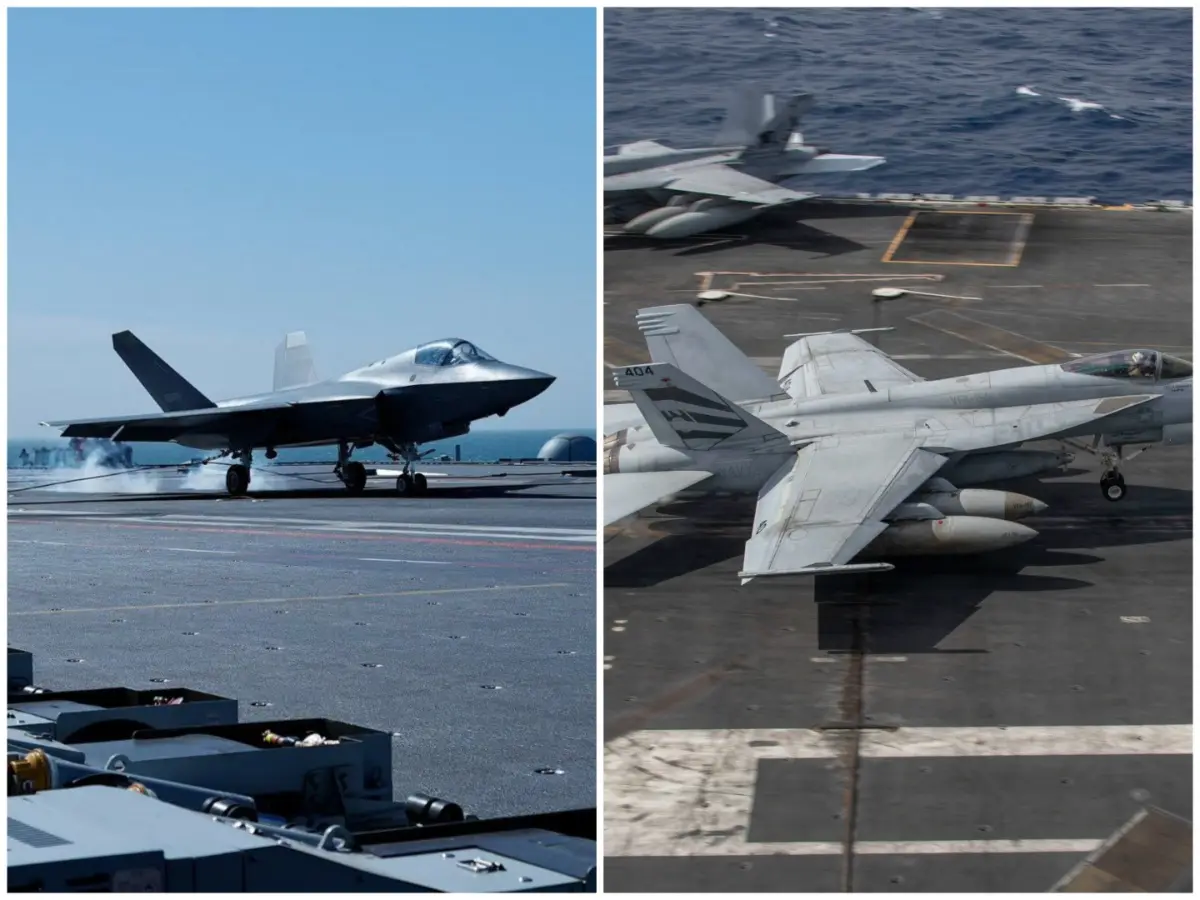
The Fujian’s flat-deck design and expanded hangar bays allow it to operate more than 50 aircraft, including fighters, early-warning planes, helicopters and drones. For the first time, China can field a true carrier air wing capable of sustained power projection far from its shores.
The carrier supports 60–90 aircraft, including 44 strike fighters (F/A‑18E/F Super Hornets, F‑35C), 5 EA‑18G Growlers, 4 E‑2D Hawkeyes, 9 MH‑60R/S Seahawks and logistics planes. 4.5‑acre flight deck, 4 elevators and 2 hangars enable 120+ daily sorties.
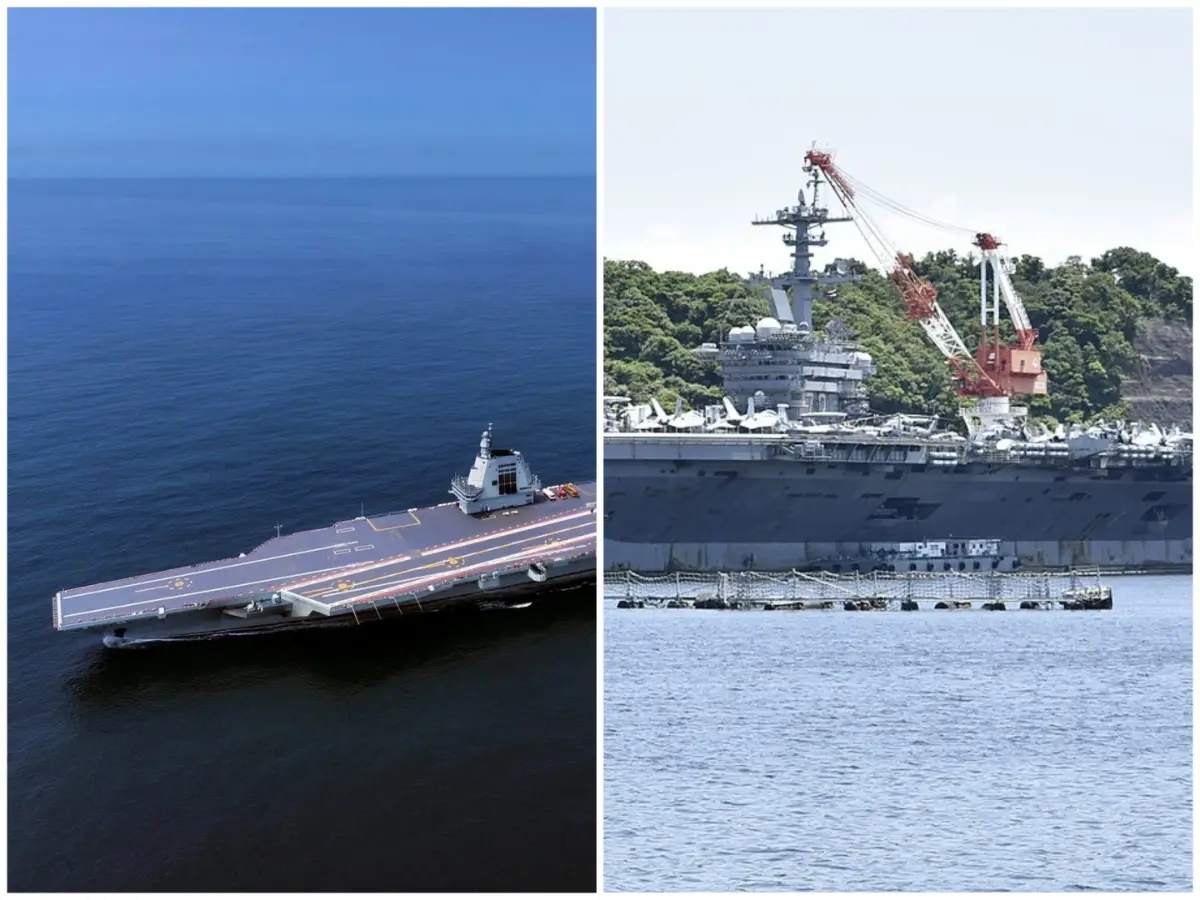
A major technological step for the US & Chinese Navy
The Fujian also carries advanced active electronically scanned array (AESA) radars, electronic warfare systems, and HQ-10 short-range surface-to-air missiles for close-in defence, supported by 30 mm close-in weapon system (CIWS) guns. It uses a conventional propulsion system—steam turbines with diesel-electric generators—which limits its endurance compared with America’s nuclear-powered supercarriers.
Abraham Lincoln’s 2017 RCOH was a milestone, enabling F‑35C operations and Starlink/Eutelsat OneWeb LEO satellite connectivity for 1 Gbps internet, revolutionising sailor welfare and ops. First carrier with Kymeta u8 terminals, it sets standards for hybrid warfare in contested seas.
)
)
)
)
)