US midterm elections 2026: Why Atlanta matters in Georgia’s political battle – All you need to know

Atlanta’s voters, Georgia’s suburbs and key Senate and governor races are putting the state in focus ahead of the November 3 US midterm elections, with Trump’s role adding to the political stakes.

Atlanta’s outsized political influence
Atlanta is central to Georgia’s political landscape, with strong Democratic support in the city and surrounding urban counties. But Republicans retain significant support elsewhere in the state. In the November 3 midterms, turnout in Atlanta and its surrounding suburbs will be closely watched as voters choose candidates in contests that could influence control of Congress. Results across Georgia’s urban, suburban and rural areas will shape the statewide outcome.

Jon Ossoff vs Mike Collins: Senate showdown
Democratic Senator Jon Ossoff is seeking re-election against Republican Mike Collins, a US representative who won his party’s nomination. The contest has national significance because it could affect Senate control. Atlanta’s Democratic voters are important to Ossoff, but both campaigns must compete across Georgia’s urban, suburban and rural communities.

Keisha Lance Bottoms vs Rick Jackson: Governor’s race
Georgia’s gubernatorial race features Democrat Keisha Lance Bottoms, Atlanta’s former mayor, against Republican businessman Rick Jackson. The contest will decide who succeeds Governor Brian Kemp, who cannot seek another term. Their campaigns are focusing on issues including healthcare, public safety and the economy, while their positions on President Donald Trump have also drawn attention.

Beyond Atlanta: The suburbs matter
Atlanta’s political influence extends into the suburbs. Cobb, DeKalb and Gwinnett counties contain communities with different voting patterns, economic priorities and demographic profiles. Democrats need support beyond the city, while Republicans seek to maintain strength statewide. Turnout across these counties will help determine how urban votes translate into Georgia’s results.

Gwinnett reflects a changing electorate
Gwinnett County reflects Georgia’s changing electorate, with substantial Black, Hispanic and Asian communities. But its residents do not vote as one bloc. Concerns about housing, jobs, education and immigration can shape choices differently across neighbourhoods. Candidates from both parties are competing to connect with voters whose priorities challenge older assumptions about party loyalty.
Cost of living and healthcare in focus
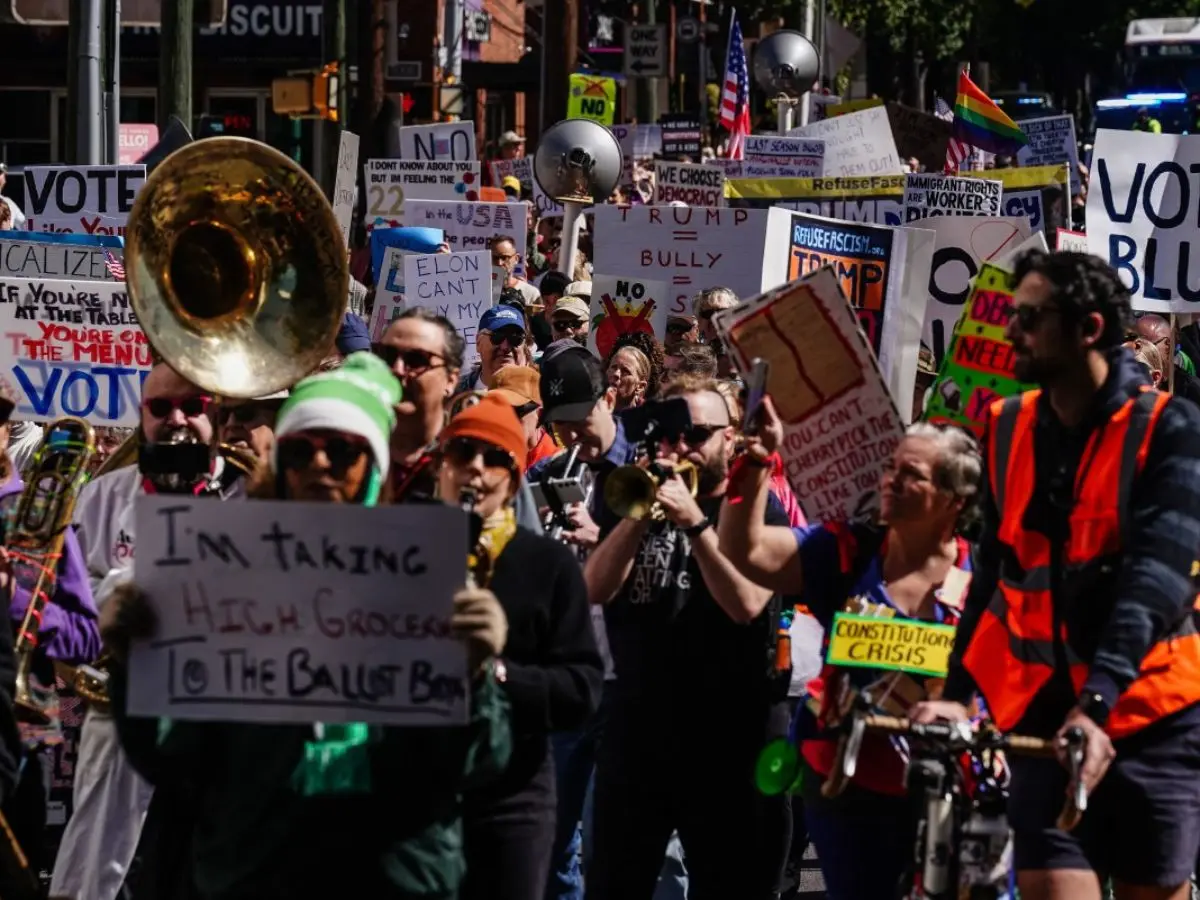
Household costs are a major campaign issue, from groceries and fuel to housing and healthcare. Ossoff has criticised Trump administration policies over affordability, while Collins supports the president’s agenda. In the governor’s contest, Bottoms and Jackson are seeking to persuade voters on state issues, including healthcare, crime and economic development.

Trump takes the Georgia campaign stage
Trump campaigned in Dalton on October 16 with Republican Senate candidate Mike Collins and gubernatorial nominee Rick Jackson. He attacked Ossoff and repeated false claims that Georgia’s 2020 election was rigged. Ossoff said Trump’s visit reminded voters of policies he blamed for higher costs; Bottoms also challenged Jackson’s alignment with Trump.
)
)
)
)
)