US Congress passes long-awaited bill to boost chipmakers, compete with China

CREATING HELPFUL INCENTIVES TO PRODUCE SEMICONDUCTORS (CHIPS) for AMERICA fund
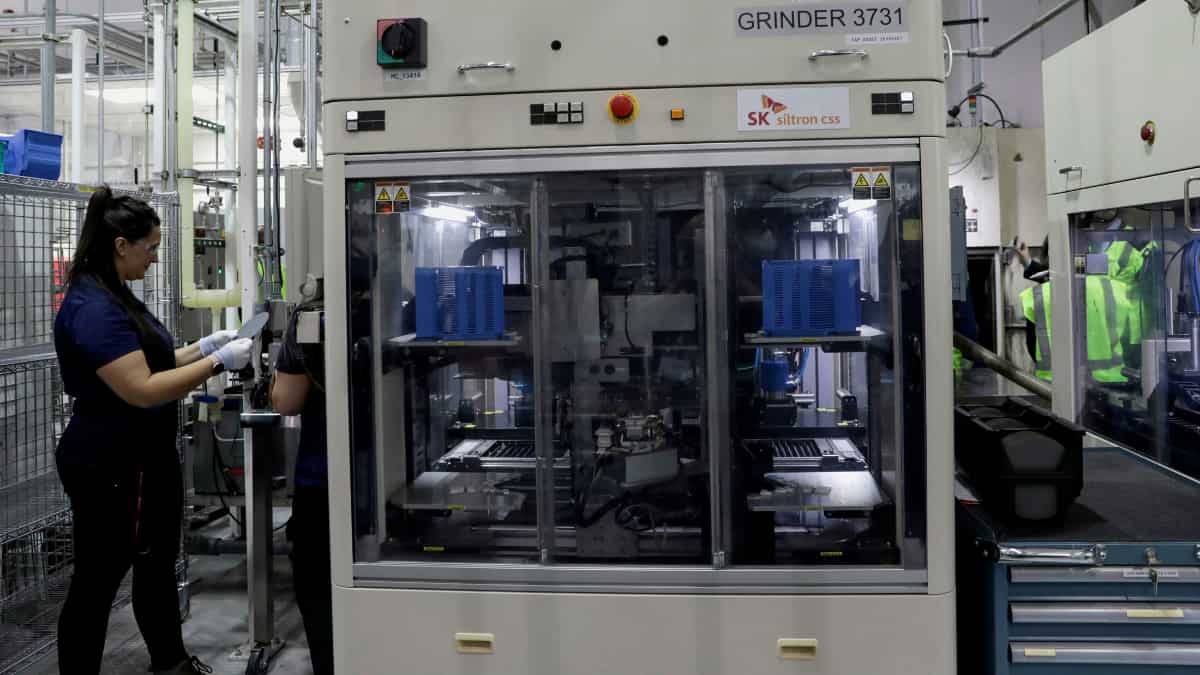
This $52 billion fund, allocated over five years, includes $39 billion in financial assistance for companies to build, expand or modernize domestic facilities for semiconductor fabrication, assembly, testing, advanced packaging and research and development.
It includes $10 billion for Department of Commerce (DOC) research and development, including private-public partnerships and partnerships between government, industry and academic institutions, and $1 billion to create the “Recompete Pilot Program,” to support persistently distressed communities with economic development activities
Includes $1.5 billion for the Public Wireless Supply Chain Innovation Fund to boost open-architecture, software-based wireless technologies to help replace telecommunications equipment from companies like Huawei and ZTE
Guard rails
To ensure that the $50 billion goes to develop U.S. manufacturing capability, the legislation specifies that companies cannot use the money to purchase stock or pay dividends, but it does not prevent them from using other funds to do so.
Funding must be used to implement the Commerce Department semiconductor incentive, to develop domestic manufacturing capability as well as for previously authorised research and development and workforce development programs.

Tax credits
The legislation creates a 25% investment tax credit for semiconductor manufacturing and includes incentives for making the chips themselves as well as specialized equipment needed to make the chips.
The credit is provided for property placed in service after December 31, 2022, for which construction begins before Jan. 1, 2027. That's estimated at $24 billion.

Boosting science
The bill authorizes $200 billion over 10 years primarily for research activities. This includes a big jump in authorizations for programs to expand the National Science Foundation's work and establish regional technology hubs to foster develop of high tech in parts of the country that have not been hubs for the industry. But it will require separate legislation to fund those programs.
Senator Democratic Leader Chuck Schumer included the science funding in the bill only after it drew Republican support in a first procedural vote last week.

Expansion of Science, Technology, Engineering and Math education
The bill includes provisions to expand "STEM" - Science, Technology, Engineering and Math education, including measures to reach traditionally underserved communities, foster hiring of veterans in STEM careers and fight sexual harassment in science.
The bill includes $19.4 million in funding to provide enhanced security protection for US Supreme Court justices and clerks, a reaction to threats against the justices as the high court has issued a series of precedent-breaking decisions, including overturning the right to abortion. It also includes the authorization for NASA, the National Aeronautics and Space Administration.
)
)
)
)
)