Deserted stations and long queues as UK hit by biggest rail strike in over 30 years - see pics

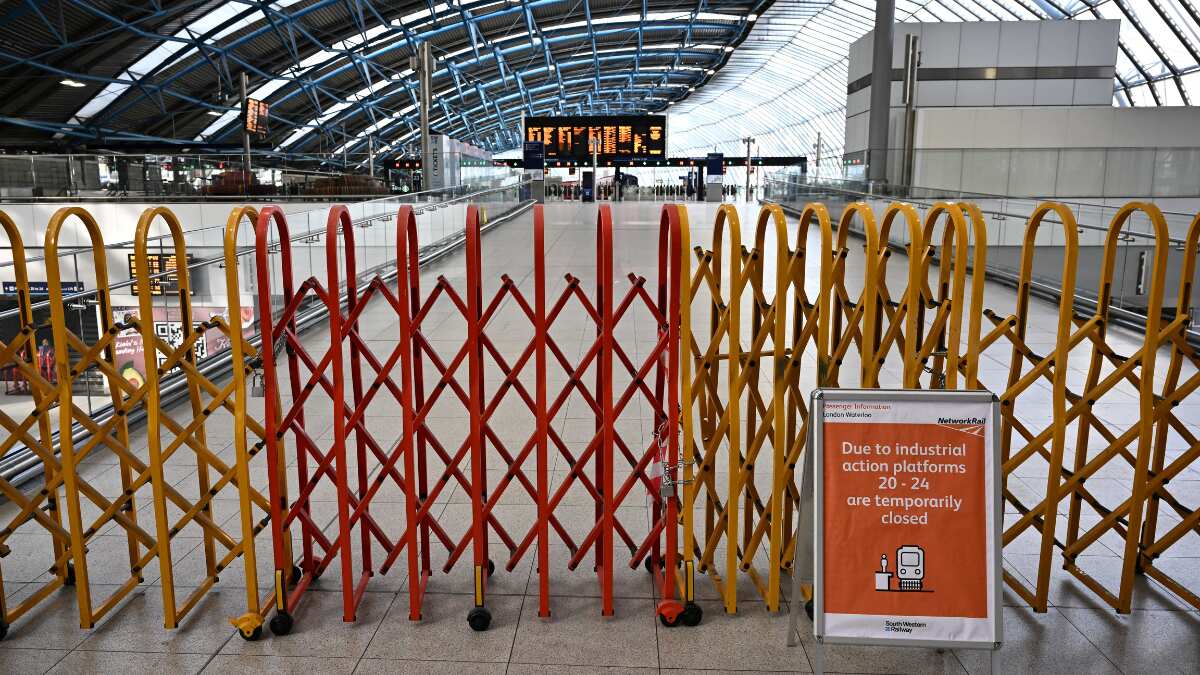
Stations are deserted
Train and London Underground stations, normally a sea of people for the morning rush, were deserted or even locked, with just a skeleton service running on many networks across the country.
Passengers were warned not to travel all week, with two more days of strike action scheduled for Thursday and Saturday wreaking havoc to schedules.
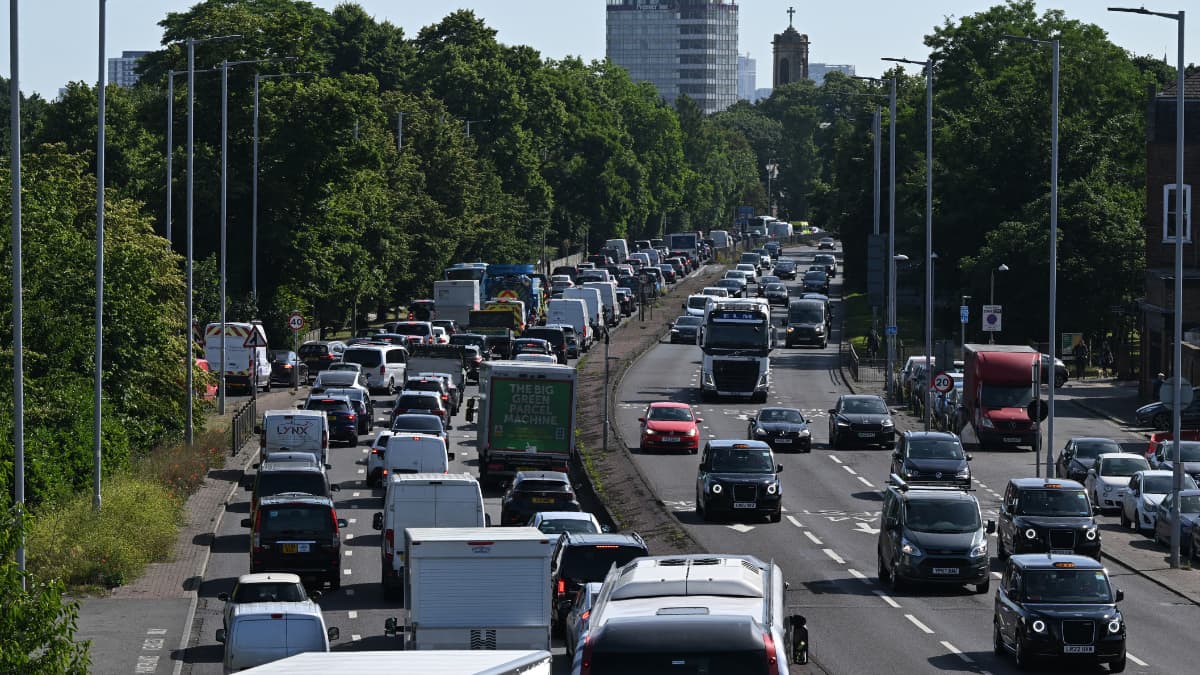
Long queues
In London, cab firms reported a surge in demand, while main roads were packed with buses and cars, and cyclists weaving in between.
Long queues formed at bus stops on the outskirts of London shortly after 6:00 am, but many gave up as services carried on without stopping, already full.
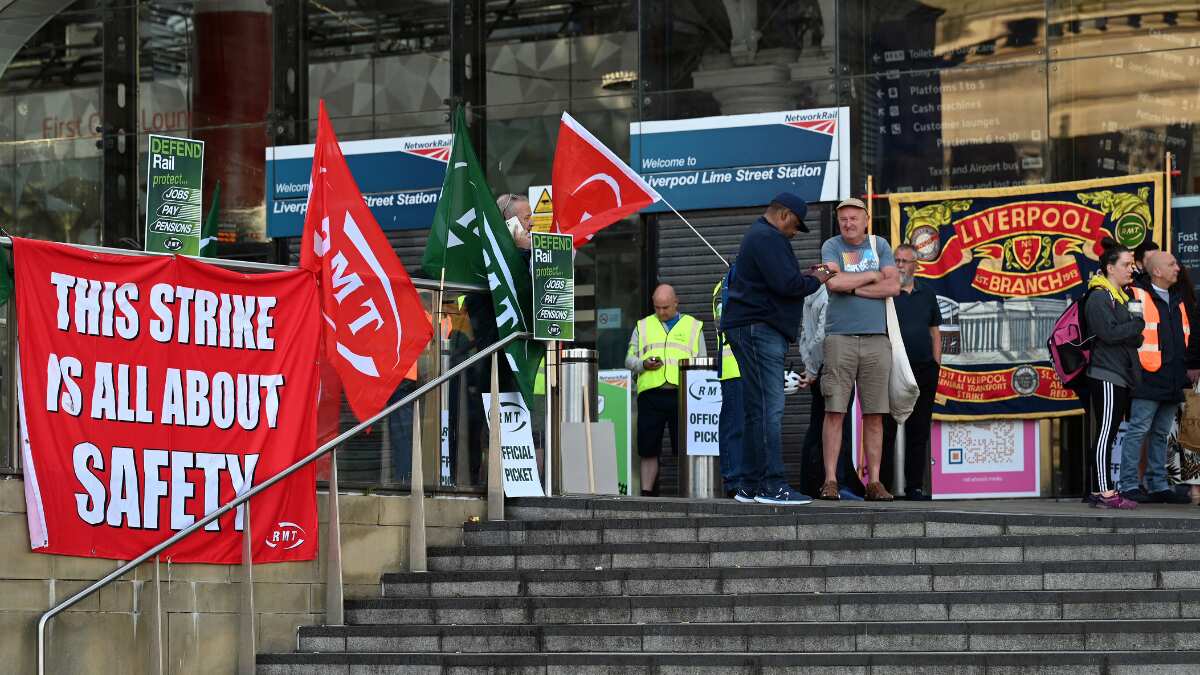
'Stay the course"
Prime Minister Boris Johnson, addressing his cabinet, urged "the union barons to sit down with Network Rail and the train companies" to thrash out a deal.
The country needed to "stay the course", defending reforms to the rail network as needed and in the public interest.
RMT general-secretary Mick Lynch has described as "unacceptable" offers of below-inflation pay rises by both overground train operators and London Underground that runs the Tube in the capital.
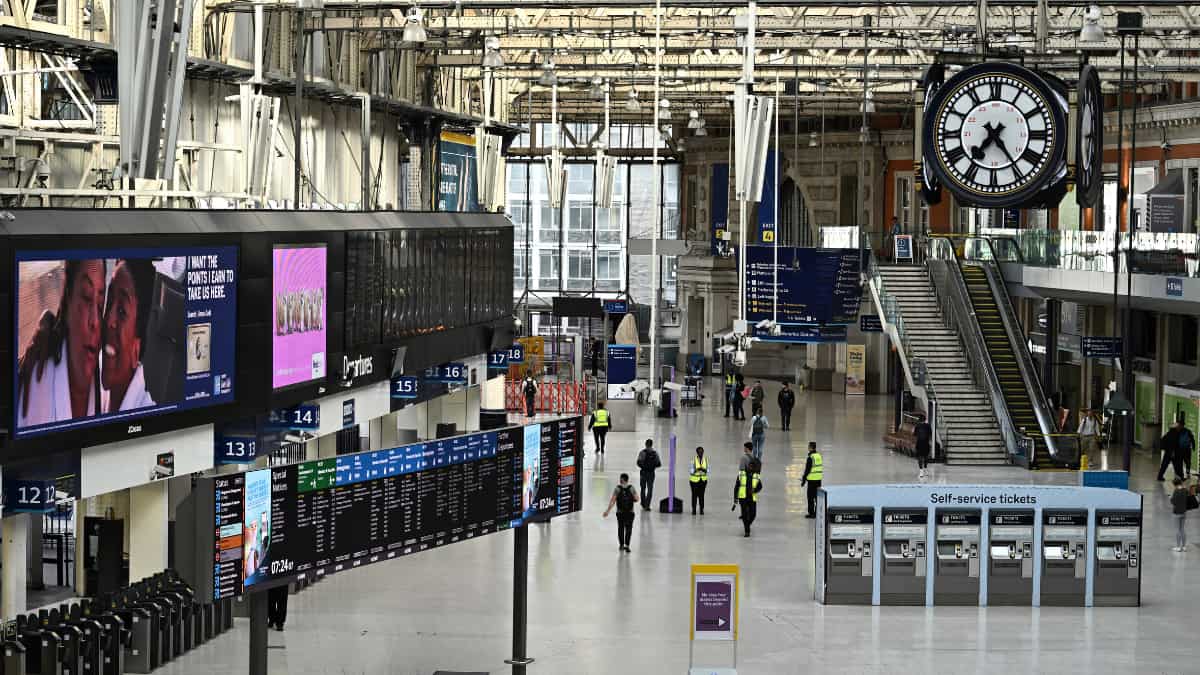
Disruption to major events
The walkouts risk causing significant disruption to major events including the Glastonbury music festival. Schools are warning that thousands of teenagers taking national exams will also be affected.
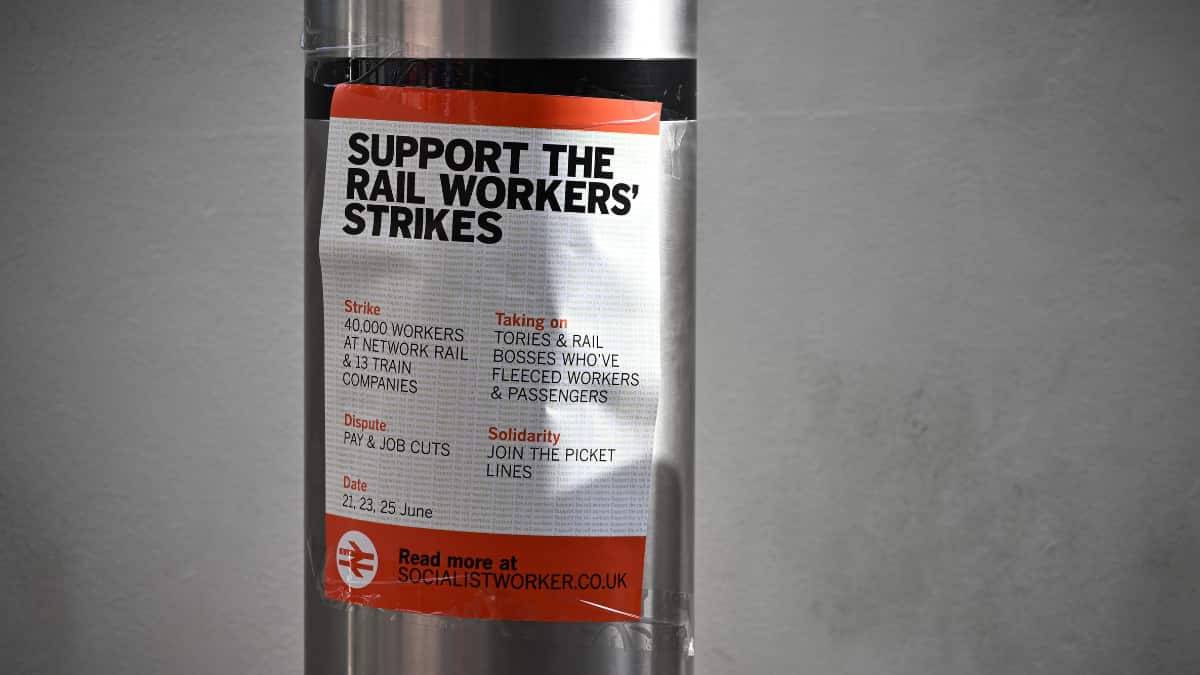
The strikes are the biggest dispute on Britain's railway network since 1989, according to the RMT. Rail operators, however, warn of disruption throughout the week.
Railway jobs at rist
Countries around the world are being hit by decades-high inflation as the Ukraine war and the easing of Covid restrictions fuel energy and food price hikes.
Unions warn also that railway jobs are at risk, with passenger traffic yet to fully recover after the lifting of coronavirus pandemic lockdowns.
)
)
)
)
)