Rare solar eclipse sweeps Europe as millions turn to the skies to witness celestial spectacle

A rare total solar eclipse swept across parts of Europe on August 12, briefly turning daylight dark in areas along the path of totality, while millions gathered across Spain and other regions to witness the celestial spectacle.
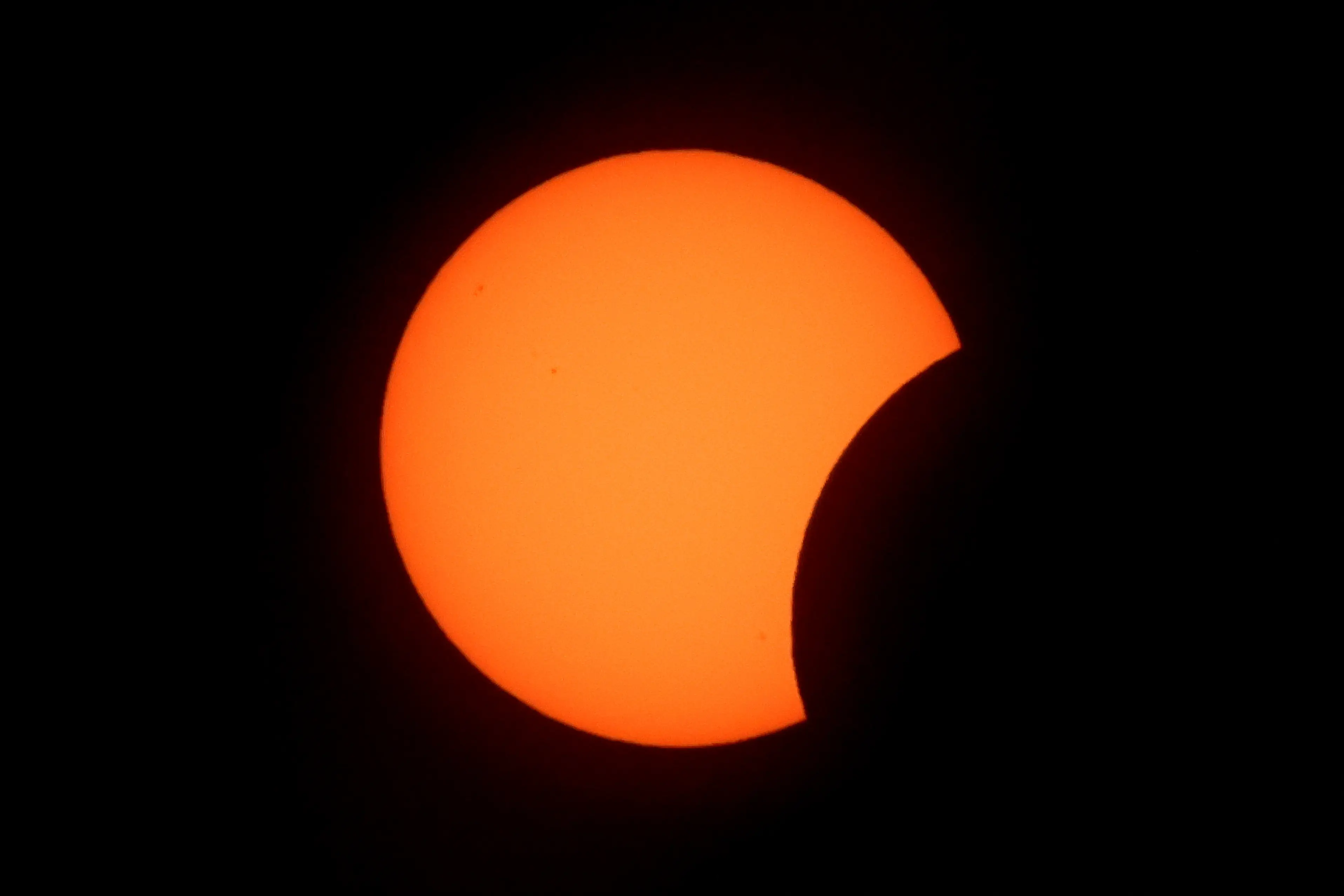
A rare total solar eclipse sweeps across Europe
Millions of skywatchers across the Northern Hemisphere looked up on August 12, 2026, as a rare total solar eclipse crossed Europe, including Greenland, Iceland and northern Spain. The event marked mainland Europe's first total solar eclipse since August 11, 1999. The eclipse occurs when the Sun, Moon and Earth align, with the Moon moving directly between the Sun and Earth.
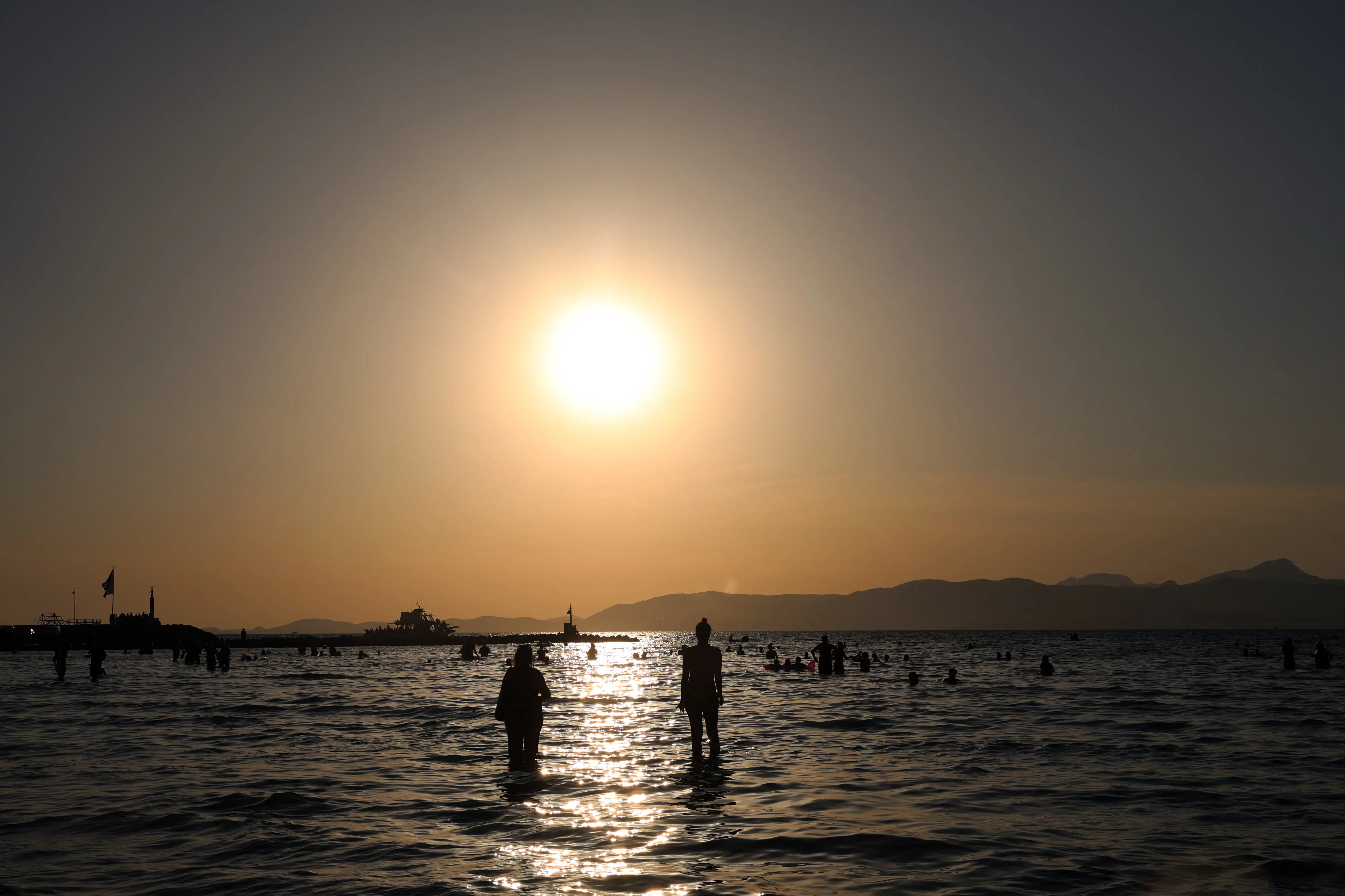
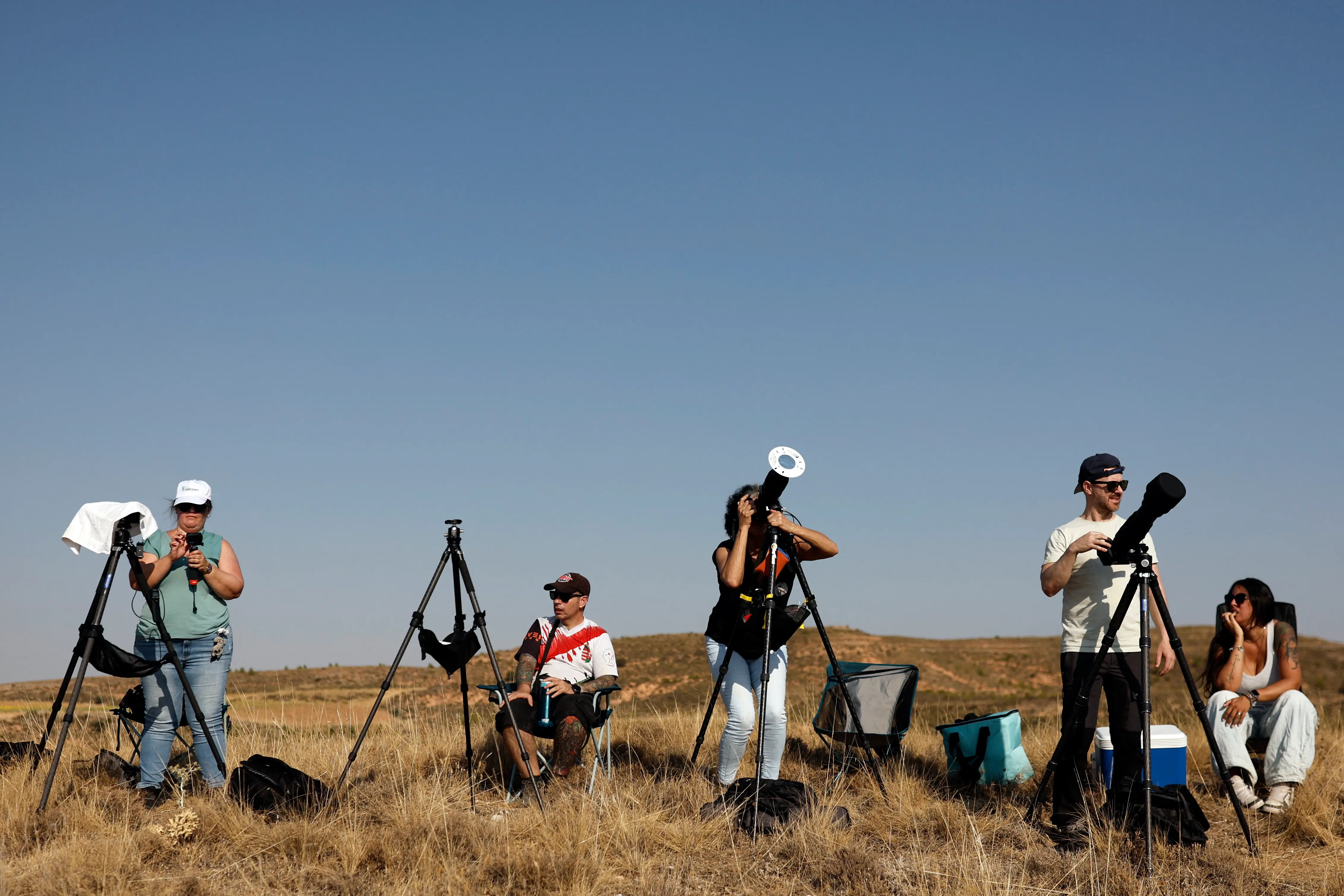
Spain witnesses a spectacular eclipse
Millions gathered across Spain to witness the total solar eclipse. People travelled to cities, towns and open viewing areas to watch the rare celestial event. Clear skies offered favourable conditions as the eclipse briefly plunged parts of the region into darkness.
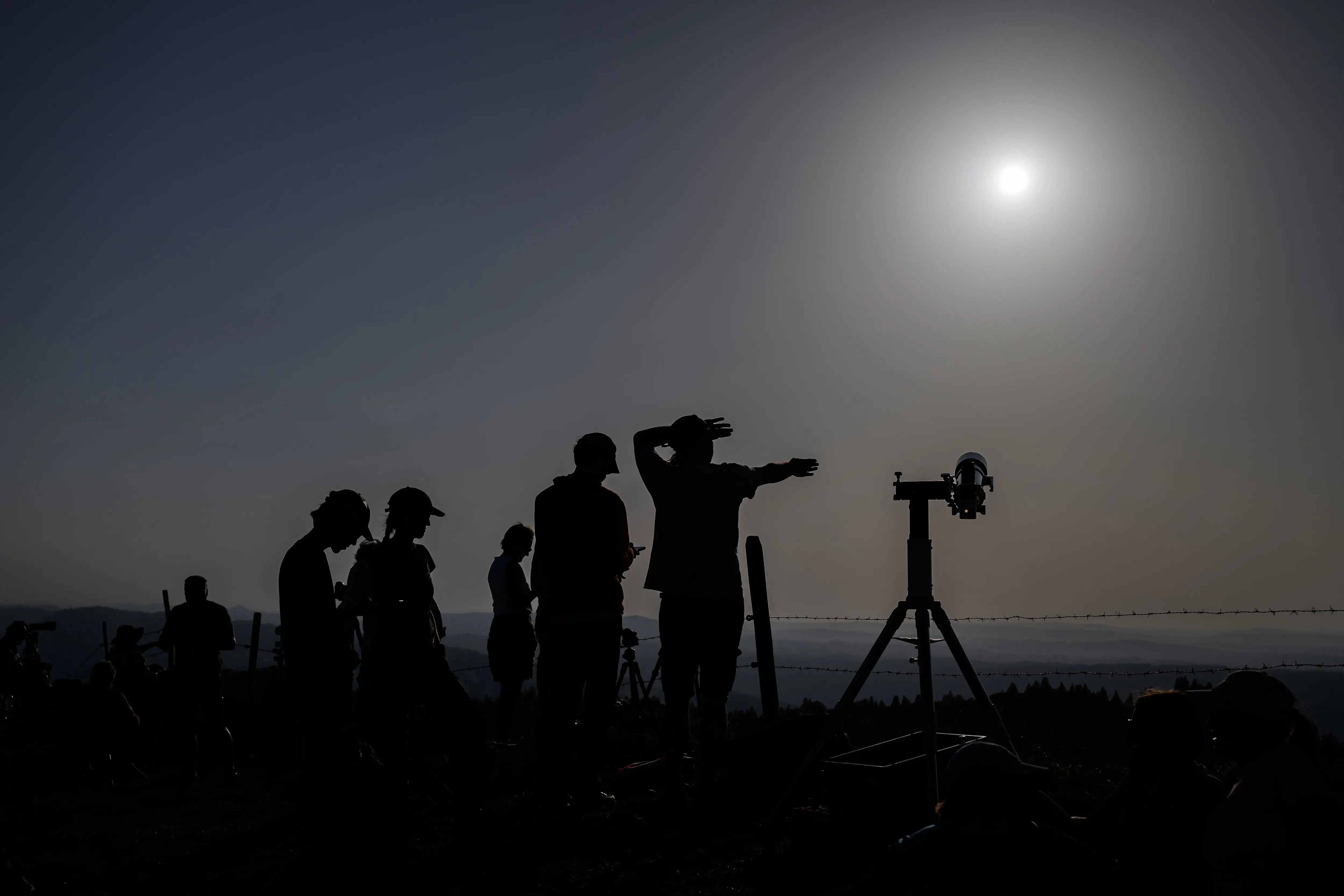
Switzerland watches a partial eclipse
Astronomy enthusiasts in Switzerland gathered at viewing locations to observe the partial solar eclipse. At the Chasseral peak above Nods in northwestern Switzerland, skywatchers prepared to observe the Moon covering part of the Sun.
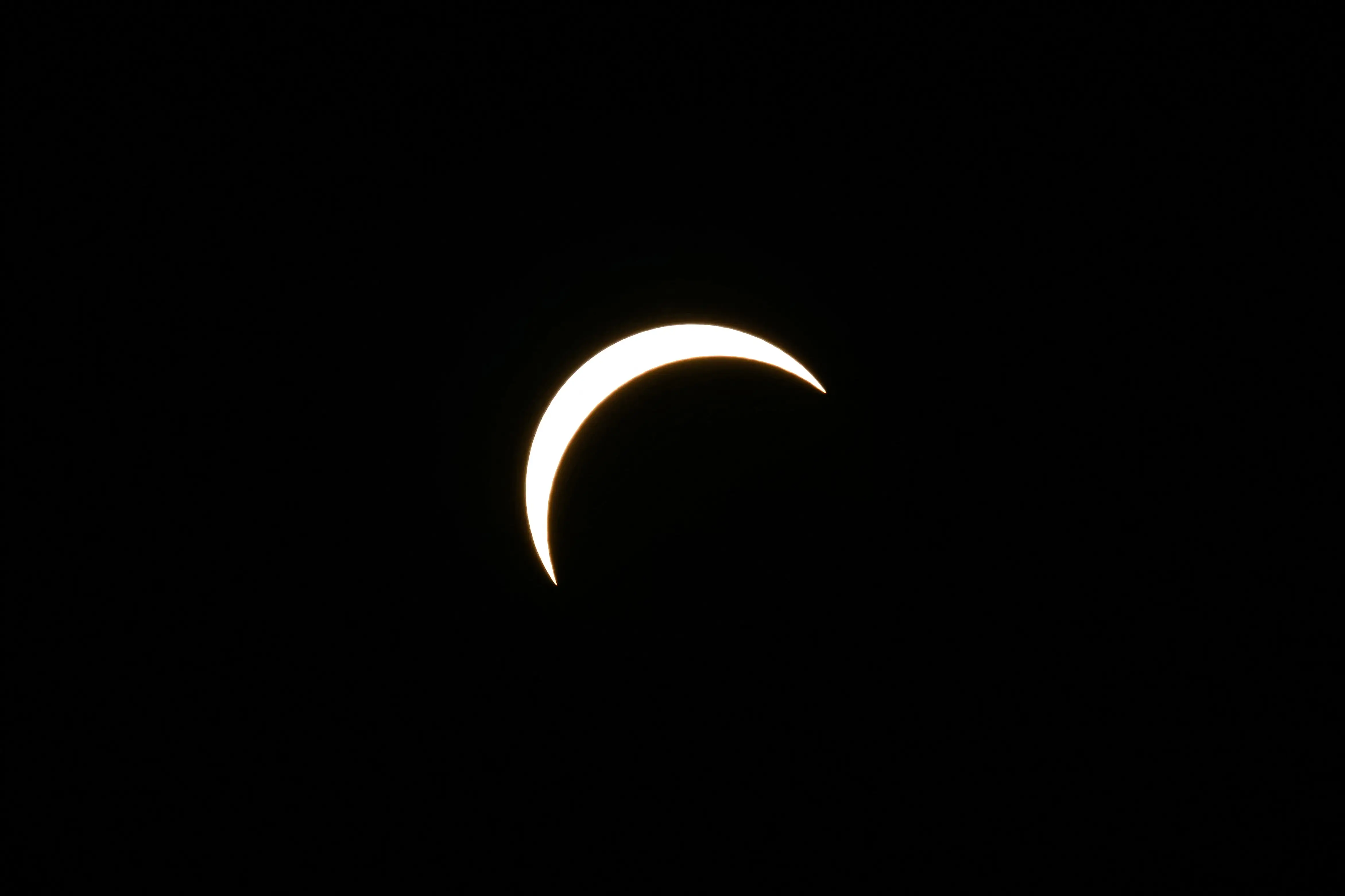
UK sees more than 90% of the Sun coveredUK sees more than 90% of the Sun covered
Skywatchers across Britain witnessed a near-total solar eclipse, with more than 90% of the Sun blocked by the Moon. In central London, the Elizabeth Tower, commonly known as Big Ben, was photographed during the dramatic celestial event. The eclipse was also visible from the sidelines of the European Athletics Championships at Alexander Stadium in Birmingham.
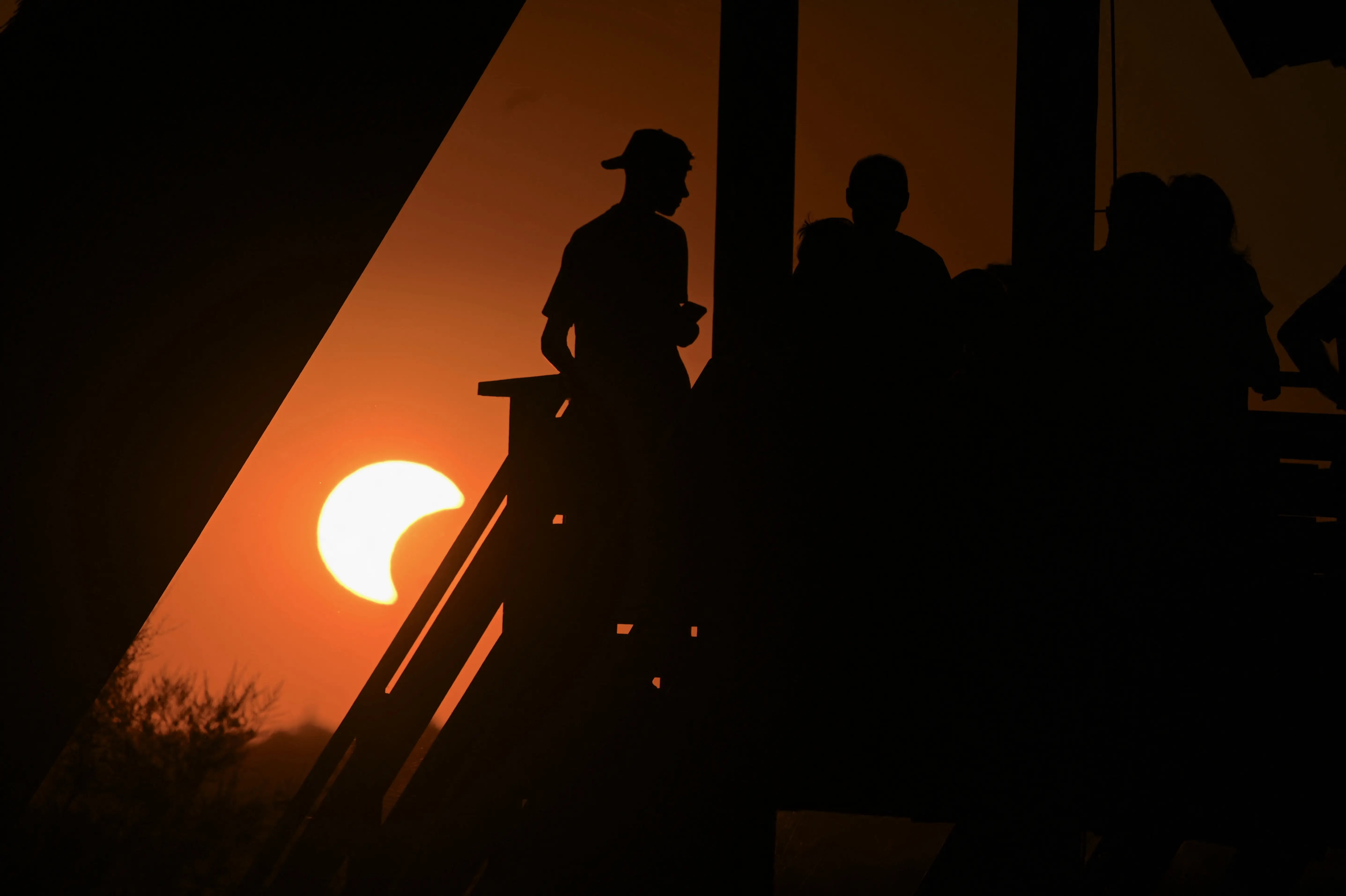
Hungary witnesses a partial solar eclipse
People gathered at the Dinnyés Observation Tower near Agard, Hungary, to watch the partial solar eclipse on August 12. Skywatchers gathered at the observation point to witness the Moon passing in front of the Sun and partially blocking its light.
Why Indians could not see the eclipse
The eclipse occurred during nighttime in India, roughly between 9:00 PM IST and 2:15 AM IST. Since the Sun had already set across the entire Indian subcontinent, people in India could not see either the total or partial phases of the eclipse from the ground.
)
)
)
)
)