The Pale Blue Dot: How one image taken from 3.7 billion miles away proved Earth is a speck in space

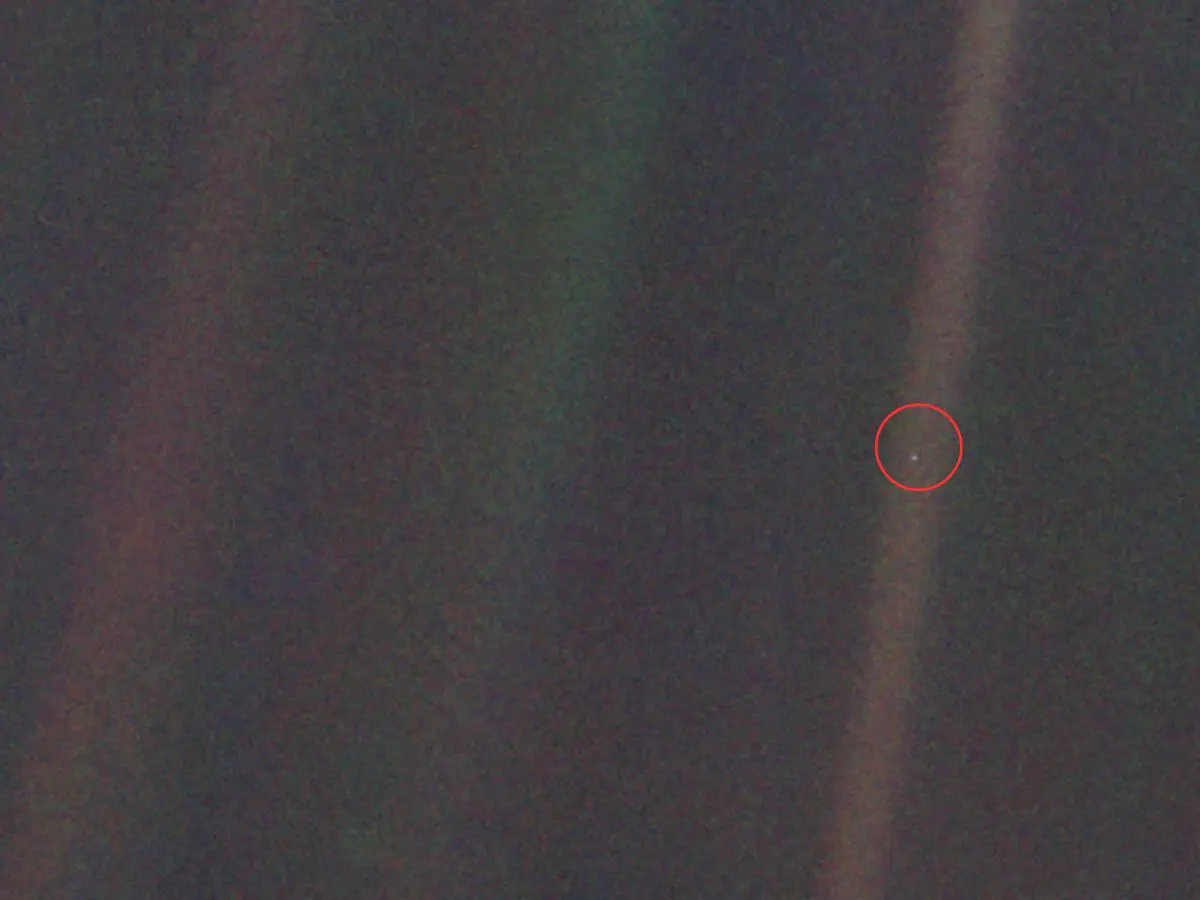
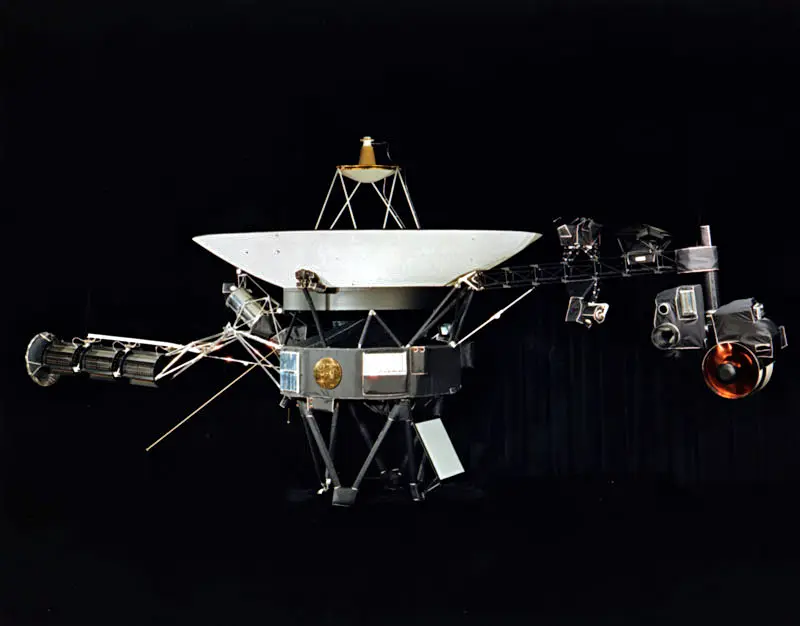
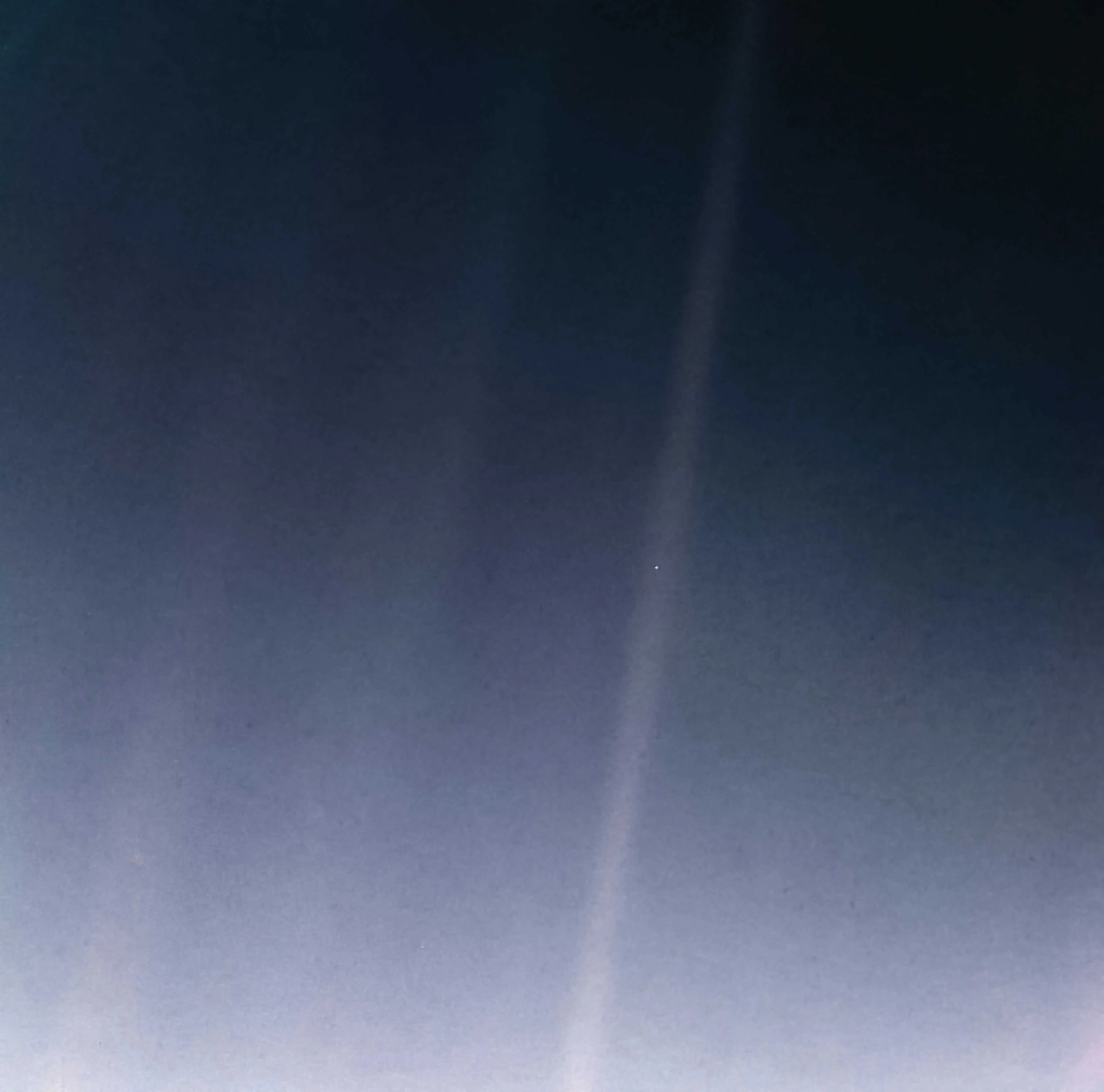
Voyager 1 warmed its cameras for three hours before taking the photos. Earth’s image was recorded at 04:48 GMT on February 14, 1990, just 34 minutes before the spacecraft powered off its cameras permanently.
A Glimpse from the Edge of the Solar System
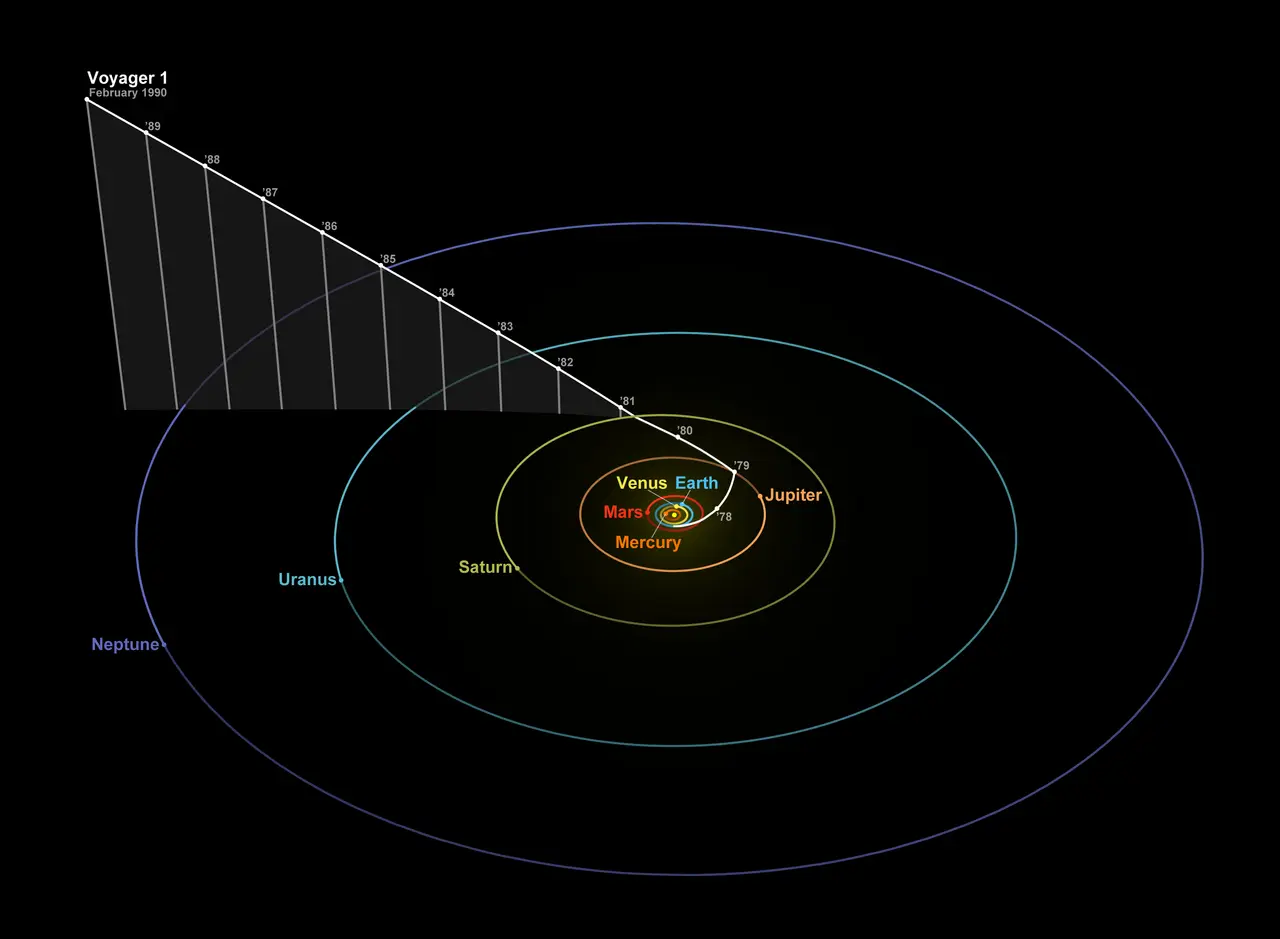
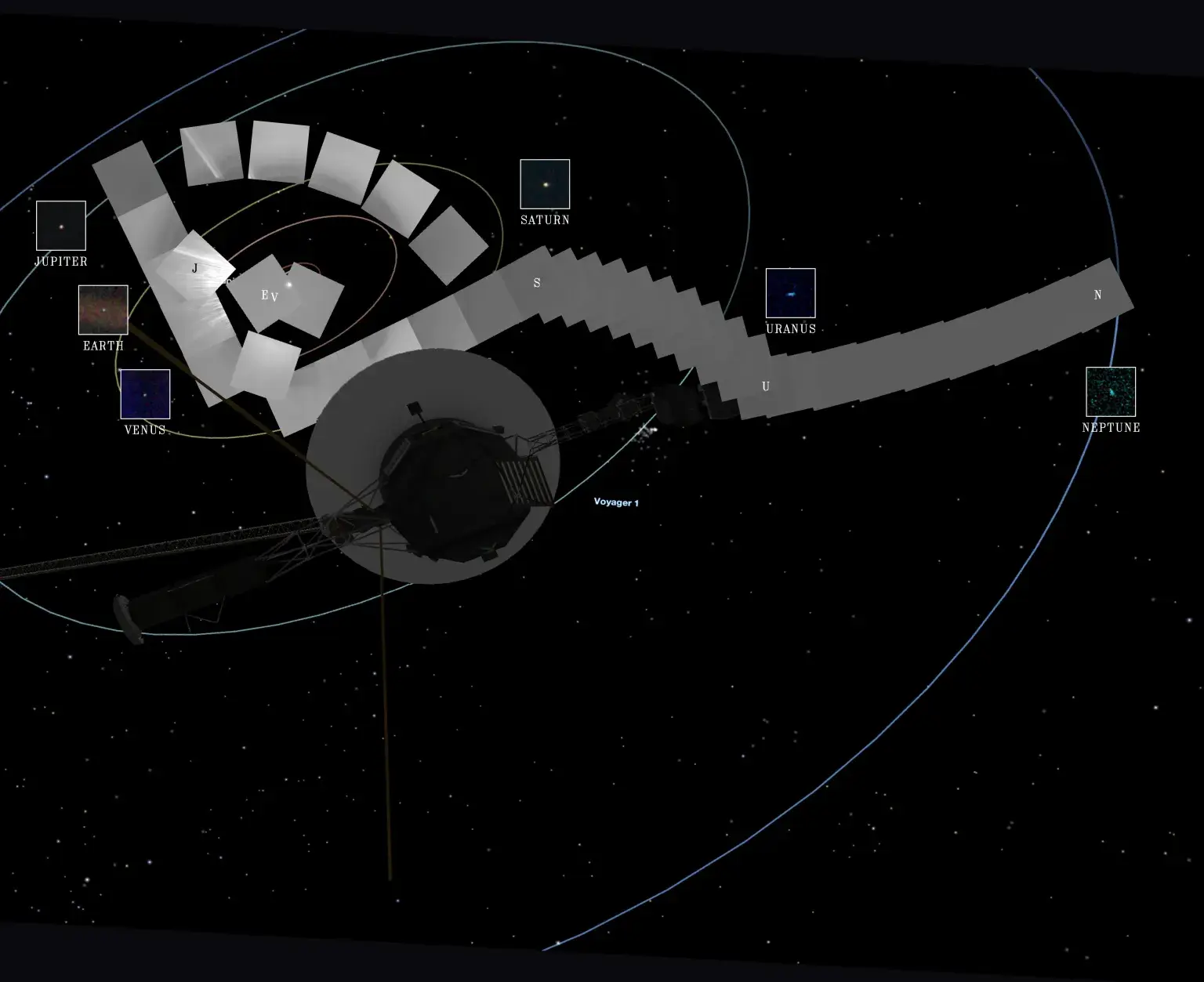
On February 14, 1990, Voyager 1, about 3.7 billion miles from the Sun, turned its cameras back toward Earth for the final time. The spacecraft captured a series of 60 images, later stitched into what became known as the 'Family Portrait' of the solar system. From this vantage point, Earth appeared as a tiny speck, just a point of light about a pixel in size, suspended in a scattered ray of sunlight.
The Family Portrait
Voyager 1’s photographs included Neptune, Uranus, Saturn, Jupiter, and Venus. According to NASA's website, 'Mars was obscured by scattered sunlight bouncing around in the camera, Mercury was too close to the Sun, and dwarf planet Pluto was too tiny, too far away, and too dark to be detected'. The images gave humanity an unprecedented view of our planetary neighbourhood, showing each world as a faint dot, underscoring the vastness of space.

Carl Sagan’s Vision
Planetary scientist Carl Sagan, a member of the Voyager Imaging Team, proposed the Earth image in 1981. The scientist was a consultant and adviser to NASA beginning in the 1950s. He recognised that seeing Earth from this distance might reveal its fragility. According to NASA, Segan's team 'wanted humanity to see Earth’s vulnerability, and that our home world is just a tiny, fragile speck in the cosmic ocean.'
The Moment of Capture
Voyager 1 warmed its cameras for three hours before taking the photos. Earth’s image was recorded at 04:48 GMT on February 14, 1990, just 34 minutes before the spacecraft powered off its cameras permanently. The images reached Earth on May 1, 1990 after four seprate communications passes via NASA’s Deep Space Network.
A Humbling Perspective
In his book Pale Blue Dot, Sagan reflected: "That’s here. That’s home. That’s us. On it everyone you love, everyone you know, everyone you ever heard of, every human being who ever was, lived out their lives… on a mote of dust suspended in a sunbeam.” He emphasised the need for humanity to care for each other and protect the planet, the only known world to harbour life.
Revisiting the Dot
In 2020, for the 30th anniversary of the iconic image, a new version, Pale Blue Dot Revisited, was created by JPL engineer Kevin M. Gill, with input from two of the image's original planners, Candy Hansen and William Kosmann, preserving the intent and data of the original image while applying contemporary processing techniques. Voyager 1 remains humanity’s most distant human-made object, a testament to exploration and perspective.
Legacy and Display
NASA mounted the image mosaic at the Jet Propulsion Laboratory’s Theodore von Kármán Auditorium, where it covered over 20 feet. The Earth image was frequently replaced due to public interaction, illustrating the enduring fascination with the tiny dot in space.
)
)

)
)