The observable universe is just 5% of reality, 95% remains invisible!

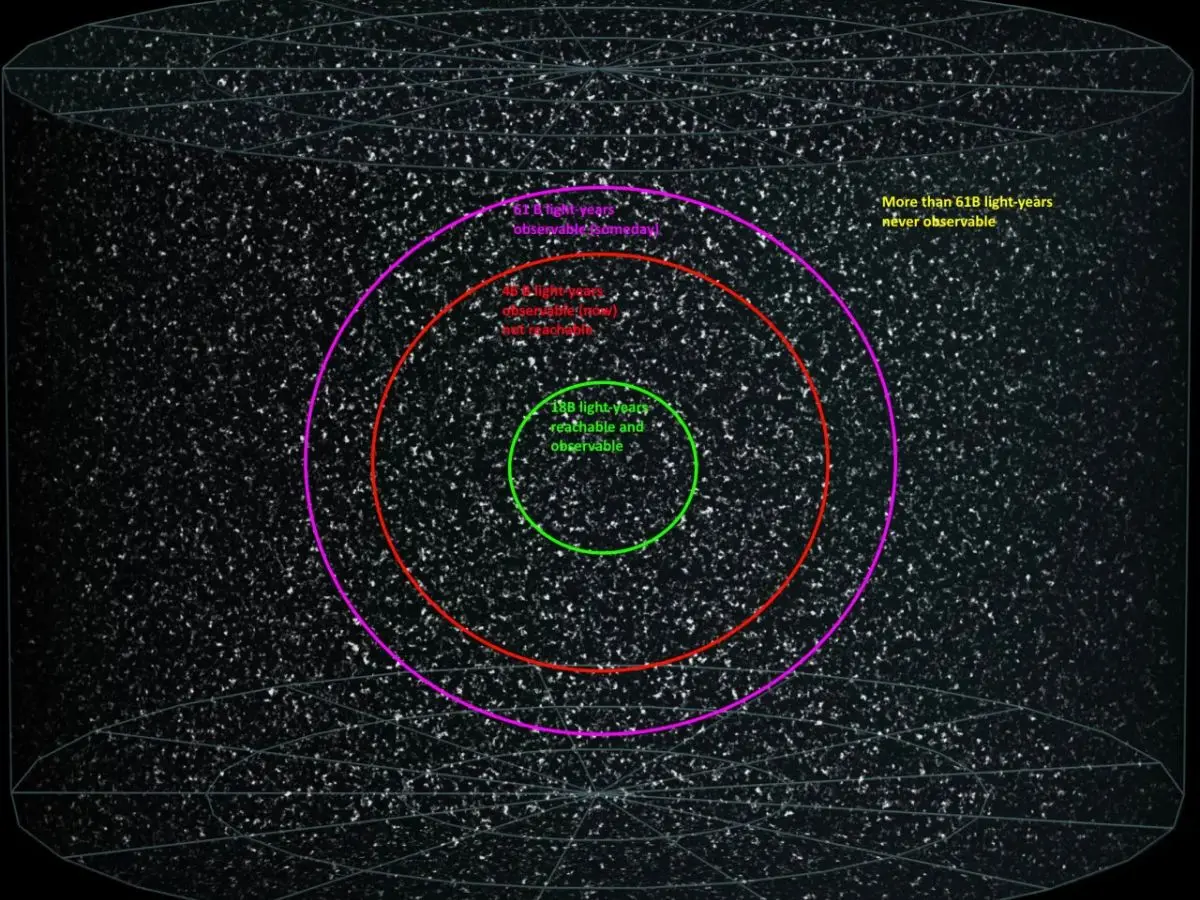
The observable universe extends to about 46.5 billion light years in radius. This boundary exists because light from more distant regions has not had time to reach us since the Big Bang, 13.8 billion years ago.
The Known and the Unknown
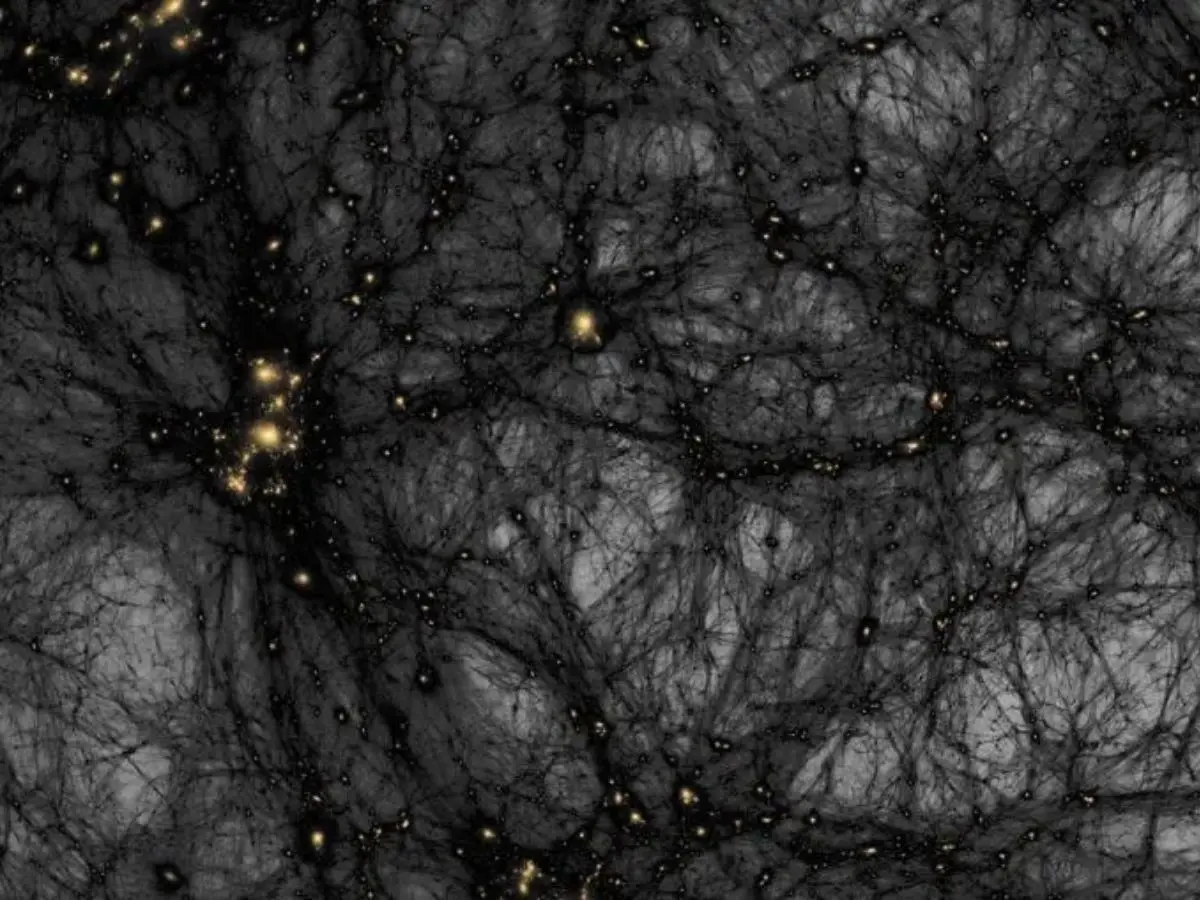
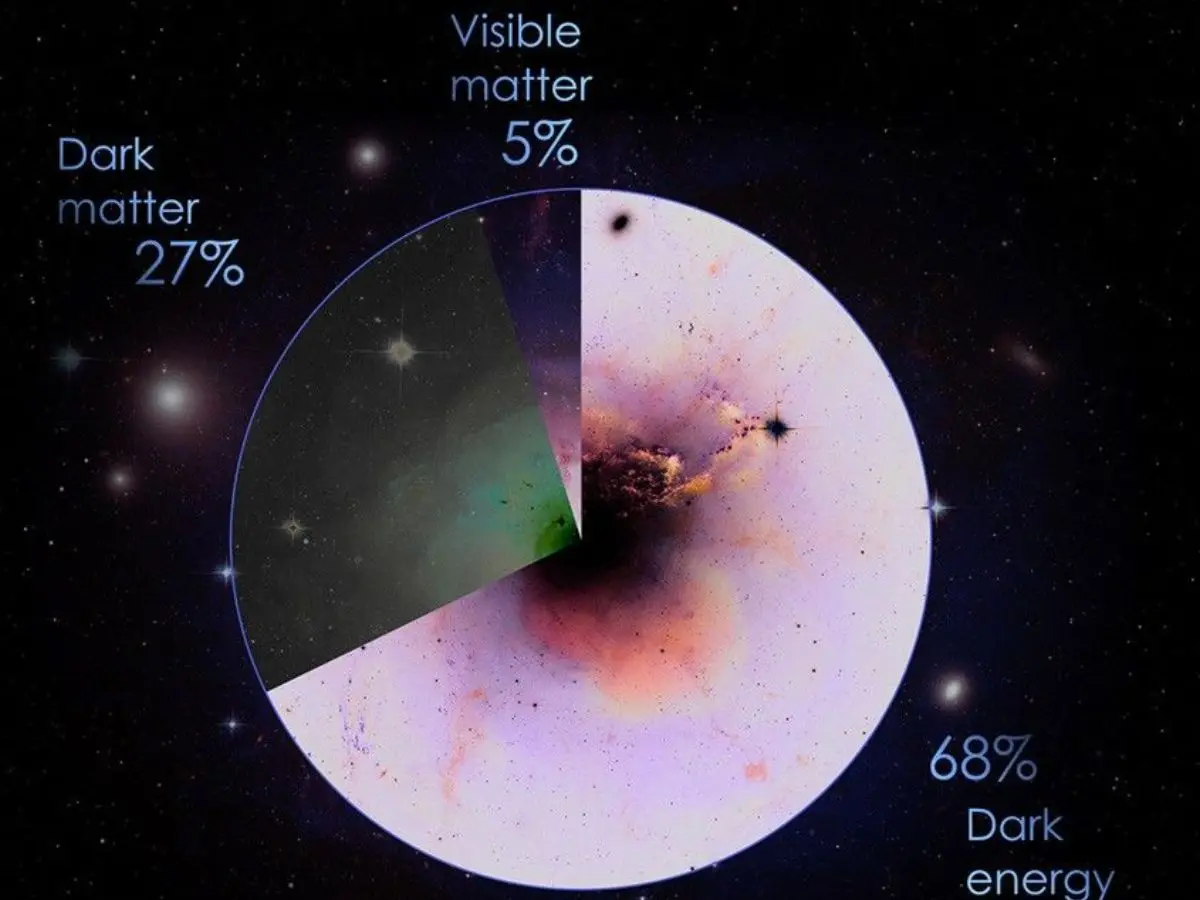
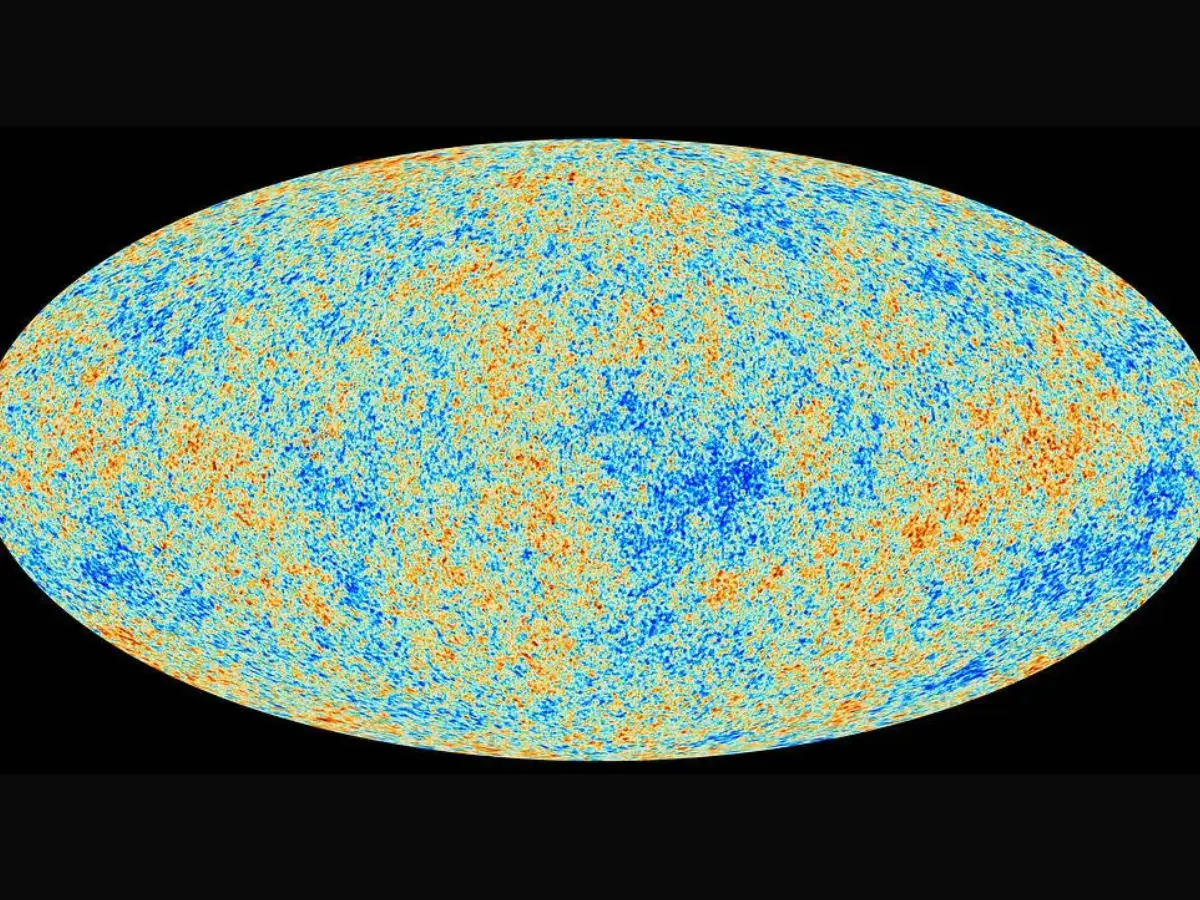
Modern cosmology has revealed a startling truth: everything we can see in the universe, stars, planets, galaxies, and all the material objects that make up our lives, accounts for just a tiny fraction of reality. Observations from satellites such as NASA’s Wilkinson Microwave Anisotropy Probe (WMAP) and the European Space Agency’s Planck mission have shown that ordinary matter, the atoms and particles that interact with light, forms only about 5 per cent of the universe’s total energy and matter content. The rest lies hidden, made up of entities we cannot see directly: dark matter and dark energy.
The 5% We Can See
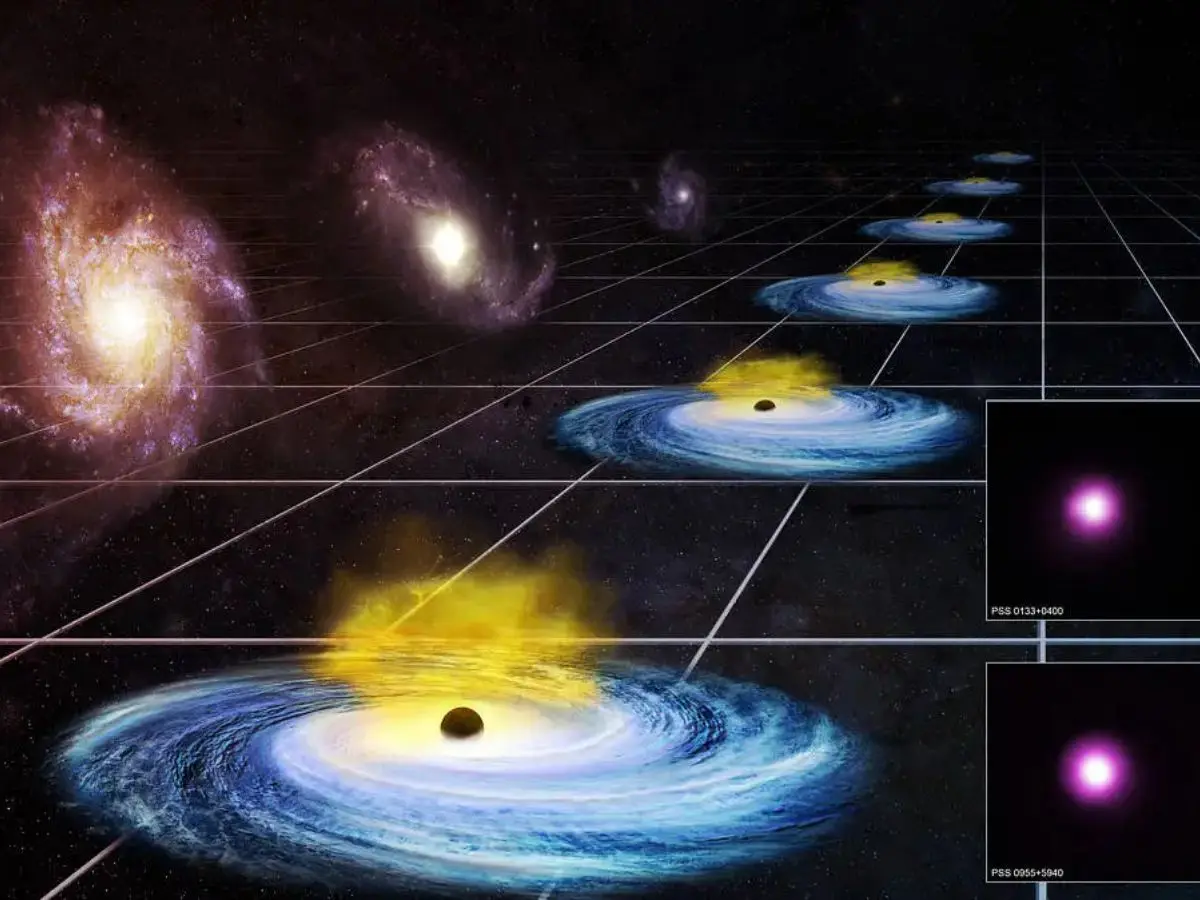
Ordinary matter, also called baryonic matter, consists of protons, neutrons, and electrons. This is the material that emits or absorbs radiation, allowing telescopes to observe stars, nebulae, and galaxies. From the largest galaxy cluster to the smallest grain of dust, everything visible belongs to this category. Yet despite its familiarity, this matter represents only a sliver of the cosmos. It is the island of visibility on which all human understanding of the universe has so far been built.
The Hidden Mass: Dark Matter
The next 27 per cent of the universe is made up of dark matter, a mysterious form that neither emits nor reflects light. It cannot be seen directly, but its presence is inferred through gravitational influence. Galaxies rotate in ways that cannot be explained by visible mass alone; without dark matter acting as a hidden scaffold, galaxies would fly apart. Gravitational lensing, in which light from distant objects is bent around massive invisible structures, provides further evidence. Though widely accepted, the true nature of dark matter remains unknown, with competing hypotheses ranging from undiscovered particles to more radical ideas of modified gravity.
The Greater Mystery: Dark Energy
Even more dominant is dark energy, which accounts for roughly 68 per cent of the universe. Its existence was first inferred in 1998, when astronomers studying distant Type Ia supernovae discovered that the universe’s expansion was accelerating rather than slowing under gravity. The simplest explanation is that some form of repulsive energy permeates space itself, counteracting gravity on the largest scales. Dark energy has since become a cornerstone of cosmological models, but its fundamental nature remains elusive. It is not only invisible but, so far, undetectable except through its effect on the expansion of space.
The Horizon of What We Can See
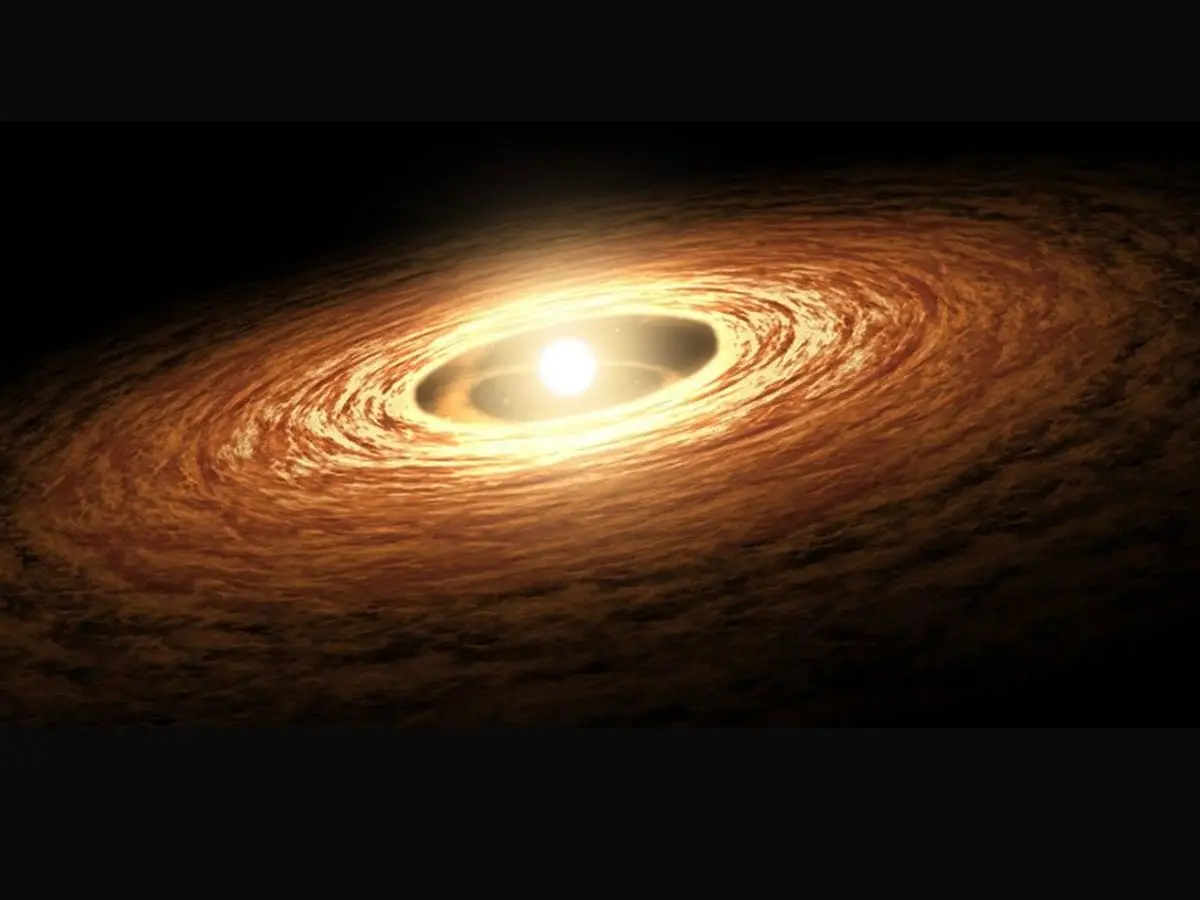
Beyond the matter-energy composition, our ability to observe is limited by cosmic horizons. The observable universe extends to about 46.5 billion light years in radius. This boundary exists because light from more distant regions has not had time to reach us since the Big Bang, 13.8 billion years ago. What lies beyond this limit remains inaccessible. The true universe may be vastly larger than the part we can see, perhaps infinite.
A Universe Mostly Unseen
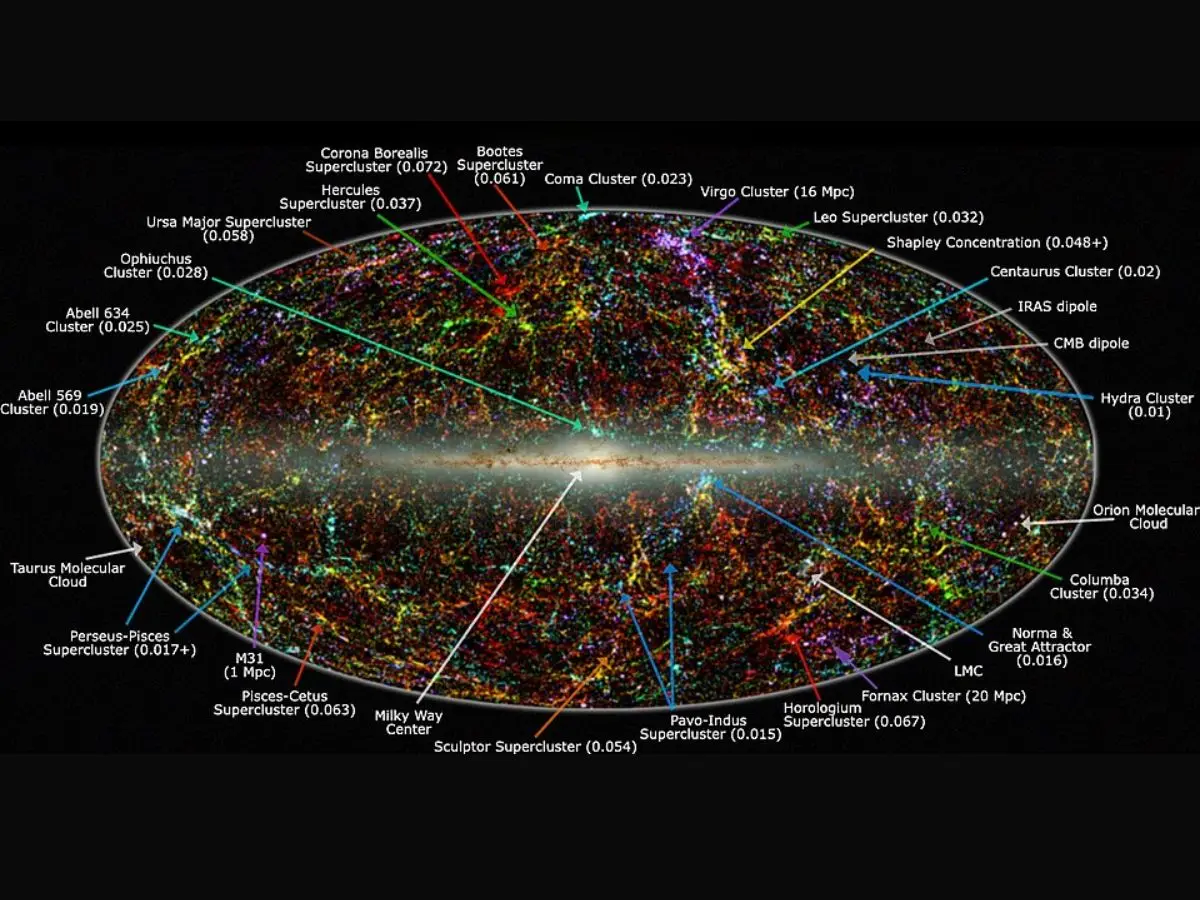
The implications are profound. Human knowledge and scientific instruments can account for only a fraction of reality. Every galaxy, every star, and every atom observed lies within a minority portion of the cosmos. The overwhelming majority, 95 per cent is invisible, detectable only through indirect clues. It shapes the structure and fate of the universe while remaining hidden from view.
Living on an Island of Visibility
The picture painted by modern cosmology is humbling. Humanity inhabits a small luminous island in an ocean of the unknown. Dark matter binds galaxies together; dark energy drives them apart. Meanwhile, the ordinary matter from which we are made is a rare component. The discovery that most of the universe is unseen does not diminish what we know but highlights the scale of what remains to be explained.
)
)
)
)
)