The 125-landing limit?: Why the USS Abraham Lincoln constantly replaces its arresting wires

The USS Abraham Lincoln replaces its steel arresting cables after exactly 125 landings. To safely stop 50,000-pound fighter jets and prevent lethal wire snaps, Navy crews quickly swap out fatigued cables in under 15 minutes.
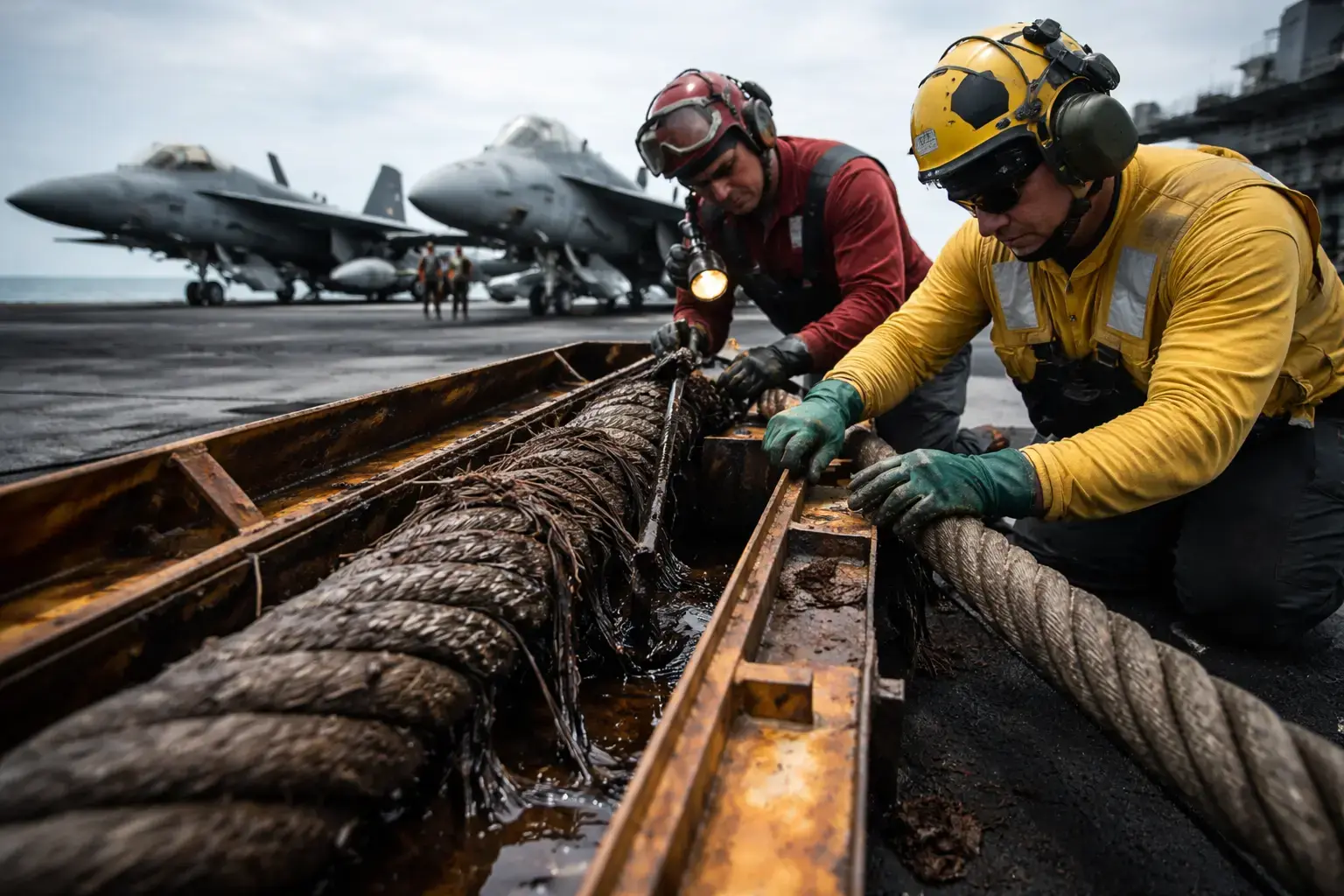
The Cross-Deck Pendants
The USS Abraham Lincoln utilises four high-tensile steel cables, known as cross-deck pendants, stretched across the flight deck. These thick wire ropes snag the tailhook of an incoming fighter jet, safely absorbing the massive kinetic energy of an arrested landing.
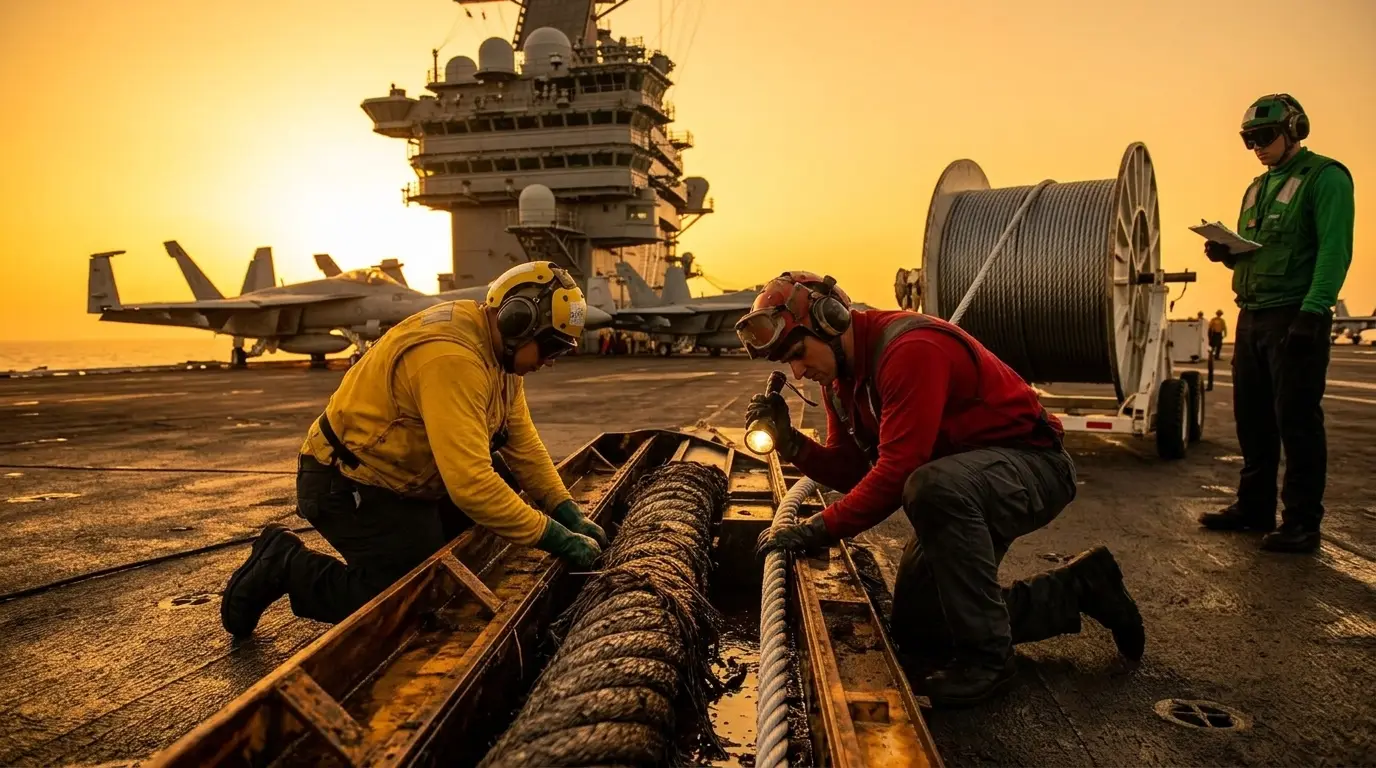
The 125-Trap Limit
Because catching a heavy aircraft at 150 miles per hour generates extreme friction, the cables suffer severe metal fatigue over time. To ensure absolute safety, the US Navy mandates that each arresting cable must be completely replaced after exactly 125 landings.
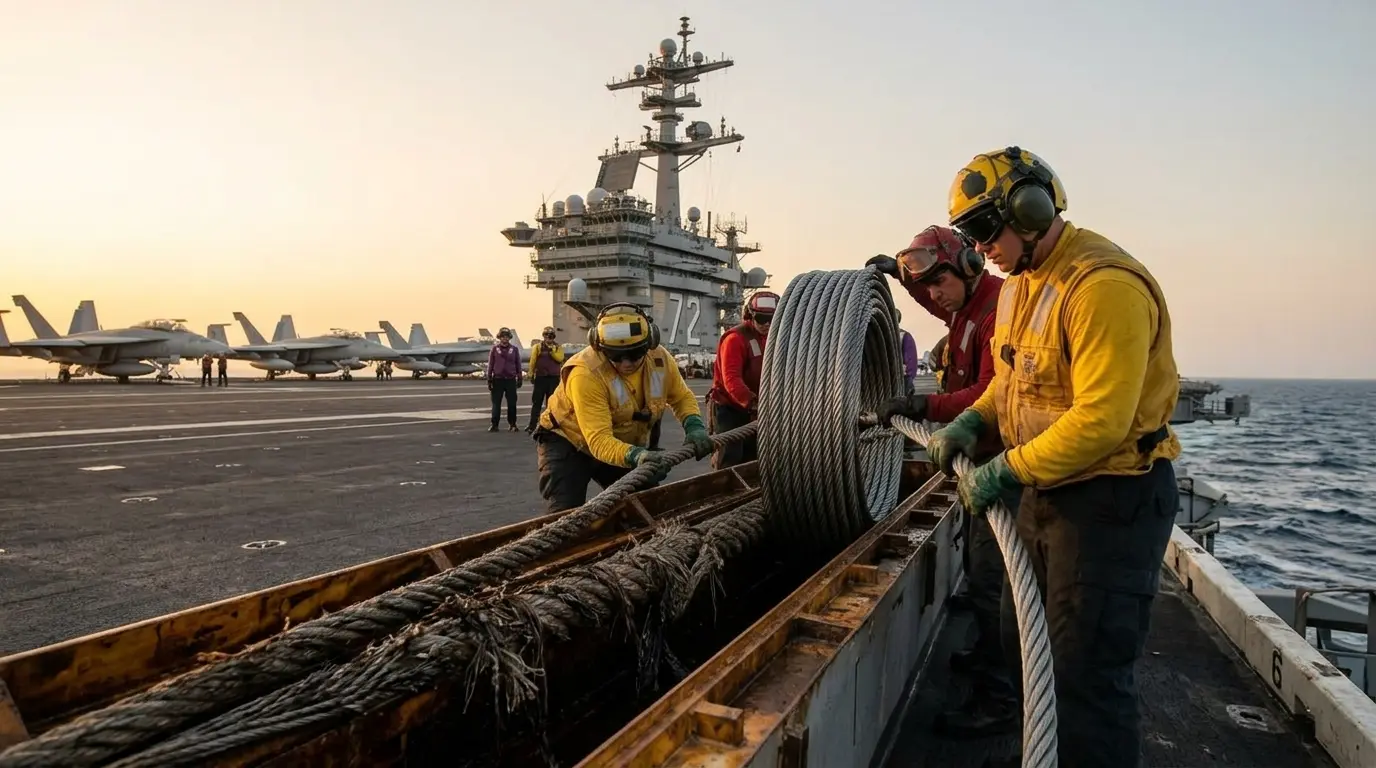
Tracking the Traps
Flight deck crews and maintenance officers meticulously log every single arrested landing that occurs on each specific wire. Once a cable approaches the strict 125-landing threshold, it is immediately decommissioned to prevent it from snapping under extreme tension.
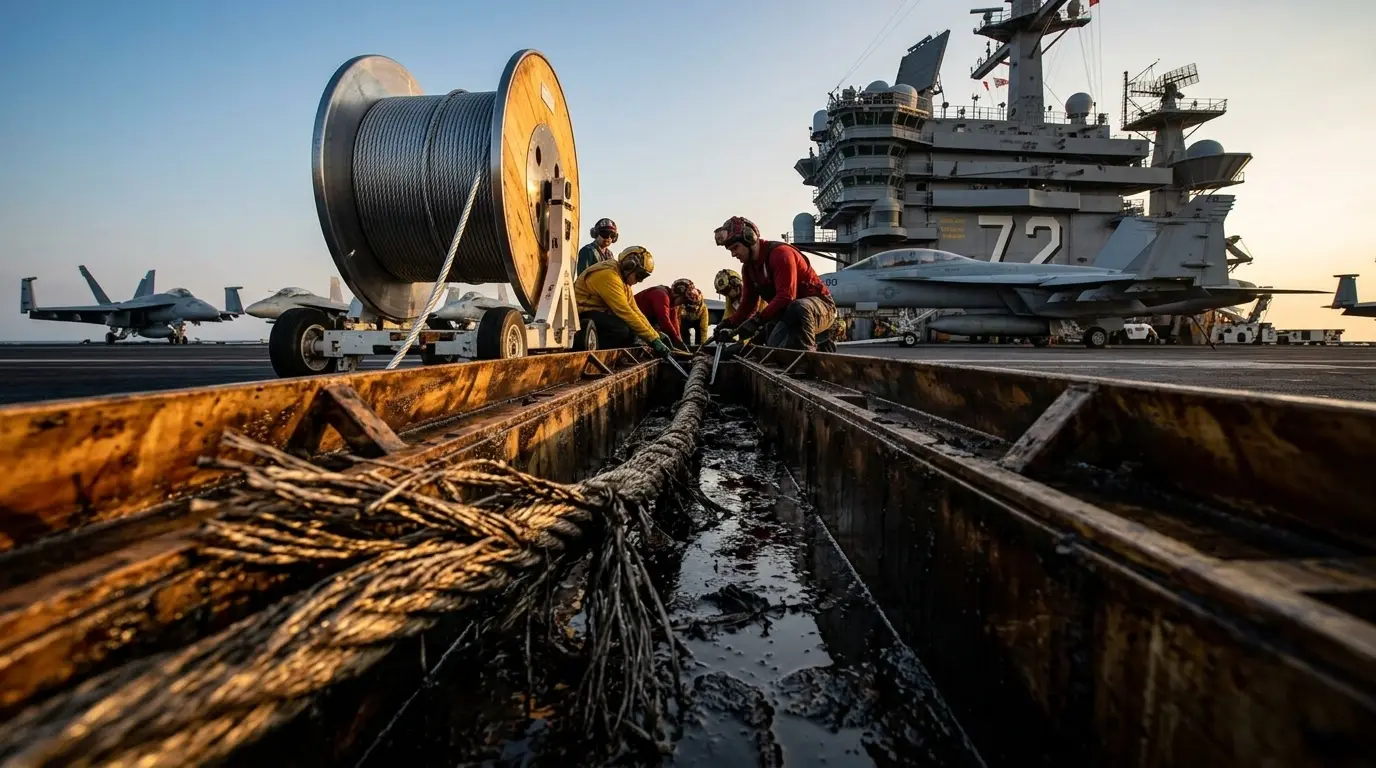
A 15-Minute Pit Stop
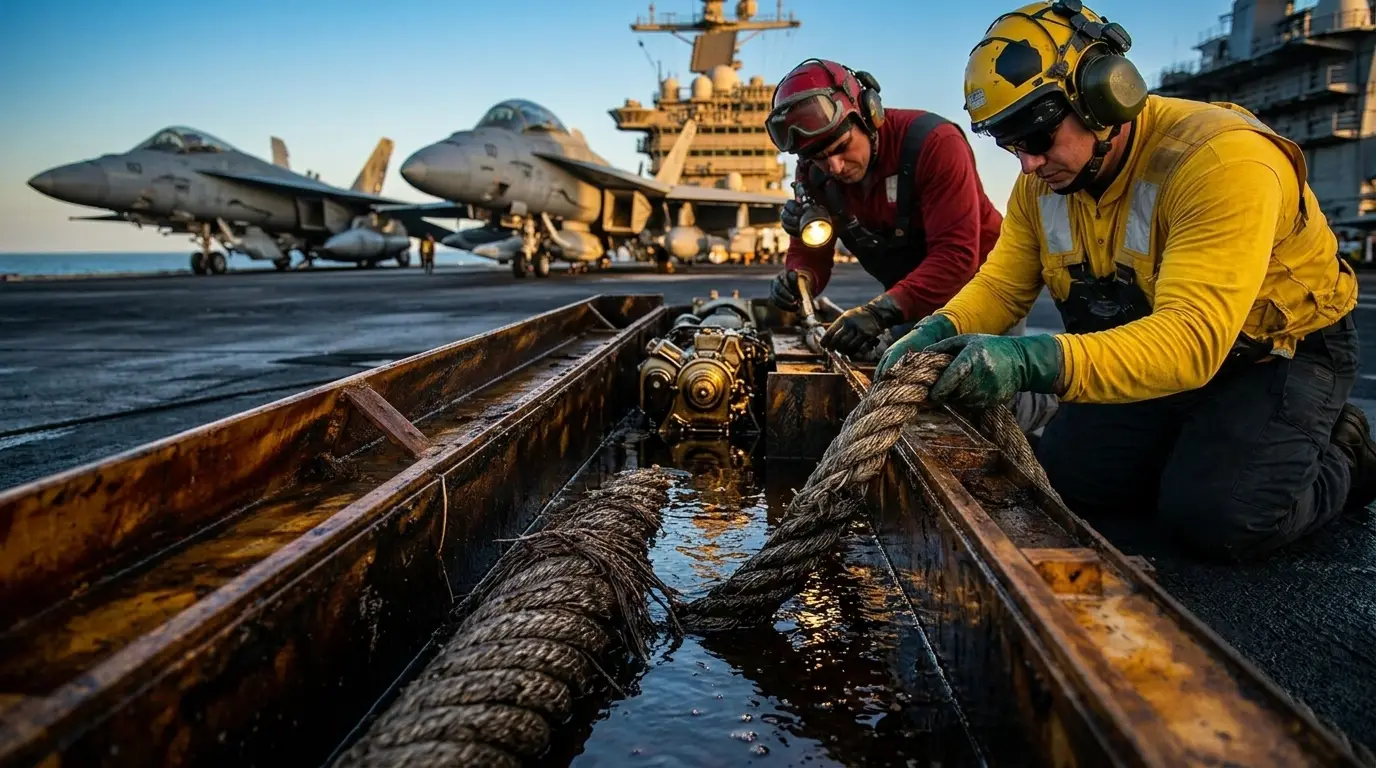
Swapping out a massive steel cable on an active flight deck is a highly choreographed operation. During a brief pause in flight operations, aviation boatswain's mates can detach the terminal couplings and install a brand-new pendant in under 15 minutes.
The Purchase Cable Link
The cross-deck pendants do not absorb the physical shock alone, as they connect directly to secondary purchase cables located at the deck edges. These purchase cables run below the flight deck into massive hydraulic engines, which mechanically convert the jet's kinetic energy into fluid pressure.
The Danger of Snapping
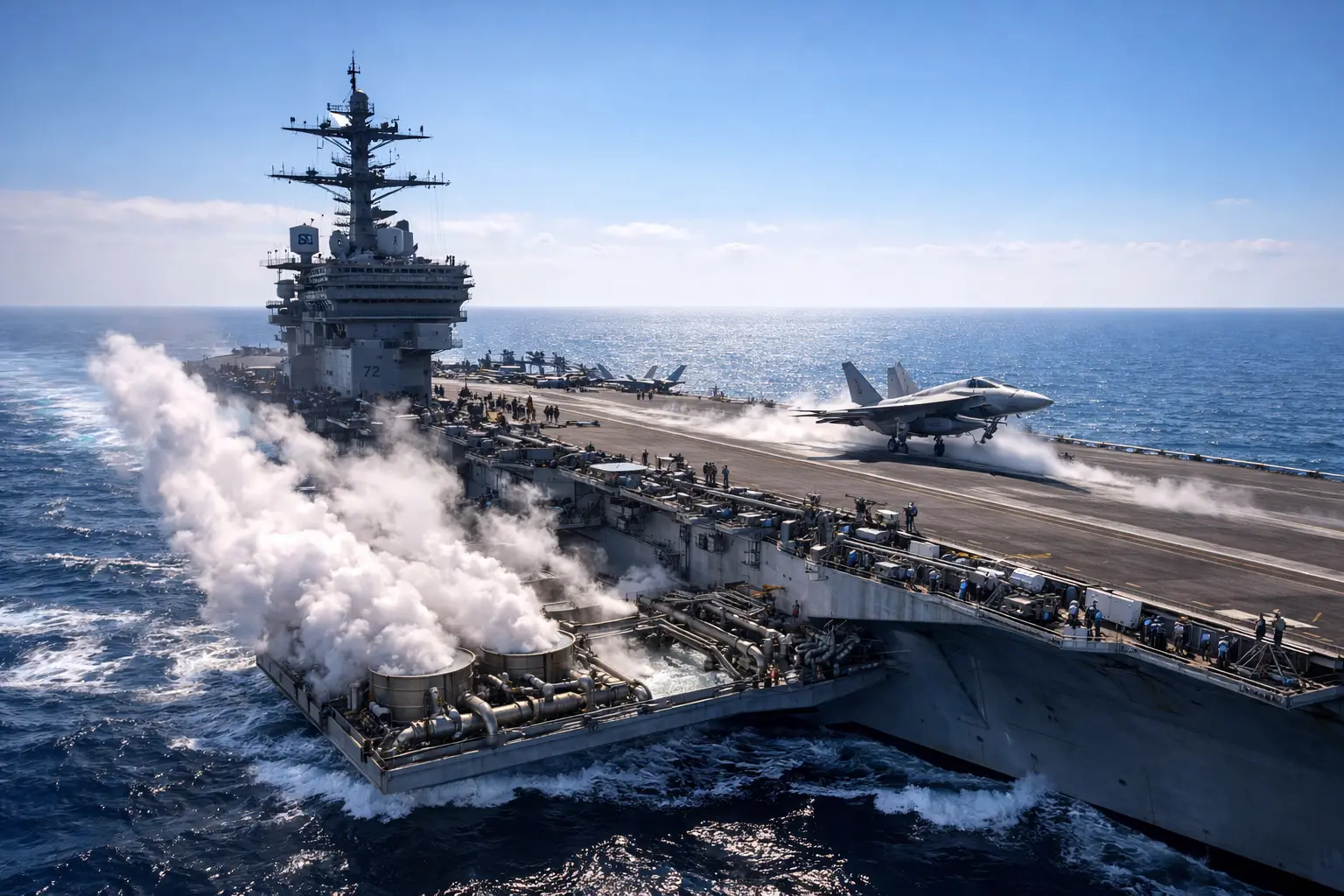
Strictly adhering to the 125-landing limit is an absolute matter of life and death for the entire crew. If a fatigued cable snaps during a landing, it violently whips across the flight deck, posing a lethal threat to personnel and causing the aircraft to plunge into the sea.
Continuous Combat Readiness
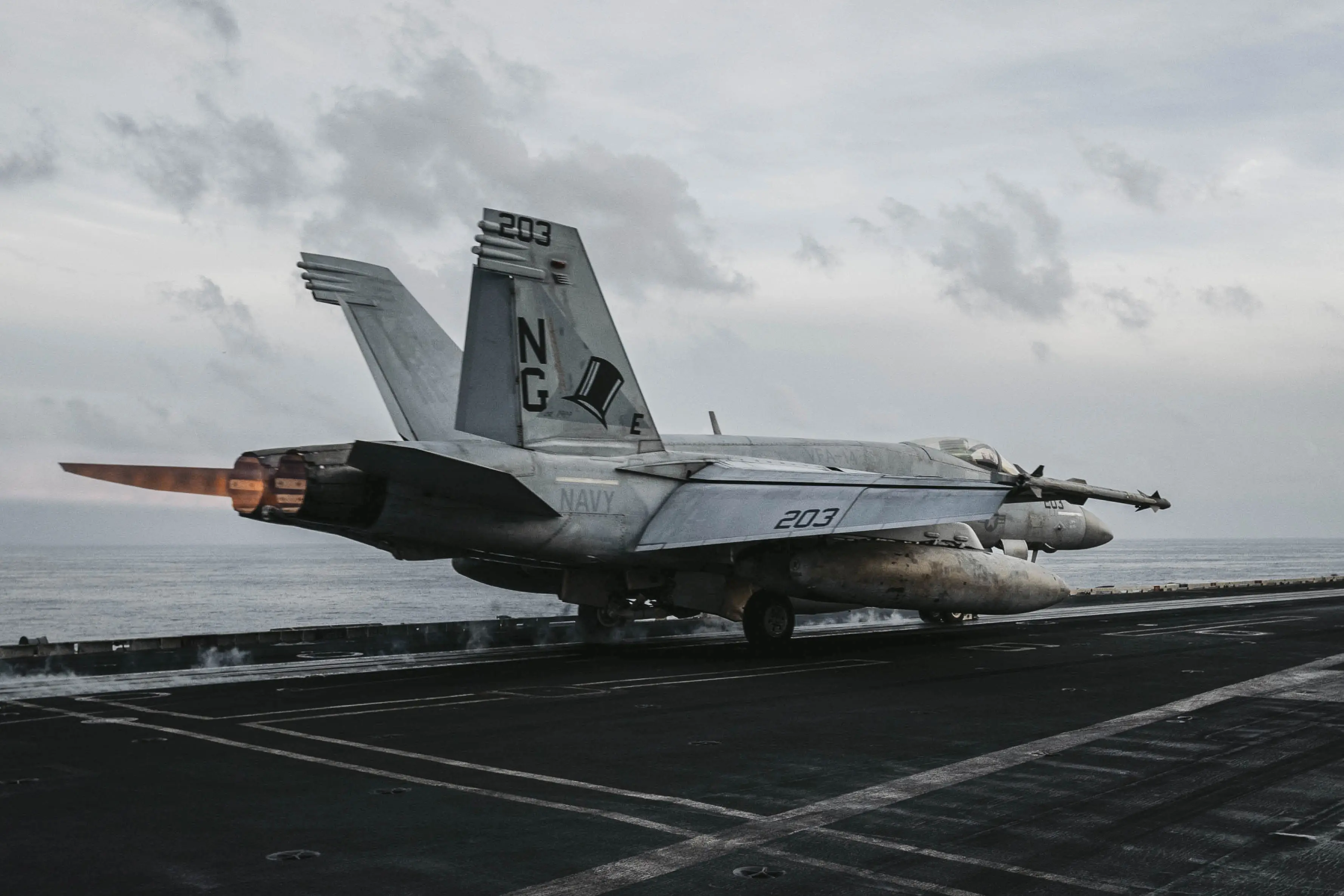
By constantly rotating and replacing these steel cables, the $4.7 billion supercarrier maintains continuous combat readiness. This relentless maintenance schedule ensures that squadrons of fighter jets can safely execute day and night missions globally without catastrophic flight deck failures.
)
)
)
)
)