Tadpole, Black Eye and Cosmic Owl: What makes these 7 galaxies the weirdest in the universe?

They are products of violent collisions, rare cosmic alignments, or mysterious forces we still cannot fully explain.
Introduction
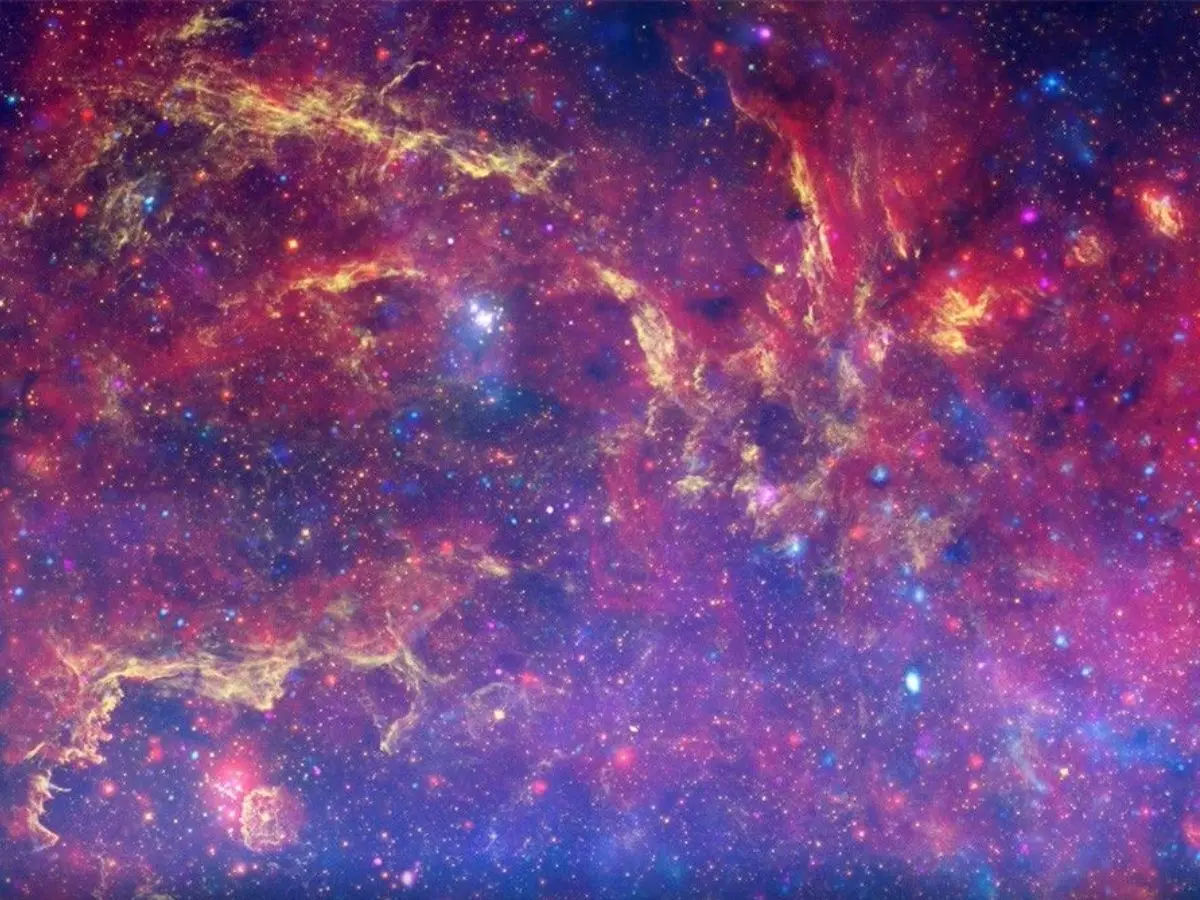
Scattered across the cosmos are galaxies so peculiar they defy the patterns astronomers thought they understood. Some twist into improbable shapes, others appear almost too perfect, and a few even challenge the very physics of galaxy formation. They are products of violent collisions, rare cosmic alignments, or mysterious forces we still cannot fully explain. From vast stellar tails to perfect rings and 'dark matter-free' enigmas, these unusual galaxies offer more than curiosity, they are clues to the universe’s most puzzling processes, each one a case study in how strange reality can be when viewed on a galactic scale.
Tadpole galaxy — a cosmic swimmer
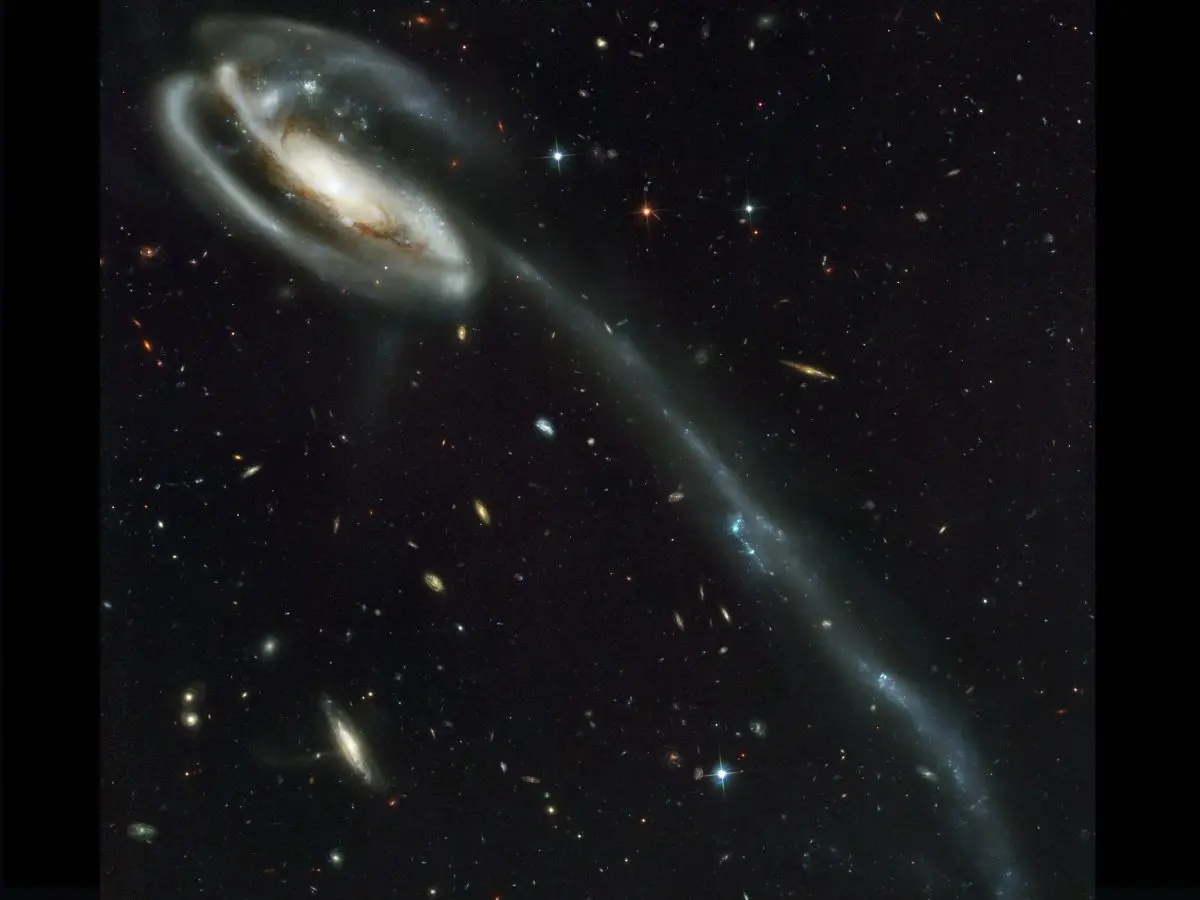
The Tadpole Galaxy (Arp 188) in Draco extends a dramatic, 280,000-light-year-long tail of stars and gas trailing behind a compact 'head', a structure born from a near-collision with another galaxy some 100 million years ago. Star clusters dot the tail, lit by bursts of new star formation.
Black Eye galaxy — a galactic bruise
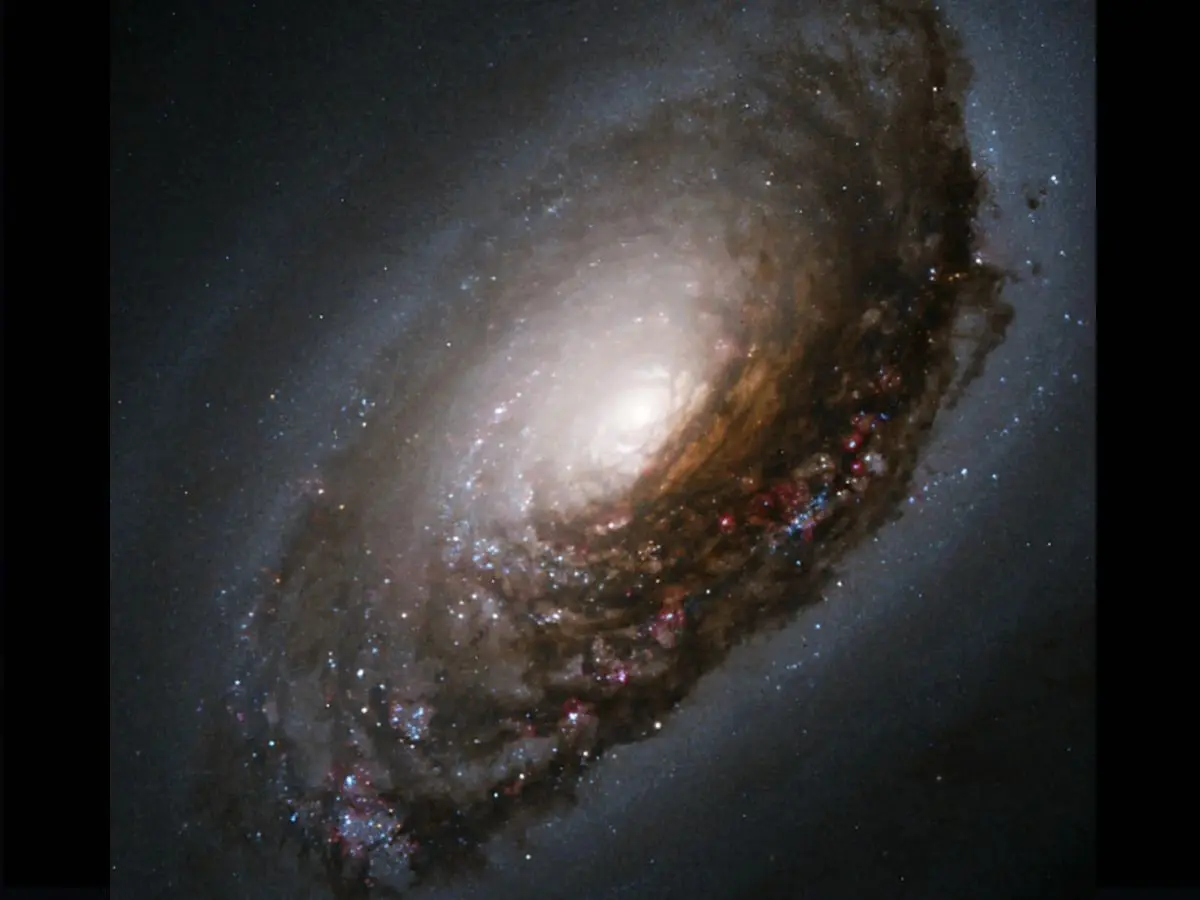
Also known as Messier 64, the Black Eye Galaxy lives up to its name: a dark dust band circles a bright core, giving it the appearance of a cosmic bruise. Its peculiarity runs deeper, gas and stars in the inner and outer regions rotate in opposite directions, likely the result of a past galactic merger.
Hoag’s Object — the perfect ring
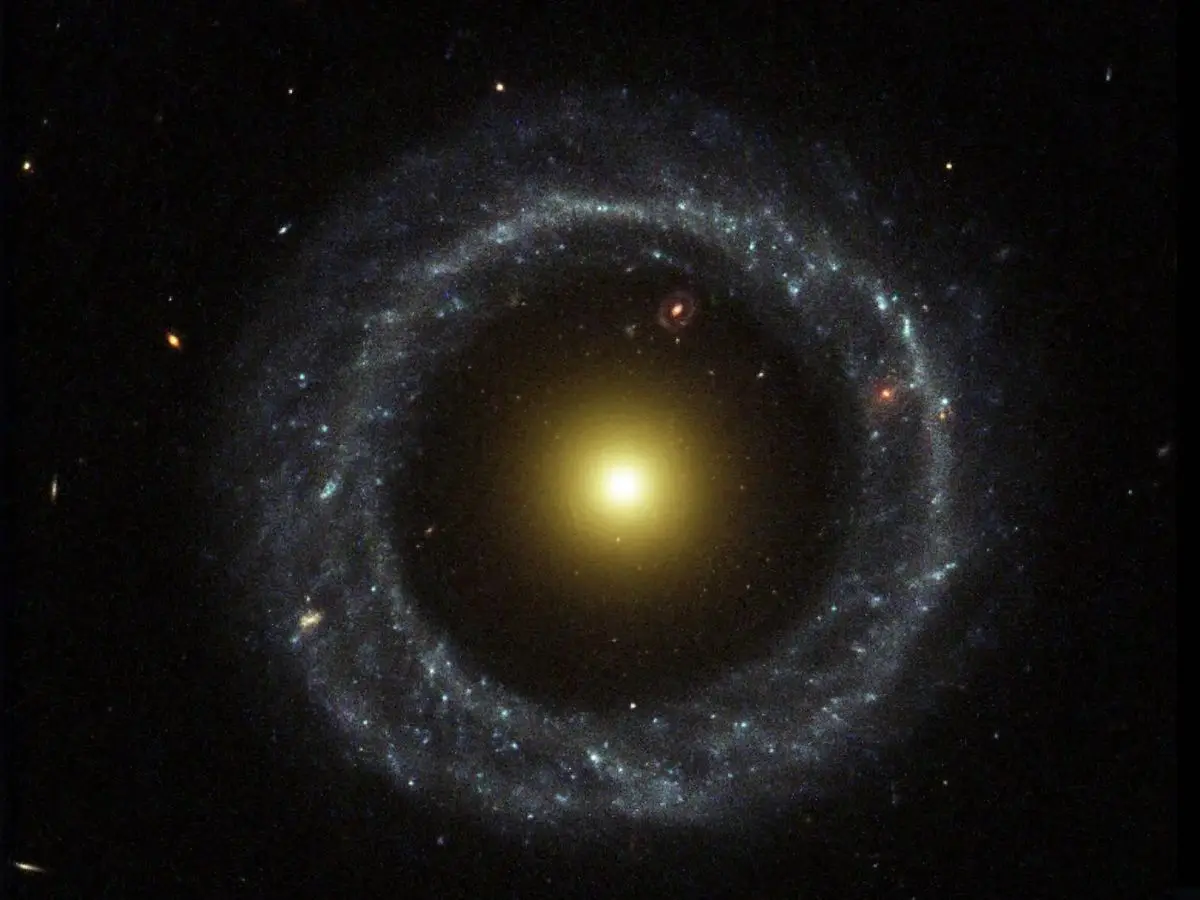
Hoag’s Object is an exceptionally rare ring galaxy: a glowing circle of young blue stars surrounding a red, centrally isolated core, with an empty gap in between. Astronomers still debate how such symmetry formed, possibly through a past collision or accretion, with no conclusive theory yet.

Galaxy in bloom — petals in space
ESO 381-12 appears to blossom in the void: its uneven, petal-like arcs extend from a lenticular core. These ghostly formations may stem from a relatively recent galactic collision, generating shockwaves and fresh fuel for star formation.
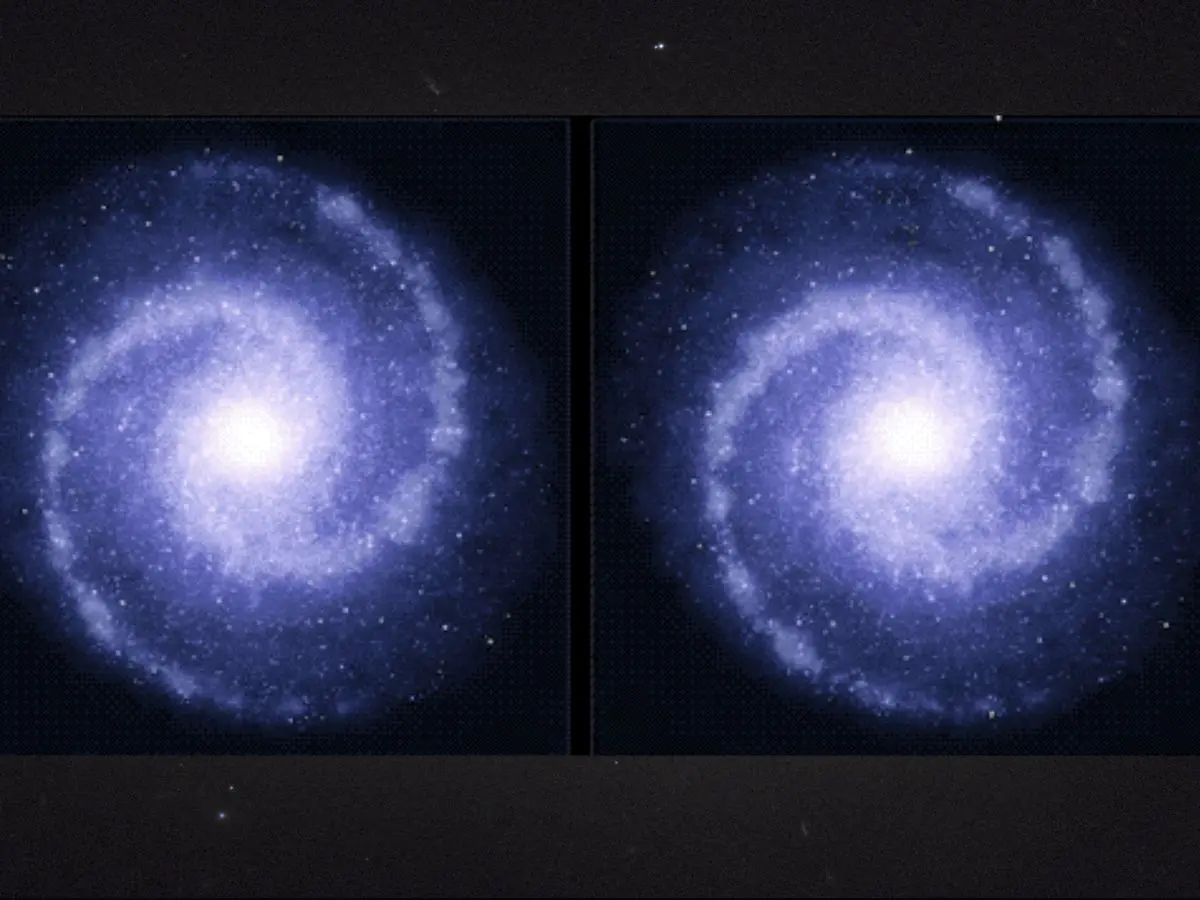
Prolate rotators — cosmic spindles
Prolate rotator galaxies are extremely elongated and rotate around their long axis, rather than the typical short spin of spiral galaxies. These cigar-shaped formations are believed to form when two large spirals collide at right angles, resulting in a rare, spindle-like structure. Only about 20 are known.
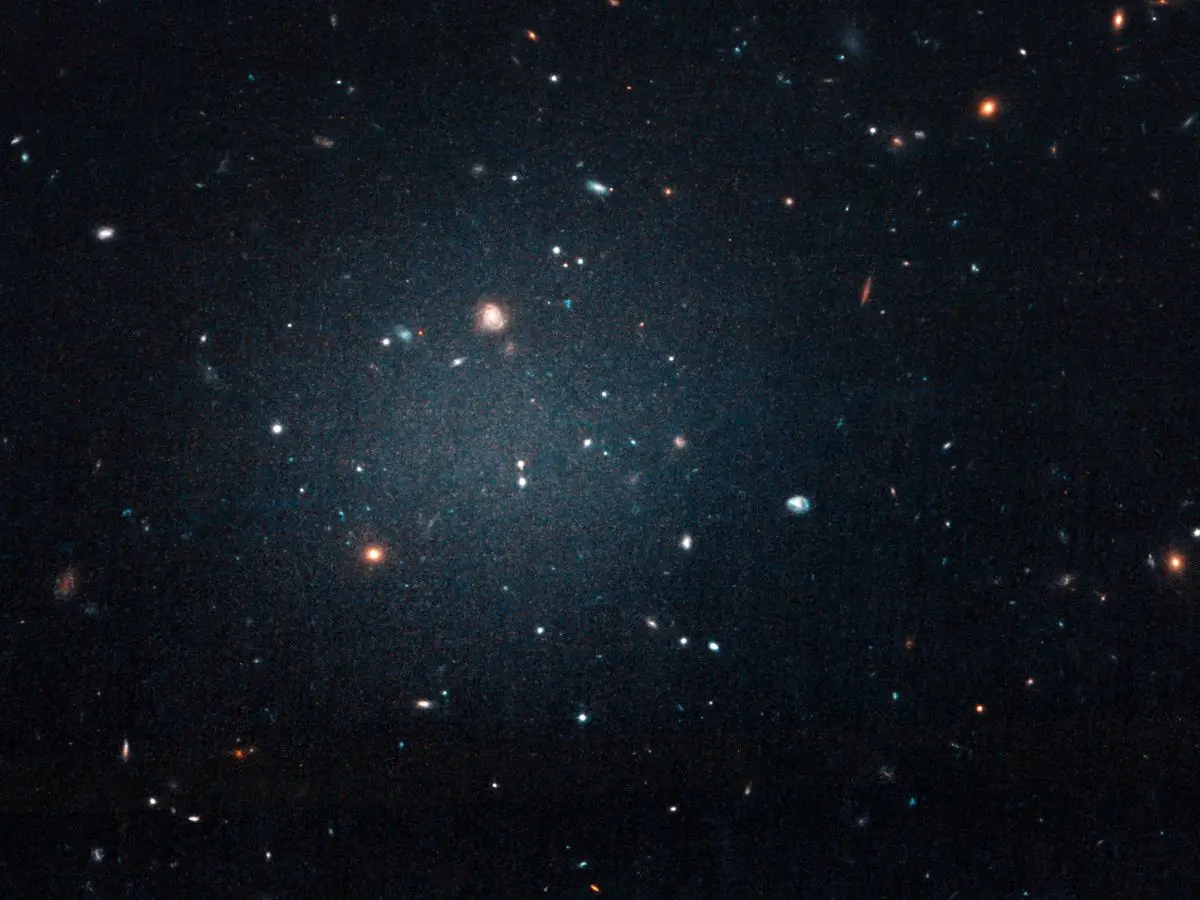
Galaxy without dark matter — challenging convention
NGC 1052-DF2 (and similarly AGC 114905) appear to possess little to no dark matter, a shocking anomaly that contradicts standard models of galaxy formation, which rely on dark matter as structural glue. These observations force astrophysicists to reconsider fundamental assumptions.
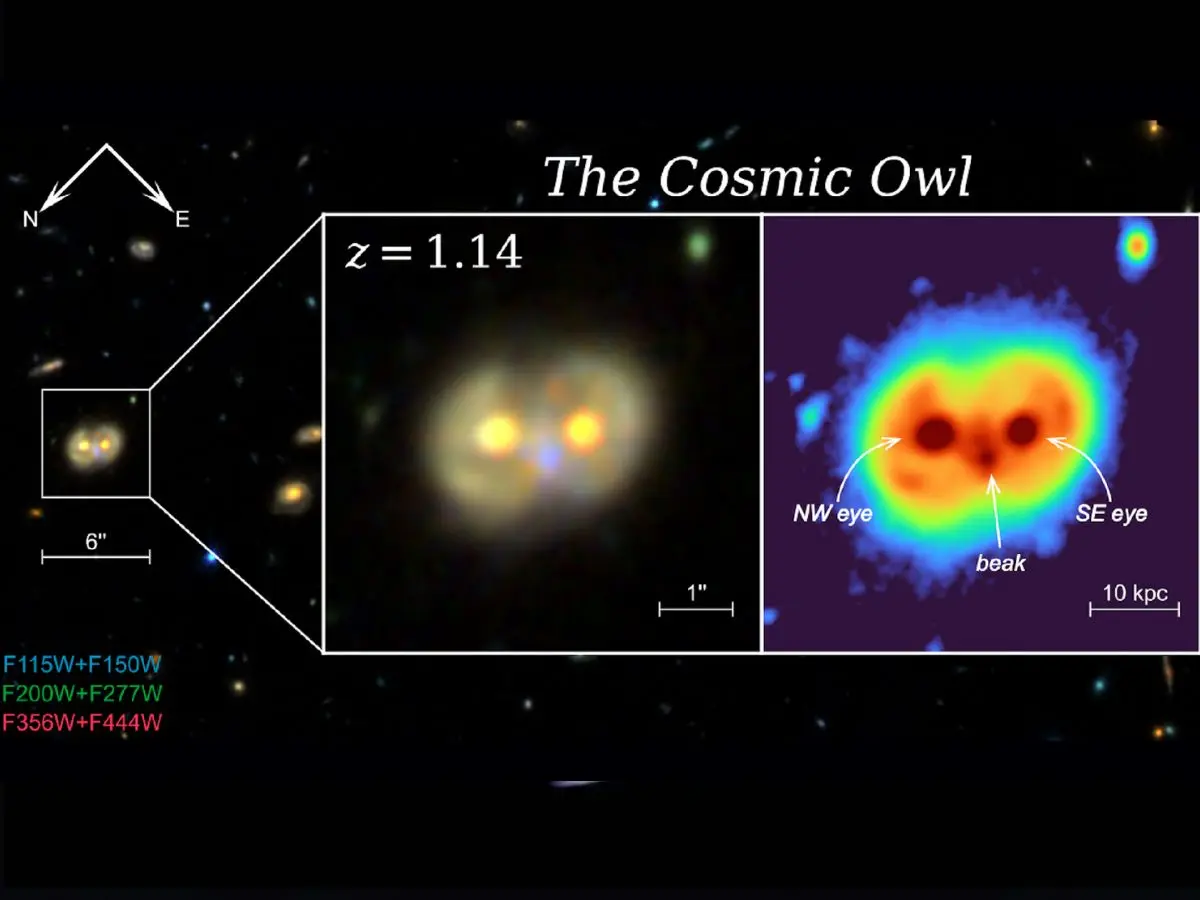
Cosmic Owl — twin-ring collision spectacle
Captured by James Webb, the 'Cosmic Owl' is a breathtaking structure where two ring galaxies collide, resembling an owl’s face with dual 'eyes' from active galactic nuclei and a molecular gas-rich 'beak'. Such twin-ring formations are extraordinarily rare and provide unique insight into early, universe star formation and galaxy evolution.
)
)
)
)
)