Su-57 fighter jet: 10 components designed specifically for a low-radar profile

Russia’s Su-57 uses advanced shaping, special coatings, internal bays, and new engine nozzles to reduce radar detection from multiple angles. With future upgrades coming, the fighter promises even deeper stealth abilities. Here’s how its design hides it from enemy sensors.
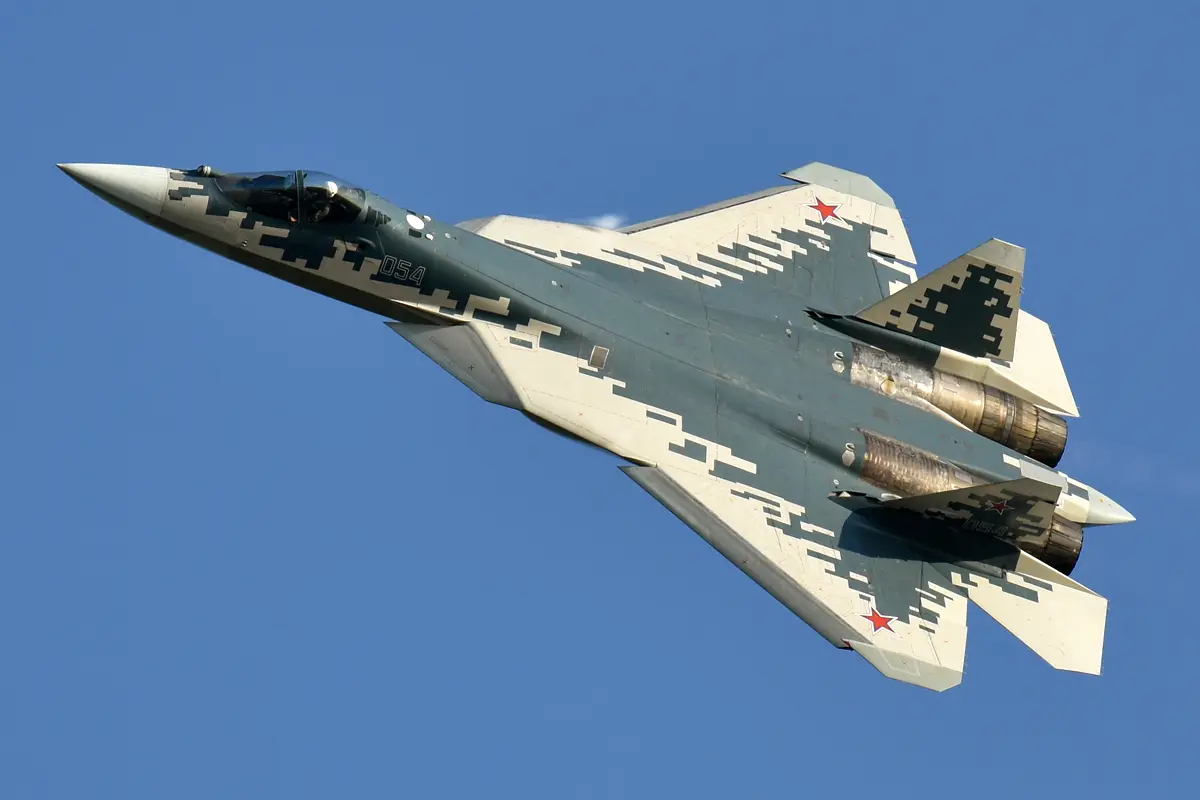
Angled Planform Edges Redirect Radar Waves
Su-57's wings, control surfaces, and skin panels feature carefully angled edges reflecting radar waves away from enemy sensors. Leading and trailing edges are serrated, breaking up radar reflections. This shaping reduces radar cross-section by approximately 30 times compared to Su-27's 10-15 square metre signature.
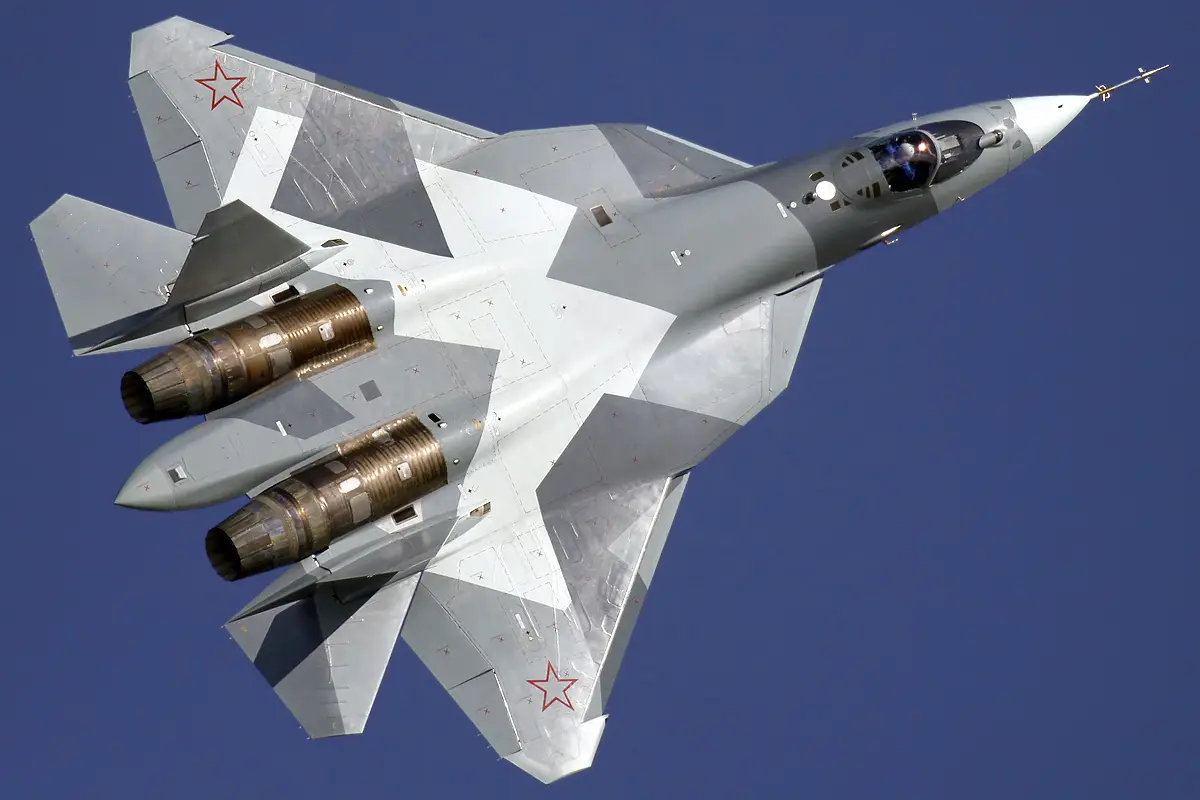
Advanced Canopy Coating Reduces Cockpit Signature by 30%
The Su-57's canopy uses 70-90 nanometre metal oxide layers with enhanced radar-absorbing properties. This innovation halves canopy weight while reducing cockpit radar return by 30 per cent and blocking ultraviolet and thermal radiation exposure. Production coating doubles radar absorption compared to earlier designs.
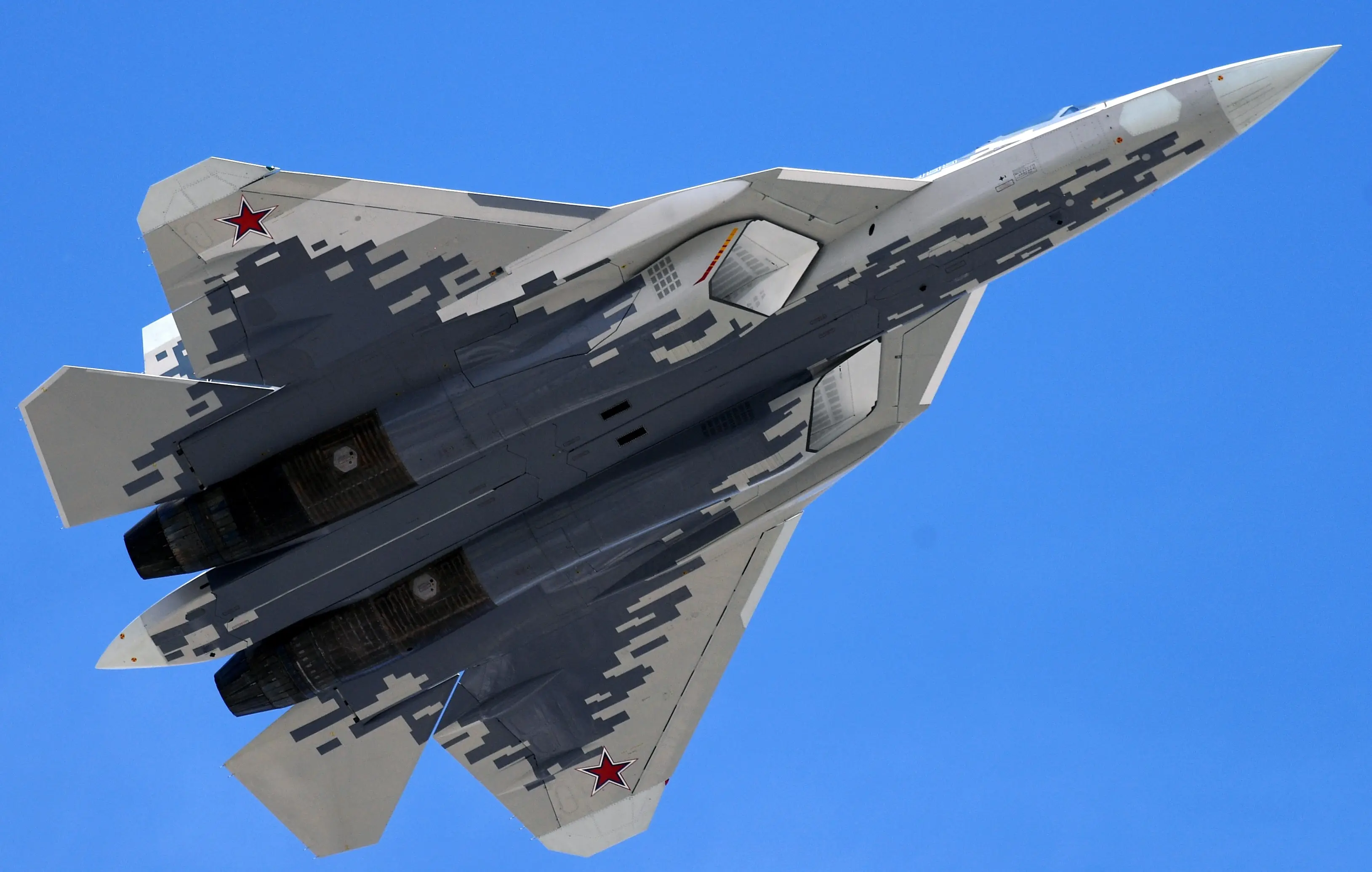
Four Internal Weapons Bays Preserve Stealth Shape
Su-57 features two large tandem weapons bays between engines and two smaller canoe-shaped side bays at wing roots. Internal carriage keeps missile cross-sections hidden from enemy radar. Each bay carries missiles with 4.3-metre maximum length, preserving aerodynamic profiles necessary for stealth.
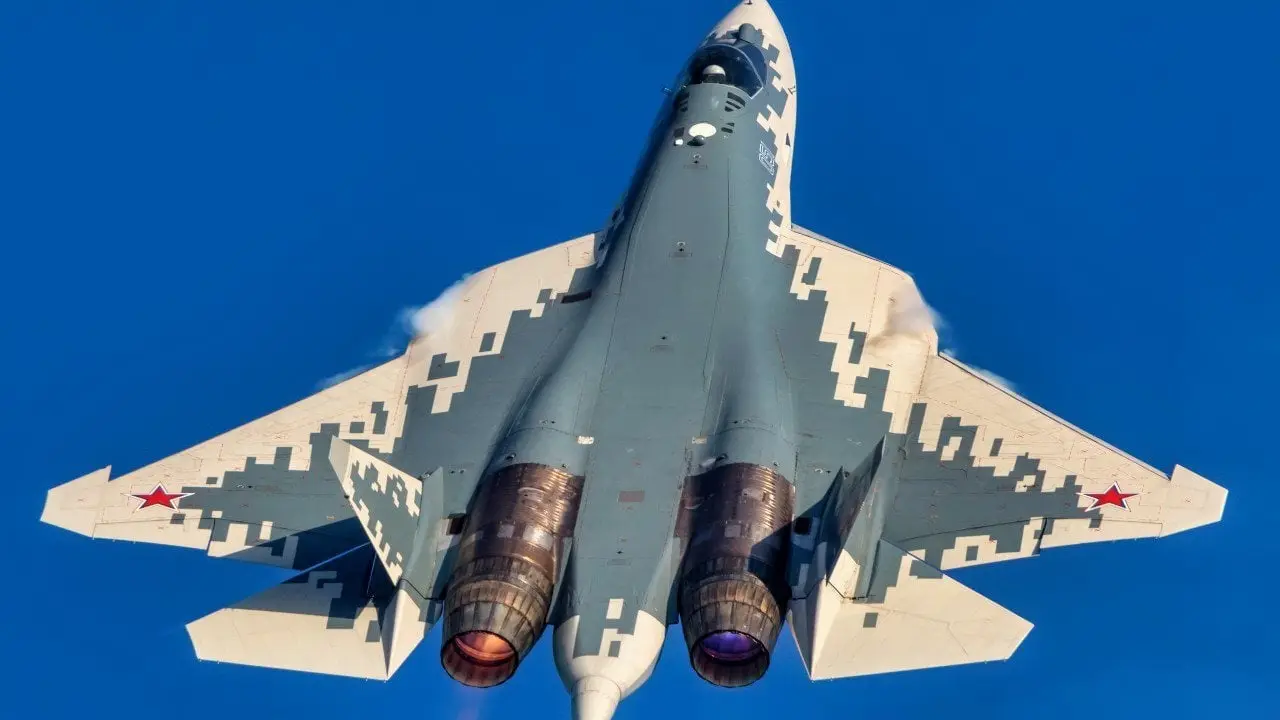
Flat 2D Thrust-Vectoring Nozzles Replace Round Designs
Su-57E features new flat rectangular nozzles instead of traditional circular designs. Flat geometry deflects radar waves rather than reflecting them back, reducing nozzle radar signature. Trapezoidal outlet geometry with smooth transitions minimises radar reflectivity whilst maintaining thrust control.
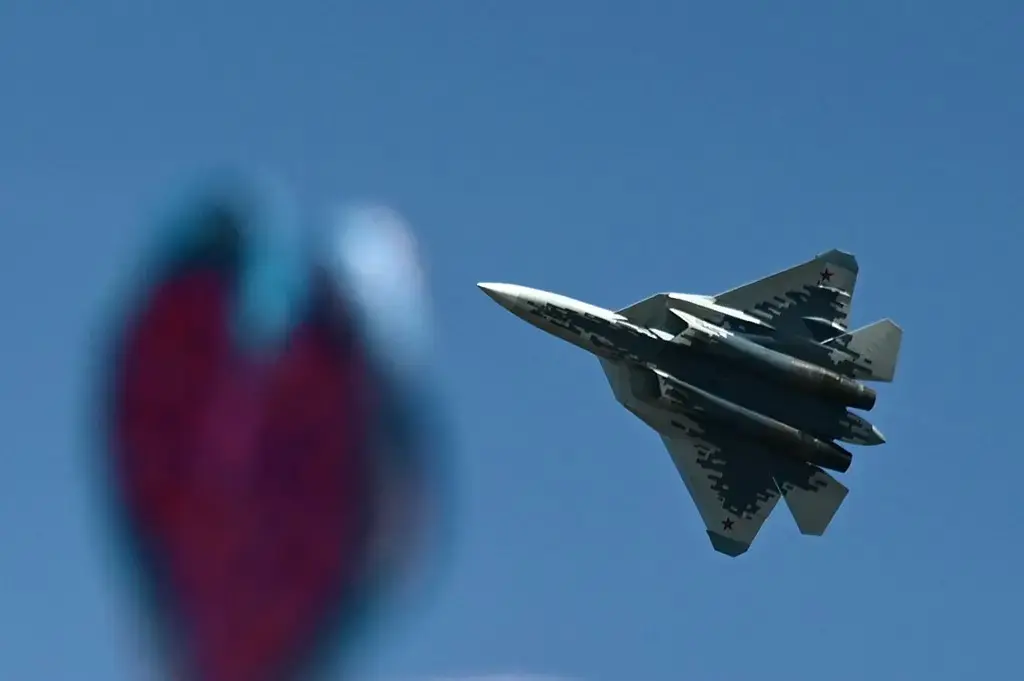
Radar-Absorbing Material (RAM) Coating Layers
Su-57 applies composite RAM coating containing ferrite particles and metal-filled polymers absorbing X-band radar frequencies. Carbon-based materials enhance microwave absorption. Coating thickness ranges from 3-10 millimetres, requiring precise application across critical airframe surfaces for maximum effectiveness.
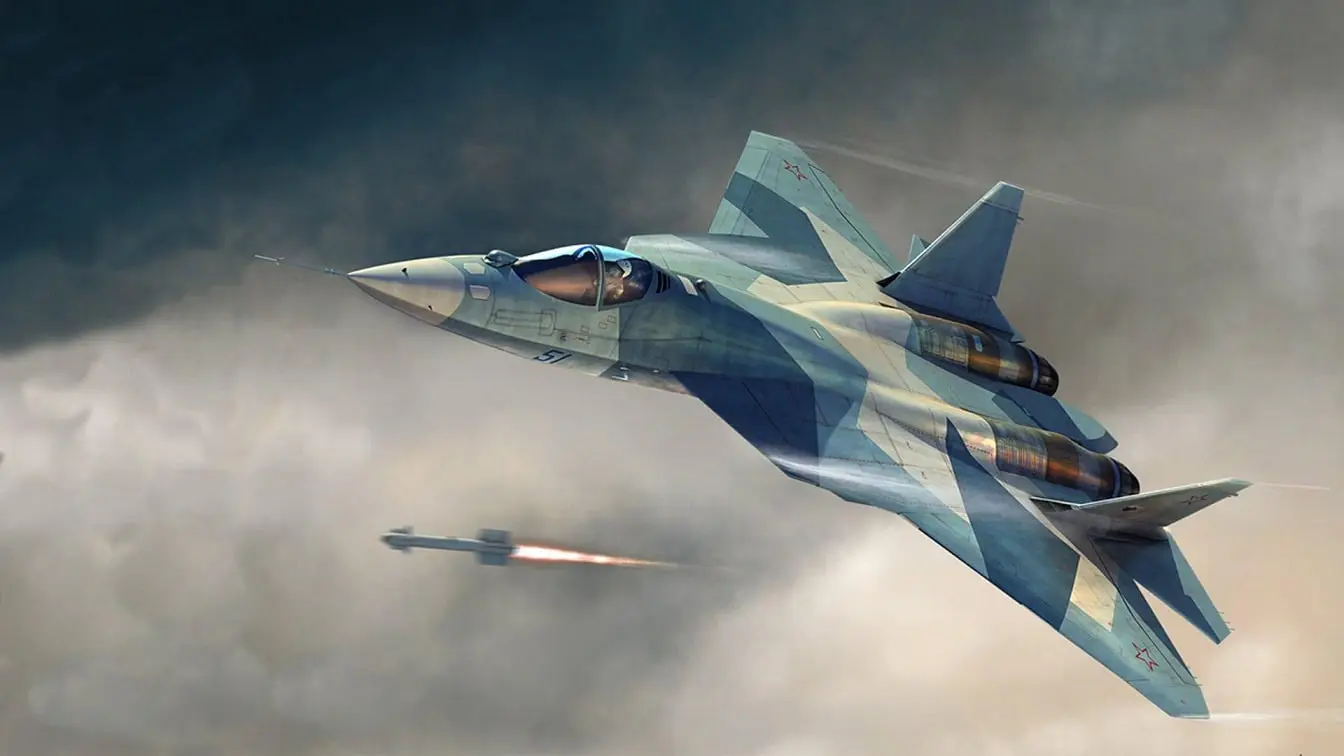
Moveable Leading-Edge Extensions Control RCS
Su-57's leading-edge extensions move to optimise radar cross-section at different flight angles. This variable geometry allows pilots to streamline surfaces for stealth or deploy extensions for enhanced manoeuvrability depending on tactical requirements. Leading-edge control significantly impacts radar signature variation.
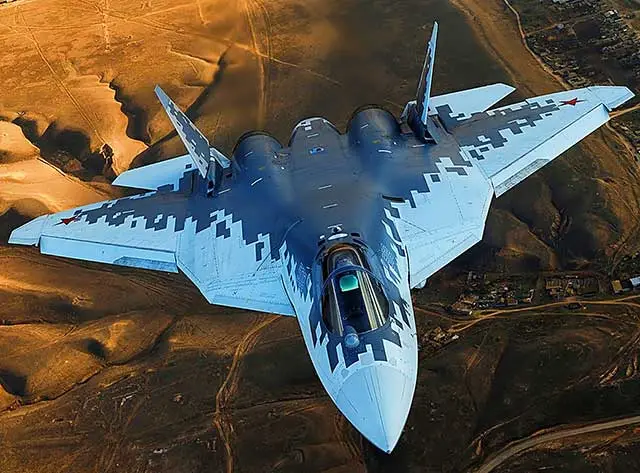
Radar-Absorbent Compartment Edges Eliminate "Freak Waves"
Internal compartment edges containing radar arrays feature specialised radar-absorbing coatings preventing freak wave amplification. These coatings absorb electromagnetic waves that would otherwise amplify and create detectable radar signatures. Careful internal design prevents unintended radar reflections.
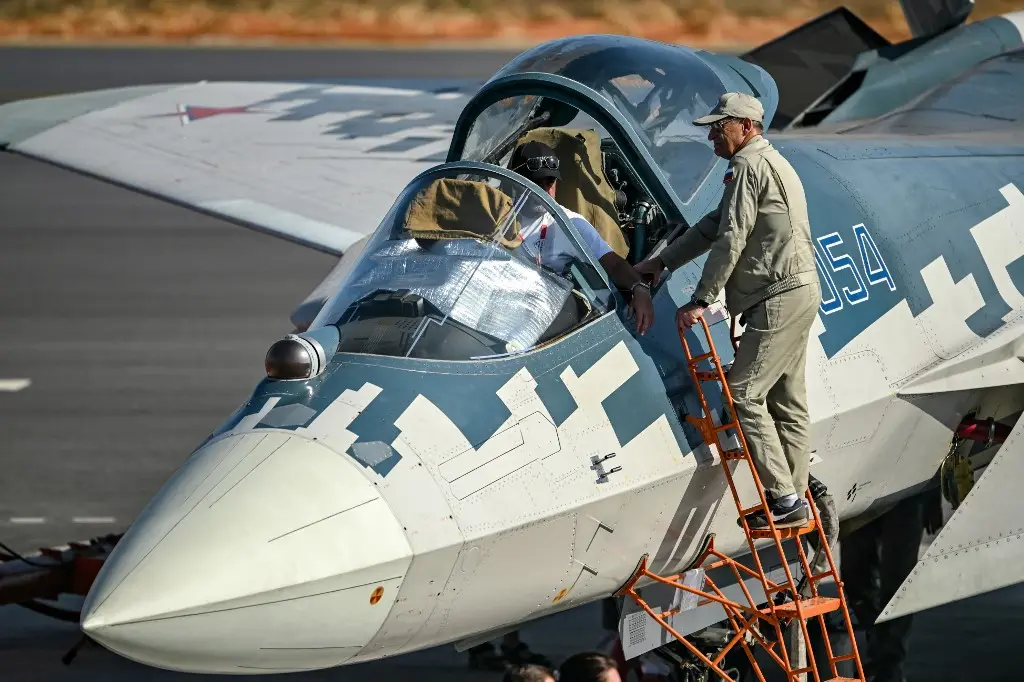
Low-Observable Fuselage Shaping Reduces Frontal Aspect
Su-57's fuselage shape reduces radar reflectivity from all angles, particularly the critical frontal aspect where enemy fighter radars operate. Streamlined chines, blended wings, and minimised surface discontinuities eliminate radar-reflecting corners. Tolerances are significantly tighter than previous Russian fighters.
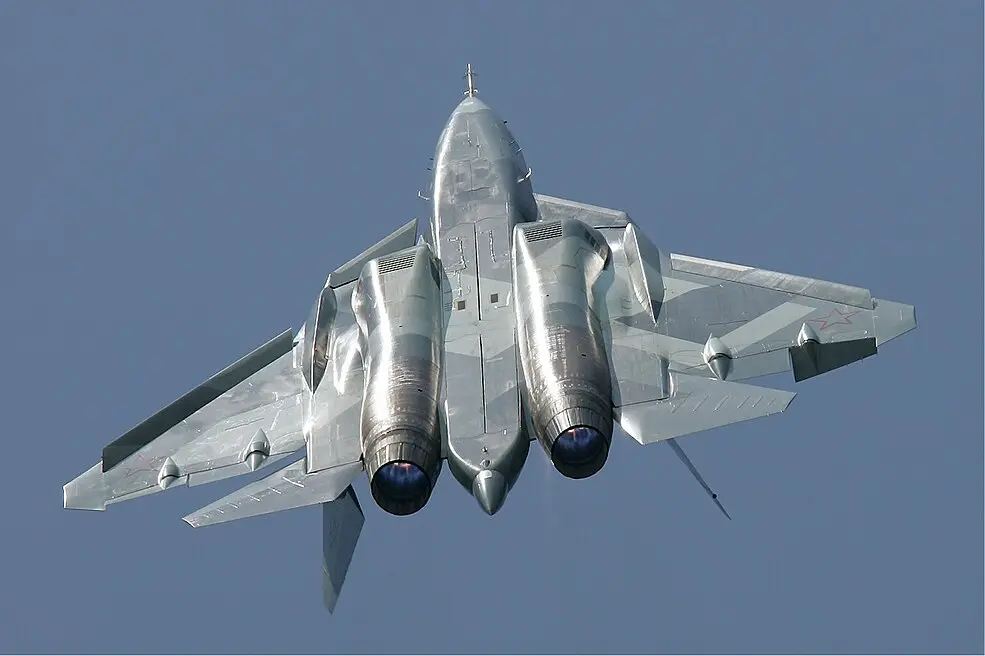
Serrated Skin Panels Break Up Radar Reflections
Precise serrated edges on all external skin panels scatter incoming radar energy into multiple directions rather than reflecting concentrated signals. Spacing and depth of serrations target specific radar frequencies. Combined with angled surfaces, serrations reduce detectable radar reflections substantially.
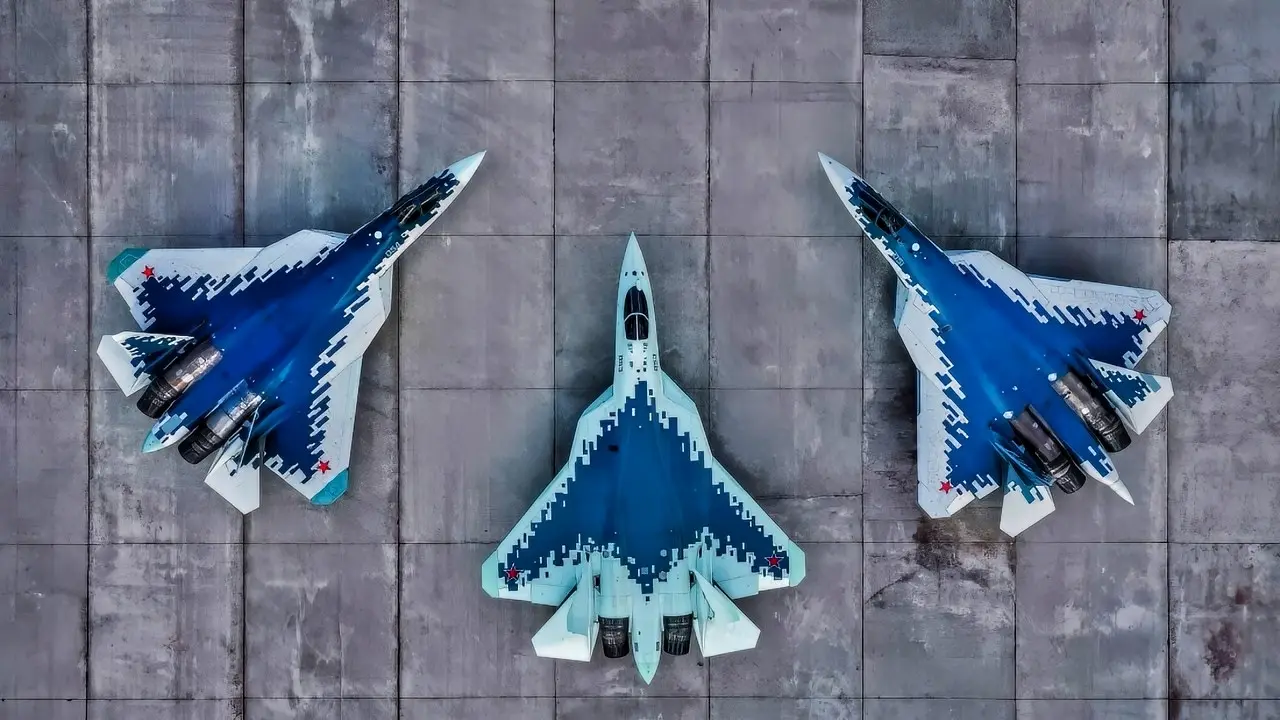
Future Metamaterial Coatings and Enhanced RAM
Russia develops advanced composite materials with multi-band radar absorption capabilities for next-generation upgrades. Metamaterial structures integrate mechanical strength with enhanced electromagnetic absorption. Future Su-57M variants will incorporate improved RAM coatings reducing radar signature even further.
)
)
)
)
)