Stryker Cyber Attack: What is a “wiper” cyber attack and why is it so dangerous?

A wiper cyber attack permanently erases all system data to cause maximum destruction. The recent Stryker hack shows its danger, as hackers destroyed 200,000 devices globally, halting critical medical supply operations.

Destructive Wiper Attack Explained
A wiper cyber attack is a highly destructive form of malware designed to permanently erase system data. It overwrites hard drives and deletes operating systems so that computers cannot recover. The primary goal is total operational sabotage rather than financial extortion. This completely breaks the infected devices, forcing companies to replace or factory reset everything.
100 Per Cent Data Destroyed
This type of attack is incredibly dangerous because it causes irreversible damage to critical infrastructure. Victims lose 100 per cent of their local files, digital designs, and communication records in seconds. Rebuilding an entire IT network from scratch requires immense time and capital. Without functional computers, massive corporations are forced to halt all business operations immediately.

200,000 Stryker Devices Wiped Clean
The devastating reality of this threat hit medical giant Stryker on 11 March 2026. Hackers executed a coordinated wipe command that they claim destroyed over 200,000 corporate laptops and smartphones. Employees arrived at work to find their screens completely dark and inaccessible. The sudden IT disruption brought the entire global medical technology firm to an absolute standstill.

Zero Ransom Demanded By Hackers
Unlike typical cyber criminals, the perpetrators did not lock the data to ask for financial payouts. The attackers deployed the wiper malware simply to inflict maximum operational and economic damage. Cybersecurity experts note that state-linked hackers use this tactic during geopolitical conflicts to punish specific nations or corporations. Extortion is never the objective when destruction is guaranteed.
50 Terabytes Stolen By Handala
An Iran-linked hacktivist group known as Handala officially claimed responsibility for the devastating breach. Before pushing the final destruction command, the hackers claimed they successfully extracted 50 terabytes of sensitive corporate information. The group stated they stole critical medical designs and internal emails to expose the corporation. Attackers often steal data first to amplify the overall reputational damage.

56,000 Staff Face Global Outage
The cyber attack completely locked out the 56,000 employees working for the massive enterprise. Staff members were strictly instructed to disconnect all company-issued hardware from the internet immediately. Internal networks, testing systems, and product development software became entirely useless. Management had to rely on alternative messaging applications just to communicate updates to their workforce.

5,000 Cork Workers Sent Home
The disruption heavily impacted the major European manufacturing hub located in Cork, Ireland. Over 5,000 employees at these facilities were forced to stop working and return home early. Production lines for essential surgical tools and orthopaedic implants faced immediate delays due to the missing software. Some critical manufacturing machines were halted completely while security teams investigated the breach.

1 Cloud Tool Weaponised Globally
Investigators discovered the attackers did not even use custom malware to erase the massive network. They gained administrative control over Microsoft Intune, a legitimate cloud-based device management platform used by the enterprise. The hackers abused its built-in remote wipe feature to factory-reset all enrolled endpoints simultaneously. This shows how powerful administrative tools can easily become destructive weapons.
79 Countries Hit Simultaneously
The scale of the digital destruction was immense, with the hacker group asserting they forced the company to shut down offices across 79 different countries. Reports confirmed that employees in the United States, Australia, Ireland, and Costa Rica all reported identical device failures at the same time. The attackers used the centralised cloud system to push the wipe command globally in mere minutes. Interconnected corporate networks quickly became a single massive point of failure.
25 Billion Dollar Medtech Crippled
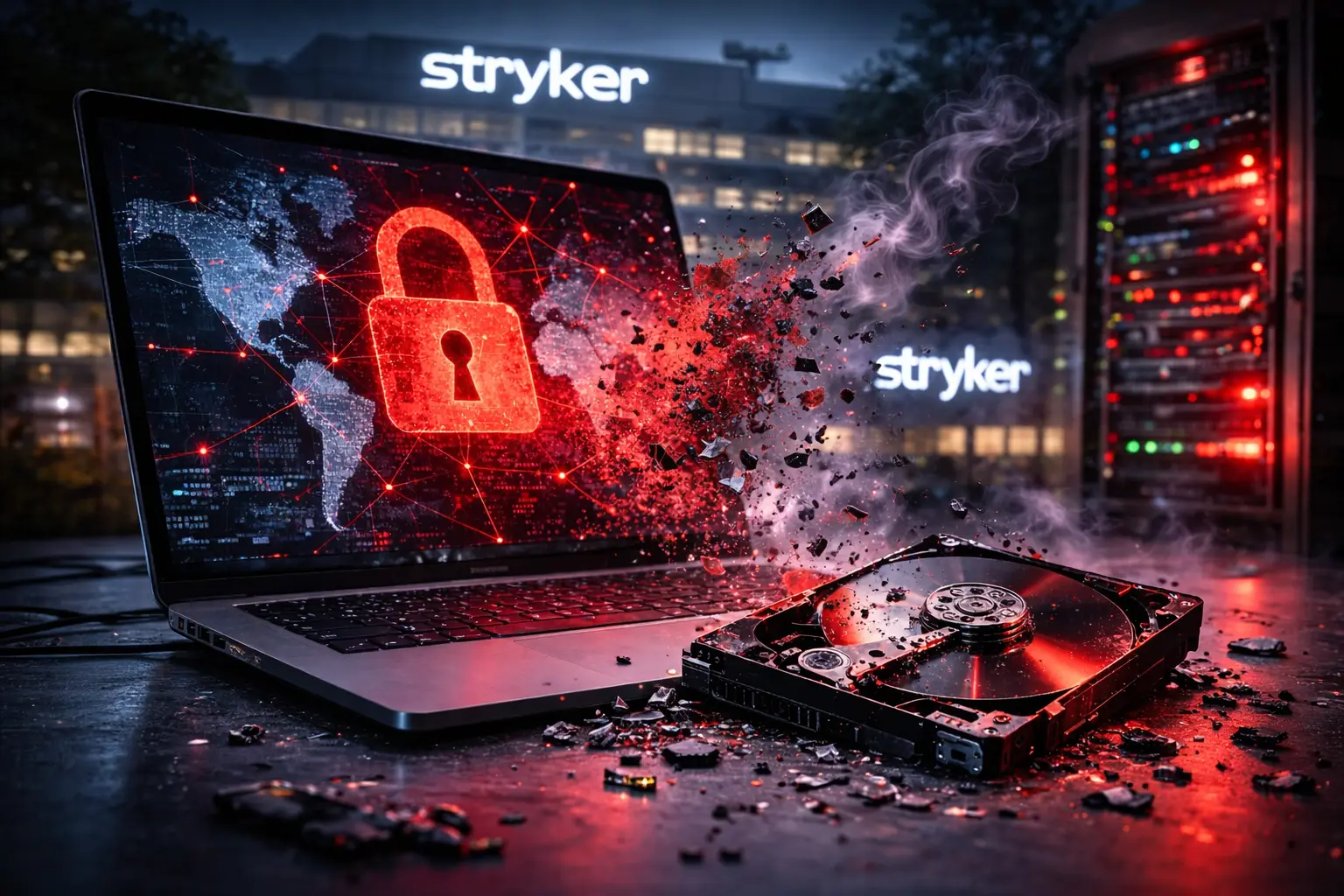
Wiper attacks against a massive 25 billion dollar healthcare manufacturer pose a severe risk to public safety. Stryker supplies essential robotic surgery systems and hospital beds to medical facilities worldwide. Extended outages in product design and supply chain management will easily delay life-saving procedures in international hospitals. This incident clearly demonstrates how civilian healthcare infrastructure remains highly vulnerable to cyber warfare.
)
)
)
)
)