'Stop the war. I don't want to die': Ukraine children recount invasion through emotional art

Russia-Ukraine war
Russia launched a full-scale invasion of its neighbouring country Ukraine, terming it a "special military operation" on February 24 this year. The conflict expanded significantly, with Russia's aggression versus Ukraine's resistance.
The war led to a massive humanitarian crisis as the global leaders are urging to bank on diplomatic channels to solve the crisis as they have expressed concerns and shock at escalating violence, massive displacement, deaths and destruction.
The humanitarian situation in Ukraine continues to deteriorate at an alarming scale and speed of displacement not seen since the Second World War.
Ever wondered what the kids might be going through? Take a look at the photos.
Paintings by Ukrainian children
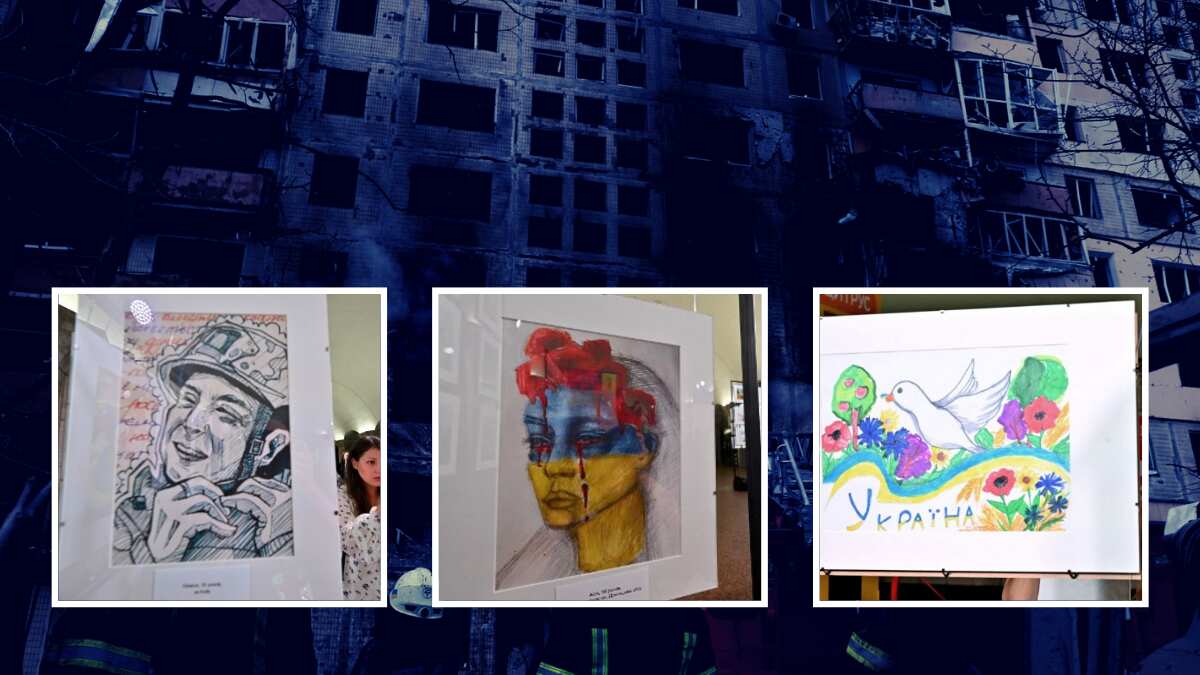
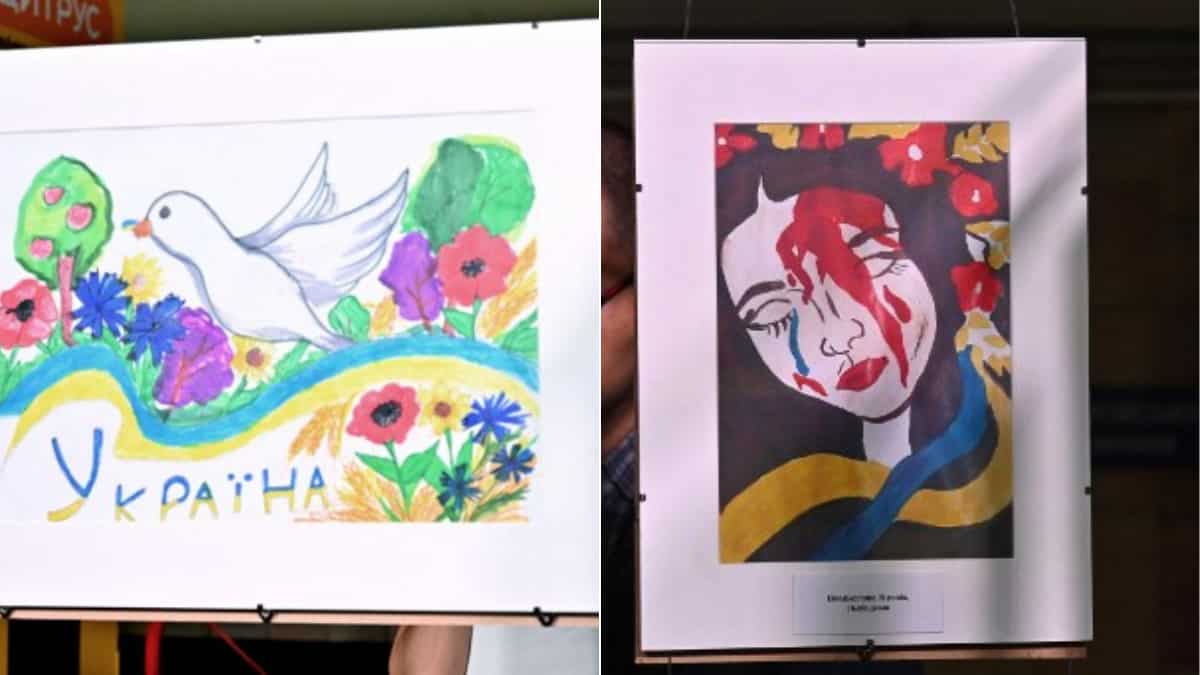
A woman's portrait painted in blue and yellow - the colours of the Ukrainian flag - and streaked with blood-red paint is among 300 pictures by Ukrainian children displayed in a Kyiv bomb shelter Friday.
'Stop the war'
Olena Sotnyk, a Ukrainian politician and advisor to the prime minister said: "It's worth reminding adults - the whole world - that children see all this, experience it, feel it. And unlike us, they can't make decisions."
Sotnyk who is also the exhibition's organisers also said, "They expect adults and the world to act to stop the war."
'Children. War. Future'
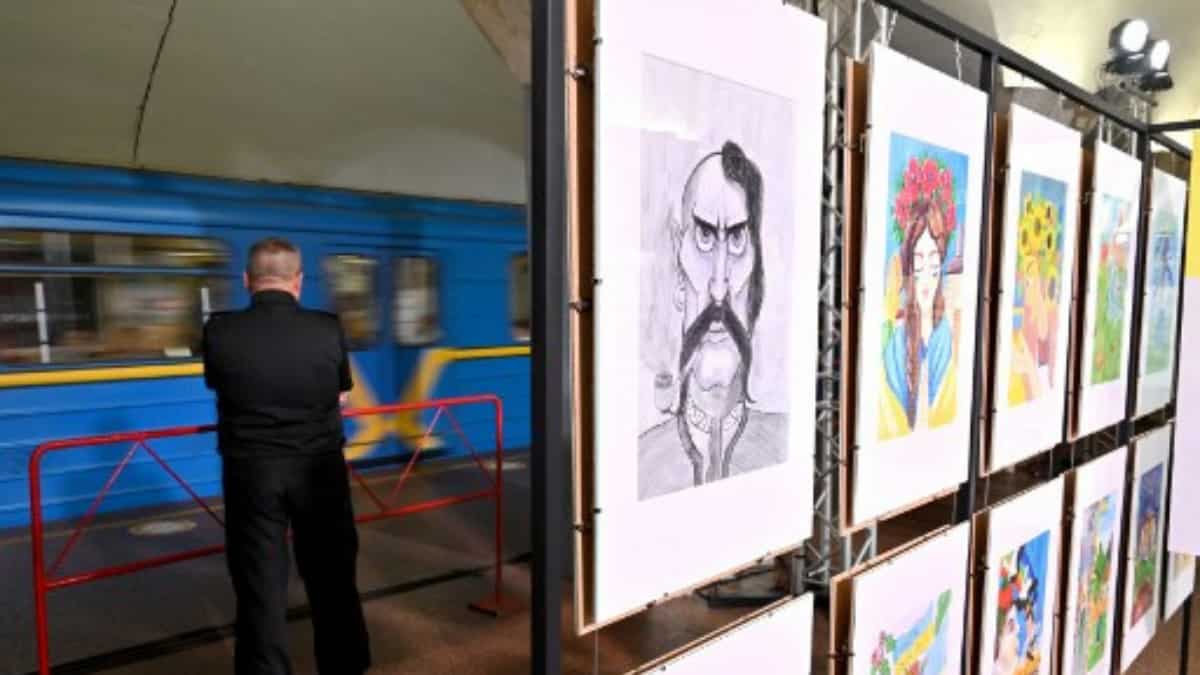
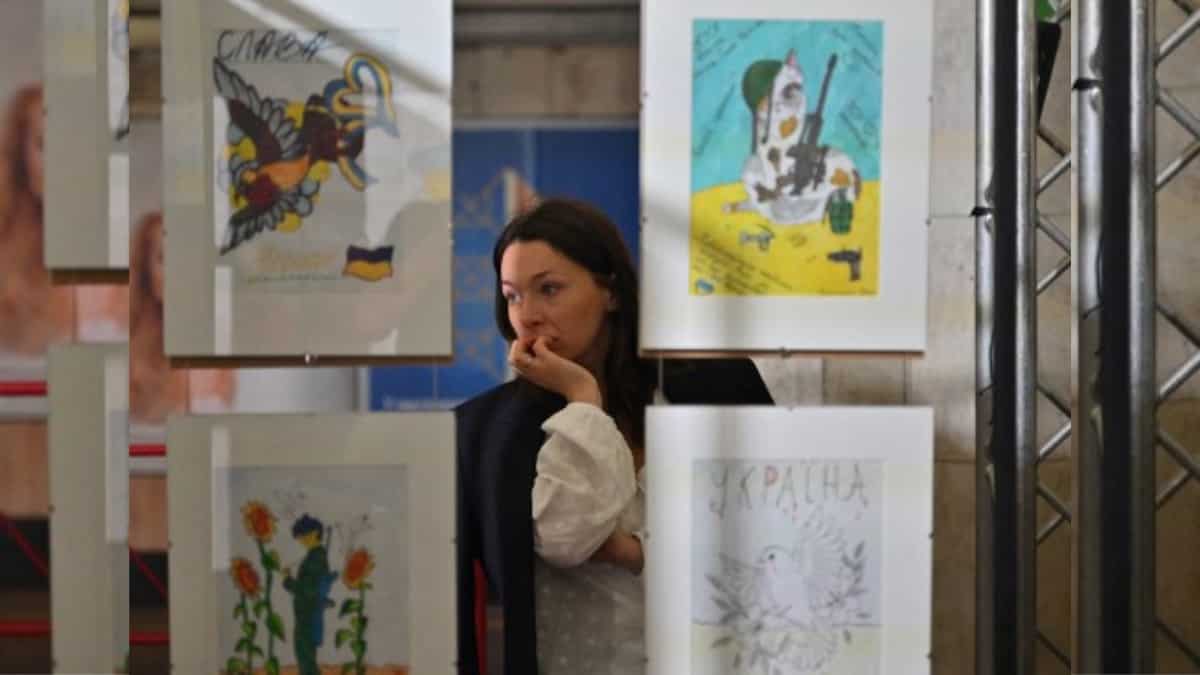
The exhibition, titled "Children. War. Future", opened to journalists Friday in a central Kyiv metro station that has been closed since the beginning of Russia's invasion on February 24.
The Maidan Independence stop has instead functioned as a bomb shelter beneath the site of massive pro-democracy protests in 2014 that toppled Ukraine's Kremlin-friendly leader.
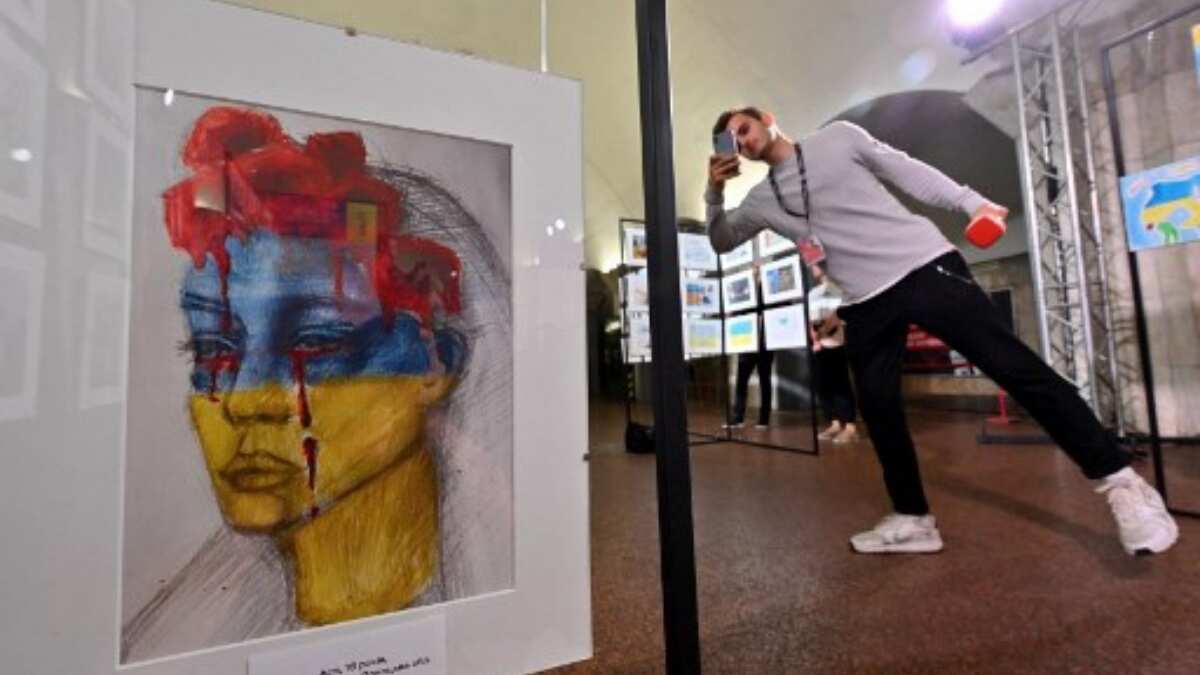
Paintings depict horrors
The paintings by Ukrainian children from across the country depict horrors from places like Mariupol -- a city brutally besieged and bombed by Russian forces -- and Bucha, one of the first towns where civilians were found killed en masse.
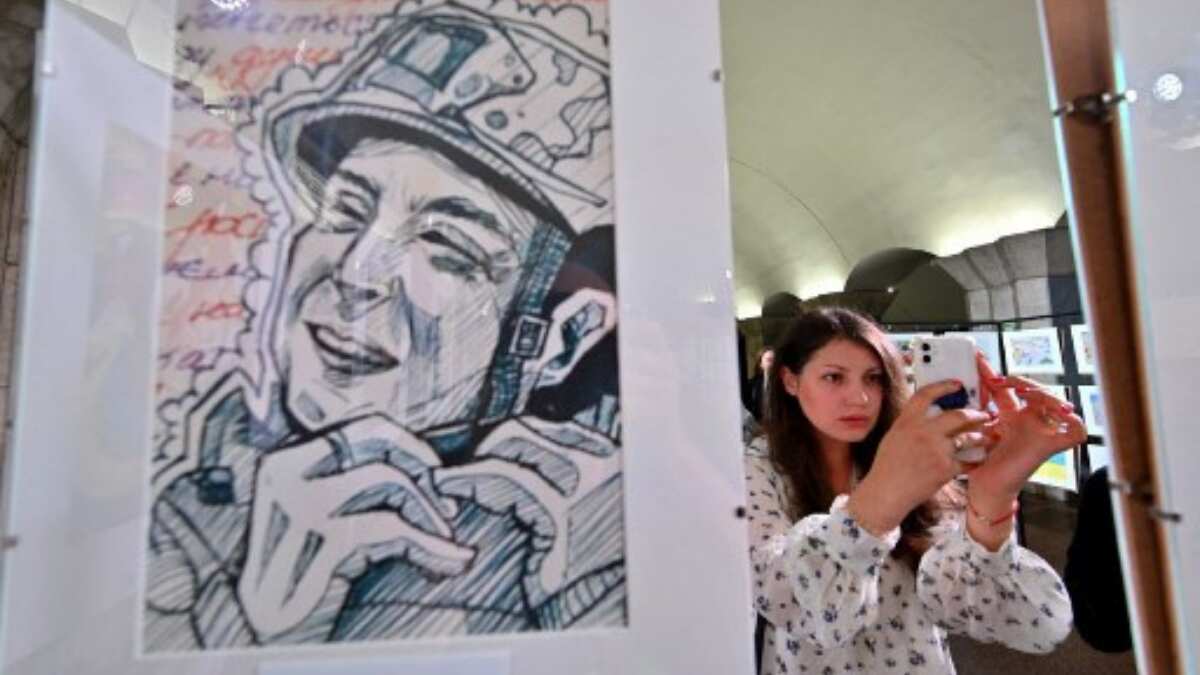
Some paintings are optimistic
Others are optimistic: a smiling soldier straps on a helmet, a woman wears a blue and yellow wreath of flowers with a dove surrounded by multicoloured flowers.
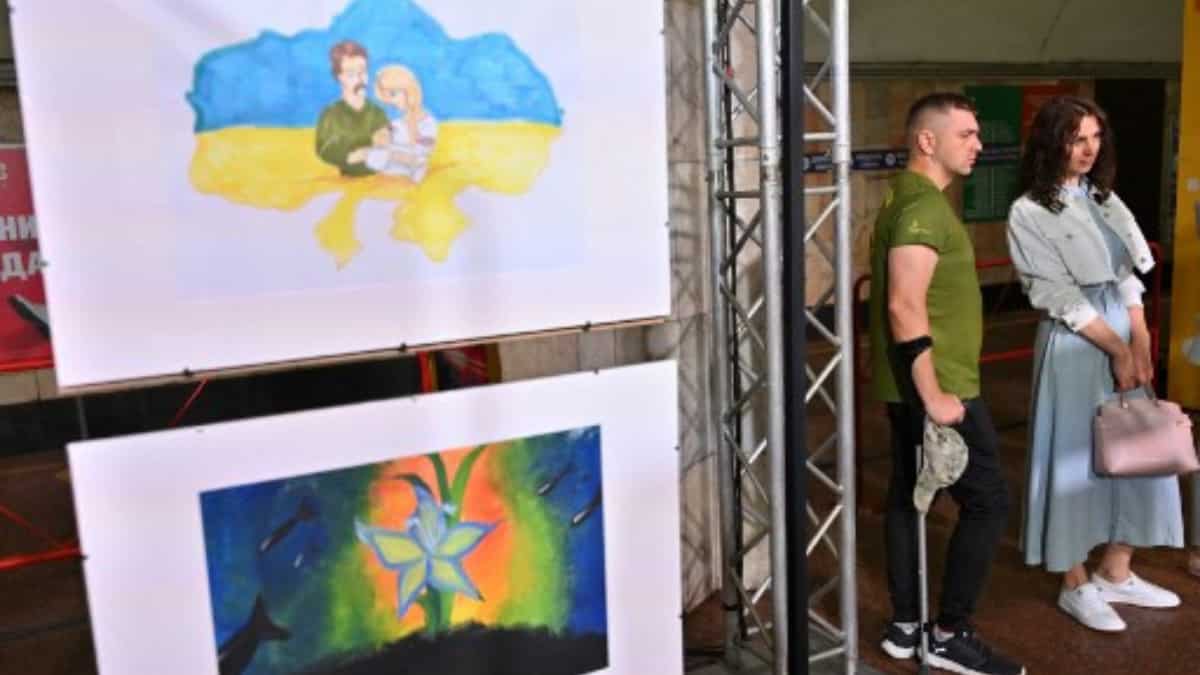
What do these kids feel?
But the captions are unambiguous: "No to war," "I don't want to die."
"What these children feel is the fear of war, anxiety. But on the other hand, there is faith, hope, support, understanding that there will be bright days in the future," said Danylo Tsvyok, who was also involved in staging the collection.
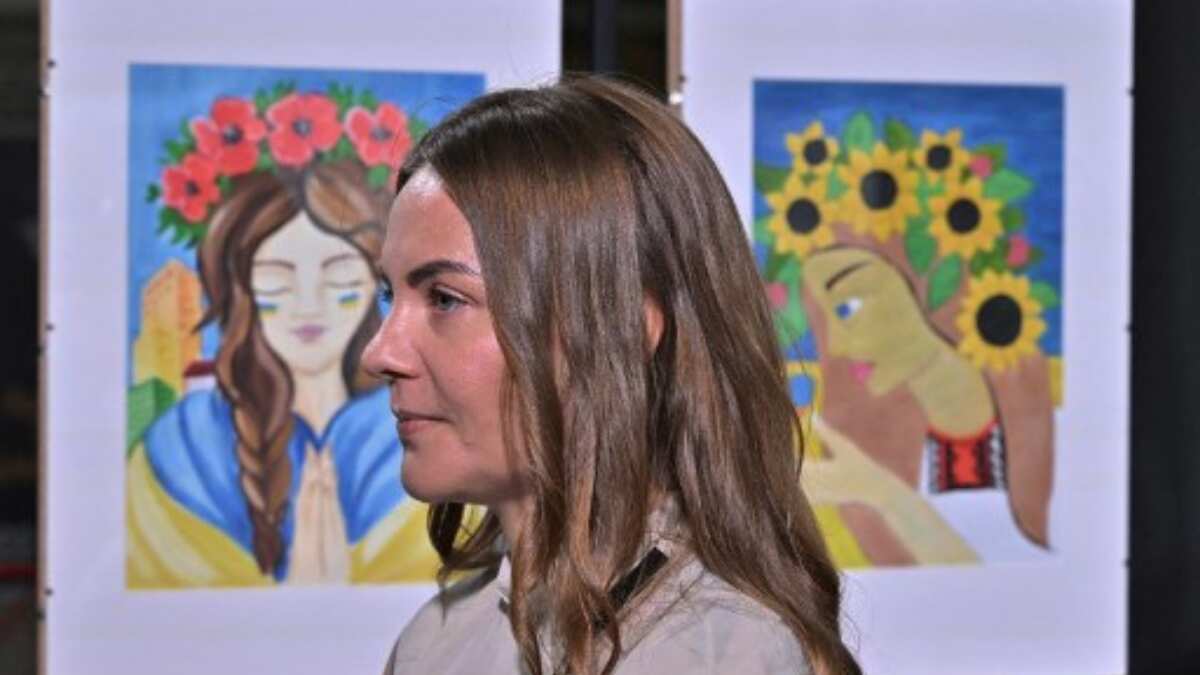
Plans for digital exhibition
Sotnyk said there were plans in place to create a digital exhibition of several thousand images by children reflecting on the conflict.
)
)
)
)
)