• Wion
  • /Photos
  • /Stay hidden from Russian satellites? How technologically advanced is the USS Gerald R. Ford

Stay hidden from Russian satellites? How technologically advanced is the USS Gerald R. Ford

The USS Gerald R. Ford cannot become invisible to satellites, but it can dodge them using orbital physics and speed. By tracking Russian satellite orbits, sailing at over 30 knots, and enforcing radio silence, the carrier easily hides in the vast ocean.


The Needle in a Haystack Strategy
1 / 7

The Needle in a Haystack Strategy

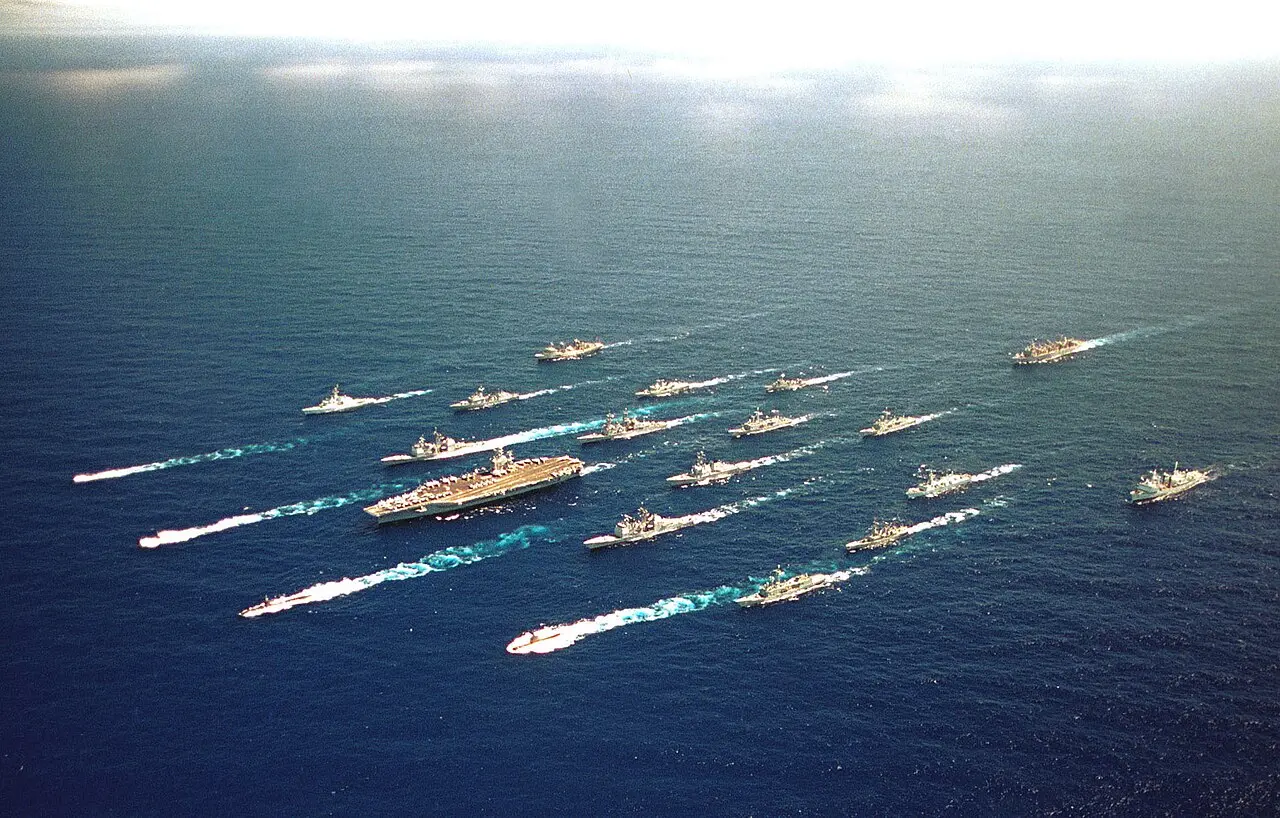
Despite displacing roughly 100,000 tonnes, the USS Gerald R. Ford is just a tiny speck when compared to the millions of square miles of open ocean. Without a constant electromagnetic tracking signal to guide them, Russian optical satellites are forced into a mathematically difficult blind search to locate the warship.

Exploiting Orbital Physics
2 / 7
(Photograph: Picryl)

Exploiting Orbital Physics

Spy satellites do not hover over one spot; they travel in highly predictable Low Earth Orbits that only provide brief viewing windows over specific regions. US Space Command tracks these Russian satellite schedules precisely, allowing the carrier strike group to alter its course just before an overhead pass occurs.

Powered by two advanced nuclear reactors
3 / 7
(Photograph: Picryl)

Powered by two advanced nuclear reactors

Powered by two advanced Bechtel A1B nuclear reactors, the supercarrier can sustain continuous speeds in excess of 30 knots (56 km/h). By capitalising on this speed, the ship can physically sprint out of a satellite’s projected viewing footprint before the camera can capture its location.

Going Dark with EMCON
4 / 7
(Photograph: Picryl)

Going Dark with EMCON

Because Russian Electronic Intelligence (ELINT) satellites track ships by listening for radio and radar waves, the Ford utilises strict Emission Control (EMCON). By shutting down active radars, communications, and its TACAN navigation beacons, the carrier stops broadcasting the digital footprint that satellites rely on.

Encrypted and Directional Comms
5 / 7
(Photograph: Wikimedia Commons)

Encrypted and Directional Comms

When communication is absolutely necessary during a satellite pass, the crew uses highly encrypted, low-power directional signals rather than broadcasting omnidirectional radio waves. This frequency-hopping technology ensures that even if a satellite intercepts a brief signal, it cannot accurately geolocate the transmitter's position on the water.

Disappearing Between Passes
6 / 7

Disappearing Between Passes

Once a Russian satellite passes over and captures an empty stretch of ocean, it can take hours or even days for another satellite to revisit that exact area. In that blind window, the USS Gerald R. Ford can travel hundreds of miles in any direction, entirely resetting the enemy's search grid before the next pass.

Blind by oceanic weather systems
7 / 7
(Photograph: Wikimedia Commons)

Blind by oceanic weather systems

While synthetic aperture radar can see through clouds, traditional high-resolution optical spy satellites are frequently blinded by oceanic weather systems. Task force commanders actively use natural meteorological cover, sailing the carrier under massive storm fronts to physically block the visual line of sight from space.