Sequins, skin and politics at Rio's annual carnival celebration

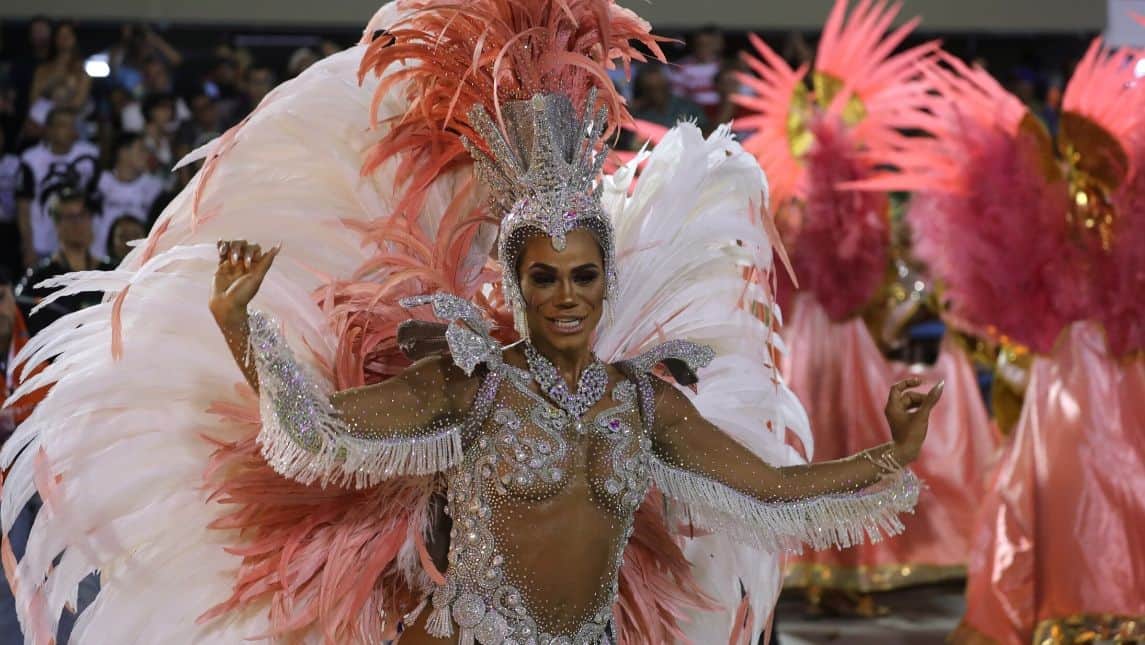
Vying for title
Vying for the title of carnival champions, the city's top thirteen samba schools get around one hour each to wow spectators and judges with elaborate shows flush with scantily clad dancers, small armies of drummers and huge floats built on seemingly impossible feats of engineering.
Environmental catastrophe
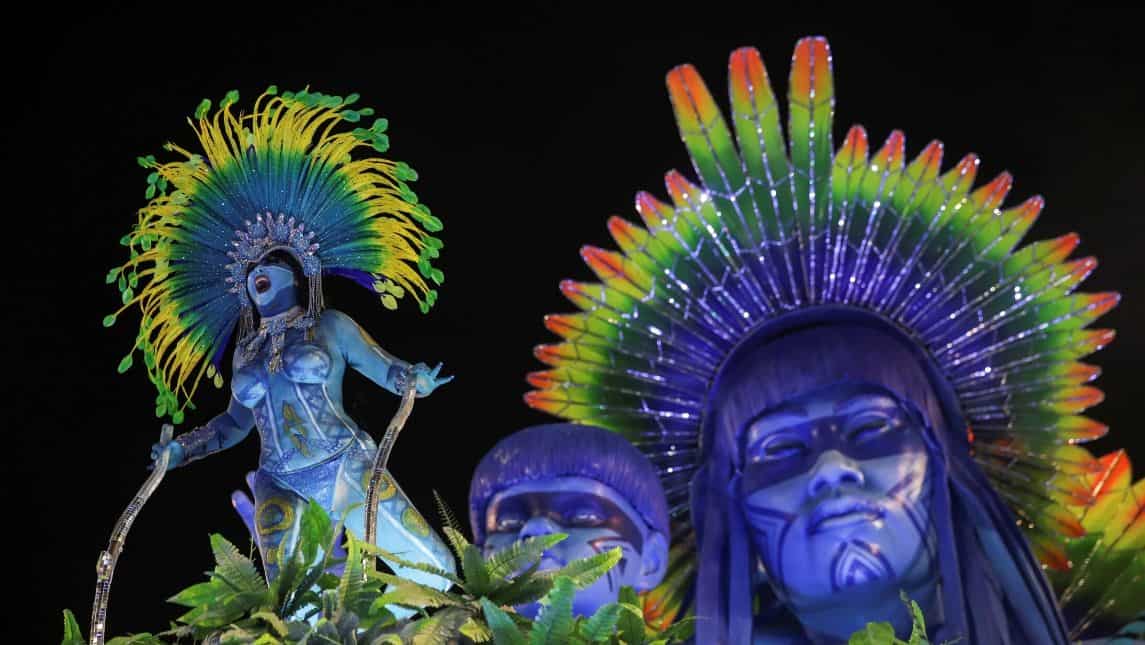
Samba school Estacio de Sa kicked things off the carnival with a show on the theme of "rocks" that featured floats covered in dinosaurs (prehistoric rocks), sparkling diamonds (precious rocks) and, finally, the moon.
It aimed at evoking the Earth turning into a barren, moon-like rock, the kind of environmental catastrophe that critics warn the world could face if Brazil does not do a better job protecting the Amazon.
Deforestation of the Brazilian Amazon increased 85.3 percent in President Bolsonaro's first year in office.

Jibe at Bolsonaro
The event has taken a particularly political turn after a year under far-right President Jair Bolsonaro, who has deeply divided Brazil with his overt attacks on just about every cause close to the carnival community's heart: diversity, gay rights, environmentalism, the arts.
Biblical connotation
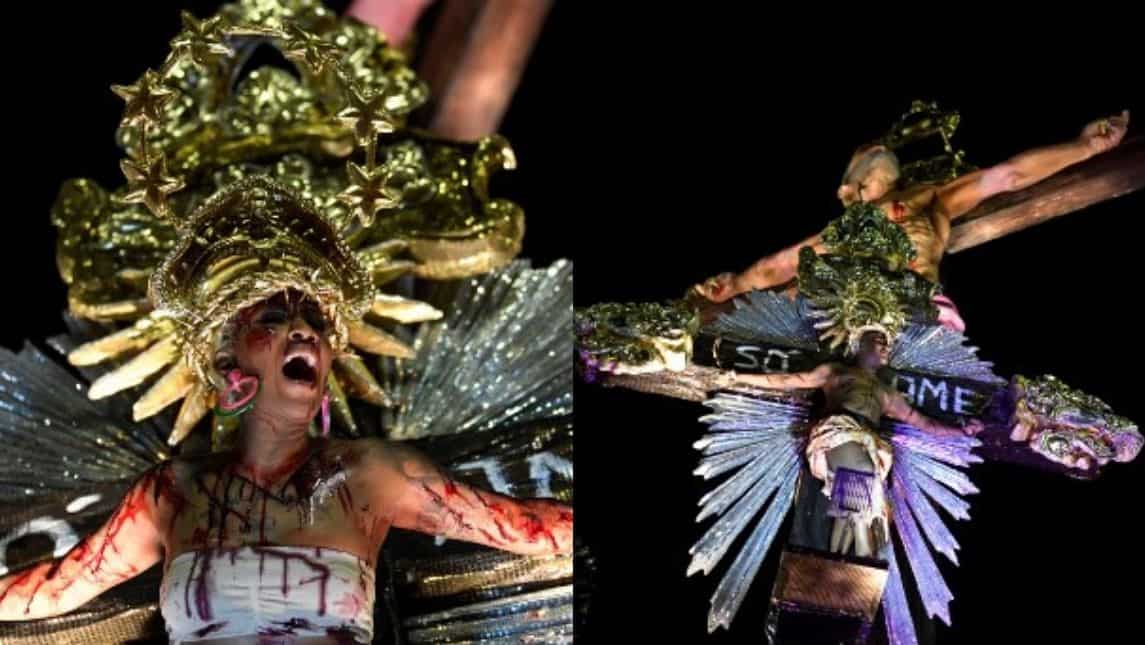
Reigning champions Mangueira then threw religion into the mix.
Their show depicted Jesus returning as a resident of one of Rio's impoverished favela neighbourhoods and preaching a message of tolerance only to be beaten and persecuted by the police.
Mangueira presented various revisionist versions of Jesus including a black man, a woman, a man in eyeshadow and rouge.
Extravagant affair
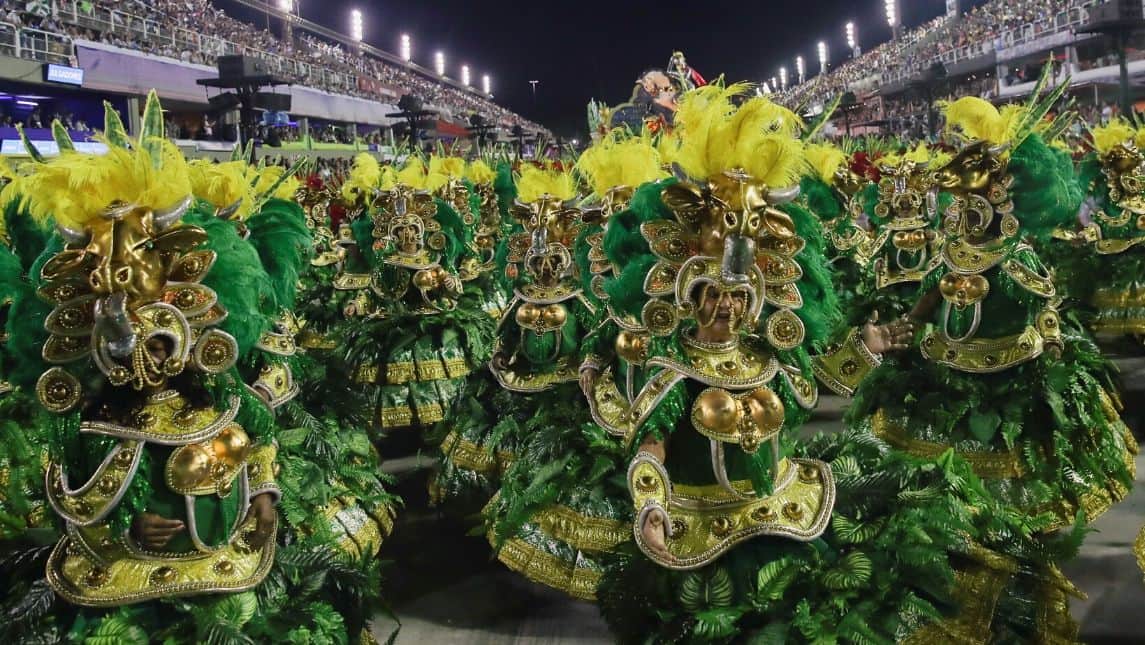
The costumes, floats and choreography of Rio's samba school may change, but they are always sparkling and spectacular, often taking all year and over $2 million to put together.
The spectacle draws a live audience of some 70,000 spectators and millions more watching on TV.
Shade at police violence
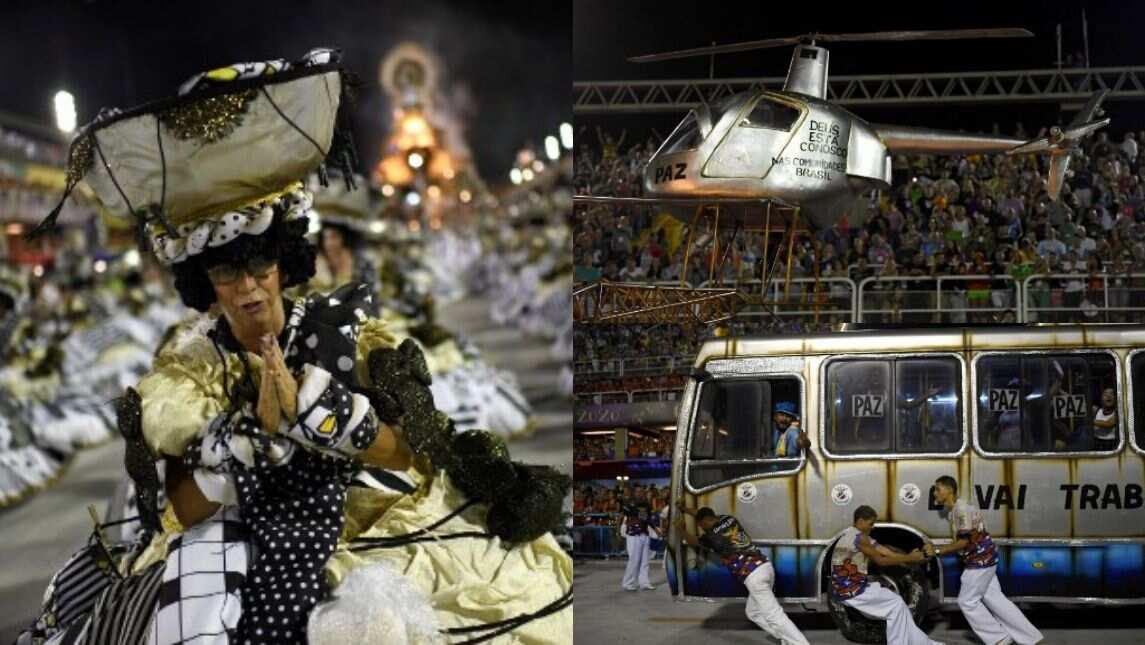
Another group, Uniao da Ilha, also explored the theme of police violence in poor communities, after killings by the authorities in Rio de Janeiro state surged by 18 percent last year, setting a record.
The group's floats were encircled by police helicopters. Instead of firing bullets, though, these helicopters, marked "Agents of the Peace," fired white T-shirts and glitter.

Tribute to indigenous tribe
The most successful school in the history of the contest, Portela, wrapped up the parade well after dawn, with a tribute to Brazil's indigenous Tupinamba people.
)
)
)
)
)