Russia’s ‘Noah’s Ark’ satellite carrying 75 Mice and 1,500 flies lands after fiery reentry

Russia’s “Noah’s Ark” biosatellite, carrying 75 mice, 1,500 flies, plants and microbes, has returned to Earth after 30 days in orbit. The mission studied the effects of space on living organisms, with 65 mice and most specimens surviving.
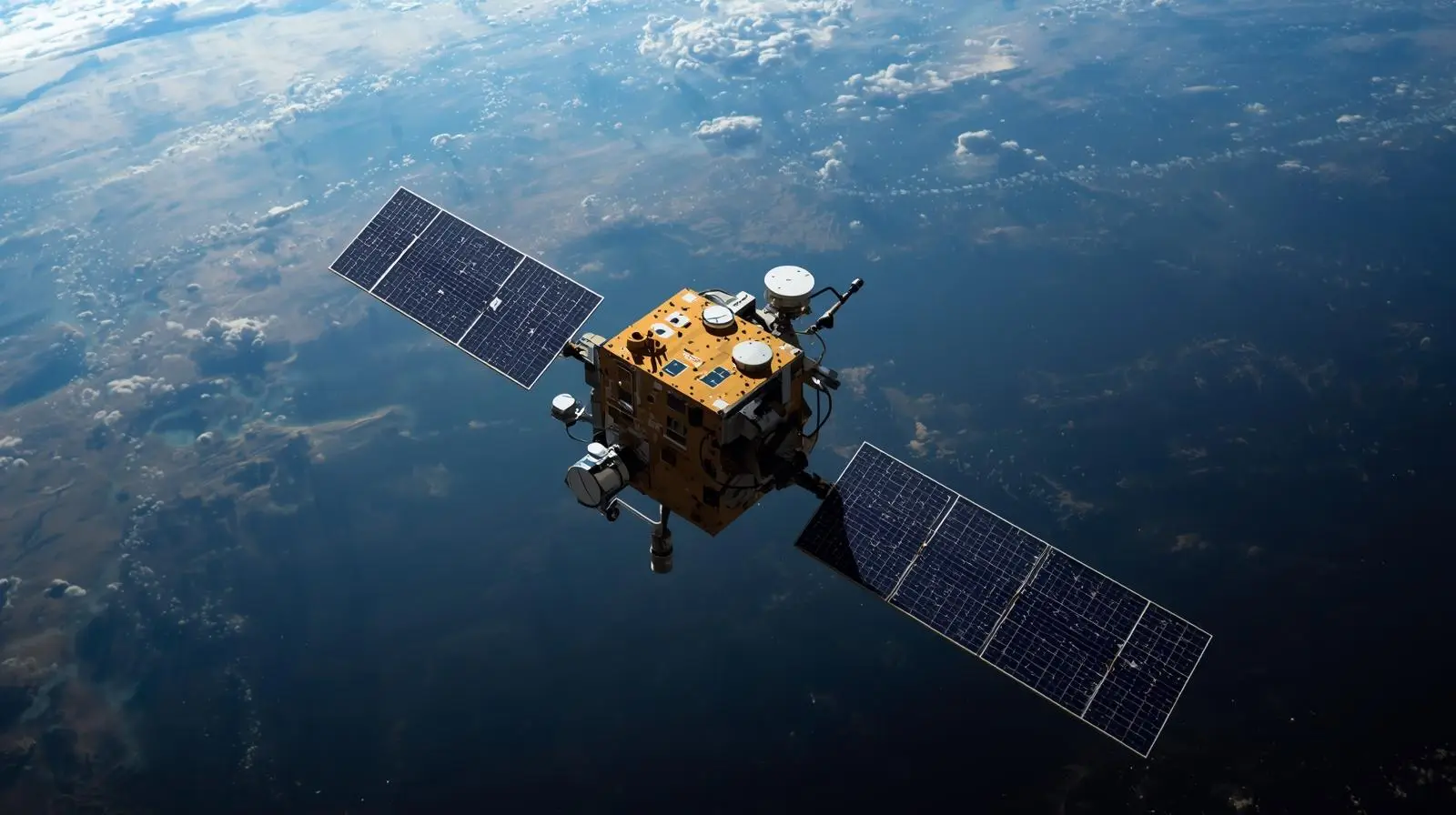
The Bion-M No2 mission
The mission by the Russian space agency Roscosmos carried a biological payload of mice, flies, plants, and microbes atop a Soyuz-2.1b rocket on a 30-day mission on August 20, 2025, to a near-polar orbit at 370–380 km altitude, inclination of roughly 97 degrees. The first and second segments of the experiment were about studies of gravitational physiology on animals to ensure life support for human flight under the effects of weightlessness, and cosmic radiation. The third, fourth and fifth sections were to understand the influence of space flight on the biology of plants and microorganisms, as well as their communities. The sixth, eighth and ninth included, biotechnological, technological, physical and technical experiments. The seventh section was about radiobiological and dosimetric experiments.
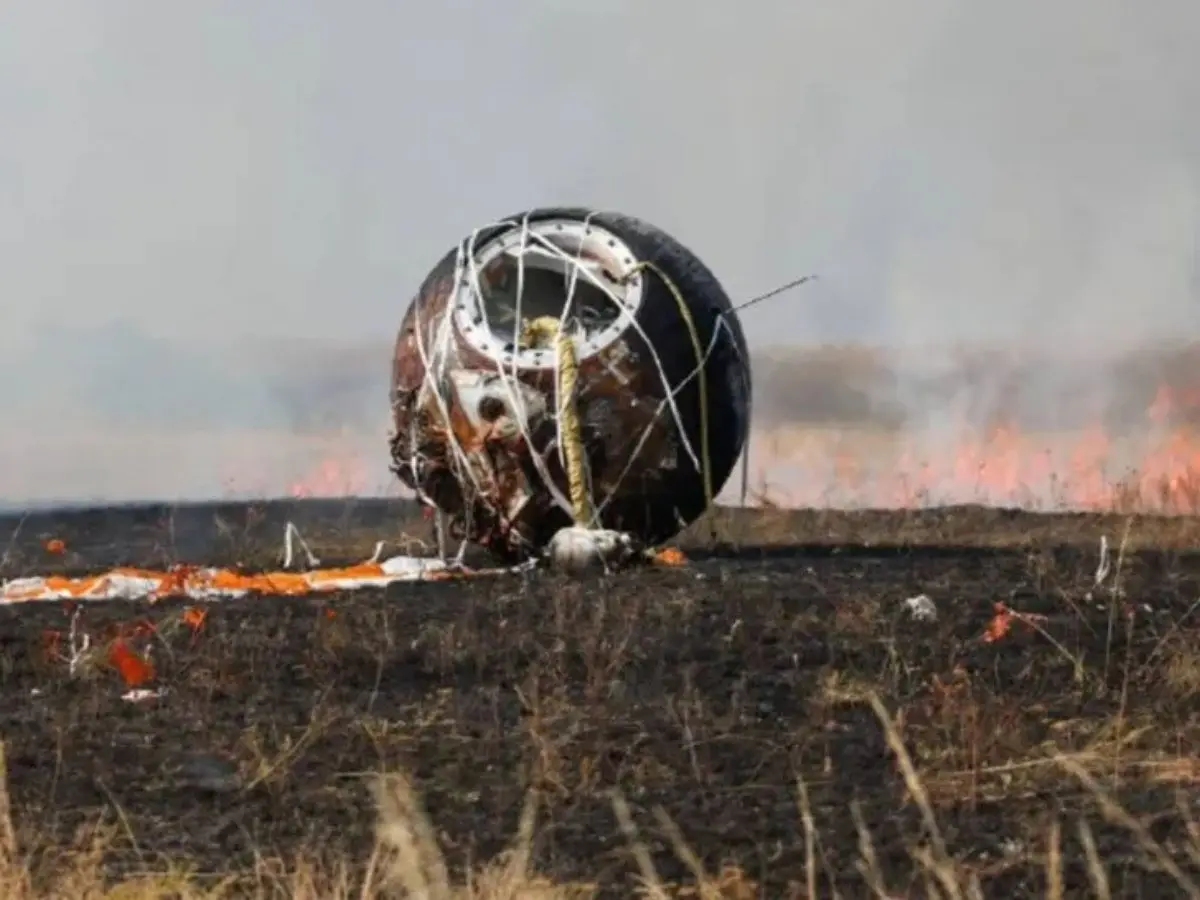
‘Noah’s Ark’
Bion-M No2 satellite made a fiery landing in Russia's Orenburg steppes on September 19. The satellite traversed from outer space with 75 mice, over 1,500 flies, cell cultures, microorganisms, plant seeds and more. It was referred to as Noah's Ark because, like the biblical structure, it was carrying a variety of living organisms on board. The dramatic visuals are from a small brush fire ignited from reentry heat or the landing itself. However, it was quickly doused before the recovery team approached.
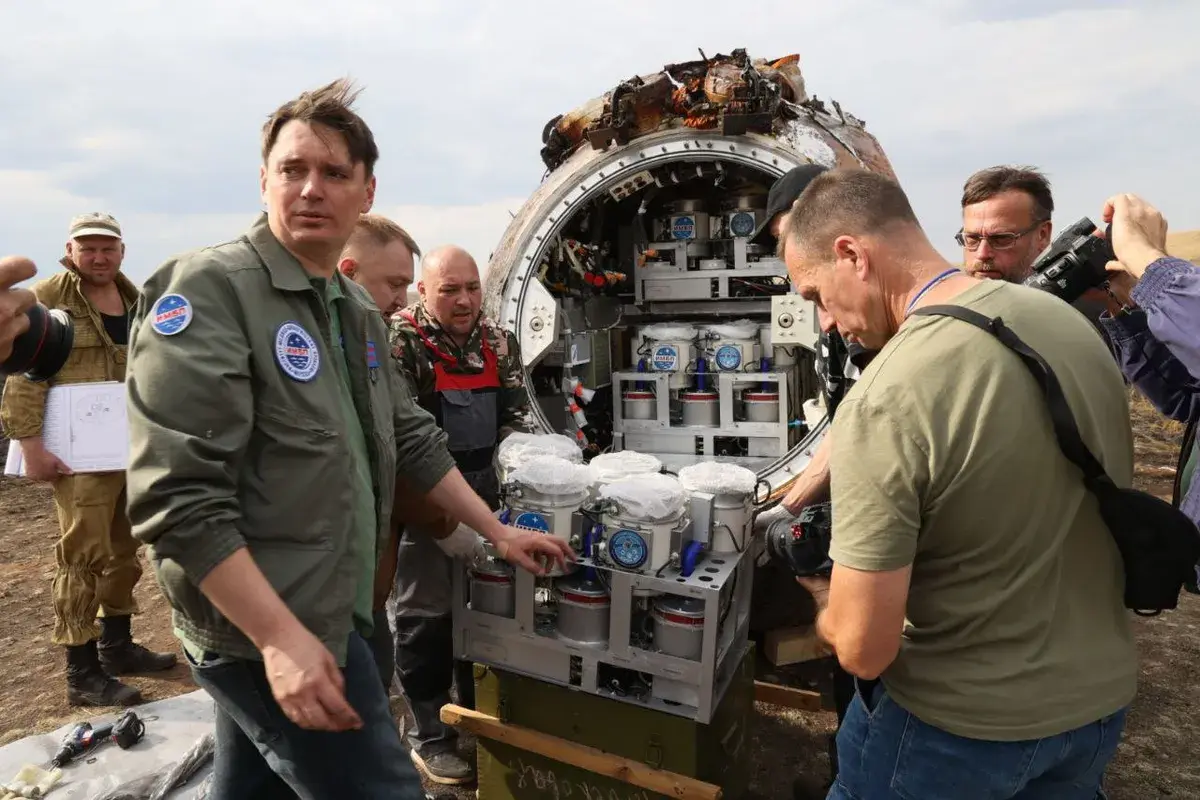
Initial Experimentations
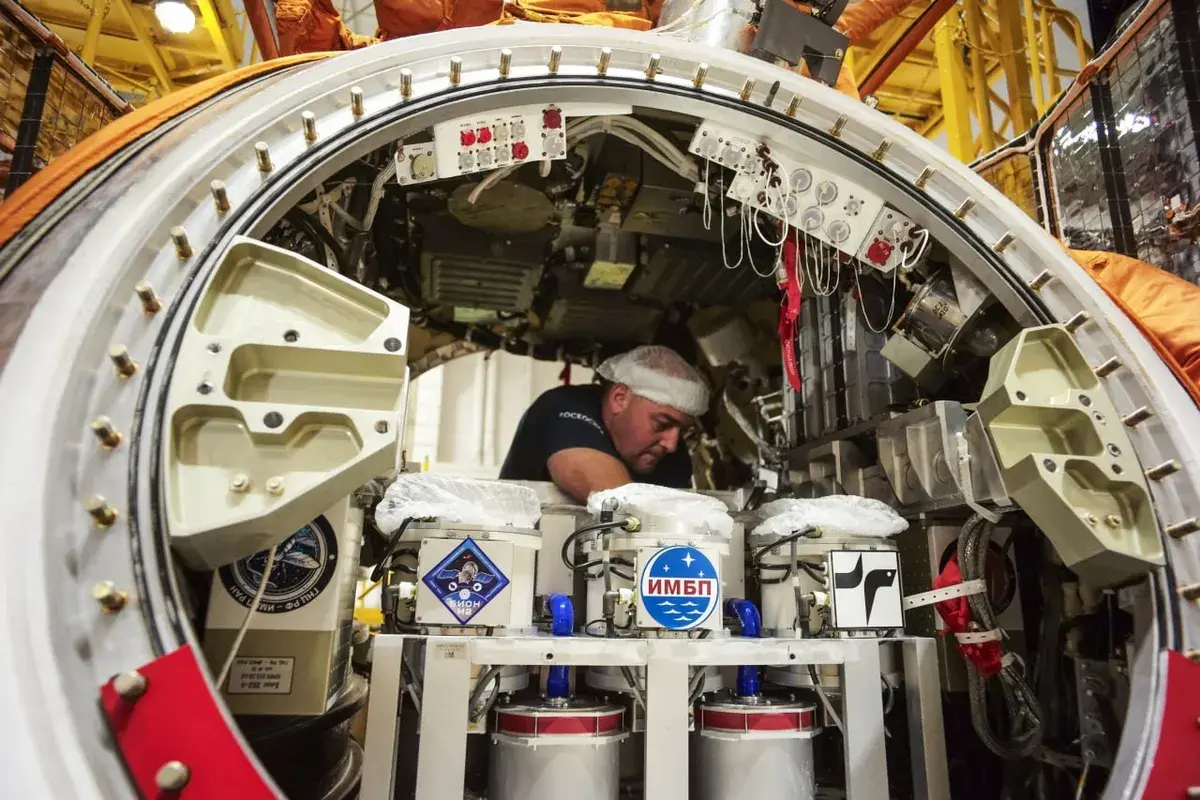
The specimens were exposed to intense cosmic radiation; some of them were genetically altered to be sensitive to such radiation, while others received protective drugs and other diets. The mice were placed inside a “BIOS” cylindrical container in groups with water gel, dry food to support life. A trio of helicopters carrying technical specialists landed near the descent location and collected the specimen for initial experimentation, such as assessing the flies' motor activity to detect any nervous system problems. Out of the 75 mice that took flight, 65 returned alive and the organiser officially considered the death as “acceptable”. The cause of death can be radiation or intra-organismal aggressions.
Panspermia experiment
Also called the Meteorite was carried out during the re-entry of the satellite. This was done by embedding microbes in basalt, to test whether they survive reentry’s thermal and mechanical stress.
)
)
)
)
)