RS-28 Sarmat, RS-24 Yars, Satan and more: The missiles at the core of Russia’s ICBM arsenal

Russia maintains one of the world’s most significant intercontinental ballistic missile (ICBM) forces as part of its nuclear deterrent.
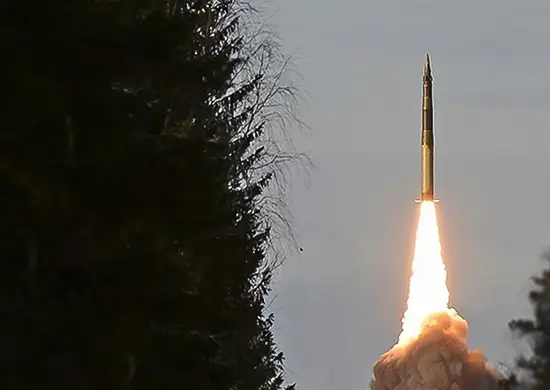
An enduring pillar of strategic deterrence
Russia maintains one of the world’s most significant intercontinental ballistic missile (ICBM) forces as part of its nuclear deterrent. The nation's ICBM force comprises hundreds of nuclear‑armed missiles capable of delivering warheads across continents. These missiles that are organised under the Strategic Rocket Forces, reflect Moscow’s commitment to maintaining a robust land‑based leg of its nuclear triad alongside submarine and bomber forces.
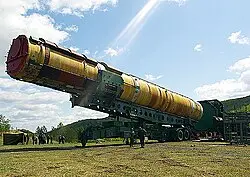
RS‑20V Voevoda (SS‑18 'Satan')
The RS‑20V (R-36M-2 Voevoda), known in NATO parlance as the SS‑18 'Satan', is widely regarded as one of Russia’s largest and most powerful ICBMs. It was developed in the early 1970s and is a three-stage ICBM. According to the russianspaceweb.com, it is a 34.3 metres missile that has a flight range of 16,000 km with a single warhead. Although many units have been retired under modernisation efforts, the type remains emblematic of the Soviet and Russian strategic missile force. With multiple warheads and a long range, it has been central to strategic planning for decades. According to reports, Russia is gradually replacing the aging system with the new RS-28 Samrat.
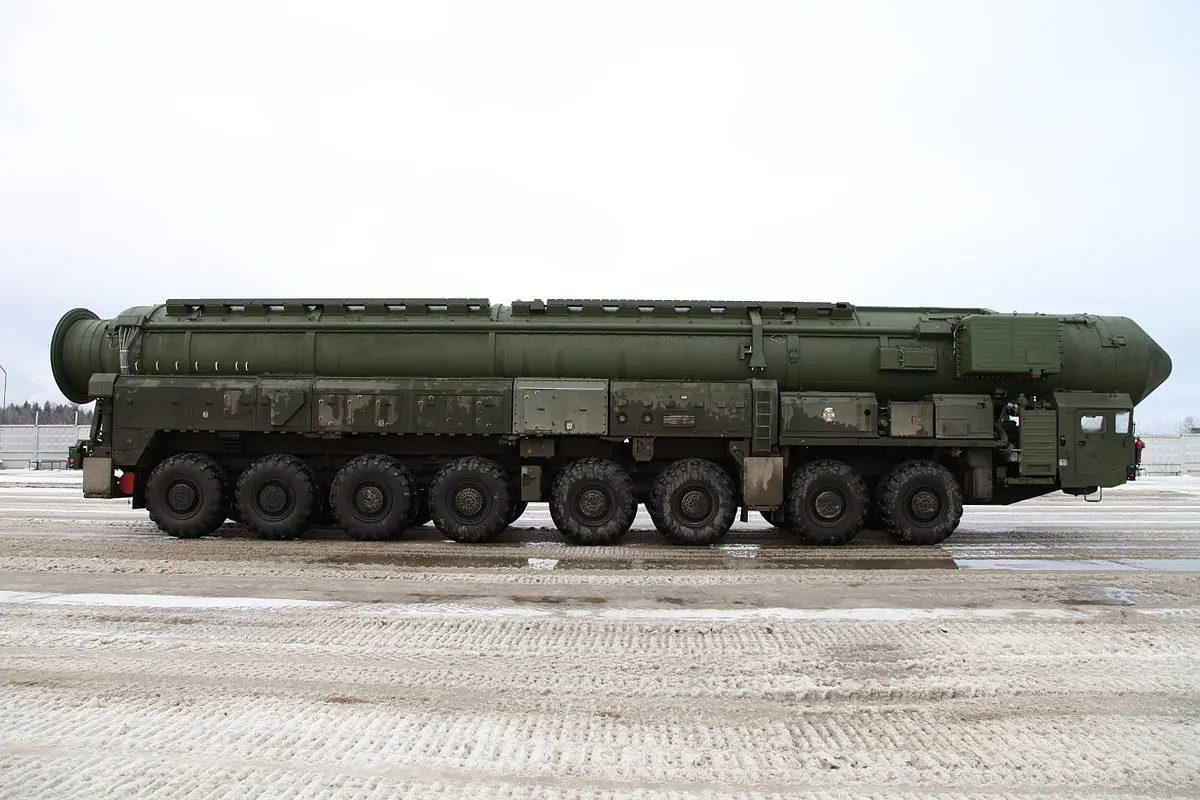
RT‑2PM2 Topol‑M (SS-27 Sickle-B)
The development of Topol-M was initiated around 1989 and the first launch was conducted in 1994. RT‑2PM2 Topol‑M, deployable from both silos and mobile launchers, is a solid‑propellant ICBM that was designed to improve survivability and responsiveness. It has a three‑stage solid rocket propulsion. Open sources state these missiles have a range of 11,000 km and travel at a top speed of 27,100 km per hour, a capability that ensures it remains a core part of Russia’s strategic land‑based deterrent.
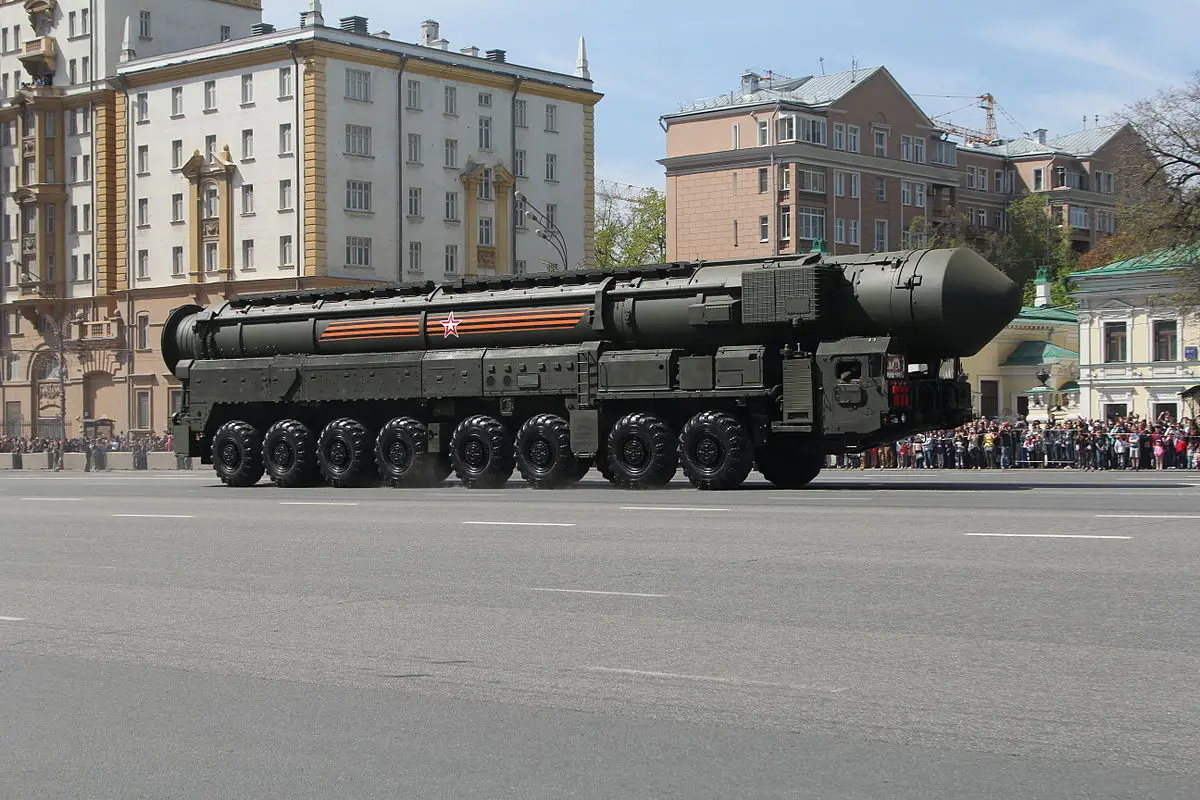
SS-27 Mod 2/ RS‑24 Yars
An evolution of the Topol‑M, the RS‑24 Yars is equipped and can carry up to 10 independently targetable reentry vehicles (MIRVs), allowing a single missile to strike multiple targets. It is a silo-based ICBM produced by Moscow Institute of Thermal Technology, with a range of 10,500-12,000 km. On Wednesday, Russia announced that Yars was deployed for combat patrol during routine training exercises in Siberia.
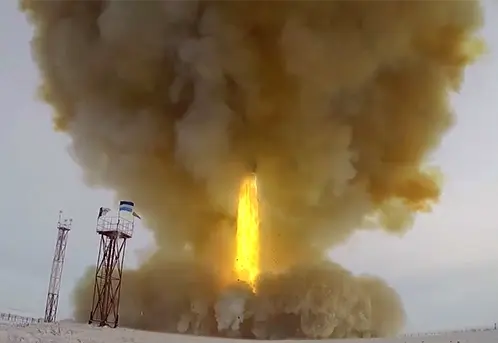
Avangard hypersonic glide vehicle
Russia has deployed the Avangard hypersonic glide vehicle atop some older ICBMs. It is important to note that it is a hypersonic glide vehicle, that was designed to be carried as a MIRV payload by the UR-100UTTKh, RS-26 Rubezh and RS-28 Sarmat super-heavy ICBM. According to Reuters, Avangard is able to manoeuvre sharply outside the trajectory of the rocket at hypersonic speeds of up to 27 times the speed of sound (about 21,000 miles per hour or 34,000 kilometres per hour).
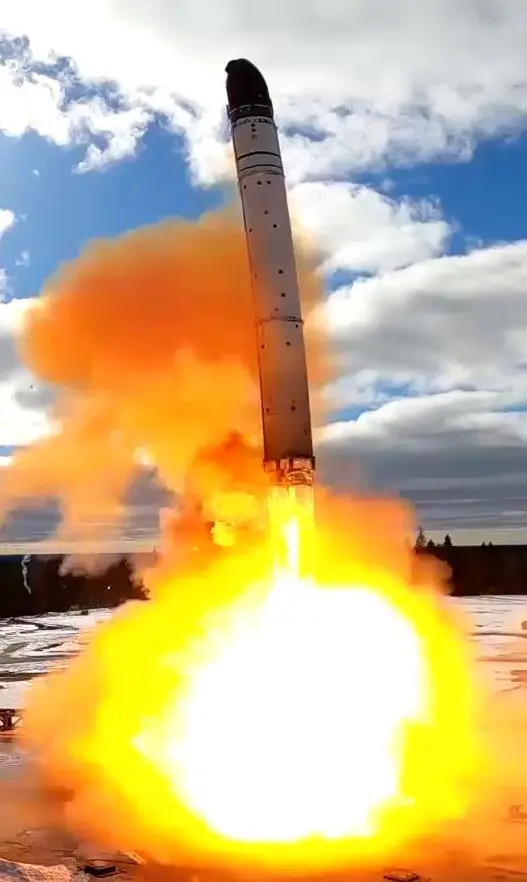
RS‑28 Sarmat/SS-X-30 Satan II
The RS‑28 Sarmat, widely referred to in the West as 'Satan II', is intended to replace legacy heavy ICBMs. With an estimated range of 10,000- 18,000 kilometres and the capacity to carry multiple warheads including Nuclear, MIRV or glide vehicles, Sarmat is positioned as a cornerstone of Russia’s modernised strategic forces. It is designed to provide global reach and to complicate adversary defence planning.
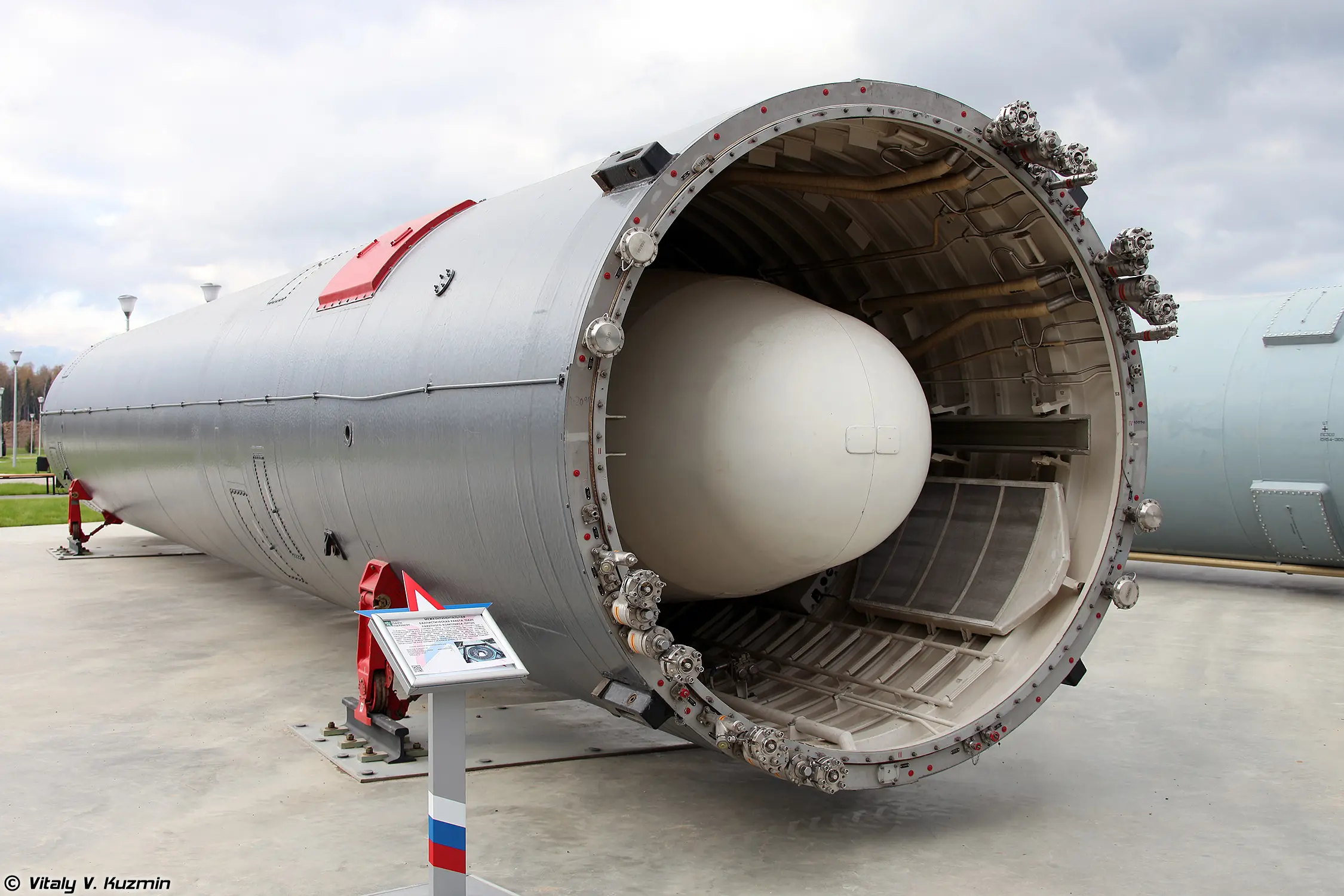
RS-26 Rubezh
According to the US-based Arms Control Association, the RS-26 is a solid-fueled ICBM that has a range of up to 5,800 km. The CSIS said the RS-26 was first successfully tested in 2012 and is estimated to be 12 metres long and weigh 36 tons and can carry an 800-kg (1,760-lb) nuclear warhead, quoted Reuters.
)
)
)
)
)