Rockets, artillery, UAVs and more: What Iron Beam can and can’t shoot down

According to Rafael, the 100kW-class system engages threats at the speed of light within a range of several kilometres, intended primarily for low-altitude and short-distance aerial dangers.

A new class of laser air defence
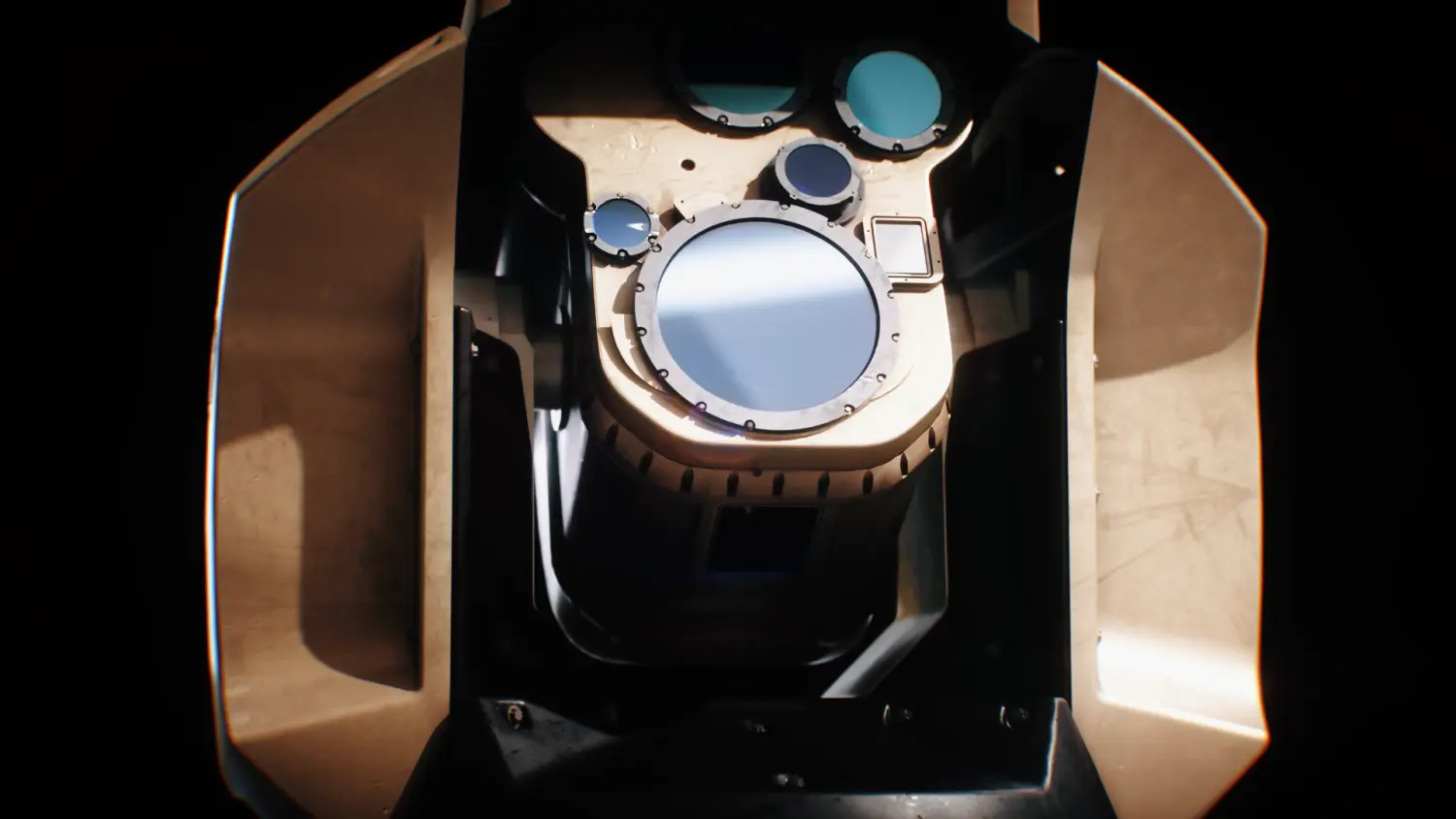
Israel’s Iron Beam is emerging as the world’s first operational high-energy laser air-defence system. It has been designed to neutralise fast-evolving aerial threats at a fraction of the cost of the traditional interceptors. Israel is set to deploy the system by the end of the year following it's operational testing in September. According to Rafael Advanced Defense Systems, Iron Beam is a 100kW-class High Energy Laser Weapon System (HELWS) which is capable of engaging targets at the speed of light, from a few hundred metres to several kilometres. The company also notes that the laser weapon system delivers an unlimited magazine at almost zero cost per interception, and minimal collateral damage. These features distinguish it from kinetic missile interceptors.

A focused look at Iron Beam’s interception envelope
The technology was developed by the Israeli defense contractor Rafael Advanced Defense Systems along with Elbit Systems manufacturing the laser source. Iron Beam is designed as a short-range high-energy laser effector, offering a new layer within Israel’s defensive architecture. The system is intended primarily to tackle low-altitude and short-distance aerial dangers. Its purpose is not to replace missile-based systems but to absorb the bulk of close-range attacks that frequently target Israel.
Rockets and artillery shells
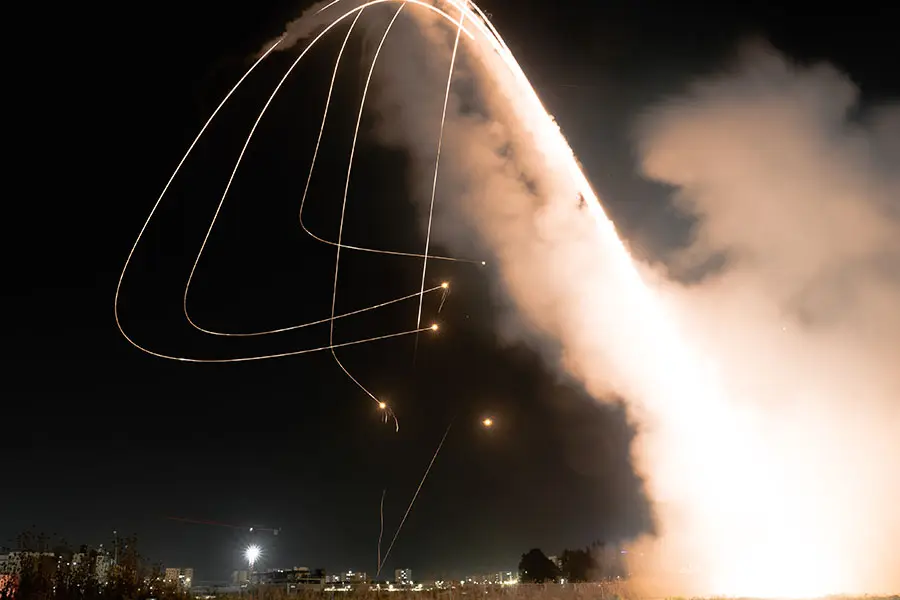
Rafael confirms that Iron Beam can neutralise rockets, artillery shells and mortars, collectively known as RAM threats. These are among the most common projectiles launched toward Israeli cities and border communities. Because these objects follow predictable trajectories and fall within the system’s engagement envelope, Iron Beam can burn through them rapidly with pinpoint accuracy. Some of the most common examples launched at Israel over the years include:
-Qassam rockets (various models)
-122mm Grad/Katyusha rockets (short range)
-120mm and 81mm mortar rounds
These projectiles follow a predictable ballistic path and could fall into Iron Beam’s short-range engagement zone.

UAVs and drone swarms
Iron Beam is also built to intercept UAVs of various sizes, including small quadcopters and larger tactical drones. Some examples include FPV kamikaze drones and Shahed-style loitering munitions (short-range variants). Rafael notes that its rapid retargeting capability enables engagement of drone swarms, which are increasingly used in modern conflict. This feature, gives the system a distinct advantage in scenarios involving multiple simultaneous aerial intrusions.
Short-range ballistic and small-calibre threats
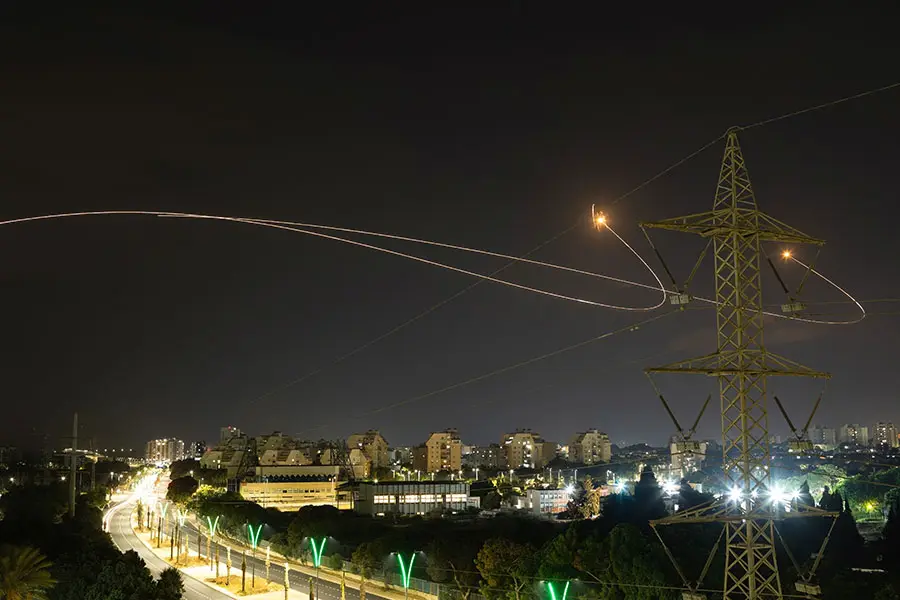
Rafael further states that the system can tackle short-range ballistic threats, including small-calibre mortars as well as low-altitude light projectiles. These fall well within the system’s range and power capacity. The laser focuses on a single point on the target, enabling neutralisation within seconds.

Cruise missiles at close range
Rafael lists cruise missiles among the threats Iron Beam can handle, but this interception is only limited to handling missiles that travel short distances. Its engagement range limits its effectiveness to low-flying, slow-to-medium-speed cruise missiles approaching within several kilometres. It is not intended for long-range interception.
What Iron Beam cannot intercept
Because Iron Beam’s maximum range is around 10 kilometres, it cannot intercept medium- or long-range ballistic missiles, including the types targeted by Israel’s Arrow system. While highly effective against short-range rockets, artillery fire and UAVs, Iron Beam is not intended for long-range ballistic missile interception. It also cannot engage high-altitude, high-speed missiles, nor threats travelling beyond its line-of-sight or atmospheric conditions that hinder laser propagation. Its role is to relieve pressure on missile-based systems, reduce costs, and handle high-volume, short-range attacks, becoming a crucial new layer in Israel’s evolving defence architecture.
Complement, not replacement
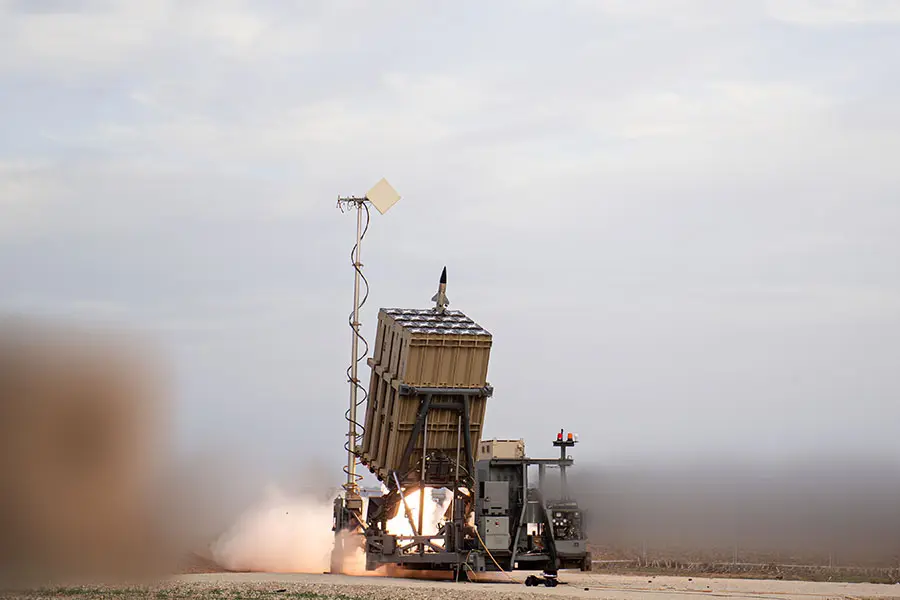
As the Jerusalem Post notes, Iron Beam neutralises threats far faster than kinetic interceptors and at a fraction of the cost. However, it is not intended to replace Iron Dome, David’s Sling or Arrow, but to complement the Iron Dome and the Israel's existing air defence architecture
)
)
)
)
)