Quantum leap: New algorithm unlocks complex materials beyond supercomputers, solving them in seconds

A new quantum-inspired algorithm is transforming materials research by enabling rapid analysis of highly complex structures. Scientists can now engineer quantum properties by tweaking designs, such as twisting graphene layers to form moiré patterns that can turn the material superconducting.
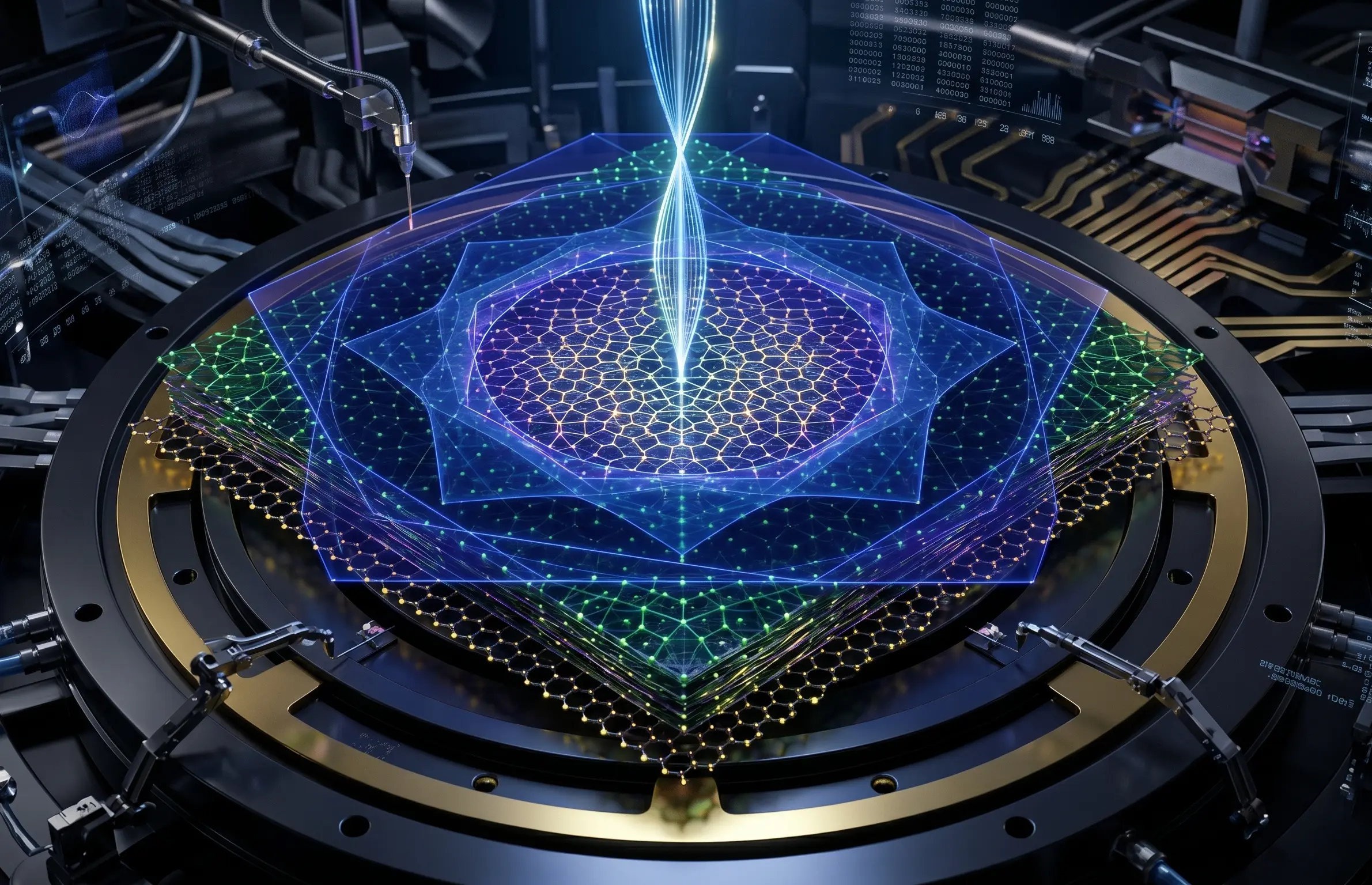
Quasicrystals and super-moiré materials
The scientists have encountered structures like quasicrystals and super-moiré materials after developing more complex layered systems, making it difficult to identify the most useful designs. Simulating their material required enormous data, exceeding a quadrillion variables, beyond the capacity of even the most powerful supercomputers.
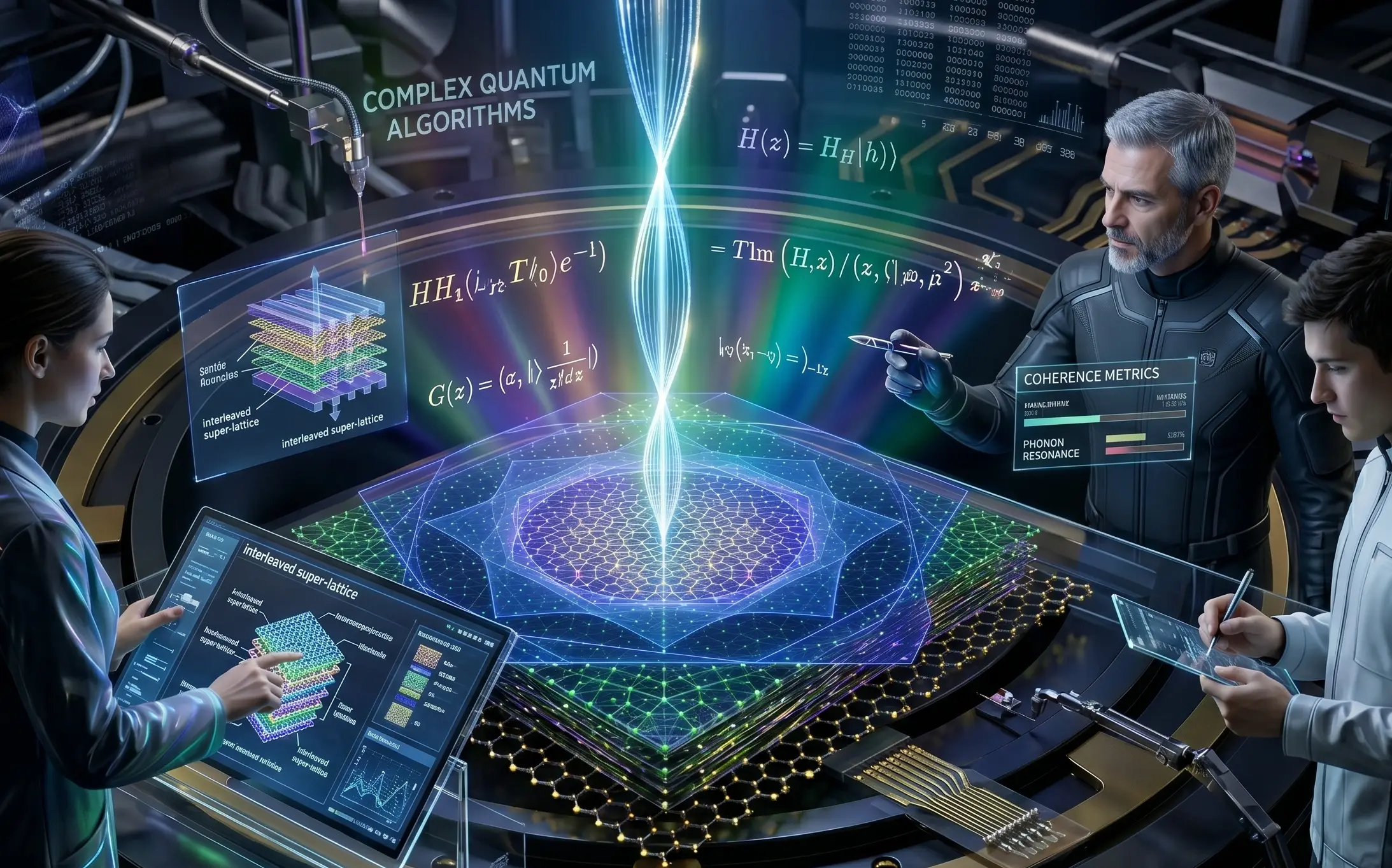
What researchers explain?
Researchers at Aalto University’s Department of Applied Physics have now developed a quantum-inspired algorithm capable of efficiently handling such vast and non-periodic systems with remarkable speed. Assistant Professor Jose Lado, also underscored a growing feedback loop in quantum technology. “Crucially, these new quantum algorithms can enable the development of new quantum materials to build new paradigms of quantum computers, creating a productive two-way feedback loop between quantum materials and quantum computers,” he explains.
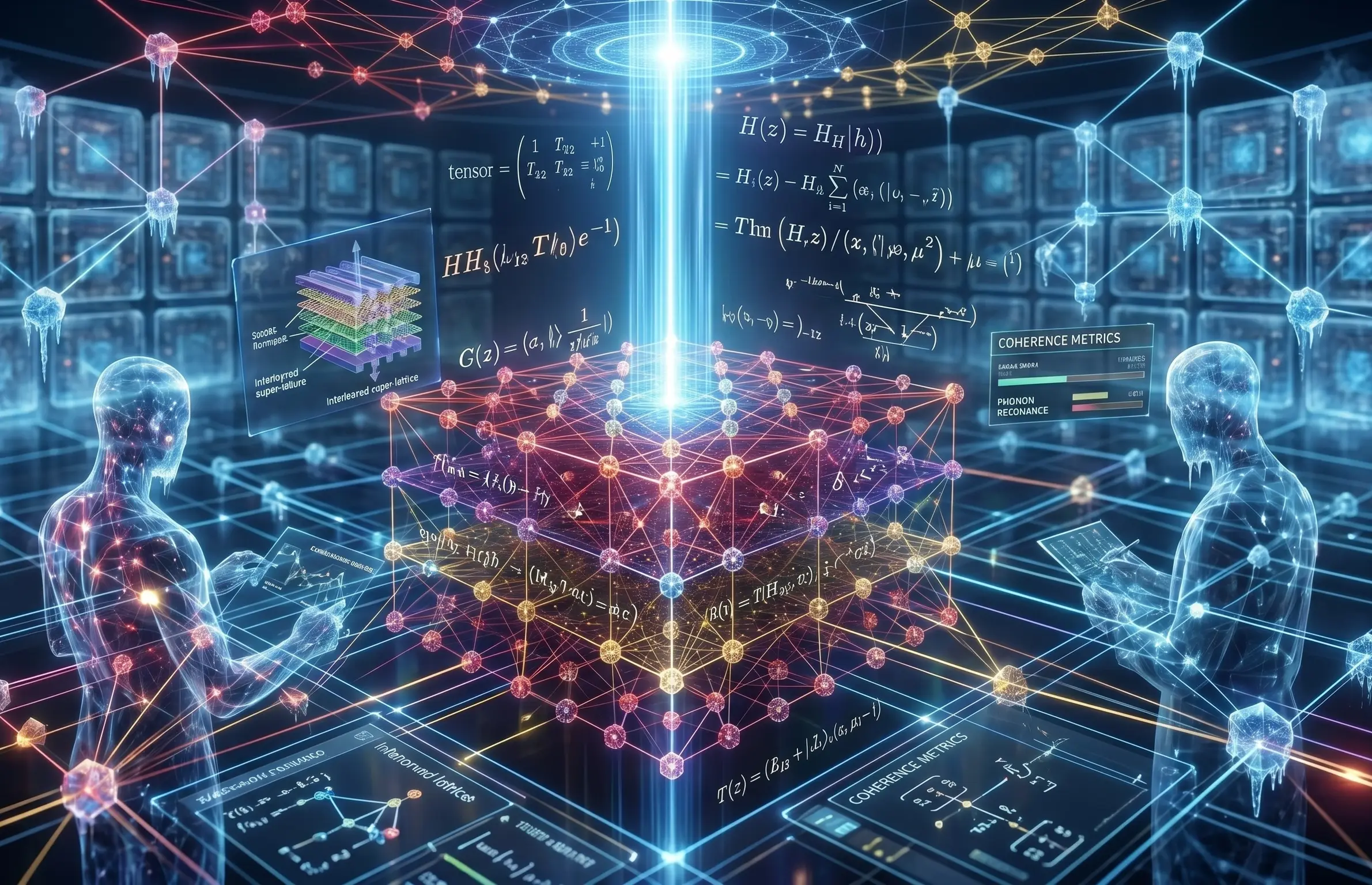
Ideal for large-scale quantum materials
Tensor networks are key to this method, as they can model functions over highly detailed computational grids, making them ideal for studying large-scale quantum materials. The research could enable dissipation-free electronics, potentially reducing heat from AI data centres. Led by Jose Lado, the team’s findings appeared in Physical Review Letters as an Editor’s Suggestion.

Complexity in Quasicrystals
The research focused on topological quasicrystals, which contain unique quantum excitations that help maintain electrical conductivity by shielding it from noise and interference. Because these excitations are unevenly distributed across the material, they are hard to analyse. Instead of modelling the entire structure, the team reframed the problem using concepts akin to those in quantum computing. “Quantum computers work in exponentially large computational spaces, so we used a special family of algorithms to encode those spaces, known as tensor networks, to compute a quasicrystal with over 268 million sites. Our algorithm shows how colossal problems in quantum materials can be directly solved with the exponential speed-up that comes from encoding the problem as a quantum many-body system,” Antão says.
Topological qubits with super-moiré materials
Till now, this method has been tested through simulations; however, experimental validation might follow. “The quantum-inspired algorithm we demonstrated enables us to create super-moiré quasicrystals several orders of magnitude above the capabilities of conventional methods. That is an instrumental step towards designing topological qubits with super-moiré materials for use in quantum computers, for example,” Lado said. He stated that the team’s algorithm could be injected into a quantum computer after adaptation, noting that the algorithm could eventually run on actual quantum computers.
“Our method can be adapted to run on real quantum computers, once they reach the necessary scale and fidelity. In particular, the new AaltoQ20 and the Finnish Quantum Computing Infrastructure can play a significant role in future demonstrations,” Lado added. The results indicate that creating and analysing complex quantum materials may emerge as one of the earliest real-world applications of quantum algorithms. The study also bridges two key areas of quantum research in Finland, materials science and algorithm development.
)
)
)
)
)