Pieces of Titan submersible brought to shore

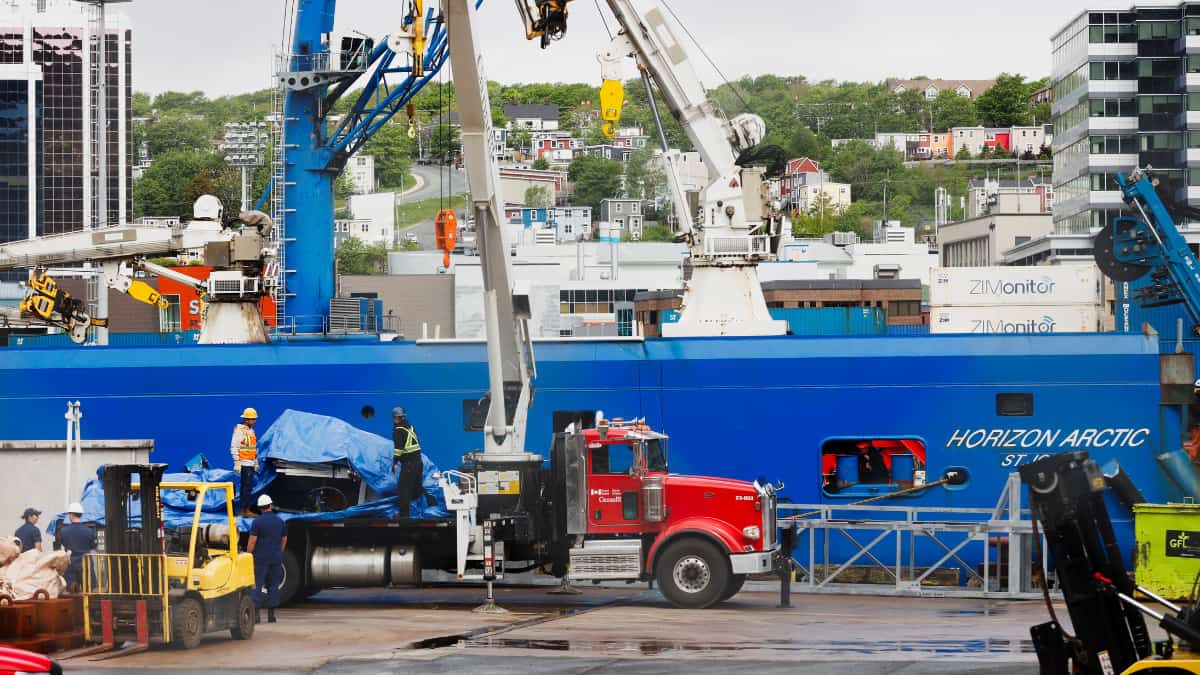
Remains of sub brought to shore
The possible remains and shattered bits of the submersible Titan were brought on shore in Canada on Wednesday, June 28. The Titan was destroyed while diving to view over a century-old wreck of the Titanic.
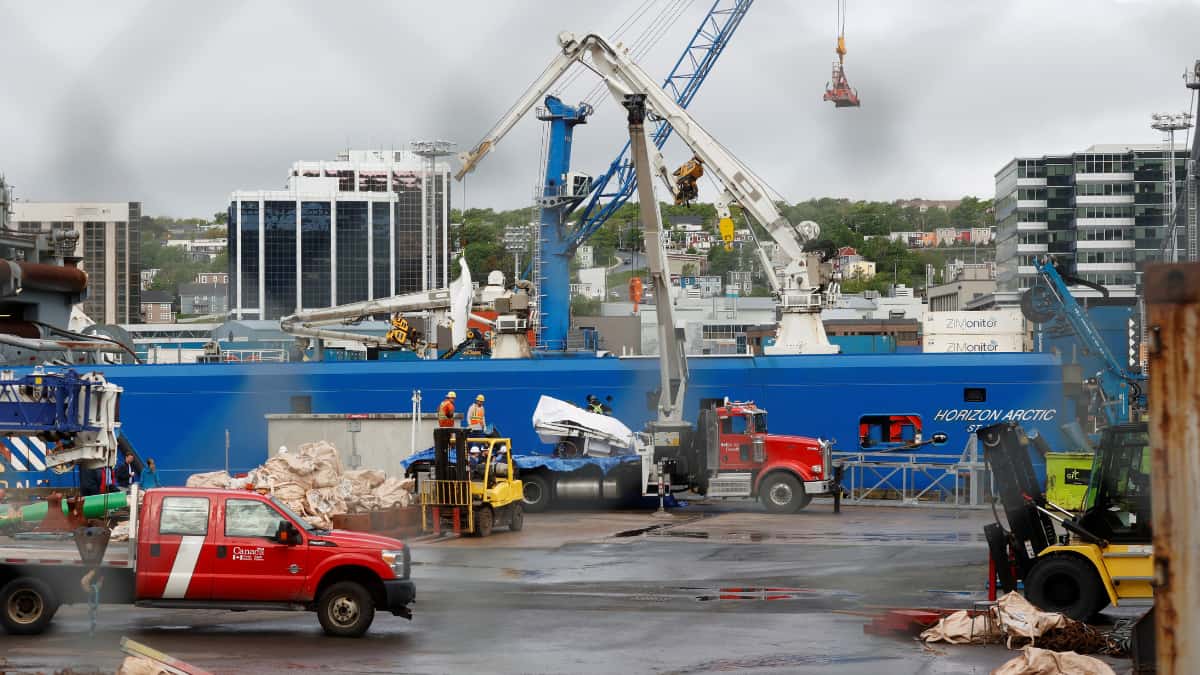
The remains of the sub were carried to St. John's, Newfoundland, about 400 miles (650km) north of the accident site, by the Canadian-flagged vessel Horizon Arctic.
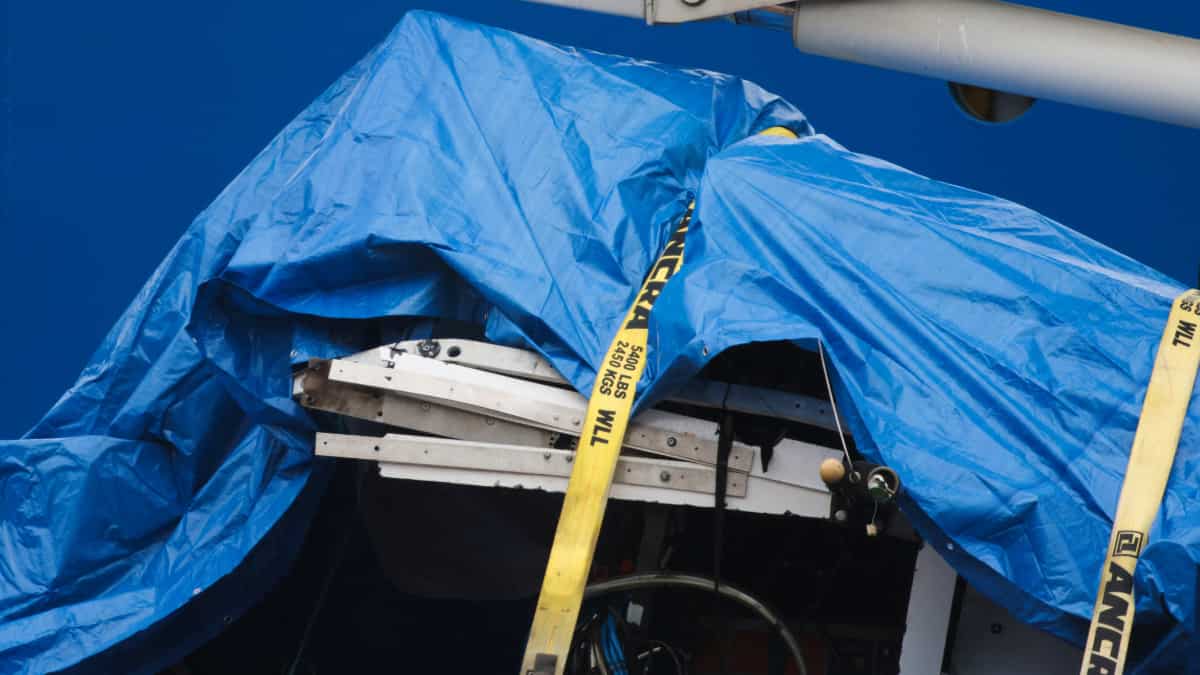
Nose of the sub recovered
Video from the Canadian Broadcast Corp showed the nose of the submersible and other shattered fragments wrapped in a white tarp being pulled up by a crane from the deck of the Horizon Arctic on Wednesday morning.
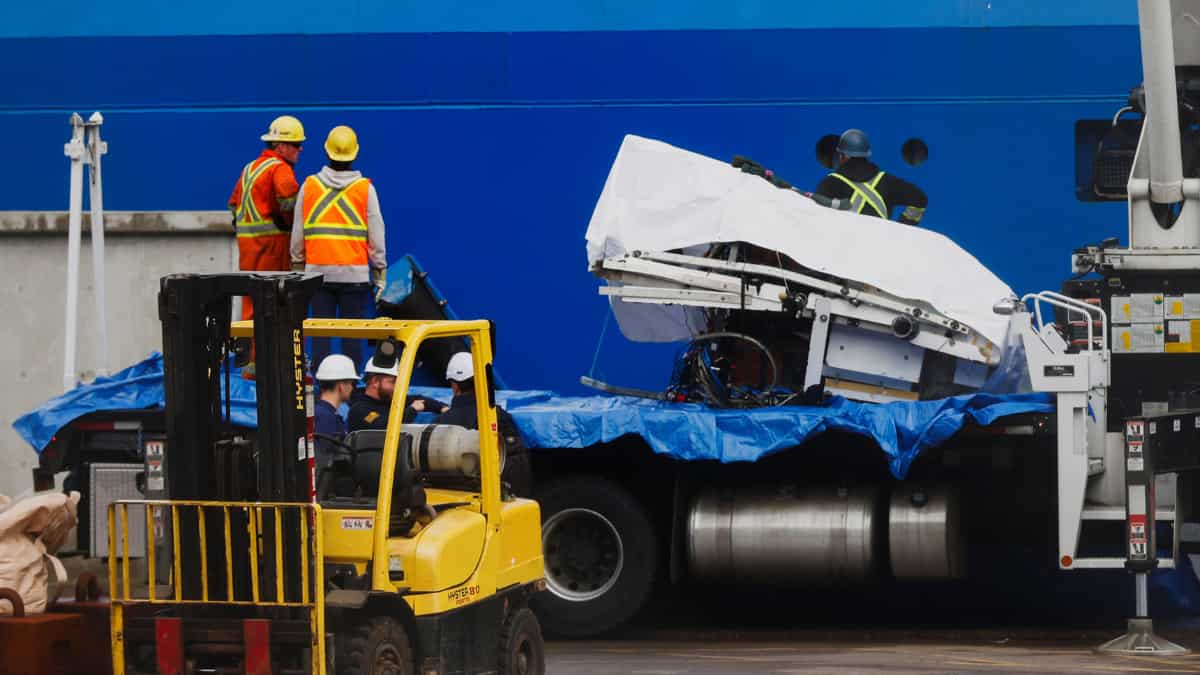
Other shattered pieces recovered
The footage also showed a shattered piece of the Titan's hull and machinery with dangling wires being taken off the ship at St. John's. The expedition to the Titanic that resulted in the death of five people had begun at St. John's.
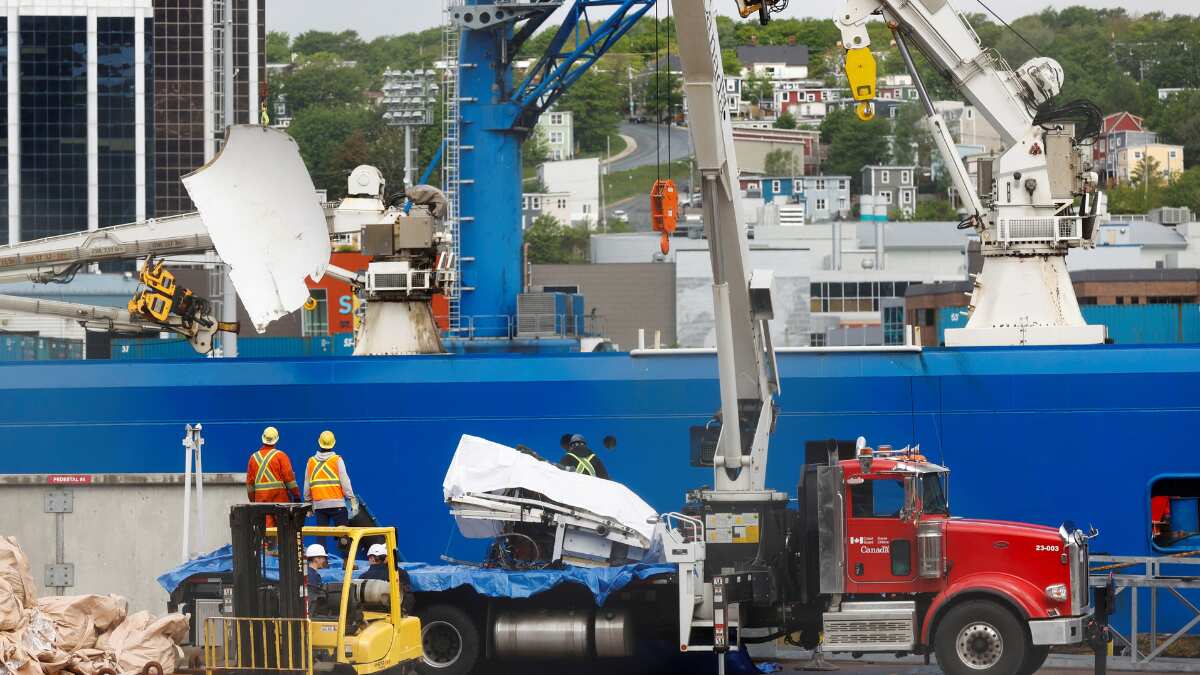
Examination of debris
As per a statement from the Coast Guard, US medical professionals "will conduct a formal analysis of presumed human remains that have been carefully recovered within the wreckage at the site of the incident."
Examination of the debris is expected to shed more light on the cause of the catastrophic implosion that shattered the Titan earlier this month.
Accident raises questions about safety
Among those killed was Stockton Rush, the submersible pilot and CEO of US-based OceanGate Expeditions, which owned and operated the Titan. Other than him, British billionaire Hamish Harding, 58; Pakistani-born businessman Shahzada Dawood, 48, his 19-year-old son, Suleman; and 77-year-old French oceanographer Paul-Henri Nargeolet were also killed in the unfortunate accident.
The accident has raised questions about the unregulated nature of such expeditions and the decision by OceanGate to forego third-party industry review and certification of Titan's novel design.
)
)
)
)
)