New to income tax filing? Here's a step-by-step guide to file your first ITR smoothly for AY 2025–26

Filing an income tax return (ITR) might initially seem difficult but with the right steps, it becomes straightforward.

Understanding Who Needs to File ITR
Filing an Income Tax Return (ITR) is not limited to individuals with taxable income. Filing an income tax return (ITR) might initially seem difficult but with the right steps, it becomes straightforward. To futher make the process simpler, the department has released updated ITR utilities for ITR-1 (Sahaj) and ITR-4 (Sugam). As per the Income Tax Department, you must file a return if:- You've deposited over Rs. 1 crore in a bank account.
-You've spent more than Rs. 2 lakh on foreign travel.
-Your annual electricity bill exceeds Rs. 1 lakh.
Even if you're below the taxable income threshold, filing ITR can help establish financial credibility and is often required for visa applications, loans, or tender applications.

Selecting the Correct Form
Selecting the correct form is an extremely crucial step. The Income Tax Department has issued seven ITR forms (ITR-1 to ITR-7) for FY 2024–25. Most individuals will use ITR-1 to ITR-4, based on their income type, whether from salary, business, or other sources. These forms are designated for different taxpayer categories, including individuals, HUFs, companies, LLPs, and partnership firms.

Documents You Need Before You Begin
Collecting the right documents in advance simplifies the filing process. Here's what you should keep ready:
1. PAN and Aadhaar cards
2. Form 16 from your employer
3. Interest certificates from banks or post offices
4. Form 26AS, AIS and TIS from the income tax portal
5. Bank account details
6. Investment proofs for deductions under sections like 80C, 80D

Registering and Logging In on the e-Filing Portal
To file your ITR online, start with the official e-filing website: [https://www.incometax.gov.in](https://www.incometax.gov.in)
1. Click 'Register' and select 'Individual'.
2. Enter your PAN as your User ID.
3. Complete the registration with your personal details.
Once registered, log in using your PAN, password, and captcha code.
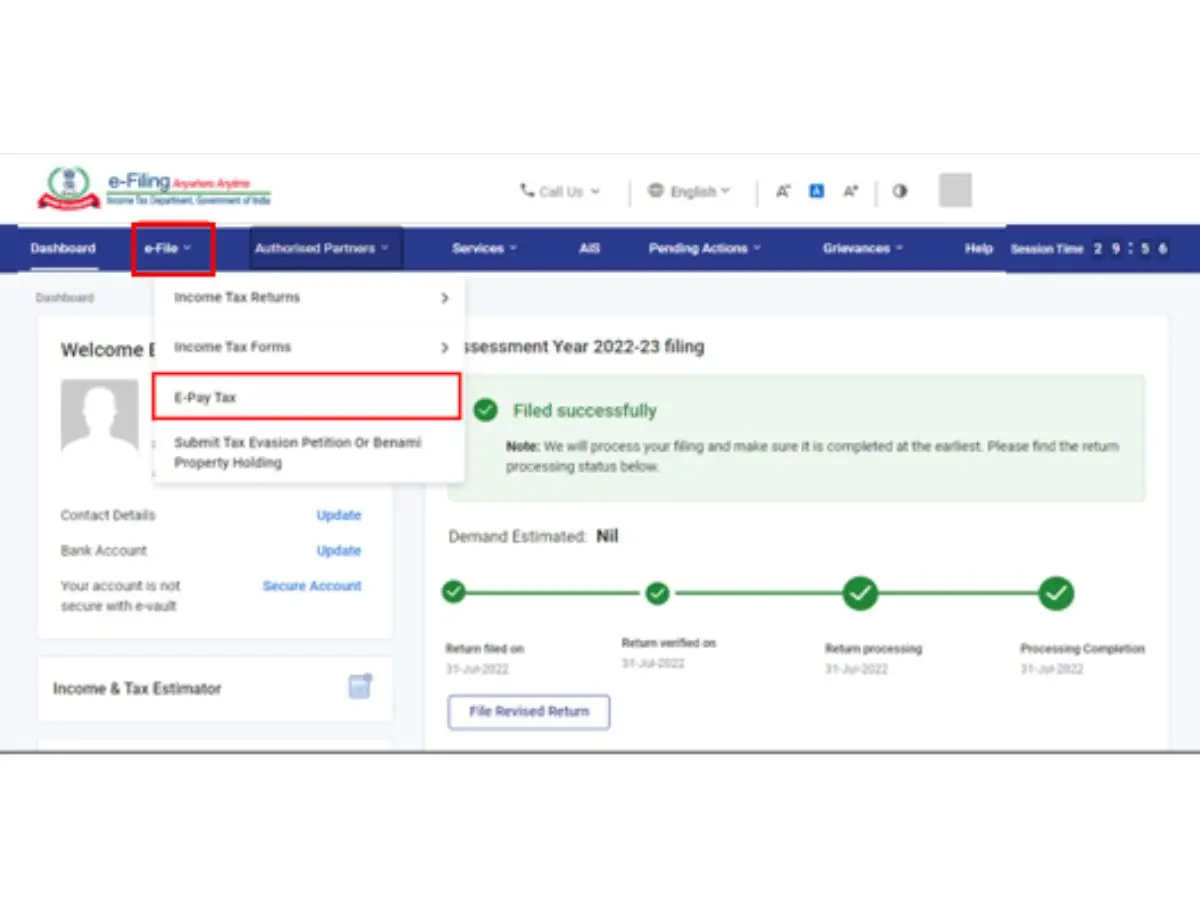
Filing Process - Step by Step
1. After login, go to the 'e-File' menu.
2. Select 'File Income Tax Return'.
3. Choose Assessment Year: 2025-26
4. Select 'Online' mode.
5. Choose status: 'Individual'
6. Pick the appropriate ITR form (e.g., ITR-1 for salaried individuals).

Filling in the Return Details
Carefully input or confirm the following:
1. Personal and contact information
2. Income details from salary, interest, or other sources
3. Applicable deductions (80C, 80D, etc.)
4. Bank account for refund
Review the auto-filled details from AIS/TIS and update if necessary. Errors or mismatches can lead to notices.

Final Steps: Review, Submit and E-Verify
1. Click 'Preview and Submit' to verify the information.
2.After submission, e-verify the return using:
-Aadhaar OTP
-Net banking
-EVC (Electronic Verification Code)
-Or by sending a signed physical copy of ITR-V to CPC, Bengaluru.
Verification is mandatory within 30 days of submission.

Deadline and Importance of Timely Filing
The deadline for filing ITR for AY 2025-26 has been extended to September 15, 2025 for individuals not requiring audit. Filing after this date may result in penalties up to Rs. 5,000. Filing on time ensures smooth refund processing, prevents legal complications, and helps build a consistent tax record for future financial planning.
)
)
)
)
)