Lunar eclipse and the influence of 'Rahu' in India

Authored By Wion Web Desk
Published: Aug 08, 2017, 03:34 IST | Updated: Aug 08, 2017, 03:34 IST
The August full moon is often referred to as a "Sturgeon" moon, named after the fish by native American tribes, who found the fish easier to catch at the time.

1 / 11
Lunar eclipse
Meanwhile, Astronomers have appealed to Indians to upload selfies with the hashtag #EclipseEating while enjoying food during the longest eclipse of the 21st century on Friday, in a bid to dispel the myths and superstitions surrounding the celestial event.
Existing superstitions and myths among the people in India keeps them from witnessing one of the most beautiful phenomena of the universe.
"Unfortunately among people, there are a lot of false beliefs or superstitions about eclipses. There are beliefs that we should not go out and see them, we should not eat during eclipse etc," said Niruj Mohan Ramanujam from National Centre for Radio Astrophysics, Tata Institute of Fundamental Research (TIFR) in Pune.
"Eclipse is the time when we realise that the universe is extremely grand where things move constantly. To miss such an event would be a pity," Ramanujam, who is also a member of the Public Outreach and Education Committee at Astronomical Society of India, told.
Existing superstitions and myths among the people in India keeps them from witnessing one of the most beautiful phenomena of the universe.
"Unfortunately among people, there are a lot of false beliefs or superstitions about eclipses. There are beliefs that we should not go out and see them, we should not eat during eclipse etc," said Niruj Mohan Ramanujam from National Centre for Radio Astrophysics, Tata Institute of Fundamental Research (TIFR) in Pune.
"Eclipse is the time when we realise that the universe is extremely grand where things move constantly. To miss such an event would be a pity," Ramanujam, who is also a member of the Public Outreach and Education Committee at Astronomical Society of India, told.
2 / 11
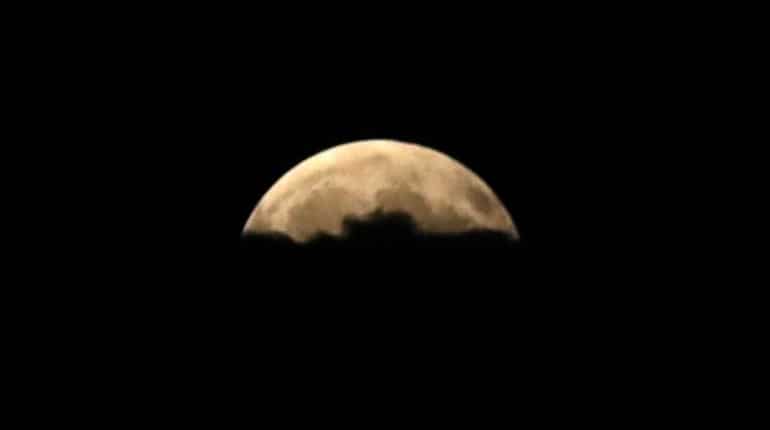
Lunar Eclipse in Varanasi
In India's northern city of Varanasi, pandits performed the famous 'aarti' on the banks of Ganges in daylight for the first time in 26 years.
3 / 11
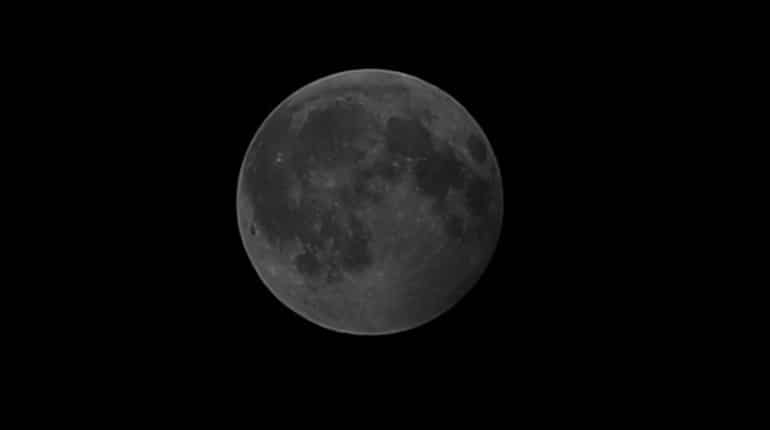
Lunar eclipse and the Holy city
Owing to the lunar eclipse on Monday, priests in Varanasi decided to change the timing of the ceremony, which is held daily in the holy city in the late evening.
Hundreds of devotees gathered around the banks of the Ganga river to witness the ceremony while temples remained closed during the 'Sutak' period - a 12-hour long period prior to the eclipse, as the duration is considered inauspicious by Hindus.
Hundreds of devotees gathered around the banks of the Ganga river to witness the ceremony while temples remained closed during the 'Sutak' period - a 12-hour long period prior to the eclipse, as the duration is considered inauspicious by Hindus.
4 / 11
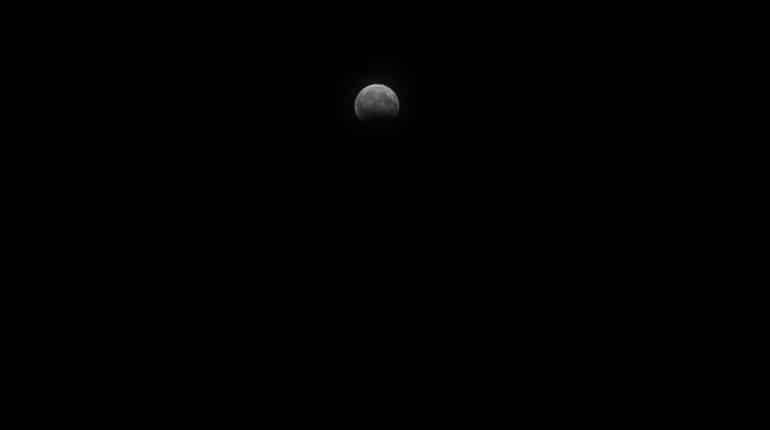
Chennai
A partial Lunar Eclipse as seen in Chennai.
5 / 11
Lunar eclipse
"We are encouraging people to start the campaign, to take a picture of them with their friends and family of eating and drinking and post it on social media platforms like Facebook, Twitter and Instagram with #EclipseEating," Ramanujam said.
"You are not scared if the mountain hides the Sun from you, so why should you be scared if Moon hides the Sun from you?" he said.
Even ancient Indian astronomers tell us that there is nothing to be afraid of from eclipses, he added.
"We want to dispell these notions because they are not based on scientific fact," Ramanujam.
The hashtag #EclipseEating was also trending during the total lunar eclipse described as a "super moon" that occurred on January 31 this year.
Uploading selfies of eating and drinking during the time of eclipse would be starting step towards breaking the false belief system prevalent in public.
"You are not scared if the mountain hides the Sun from you, so why should you be scared if Moon hides the Sun from you?" he said.
Even ancient Indian astronomers tell us that there is nothing to be afraid of from eclipses, he added.
"We want to dispell these notions because they are not based on scientific fact," Ramanujam.
The hashtag #EclipseEating was also trending during the total lunar eclipse described as a "super moon" that occurred on January 31 this year.
Uploading selfies of eating and drinking during the time of eclipse would be starting step towards breaking the false belief system prevalent in public.
6 / 11
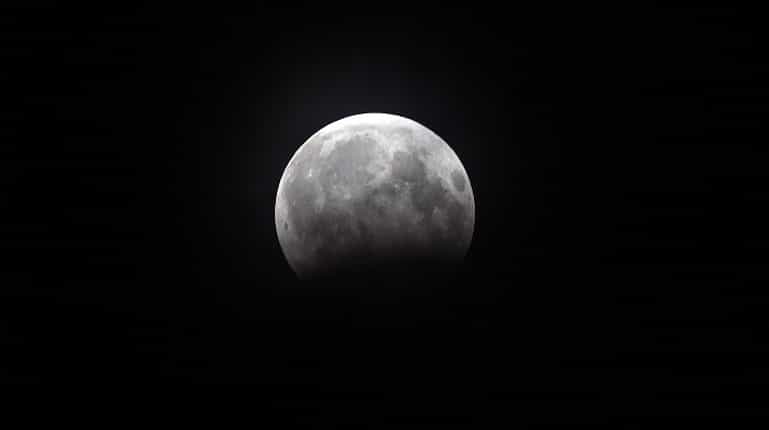
Lunar eclipse effect
The Lunar effect is generated when the sun, earth and moon become aligned and the moon crosses the shadow projected by the earth which lies between the moon and the sun.
7 / 11
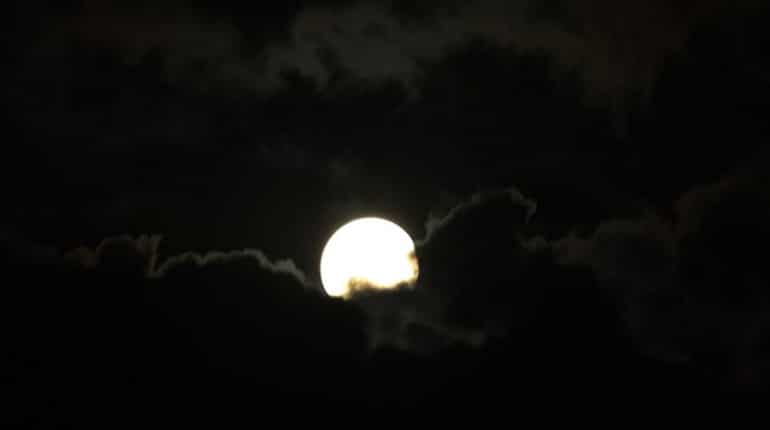
Lunar eclipse
During this eclipse, the Moon will pass through the central part of the Earth`s umbral shadow. Furthermore, the Moon will be at apogee -- farthest from the Earth in its orbit, on July 27 and will be moving at a slower speed in its orbit.
This slower moving full Moon will take longer time and greater distance of Earth`s umbral shadow cone to travel, making it the longest duration of total eclipse of this century.
Such long duration of total lunar eclipses had earlier occurred on July 16, 2000 for totality duration of 1 hour 46 minutes and another one on June 15, 2011 for totality duration of 1 hour 40 minutes, the statement said.
This slower moving full Moon will take longer time and greater distance of Earth`s umbral shadow cone to travel, making it the longest duration of total eclipse of this century.
Such long duration of total lunar eclipses had earlier occurred on July 16, 2000 for totality duration of 1 hour 46 minutes and another one on June 15, 2011 for totality duration of 1 hour 40 minutes, the statement said.
8 / 11
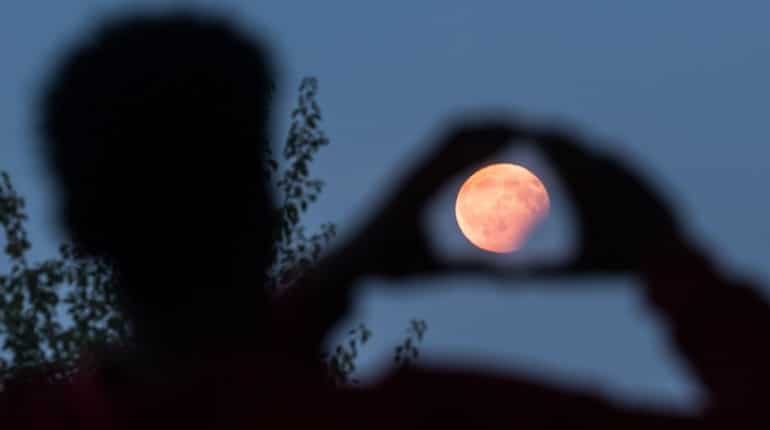
Lunar eclipse
If you missed the trilogy of supermoons earlier this year, the Lunar eclipse -- the longest of the 21st century -- set to occur on Friday, will offer you a rare celestial treat.
The celestial spectacle, which would be seen in its entirety from all parts of India, last for 1 hour 43 minutes, making it the longest total lunar eclipse of this century (2001 AD to 2100 AD), the Ministry of Earth Science had said.
The partial eclipse of the Moon will begin at 11.54 pm on July 27. The Moon will be gradually covered by the Earth`s shadow and the totality phase will begin at 1 am IST on July 28 and the total eclipse will last upto 2.43 am. Then the Moon will start to gradually come out of Earth`s shadow and partial eclipse will end at 3.49 am., the statement said.
The celestial spectacle, which would be seen in its entirety from all parts of India, last for 1 hour 43 minutes, making it the longest total lunar eclipse of this century (2001 AD to 2100 AD), the Ministry of Earth Science had said.
The partial eclipse of the Moon will begin at 11.54 pm on July 27. The Moon will be gradually covered by the Earth`s shadow and the totality phase will begin at 1 am IST on July 28 and the total eclipse will last upto 2.43 am. Then the Moon will start to gradually come out of Earth`s shadow and partial eclipse will end at 3.49 am., the statement said.
9 / 11
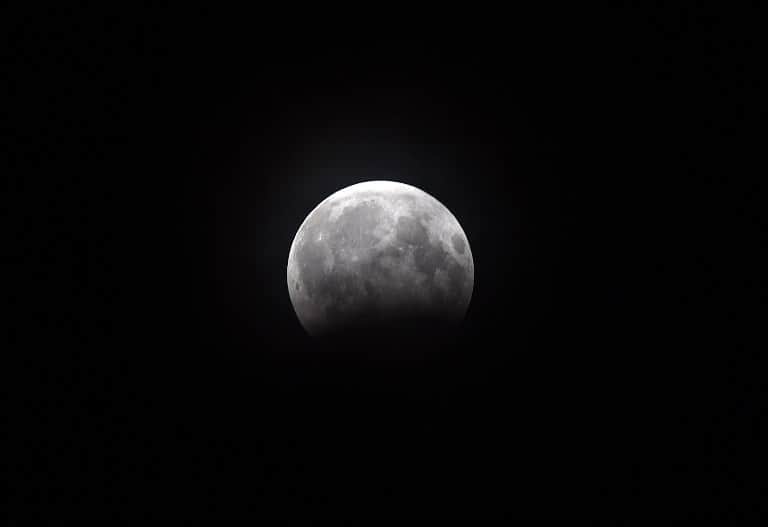
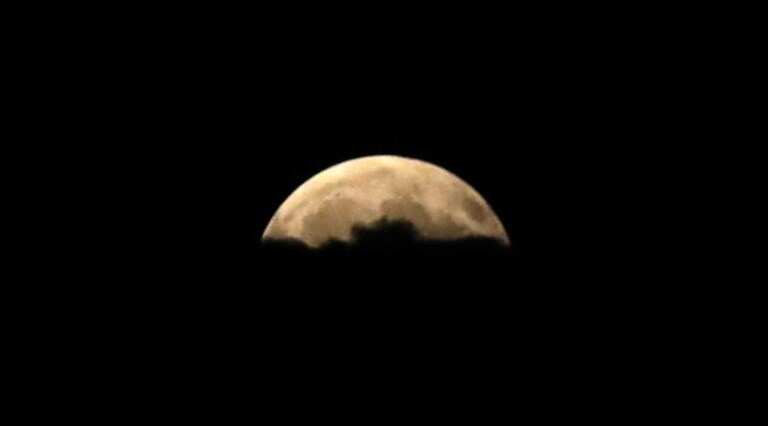
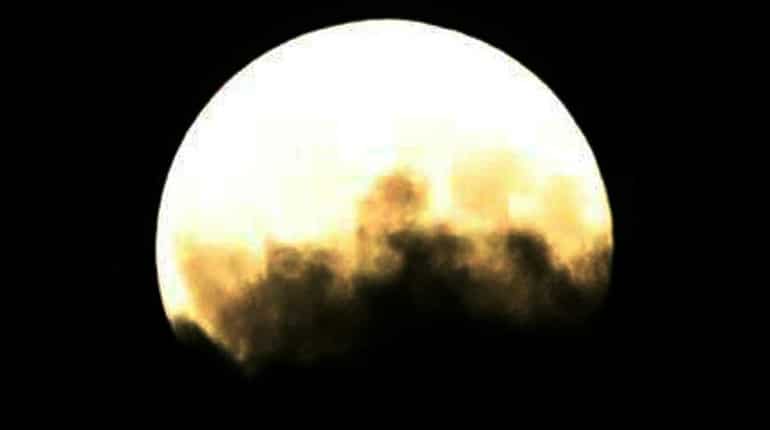
Lunar eclipse in Ankara
The moon is seen during the partial Lunar Eclipse in Ankara on August 7, 2017.
10 / 11
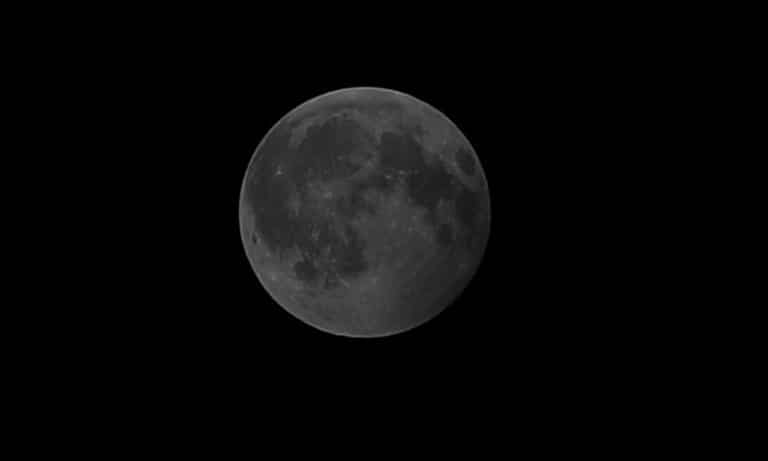
Ankara eclipsed
The moon is seen during the partial Lunar Eclipse in Ankara on August 7, 2017.
The phenomenon occurs when the moon moves through the outer part of the Earth's shadow, blocking part of the sunlight from reaching the moon and causing it to appear three-forth than normal.
The phenomenon occurs when the moon moves through the outer part of the Earth's shadow, blocking part of the sunlight from reaching the moon and causing it to appear three-forth than normal.
11 / 11
Lunar eclipse
Moreover, the Sun and Mars will also lie opposite to each other, keeping the Earth in the middle.
This will result in Mars coming close to the Earth, causing it to appear brighter than normal and it will be seen from evening to dawn towards the end of July.
The brighter Mars will remain very close to the eclipsed Moon in the sky on July 27-28 and can be spotted very easily with the naked eye, the statement said.
The eclipse will be visible in parts of South America, much of Africa, the Middle East and Central Asia. For viewers in India, the eclipse, both partial and the total, will be visible in its entirety from all parts of the country.
This will result in Mars coming close to the Earth, causing it to appear brighter than normal and it will be seen from evening to dawn towards the end of July.
The brighter Mars will remain very close to the eclipsed Moon in the sky on July 27-28 and can be spotted very easily with the naked eye, the statement said.
The eclipse will be visible in parts of South America, much of Africa, the Middle East and Central Asia. For viewers in India, the eclipse, both partial and the total, will be visible in its entirety from all parts of the country.
)
)
)
)
)