KC-135 tanker crews who make every B-2 bomber mission possible and who nobody ever writes about

Every B-2 mission that has ever flown more than a few hundred miles from Missouri has depended on aerial refuelling. On a 44-hour mission to Afghanistan or a 25-hour mission to Libya, the B-2 takes on fuel multiple times from KC-135 Stratotankers and KC-10 Extenders.
Why B-2 Missions Require Aerial Refuelling
The B-2 Spirit carries approximately 167,000 pounds of fuel — more than most commercial airliners weigh fully loaded. Despite this, the aircraft's four engines burn fuel at a rate that limits its unrefuelled range to approximately 6,000 nautical miles. For missions from Missouri to Afghanistan, Libya, or the Korean Peninsula, that range is insufficient. Multiple refuellings are required — planned at specific points along the route where tanker aircraft, themselves already positioned along the route, can rendezvous and transfer fuel. Without the tanker force, the B-2 cannot execute its signature ultra-long missions.
The KC-135 And KC-10: The Aircraft Behind The B-2
The primary tankers supporting B-2 operations are the Boeing KC-135 Stratotanker — a derivative of the 1950s-era Boeing 707 — and the McDonnell Douglas KC-10 Extender, a modified DC-10 airliner. The KC-135 can transfer approximately 200,000 pounds of fuel per sortie. The KC-10 can carry more and has greater range. Both aircraft use a flying boom system — a rigid refuelling arm extended from the tanker's tail — to transfer fuel to the receiver aircraft. The boom operator controls the boom from a prone position in the tanker's rear, looking through a window at the aircraft below.
What Refuelling A Flying Wing Actually Looks Like
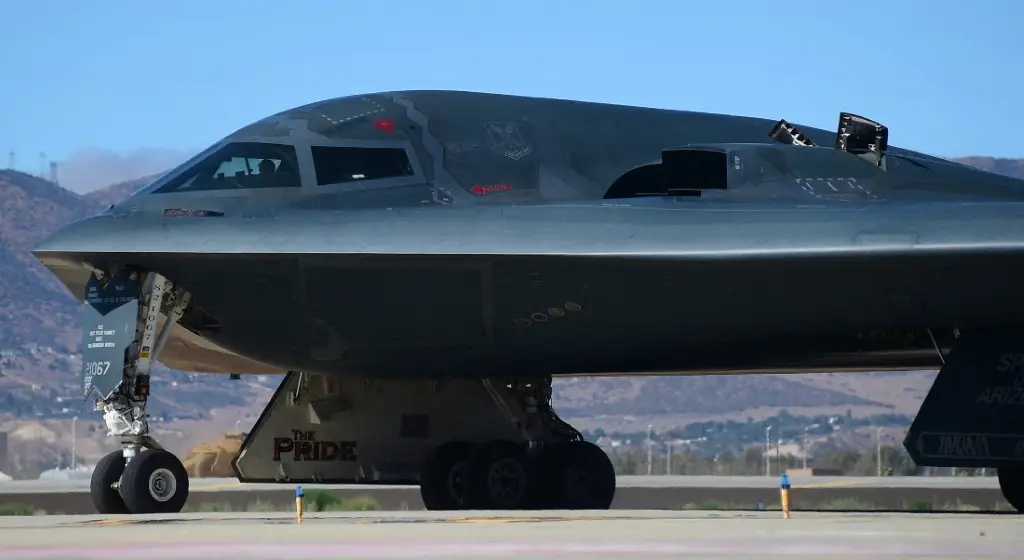
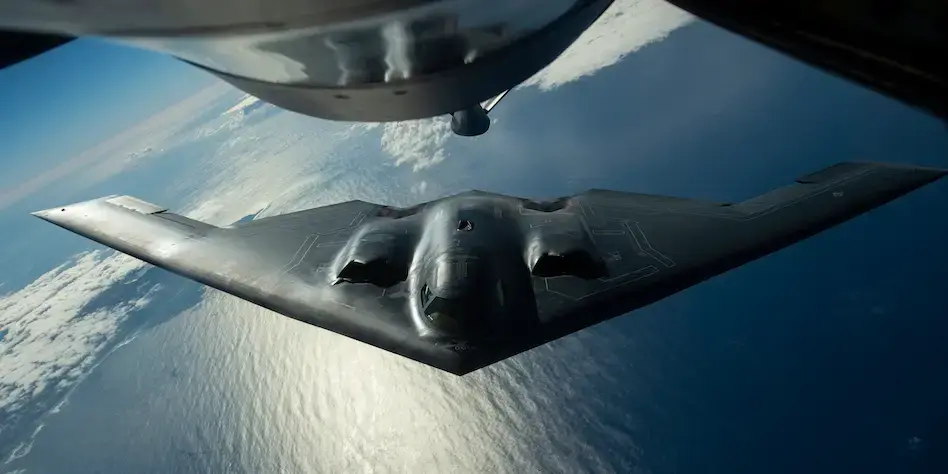
Refuelling a conventional aircraft from a boom is demanding. Refuelling a B-2 is different. The flying wing's unusual shape and its fly-by-wire handling characteristics mean its behaviour during the refuelling approach is unlike that of any other receiver aircraft. The B-2 moves into position below and behind the tanker, closing to within feet of the boom, and holds that position while the boom operator makes the connection. The B-2's lack of a conventional tail means it responds to turbulence differently than other aircraft, requiring constant subtle inputs from the pilot to maintain the precise formation position that refuelling demands.

The Boom Operator's Job
The boom operator — known in the tanker community as the boomer — lies prone in the rear of the tanker aircraft, looking out through a window at the receiver aircraft below. The boomer controls the boom using a joystick, extending and steering the nozzle to make contact with the receptacle on the receiver aircraft's upper fuselage. Once contact is made, fuel flows automatically until the transfer is complete or the connection is broken. A refuelling that goes badly — a disconnect at high fuel flow rate, a boom strike on the receiver's fuselage — can damage both aircraft. The boomer's precision is the margin between a completed refuelling and an aborted mission.
Night Refuelling Over The Ocean
Most B-2 missions involve night refuellings — the aircraft travels under the cover of darkness and meets its tankers at pre-planned rendezvous points over open ocean. Night aerial refuelling removes the visual references that make formation flying intuitive and replaces them with instruments, lights on the tanker's belly, and the boom operator's guidance over the intercom. Both the B-2 pilot and the boomer are flying essentially blind except for their instruments and each other's communications. The first refuelling on a long mission, typically over the Atlantic a few hours after takeoff, sets the tone for everything that follows.
The Planning Behind Every Rendezvous
A B-2 refuelling rendezvous is not improvised. It is planned weeks in advance as part of the overall mission profile, with specific geographic coordinates, altitudes, airspeeds, and time windows assigned to each refuelling event. Tanker aircraft are pre-positioned along the route, taking off from bases hours before the B-2 departs Whiteman so they arrive at the rendezvous point at the correct time. If a tanker is unavailable at a critical rendezvous, the B-2 mission may have to abort. The tanker crews execute their missions with no public acknowledgement, no post-mission press release, and no mention in the news reports that follow.
The Unsung Qualification
Tanker crews who support B-2 operations must be qualified in the specific procedures and communications protocols that B-2 missions require. The B-2's classified communication systems and stealth management procedures affect how the aircraft communicates during refuelling — the tanker crew must understand what they will and will not hear from the receiver. They must understand the B-2's unusual handling characteristics to anticipate disconnects and respond correctly. They are briefed on classified aspects of the mission that their non-B-2-support colleagues are not read into. The tanker crews behind every B-2 mission carry a security clearance and a skill set that is rarely recognised outside the tight community that knows how these missions actually work.
)
)
)
)
)