Investigations start as charred Japan Airlines parts lie on tarmac

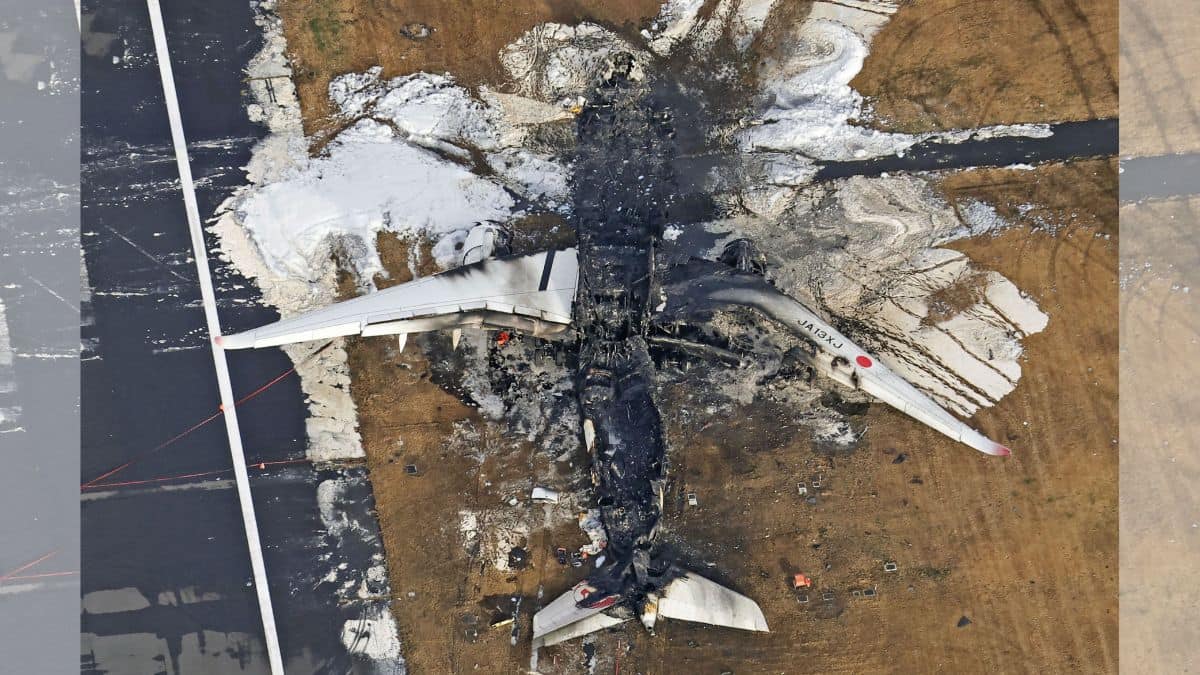
A lucky escape
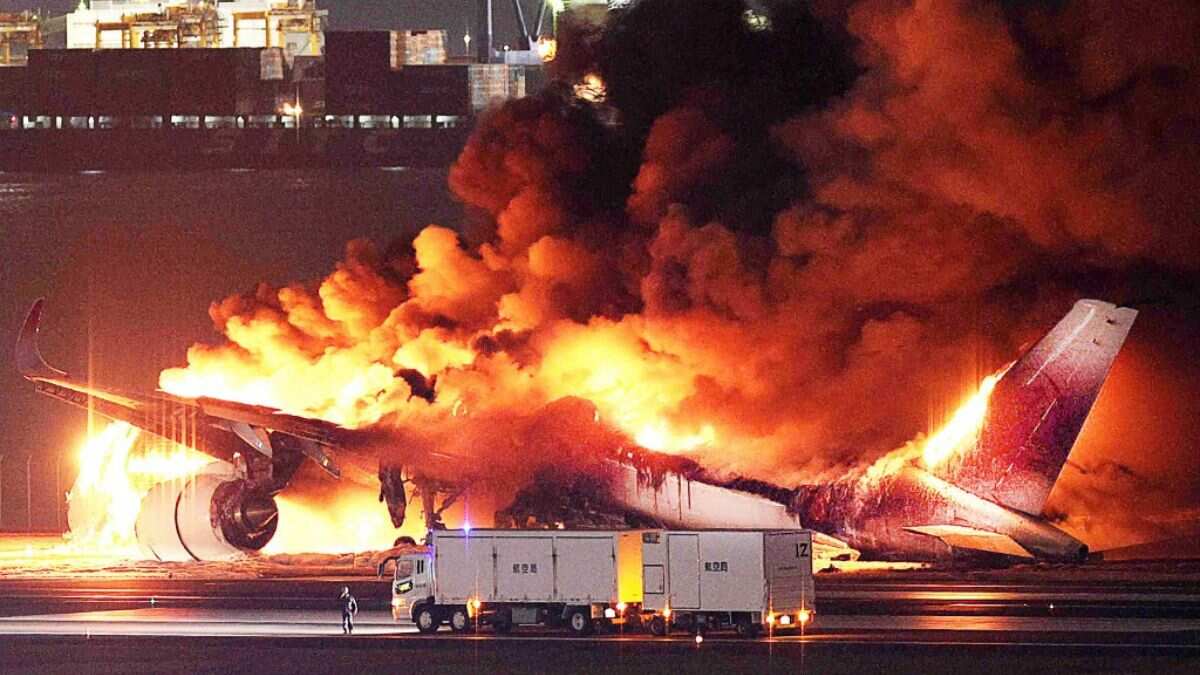
While all 379 passengers and crew on the Japan Airlines Airbus managed to escape unharmed, five people on the Coast Guard aircraft perished. The captain of the coast guard plane was its lone survivor, however, he too suffered serious injuries.
The Airbus' remains stand as a charred testament to the narrowness of lucky escape. A few hundred metres away lies the remains of the Coast Guard plane.
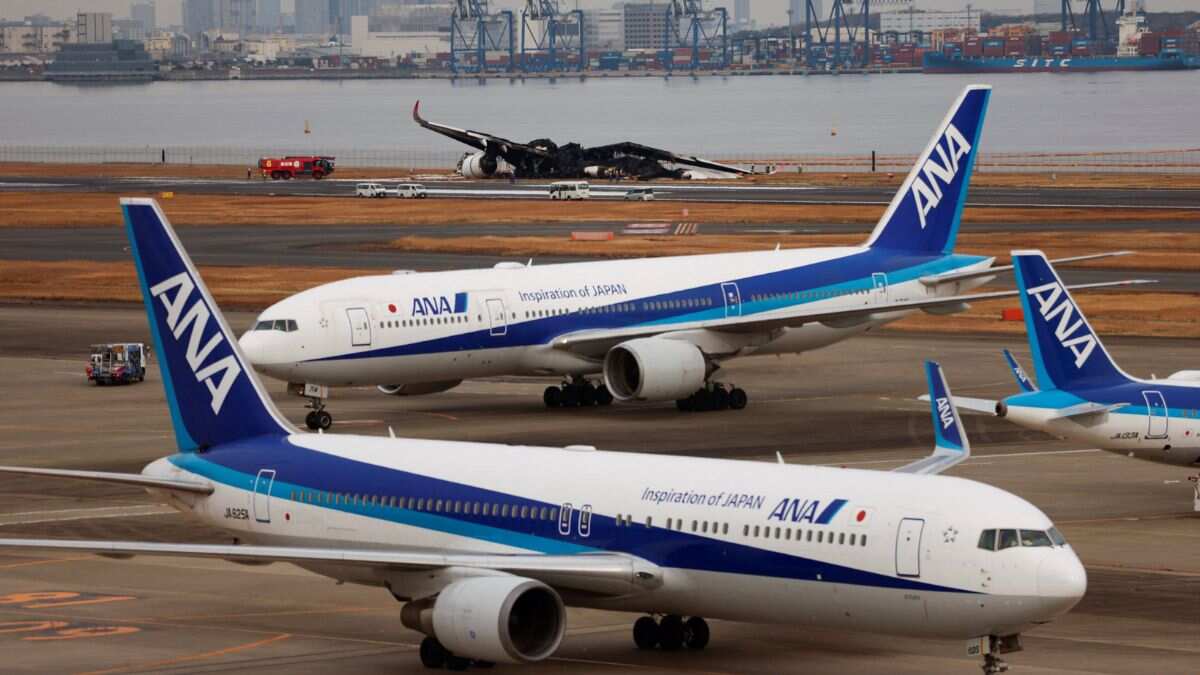
Officials vow to get to the bottom of the crash
The tragic incident comes as a surprise for Japan, which, as per AFP, hasn't seen a serious commercial aviation accident for decades. Government officials have pledged to look into the accident.
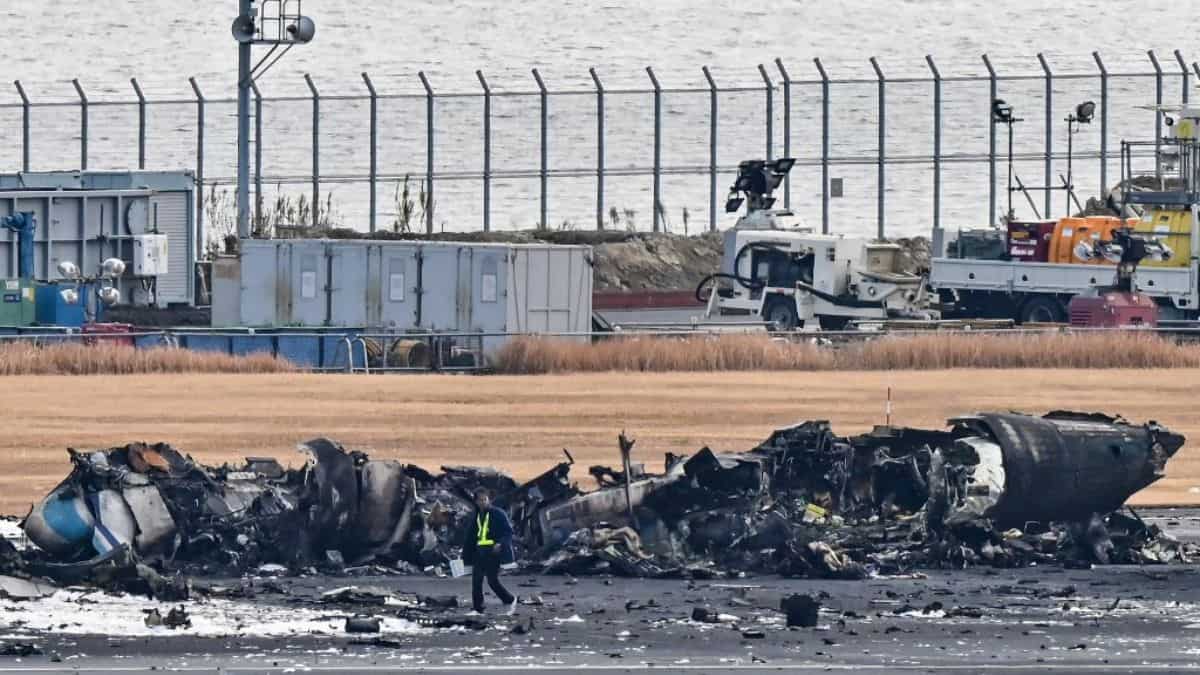
France's Airbus to help
Plane maker France's Airbus, which had manufactured the JAL plane, said that it would send a team of specialists to help Japanese authorities investigate the near-collision.
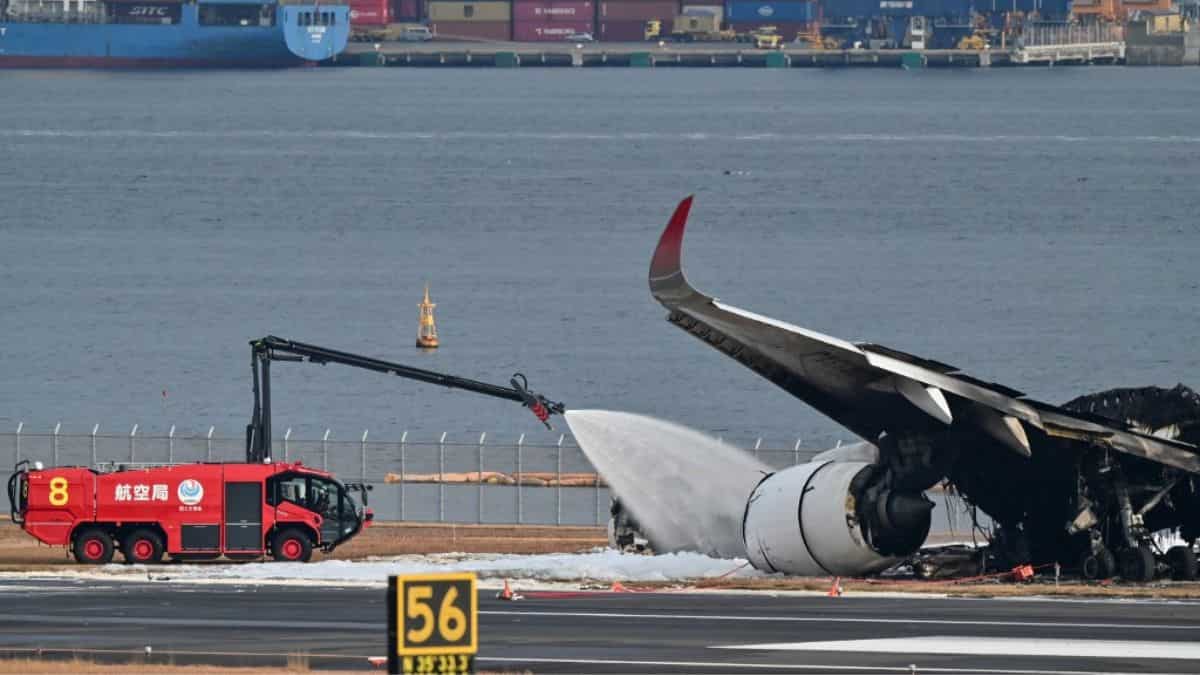
Landing permission
Amid the ongoing investigation, questions arise about the landing permission granted to the Japan Airlines flight.
Speaking at a press briefing late on Tuesday, officials responding to questions about landing permission for a Japan Airlines flight said: "Our understanding is that it was given".
While the JAL and land ministry have declined to comment on exchanges between flight controllers and the two planes, in a recording from Haneda's control tower, a voice can be heard advising the JAL flight to "continue approach".
As per NHK, the coast guard plane was instructed to hold short of the runway. However, the report also quoted an unnamed Coast Guard official who said that the pilot, Genki Miyamoto, had permission to take off.
PM Kishida praises deceased crew members
Lauding the deceased crew, Prime Minister Fumio Kishida lauded the deceased crew members who were on their way to assist the earthquake victims elsewhere in Japan.
"These were employees who had a high sense of mission and responsibility for the affected areas," said Kishida on Tuesday.
The incident prompted the grounding of many domestic flights at Haneda Airport, a major global hub, while international operations experienced minimal disruption.
)
)
)
)
)