India’s third nuclear submarine: How INS Aridhaman could give Pakistan & China sleepless nights-All you need to know

India’s third nuclear-powered ballistic missile submarine, INS Aridhaman, is poised to make its presence in the Indo-Pacific in April-May 2026. Currently, India has two nuclear-powered ballistic missile submarines: INS Arihant and INS Arighat. Let's try to know more about INS Aridhaman.
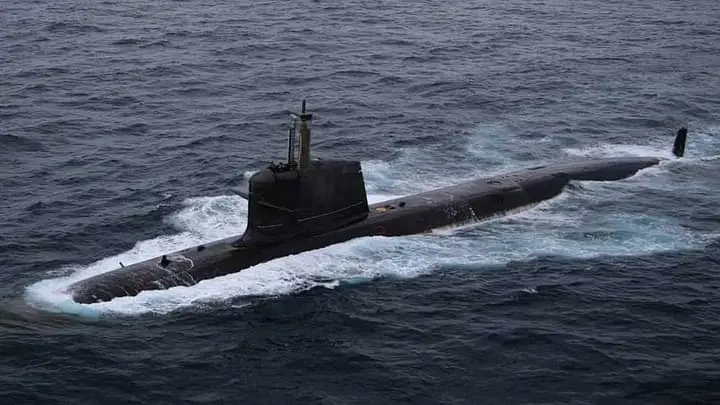
INS Aridhaman: Codenamed S4
INS Aridhaman, with the codenamed S4, has completed its final stage of deep-sea trials and is set to be inducted between April and May 2026. The move marks the advancement of the Indian Navy with the high-end defence technology, featuring nearly 75 per cent indigenous content under "Atmanirbhar Bharat" (self-reliant India).
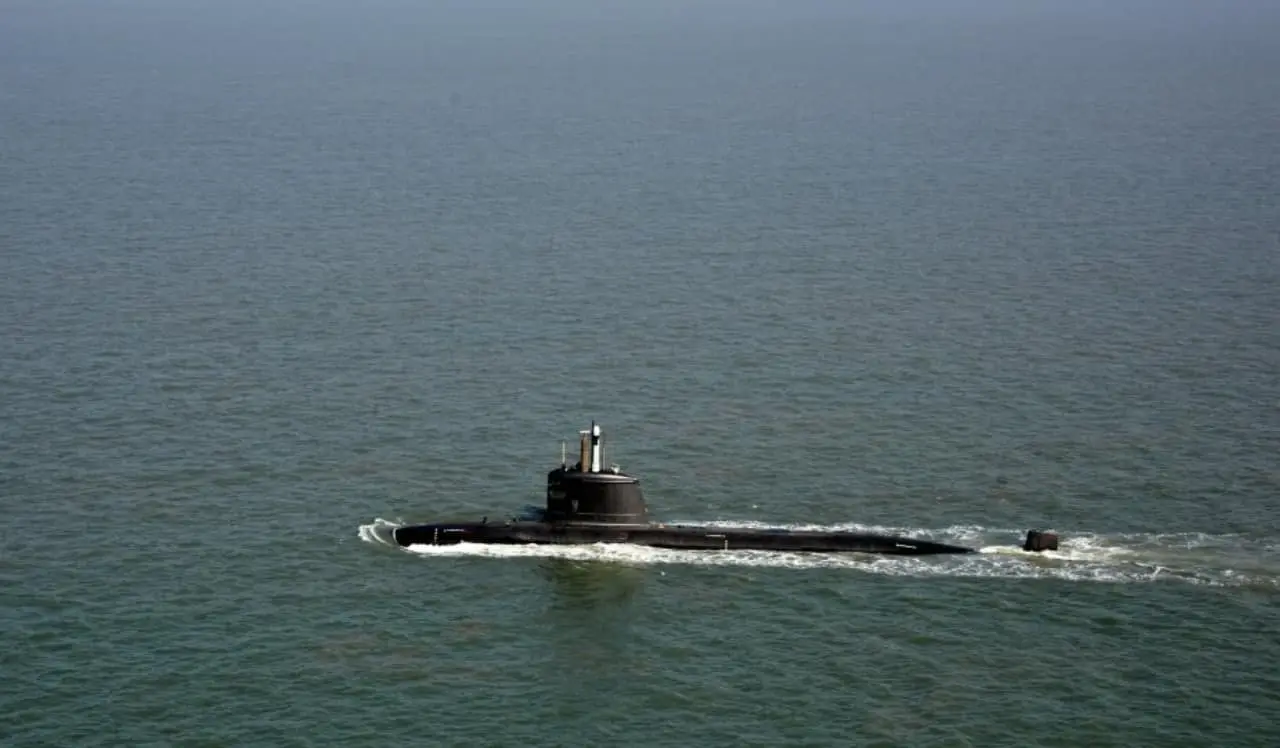
Technical specifications and design upgrades
INS Aridhaman has been built at the Ship Building Centre in Visakhapatnam under the secretive Advanced Technology Vessel (ATV) project, representing a substantial development over another nuclear-powered ballistic missile submarine (SSBN), INS Arihant and INS Arighaat. It displaces nearly 7,000 tonnes, making it approximately 1,000 tonnes more heavy as compared to the lead ship of its class. This increase in displacement is linked to a lengthened hull design of about 130 meters, designed to house a heavier missile complement. It is powered by an enhanced 83 MW pressurised light-water reactor, giving it near-unlimited operational range and making sustained underwater speeds of up to 24 knots.
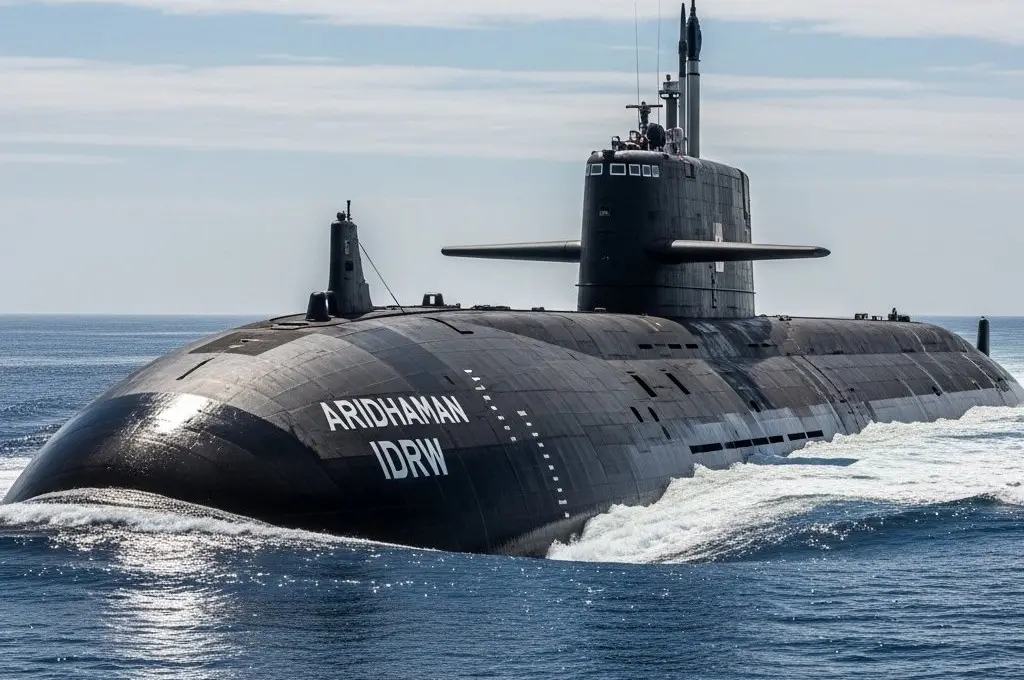
Enhanced firepower and strategic reach
Aridhaman’s most significant upgrade is its vertical launch system (VLS). While earlier submarines had four launch tubes, Aridhaman features eight, effectively doubling strike capability. It can be armed with up to eight K-4 intermediate-range ballistic missiles with a reach of 3,500 km, or alternatively, 24 K-15 “Sagarika” short-range missiles. The K-4’s integration strengthens long-range deterrence, allowing the Indian Navy to engage strategic targets while remaining within the protected bastion of the ay of Bengal.
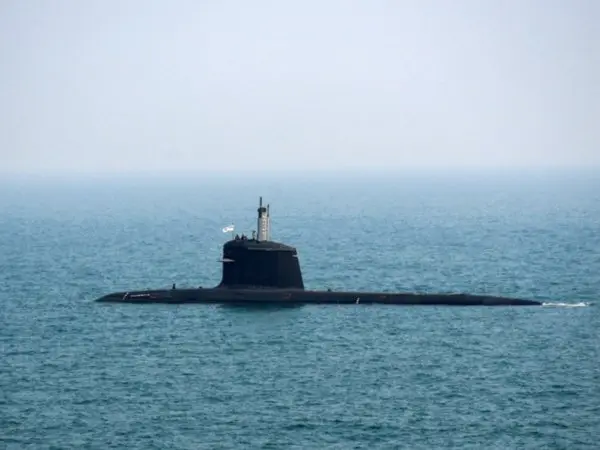
Maritime security
The induction of Aridhaman represents a major milestone in India’s maritime security, strengthening its sea-based nuclear deterrent under the “No First Use” doctrine. Meanwhile, Naval experts indicated that a fleet of at least three SSBNs is considered vital to maintain continuous at-sea deterrence, ensuring one vessel is always on patrol. In addition, Aridhaman offers unmatched stealth and survivability with enhanced acoustic silencing and advanced indigenous sonar systems, making it the most resilient component of India’s nuclear triad.

Why threat for Pakistan and China?
Posing a significant challenge to regional rivals like China and Pakistan, INS Aridhaman is engineered for stealth over speed. Its ability to navigate deep waters undetected makes it a premier asset for covert surveillance and precision strikes during conflicts. That means the vessel sacrifices high speed for the "ghost-like" ability to conduct surveillance and launch attacks from within hostile zones.
)
)
)
)
)