IN PICS | South Koreans protest IAEA chief's visit over Fukushima water release


Protests across Seoul
Hundreds of protesters took to the streets of Seoul, on Saturday (July 8) amid a visit from the United Nations nuclear watchdog's chief.
This comes as South Koreans have opposed Japan's plan to discharge treated water from the Fukushima nuclear plant.
The Director General of the International Atomic Energy Agency (IAEA) Rafael Grossi, had arrived in the South Korean capital city of Seoul, on Friday, for a three-day visit, in a bid to calm fears over Japan's plan and explain their findings in detail.
What has the IAEA said about Japan's plan?
The UN watchdog released a report, earlier this week, following a two-year review which showed that the water release would have a negligible impact on the environment.
Additionally, following a visit to the Fukushima Daiichi nuclear power plant Grossi, last week vouched for the safety of Japan's plan after surveying the facility.
He also assured that there were no pending issues and inaugurated an IAEA office on site that will monitor the release of the water, a process which will take three to four decades to complete.
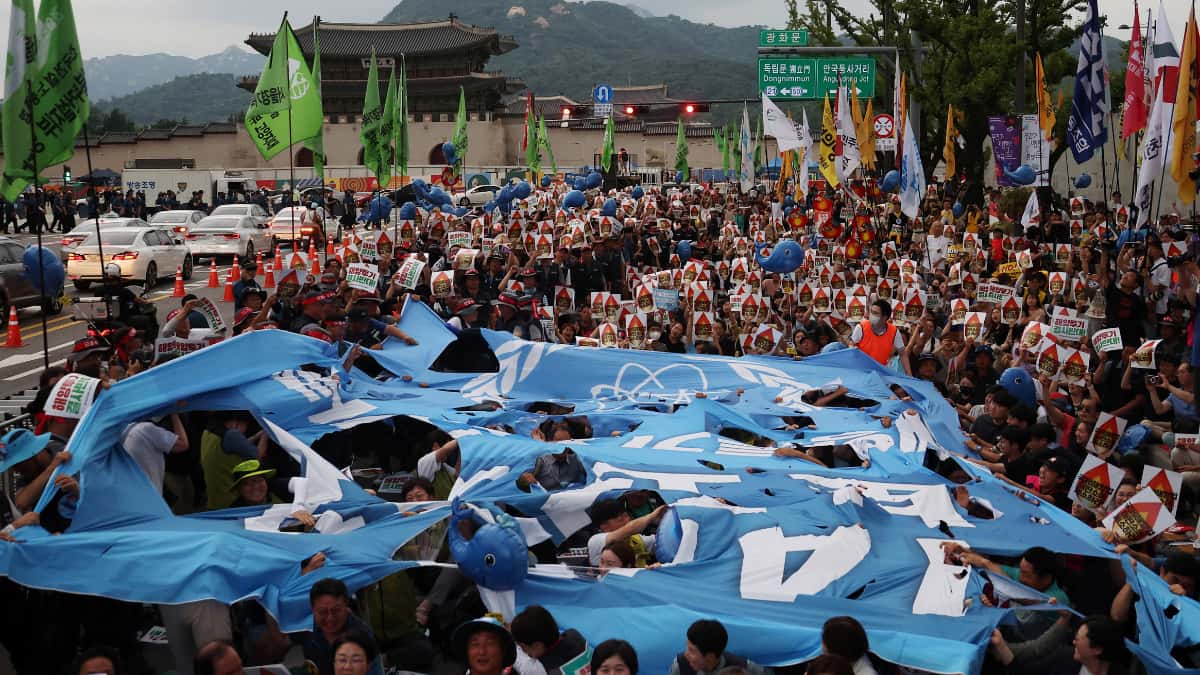
The image shows South Korean protesters tearing up a giant banner depicting the logo of the International Atomic Energy Agency (IAEA) during the protest in Seoul, on July 8.
No 'meaningful impact' on South Korean waters: govt
The South Korean government, on Friday, said that it respected the IAEA report and its approval for the release. This comes as Japan has faced opposition to its plan for releasing more than a million tons of treated radioactive water.
However, the South Korea's government's own analysis found that the release will not have "any meaningful impact" on its waters.
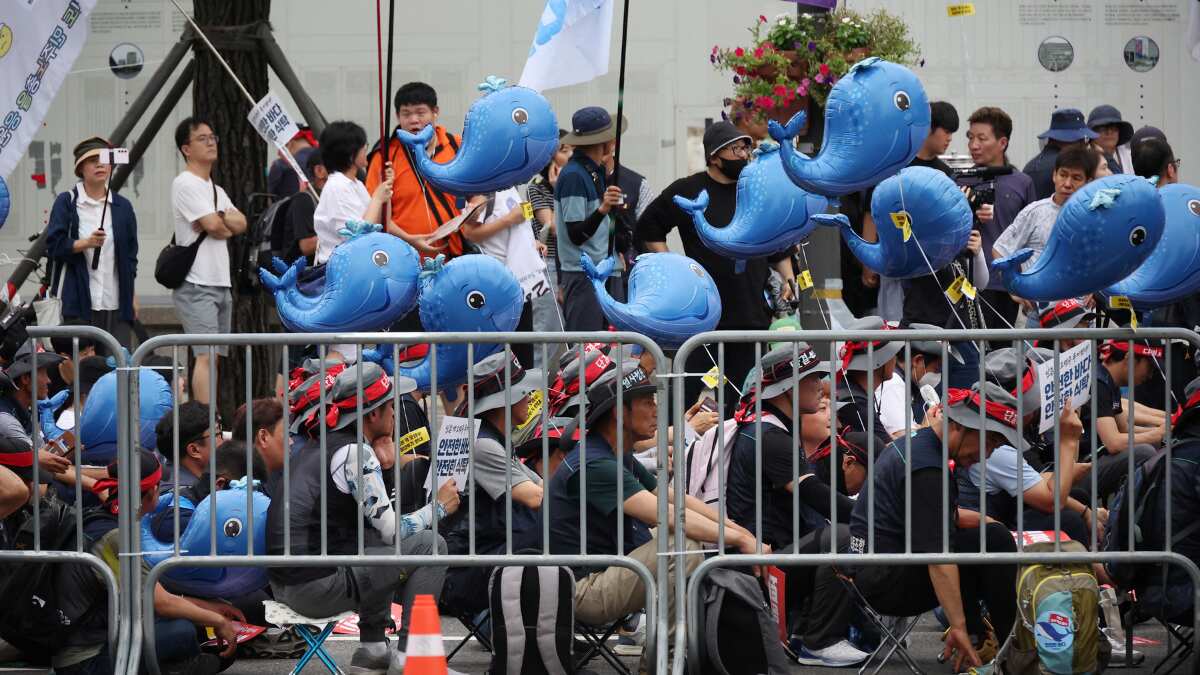
But the people are not convinced. Hundreds of South Koreans, including children and members of the Korean Confederation of Trade Unions, took to the streets in Seoul in protest over the discharge plan.
Images show some people even carried banners and blue balloons in the shape of whales.
What are the people's concerns?
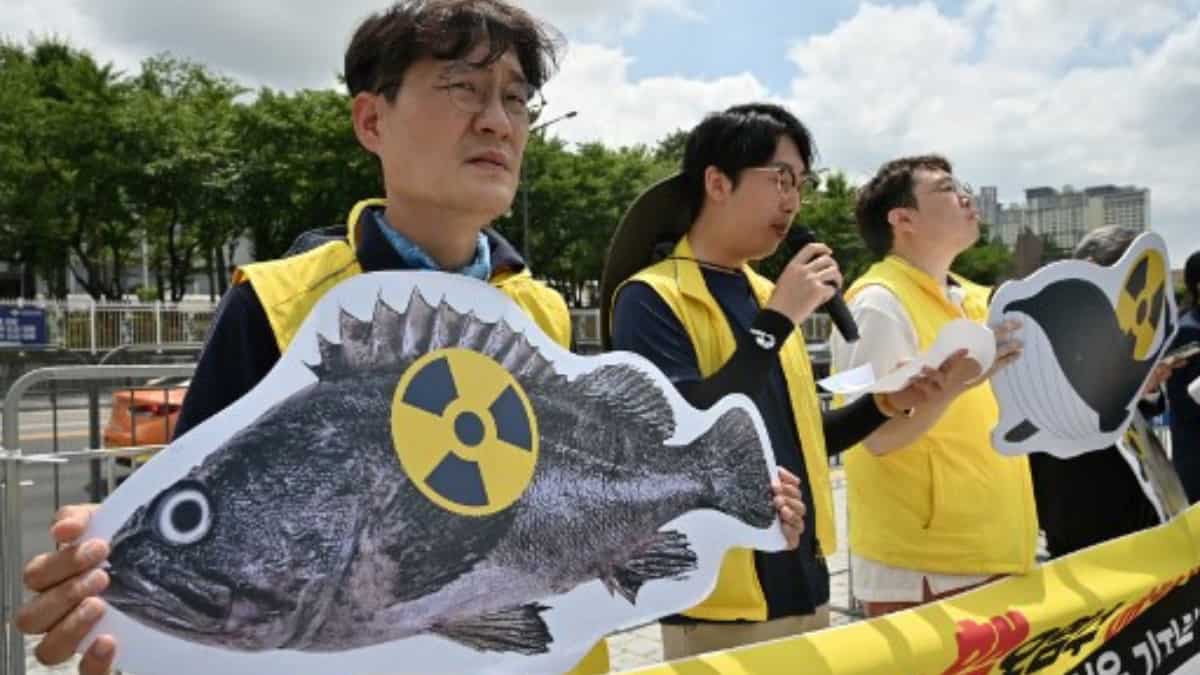
A university student named Kim Han-bi (not in the image) told Reuters, "It makes little sense to argue that the release is okay because it does not harm humans. Animals also live in the ocean."
It is also worth noting that despite South Korea's assent to Japan's plan, a ban on food and seafood products from the Fukushima region will remain in place.

South Korea reiterates its position to IAEA chief: ministry
South Korean Foreign Minister Park Jin told Grossi, on Saturday that Seoul's consistent position that the contaminated water should be verified for safety and treated in a way that complies with international law and standards, said the ministry, in a statement.
It added, Park also sought the IAEA for help in verifying safety and reassuring the public, reported Reuters.
Japan faces opposition on multiple fronts
People in South Korea are not the only ones opposed to Japan's plan as it Tokyo is also expected to face sustained opposition from China.
Additionally, the South Korean opposition Democratic Party leader Lee Jae-myung said that the government should have opposed the plan and taken the matter up with the International Tribunal for the Law of the Sea.
The Chinese state-run Global Times newspaper, earlier this week, reported that a Chinese expert in the group was disappointed with the "hasty" report, reported Reuters.
Japan has faced protests within the country as fishing unions, which have long opposed the plan, saying that it would undo years of work to repair reputational damage after several countries banned some Japanese food products over the fear of radiation.
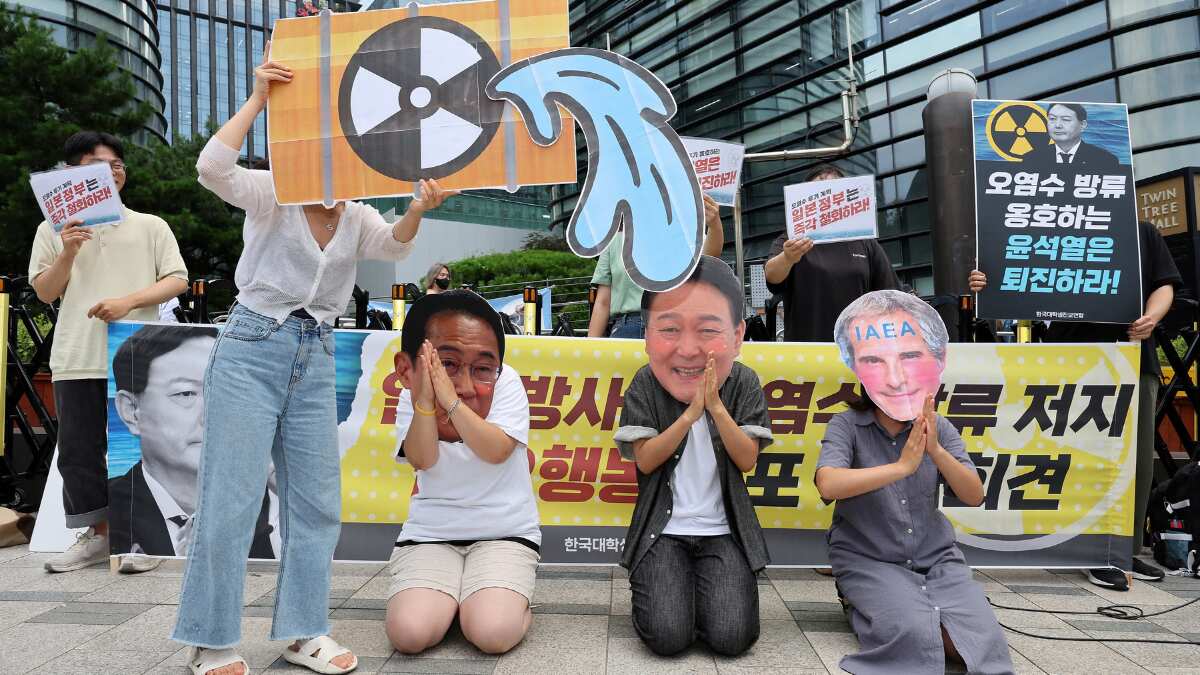
The image shows students wearing masks featuring Japanese Prime Minister Fumio Kishida, South Korean President Yoon Suk Yeol and IAEA chief Rafael Grossi during a protest in Seoul, on July 7.
)
)
)
)
)