In pics | ‘Red alert’ in Beijing: Thousands evacuated after storm Doksuri slams China


Storm Doksuri reaches Beijing
Doksuri, the storm that tore through the Pacific last week and continued to wreak havoc in parts of China, on Monday (July 31) was downgraded from a typhoon on Sunday. Over the weekend, the Chinese weather agency issued a red alert for torrential rain in the capital city of Beijing.
The storm has also prompted tens of thousands of people to evacuate from the Chinese capital after pummelling the Philippines and Taiwan as well as China’s coast, last week.

At least two people killed in Chinese capital
At least two people were killed amid torrential rains and floods in the Chinese capital city on Monday, where roads were turned into rivers trapping hundreds of people overnight, as per media reports.
In Beijing’s western suburbs, Mentougou district, rescuers found two bodies in a river during an emergency patrol and reported that hundreds were pulled to safety.

Evacuations and damage
The Chinese weather agency issued a red alert – the highest warning – for torrential rain in Beijing, home to 22 million people. The warnings have since prompted the evacuations of over 31,000 people, reported the state media on Monday.
Images and videos from Beijing show streets transformed into rivers overnight, affecting as many as 358 roads across the Chinese capital where cars were seen submerged while others were swept away in the floods.
Both airports in the Chinese capital cancelled more than 200 flights on Monday afternoon, with close to 600 delayed, said a report by Reuters citing data from flight tracking app Flight Master.

Buzzing streets in Beijing mostly deserted
Beijing residents had been asked not to go outside unless necessary, leaving the usually buzzing streets mostly deserted, over the weekend.
This comes after the officials had warned about floods, swelling rivers, mudslides and landslides.
The National Centre for the Performing Arts, located near Tiananmen Square, cancelled opera and musical performances scheduled for Sunday.
The warnings have also prompted authorities in the Chinese capital to close several tourist spots, including the Forbidden City, libraries, museums and parks as well as suspend sporting events, according to media reports.
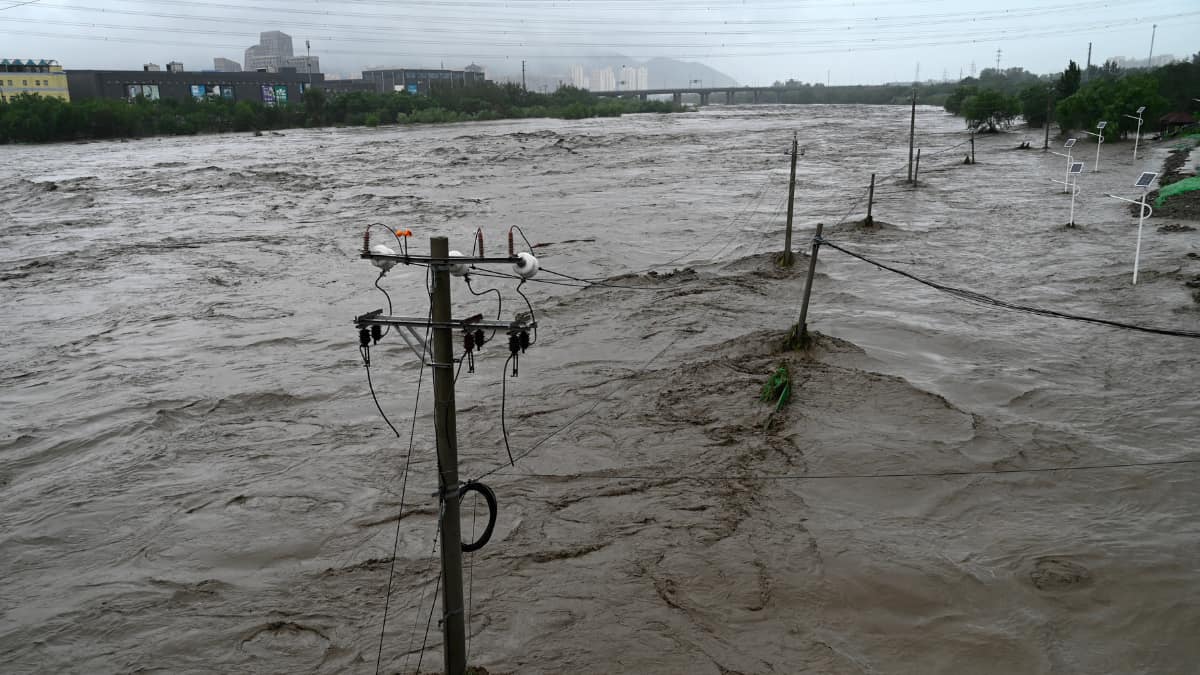
Situation in neighbouring town and provinces
The heavy rains due to storm Doksuri also led to the issuance of alerts in Beijing’s neighbouring city of Tianjin as well as Hebei province.
Three of the five rivers that make up the Hai River basin reportedly rose to dangerous levels on Monday.
Additionally, some houses washed away in the Yongding River while at least 55,000 people were evacuated from their homes in Baoding City, as per media reports.

Damage in China's Fujian
The typhoon made landfall in Fujian on Friday after it tore through the Pacific earlier this week and lost some intensity as it neared the Philippines.
Doksuri was the most powerful typhoon to hit China this year and the second-strongest to hit the southeastern province of Fujian since 2016, where it affected as many as 880,000 people with more than 354,400 people evacuated and resettled.
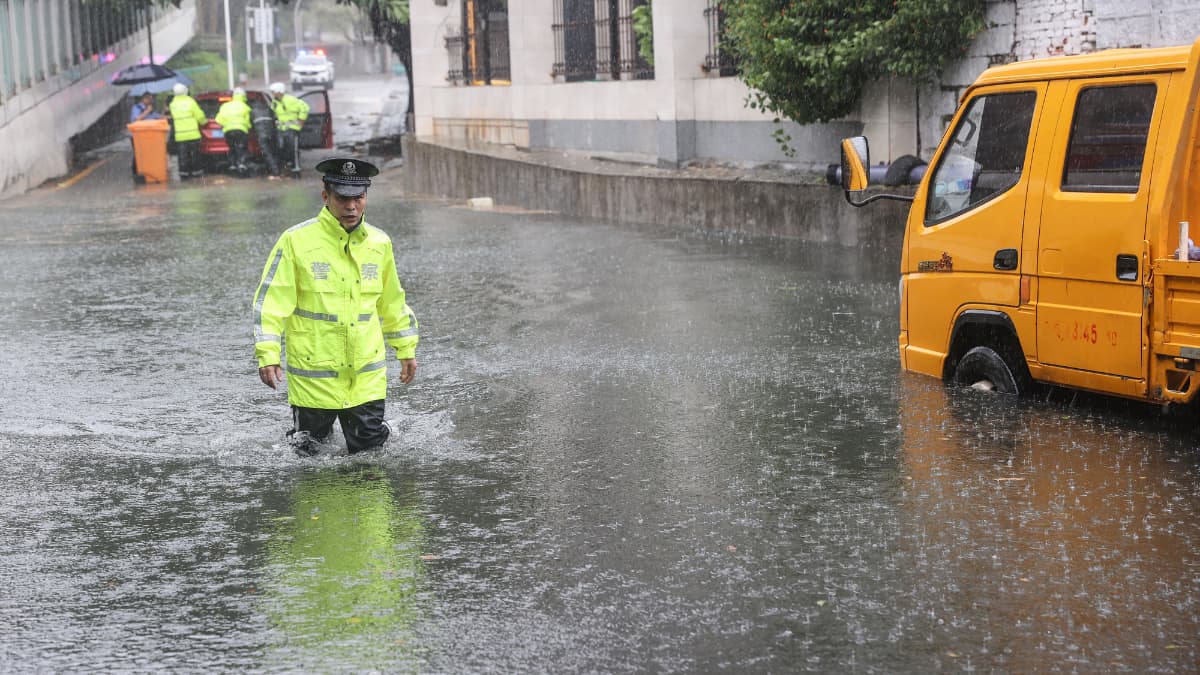
Typhoon Doksuri pummels Chinese provinces
Fuzhou, along with neighbouring cities Putian and Xianyou, reported the heaviest daily precipitation since 1961. Images and videos show downed power lines, flooded streets, and uprooted trees in coastal Fujian province.
Social media posts showed emergency workers clearing fallen trees and landslides, and people wading in thigh-high flood waters after Doksuri’s landfall, according to Reuters.

China issues warning for third typhoon in three weeks
Chinese forecasters also warned about the approach of another storm named ‘Khanun’, which is expected to rapidly gain strength and strike China’s densely populated coast, next week.
On the same day that Doksuri got downgraded from a typhoon, the Chinese weather agency updated Khanun to typhoon from tropical storm status.
Hong Kong Airlines, on Sunday, also cancelled two flights from Japan’s Okinawa on Monday due to Khanun. The upcoming typhoon is also expected to inflict further damage to corn and other crops that have already been hit by Doksuri, said the Chinese agriculture ministry.
The storms come as China has been facing multiple extreme weather events and recently recorded the highest temperature of 52.2 degree Celsius.
)
)
)
)
)