In pics | Pro-Palestinian and march against antisemitism draw nearly 100,000 in London

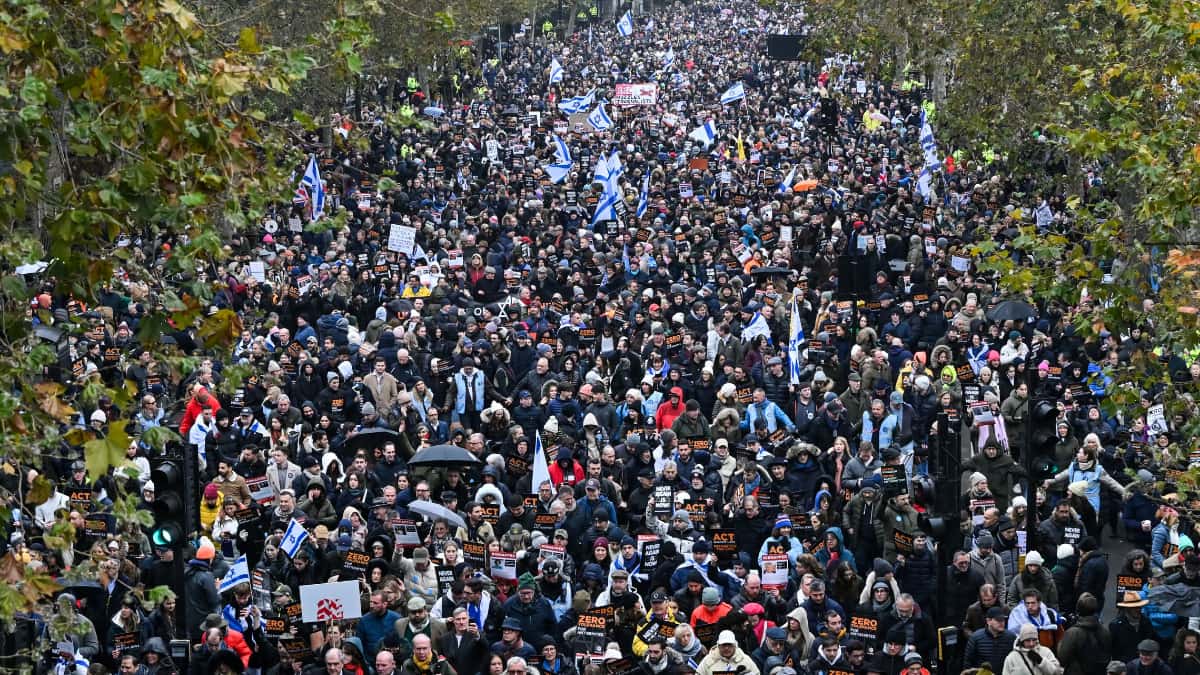
Around 50,000 people march against antisemitism
At least 50,000 people took to the streets in London on Sunday (Nov 26) to protest against a rise in hate crimes against Jews since the beginning of the Israel-Hamas war on October 7.
The march took place a day after pro-Palestinian marchers rallied through the British capital with antisemitic banners on display, despite police warnings, calling for a permanent ceasefire in Gaza.
The city’s Metropolitan Police said that they arrested over a dozen people, on Saturday (Nov 25) including at least five people for suspected incitement of racial hatred while the majority of people protested peacefully.
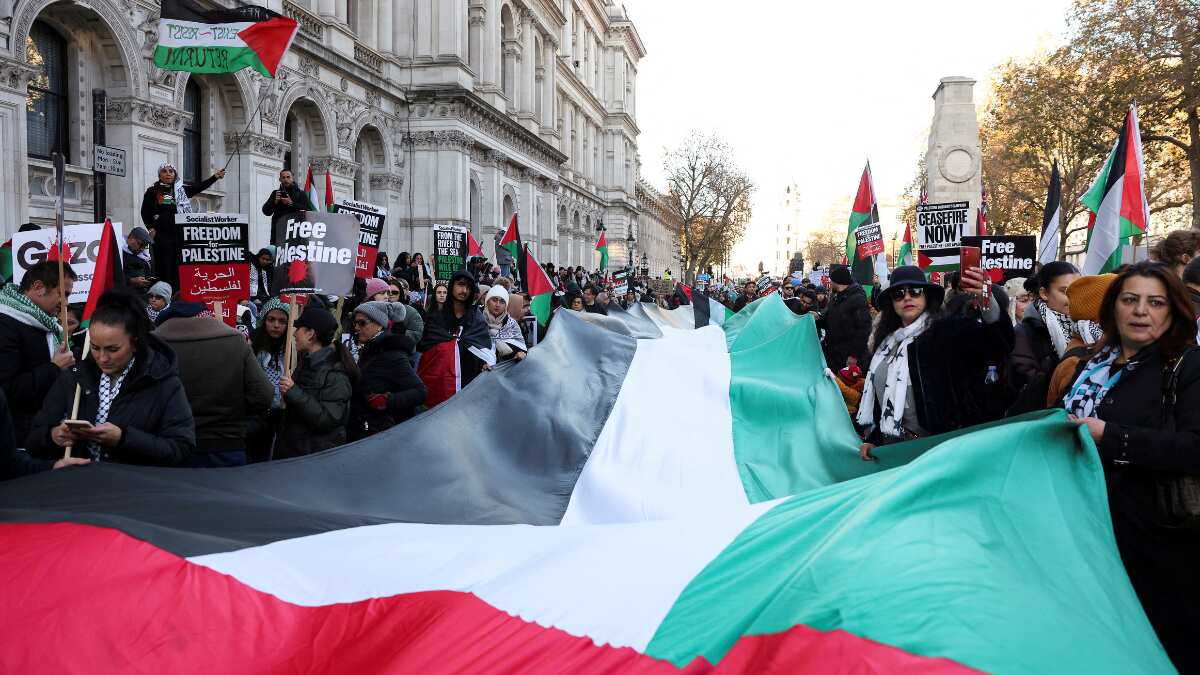
‘National March for Palestine’
The protest dubbed National March for Palestine took place in Central London with around 45,000 campaigners participating in the rally, as per police estimates, which took place on the second day of the four-day truce between Israel and Hamas.
The recent truce marked the first pause in fighting giving some respite in the constant bombardment and fighting in the Palestinian enclave, but protesters said that was not enough.
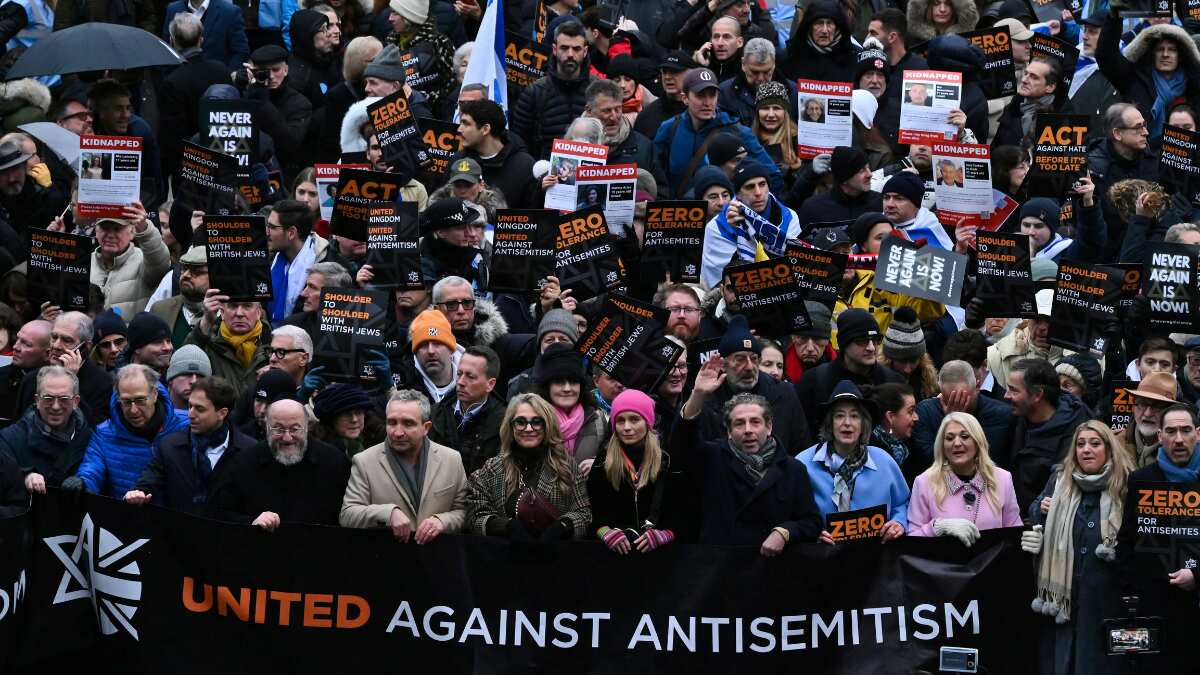
'Zero tolerance for antisemites'
Protesters carrying placards which read "Shoulder to shoulder with British Jews" and "Zero tolerance for antisemites" marched through London, while others sang in Hebrew and some chanted "Bring them home" in reference to the hostages that Hamas took after it attacked Israel on October 7.
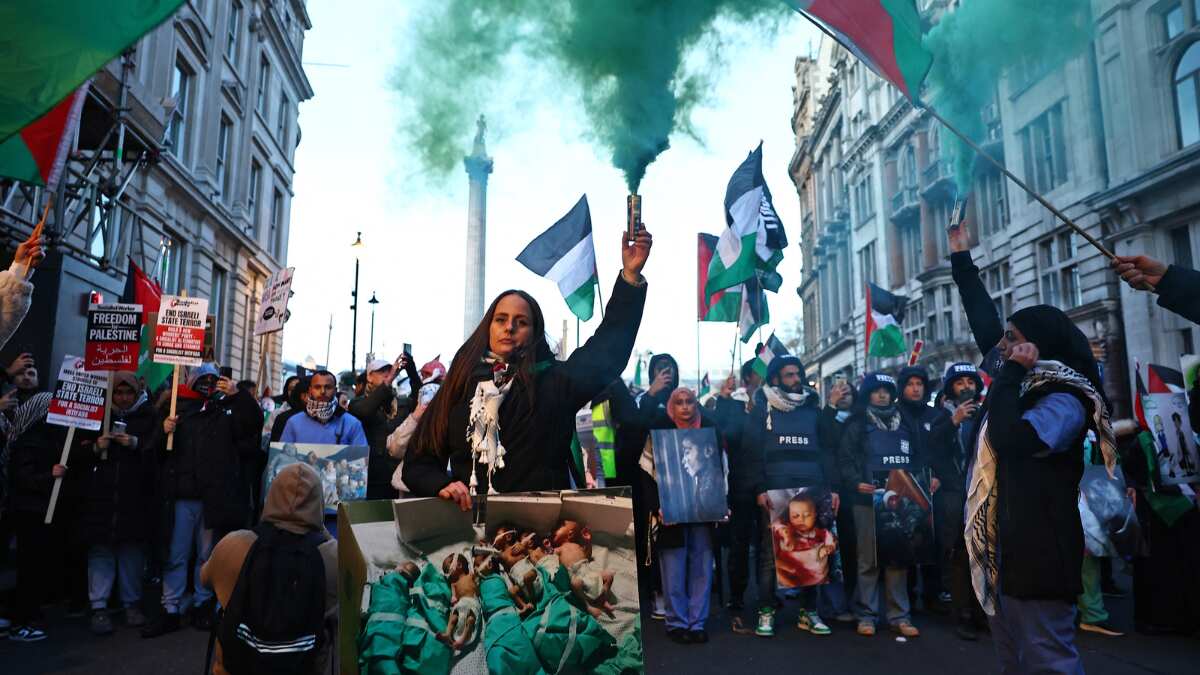
Calls for permanent ceasefire in Gaza
“We need full support for a permanent ceasefire in Gaza,” 64-year-old protester Kate Hudson told Reuters at the rally which began from Park Lane and finished outside the Houses of Parliament.
She added, “It’s very welcome that there is a pause...But this problem needs to be resolved and resolved so that the Palestinians finally have the political settlement that countless U.N. resolutions have enshrined.”
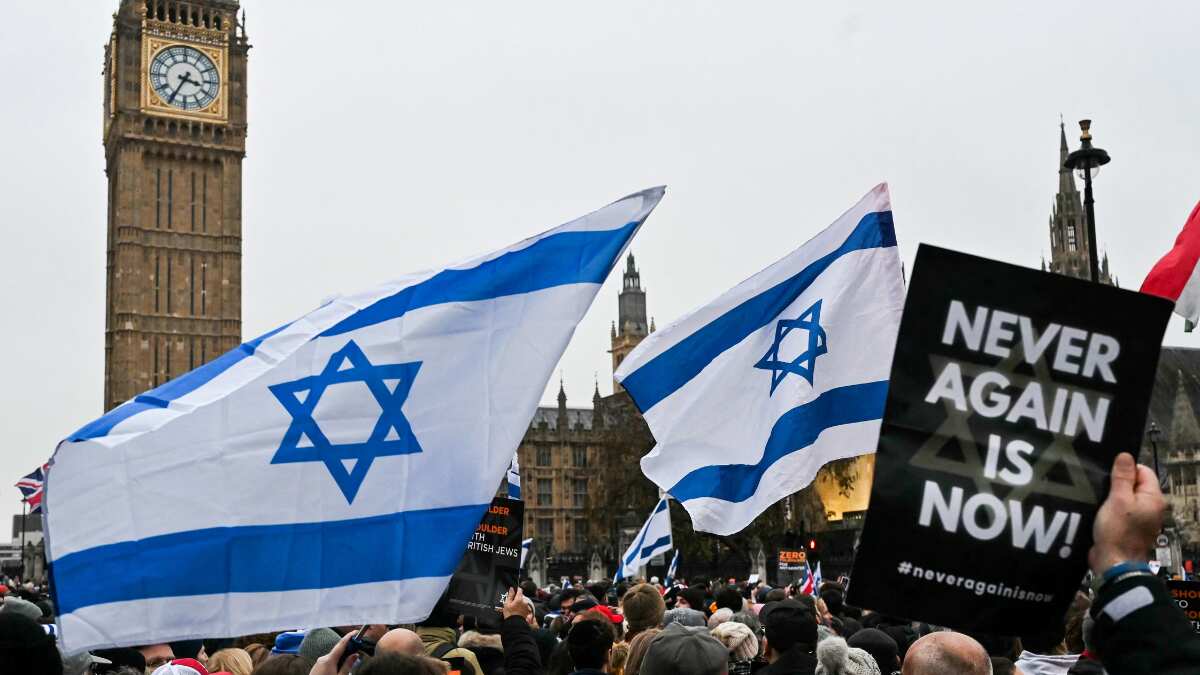
Sharp rise in antisemitic offences in London
London's Metropolitan Police received reports of 554 antisemitic offences between October 1 and November 1 which is up from 44, last year marking a more than 10-fold increase. In the same period, reports of Islamophobic offences almost tripled to 220.
"I want this march to achieve for people to understand there is no place for racism in this country," said Kate Worth, a travel agent, as quoted by Reuters. "We are all equal. And it's absolutely unacceptable what is happening right now for Jewish people," she added.
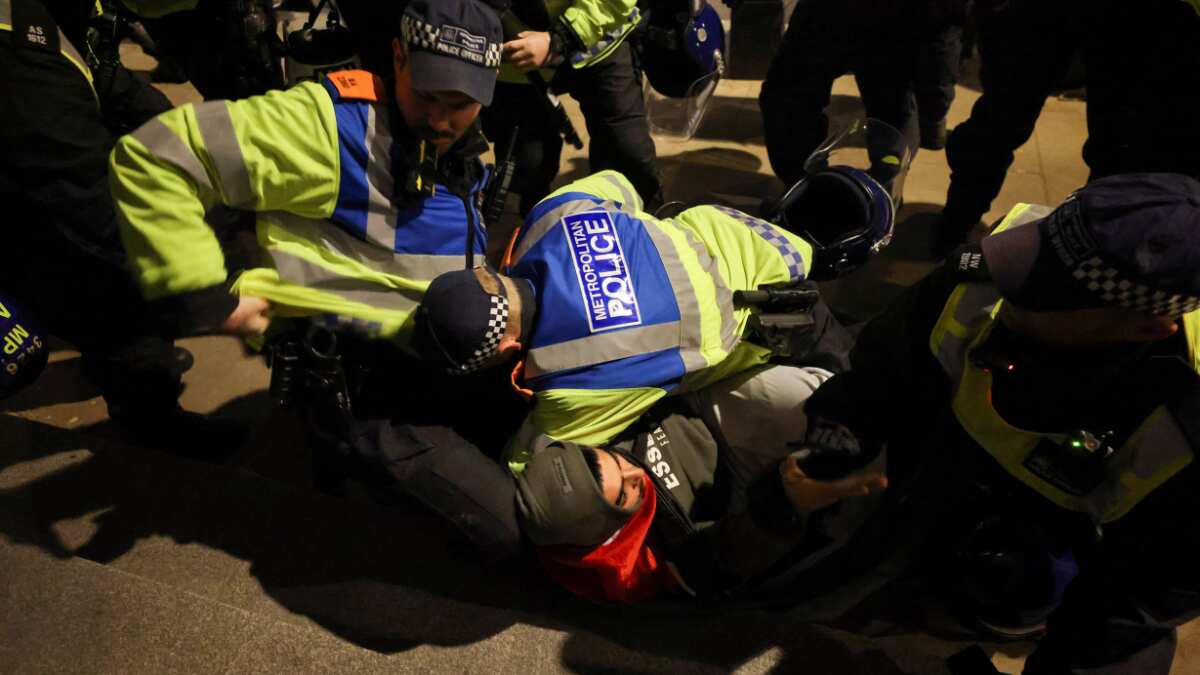
Antisemitic slogans raised, 18 arrested
During the National March for Palestine, the police were seen distributing leaflets which sought to clarify what would be deemed a criminal offence and warned demonstrators against breaking the law after facing pressure from senior government officials to take action over alleged displays of antisemitism at the protests.
“I would like to acknowledge the overwhelming majority who came into London today and exercised their right to protest lawfully,” said Ade Adelekan, the Met police’s deputy assistant commissioner. He added, “Regrettably, there was still a small minority who believed the law did not apply to them.”
The police arrested 18 people, including a man who was spotted carrying a placard with Nazi symbol Hakenkreuz.
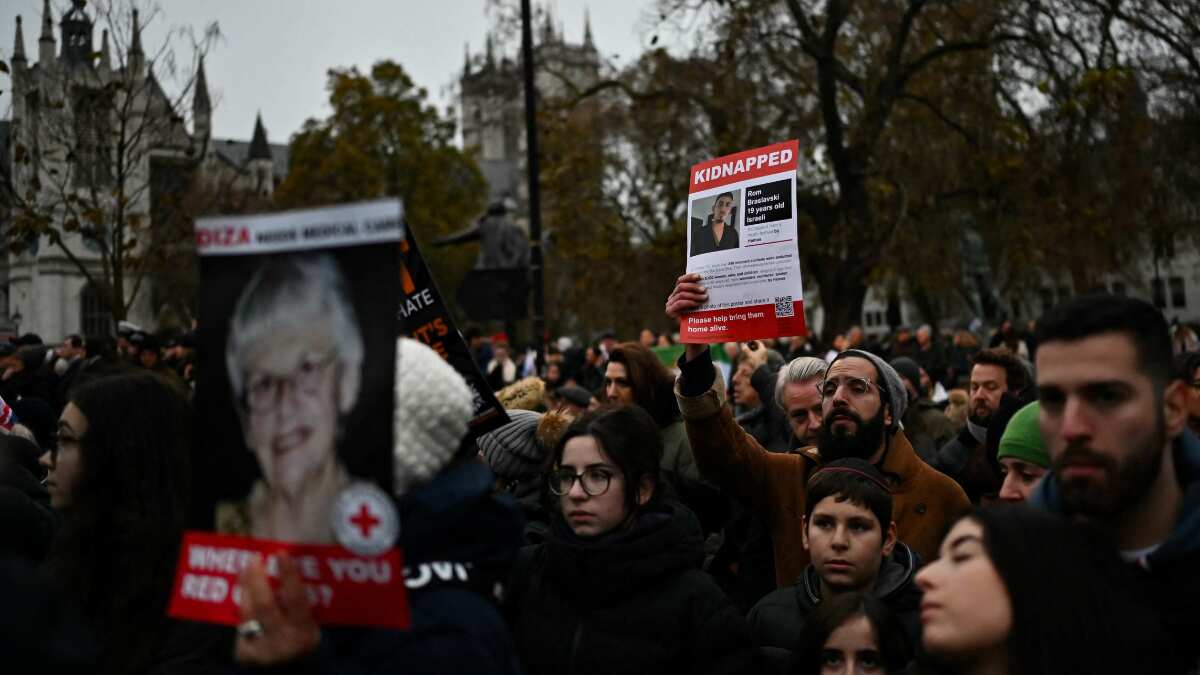
Police arrest far-right activist, man who made antisemitic comments
While the march against antisemitism was largely peaceful, the police did arrest a far-right activist, Tommy Robinson at the beginning of the march when he refused to leave the area at the request of police officers. This comes as organisers of the march, Campaign Against Antisemitism, asked Robinson not to attend because of the distress his presence was likely to cause.
Campaign Against Antisemitism, which focuses on the concerns of Jewish people in Britain, said the gathering was the biggest of its kind since the so-called Battle of Cable Street in 1936.
Battle of Cable Street was marked by a series of clashes that took place at several locations in an area of east London when British fascists fought with opponents, where many Jews lived at the time.
)
)
)
)
)