In pics | Libya: Hundreds protest against authorities in flood-hit Derna

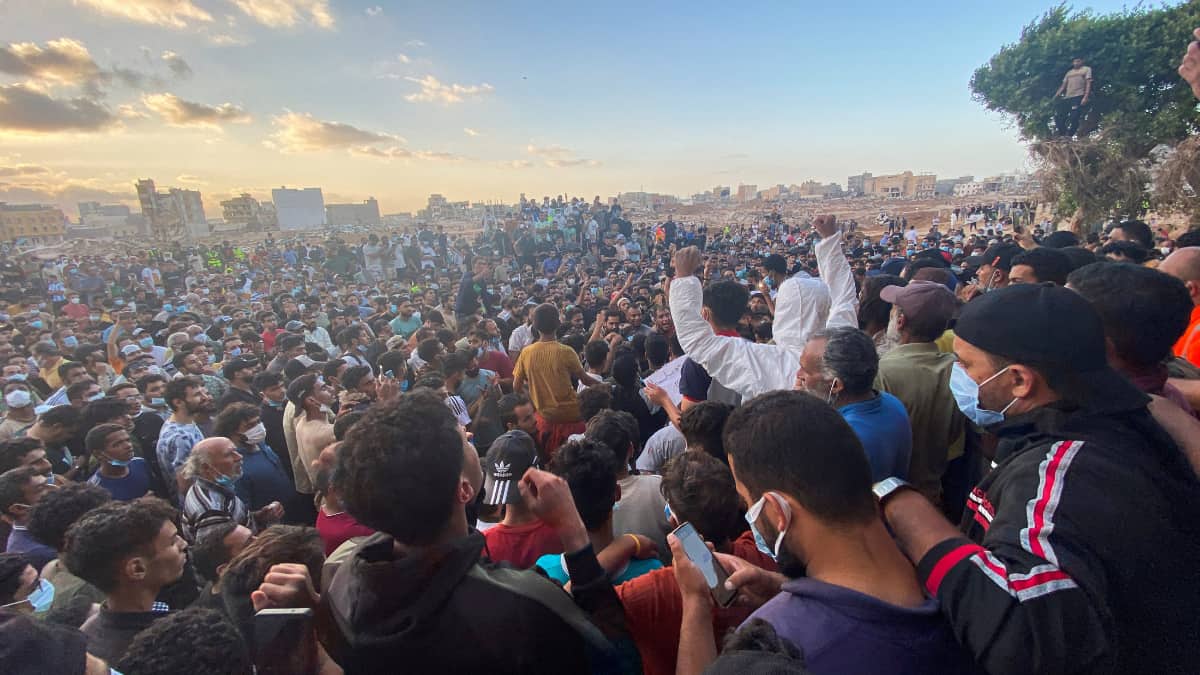
Hundreds of Libyans protest in flood-hit Derna
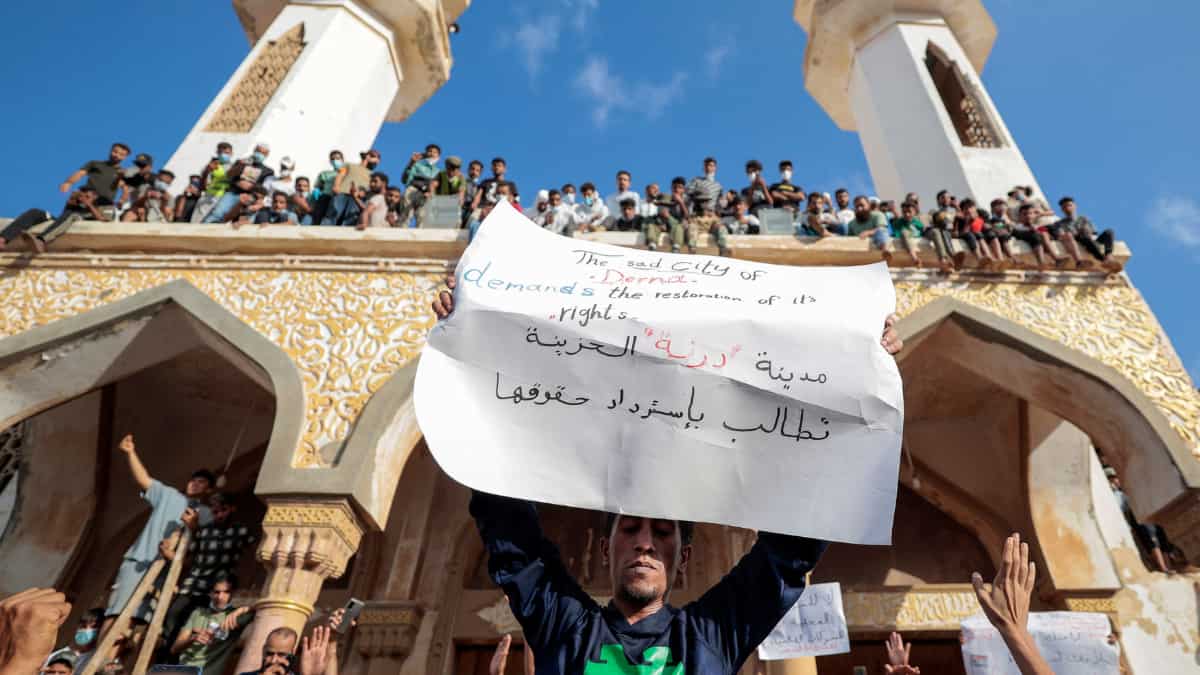
Hundreds of people in the eastern Libyan city of Derna gathered outside the city's grand mosque in protest, on Monday (September 18).
They were seen venting their anger against authorities and demanding accountability over a week after devastating floods killed thousands of the city's residents and destroyed entire neighbourhoods.
The protesters have accused officials of neglect after the heavy rains triggered flash floods that devastated the coastal city and also chanted slogans against the parliament in east Libya and its leader Aguilah Saleh.
According to reports, some protesters marched on a house reportedly owned by Derna's unpopular mayor Abdulmonem al-Ghaithi and set it on fire.
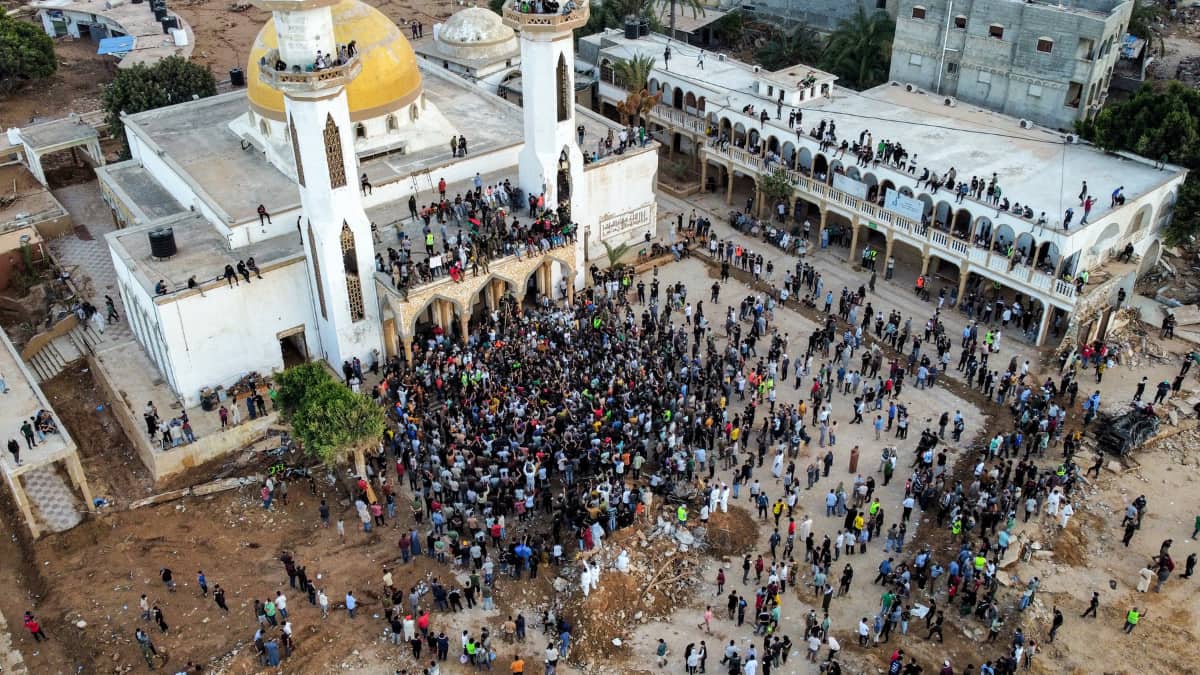
'Aguila we don't want you!'
Libya has been politically split east and west with two rival administrations in charge and crumbling public services since a 2011 NATO-backed uprising.
The head of the eastern Libyan government, Osama Hamad, is not internationally recognised and operates in the eastern regions of the country that are controlled by Khalifa Haftar’s Libyan National Army (LNA).
In Derna, protesters took aim at officials, including the head of the eastern-based Libyan parliament, Aguila Saleh.
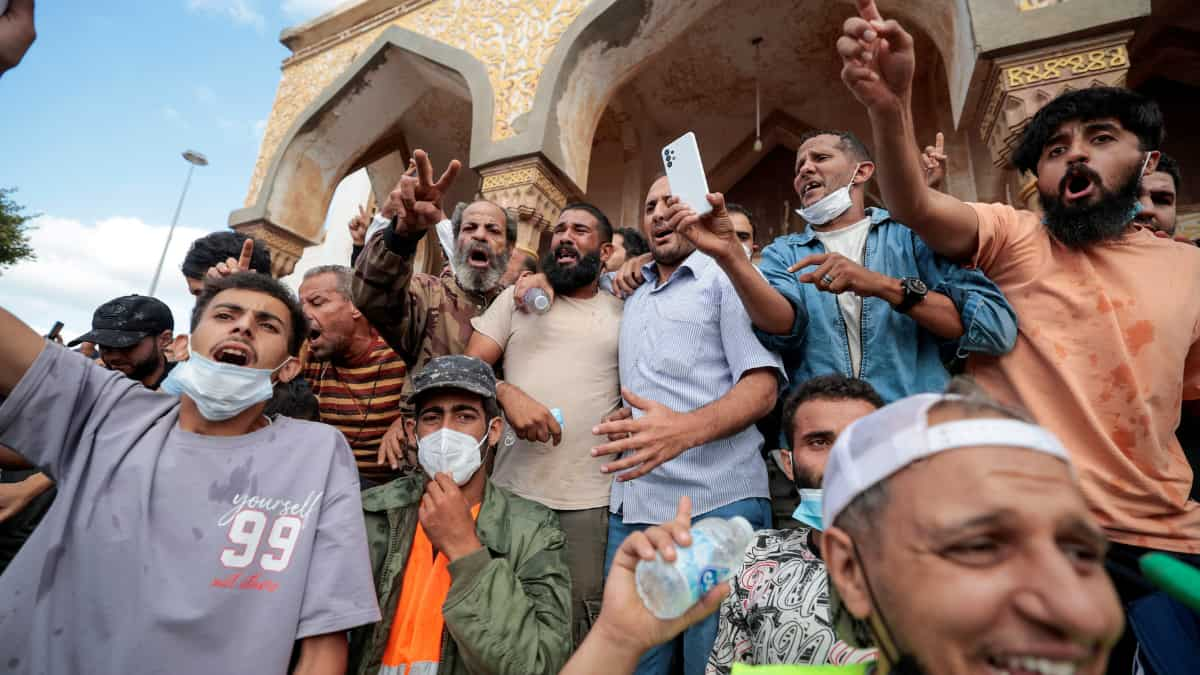
"Aguila we don't want you! All Libyans are brothers!" protesters chanted, as per Reuters and called for national unity after decades of conflict and chaos.
This comes after Saleh tried to deflect blame from the officials and called the flood an "unprecedented natural disaster". He also said that the people should not focus on what could or should have been done.
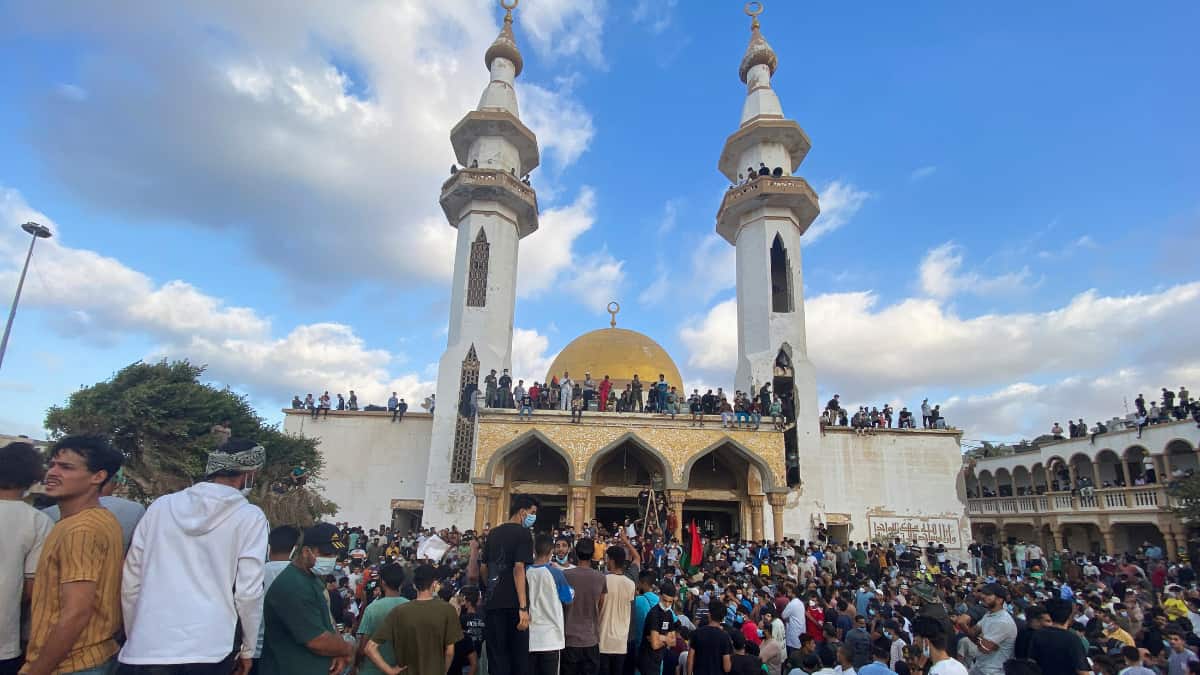
Protesters gather at Sahaba Mosque
On Monday, protesters gathered outside Sahaba Mosque, the city's grand mosque to protest against Derna's officials.
"The people want parliament to fall", "The blood of martyrs is not shed in vain" and "Thieves and betrayers must hang" were some of the slogans chanted, according to AFP.
Taha Miftah (39) said the protest - the first large demonstration since the flood - was a message that "the governments have failed to manage the crisis", adding that the parliament was especially to blame, reported Reuters.
He called for an international inquiry into the disaster and "for reconstruction under international supervision".
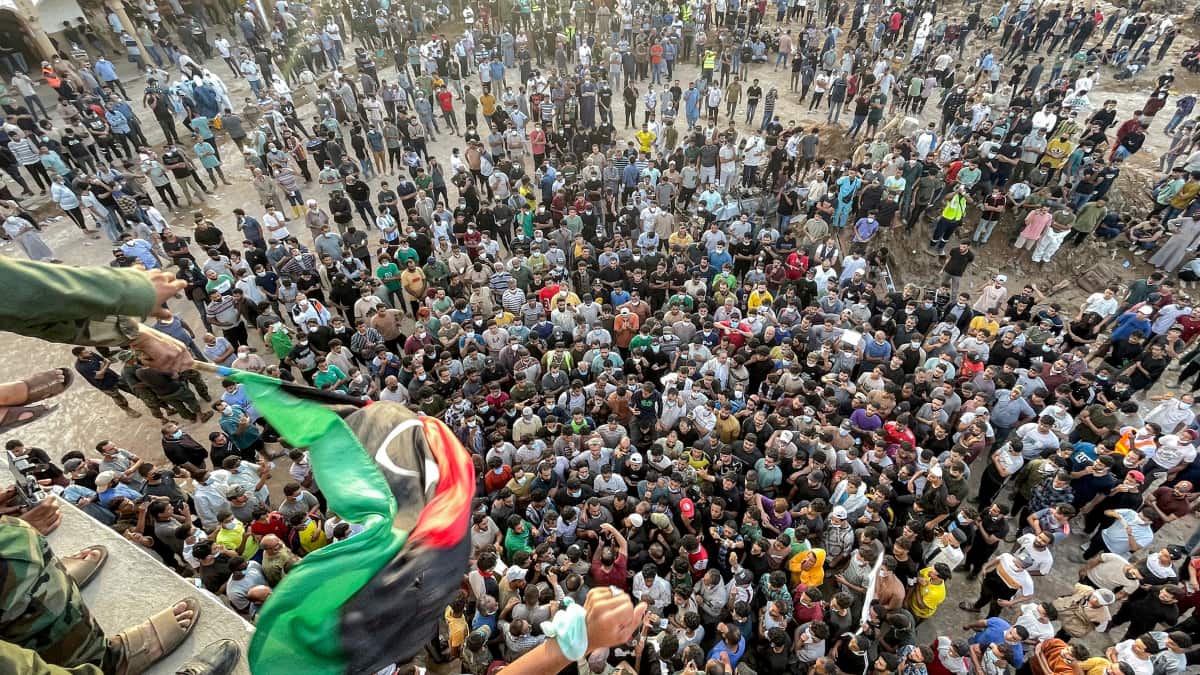
Angry protesters set fire to Derna mayor's house
Protesters also set fire to the house of the man who was Derna's mayor, al-Ghaithi, at the time of the flood, his office manager told Reuters.
A minister in the eastern Libyan government, Hichem Abu Chkiouat, said al-Ghaithi has been suspended from his post.
The parallel government in eastern Libya, as per Reuters, said Prime Minister Usama Hamad dismissed all the members of Derna's municipal council and referred them to investigation.
What do the protesters want?
As per AFP, a statement read on behalf of the protesters urged "a speedy investigation and legal action against those responsible for the disaster".
They also demanded a United Nations office in Derna and the start of "the city's reconstruction, plus compensation for affected residents" and called for an investigation into the current city council and previous budgets.
"Those who survived from the city, in what's left of the city, against the ones who brought death and destruction to the city," posted analyst Anas el-Gomati on X.
What happened in Derna?
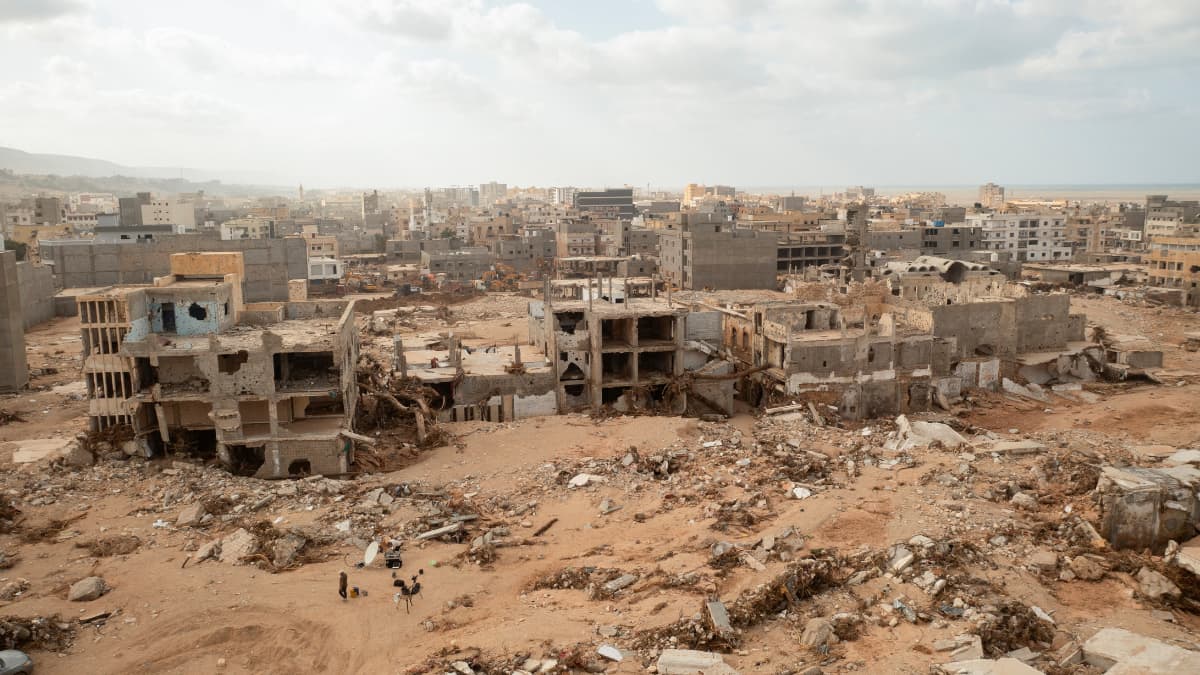
On September 10, two dams in which cracks were reported as far back as 1998 burst after Storm Daniel hit Libya and caused torrential rains.
Over a week after the devastation, the full scale of the death toll has yet to emerge since officials have given widely varying death tolls, with thousands of people still missing.
The World Health Organization has confirmed 3,922 deaths.
Meanwhile, al-Ghaithi expressed grave concerns, suggesting that the death toll in the city alone could reach 18,000 to 20,000 people, given the extent of the destruction.
Petteri Taalas, head of the UN's World Meteorological Organization (WMO), last week, said, "With better functioning coordination...they could have issued the warnings and the emergency management forces would have been able to carry out the evacuation of the people, and we could have avoided most of the human casualties."
Situation to worsen?
With the rising death toll, al-Ghaithi while talking to Reuters had also voiced fears of a potential epidemic "due to the large number of bodies under the rubble and in the water."
Meanwhile, tens of thousands of traumatised residents are homeless and badly need clean water, food and basic supplies, said the UN agencies as well as local officials.
On Monday, the UN also warned about the growing risk of cholera, diarrhoea, dehydration and malnutrition and said that the disease outbreaks could bring "a second devastating crisis".
Local officials and WHO "are concerned about the risk of disease outbreak, particularly from contaminated water and the lack of sanitation," said the UN about the situation in Derna, as quoted by AFP.
)
)
)
)
)