In pics | Indian farmers fly kites to counter tear gas drones on 2nd day of 'Delhi Chalo' march


India Farmers' Protest Day 2
The farmers' protest in Indian entered day two, on Wednesday (Dec 14) where protesters clashed with the police and broke barricades at the Shambhu border which divides the Indian state of Punjab and Haryana.
The police fired tear gas shells and sprayed water from tankers on the protesting farmers who tried to cross the Shambhu border resuming their march to the Indian capital Delhi.
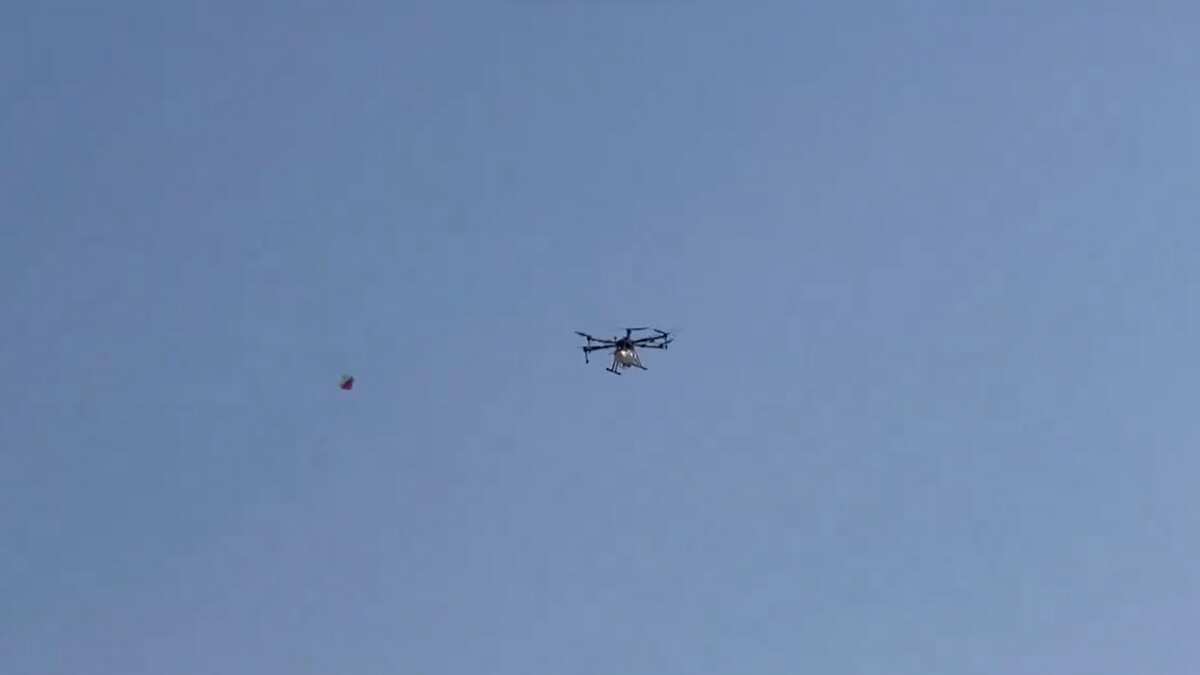
Indian farmers use kites to counter tear gas drones
On Wednesday, protesters near the Punjab-Haryana border resorted to unconventional methods after tear gas drones reportedly hovered above the crowd. According to reports, protesters flew kites to entangle the drone's rotors.
However, the police in the Indian state of Haryana denied the reports of drones being brought down but called for action against farmers who flew kites using banned Chinese strings.
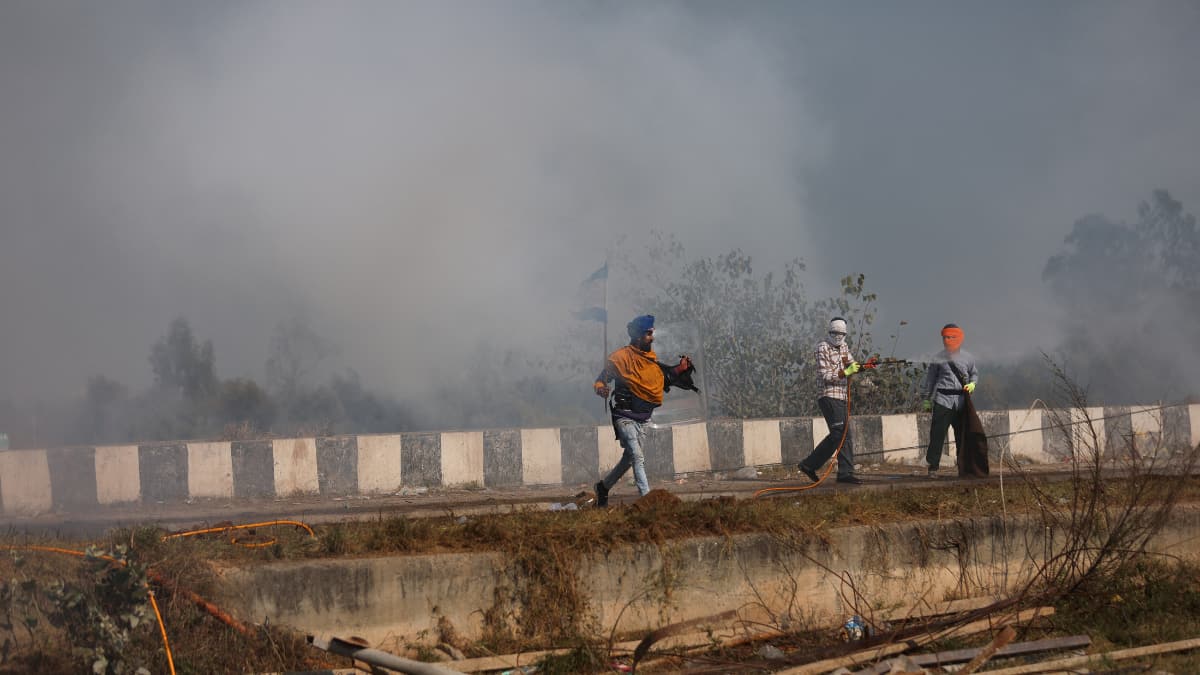
Situation at Shambhu border turns tense
As the day progressed, the situation at the Shambhu border turned tense as security personnel fired tear gas shells at the protesters in a bid to disperse the agitating farmers who were approaching the police barricade.
Indian officials also suspended mobile internet services, bulk SMS and all dongle services provided on mobile networks, except the voice calls in the districts Ambala, Kurukshetra, Kaithal, Jind, Hisar, Fatehabad and Sirsa of Haryana State till February 15.
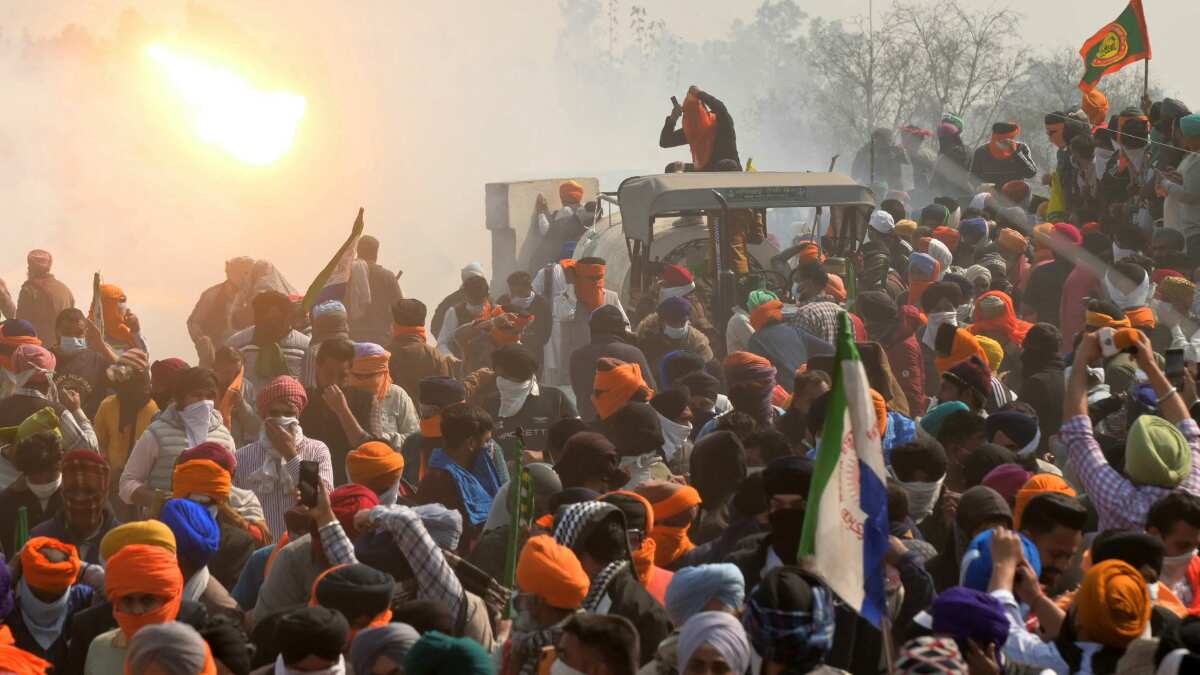
Why are Indian farmers protesting?
The Samyukta Kisan Morcha (Non-Political) and the Kisan Mazdoor Morcha - which represents more than 150 unions - have been leading the "Delhi Chalo" agitation to pressure the Indian government led by Prime Minister Narendra Modi to fulfil their demands, which include a law on minimum support price for crops and loan waivers.
Farmers are moving towards the capital from three neighbouring states—Uttar Pradesh, Haryana and Punjab. Two of these states are ruled by national ruling Bharatiya Janata Party (BJP), while Punjab is ruled by the Aam Aadmi Party (AAP).
Farmers are also demanding justice in Lakhimpur Kheri violence case. The incident in question took place in 2021 when a vehicle in which the son of a union minister was travelling mowed down farmers, killed at least eight of them.
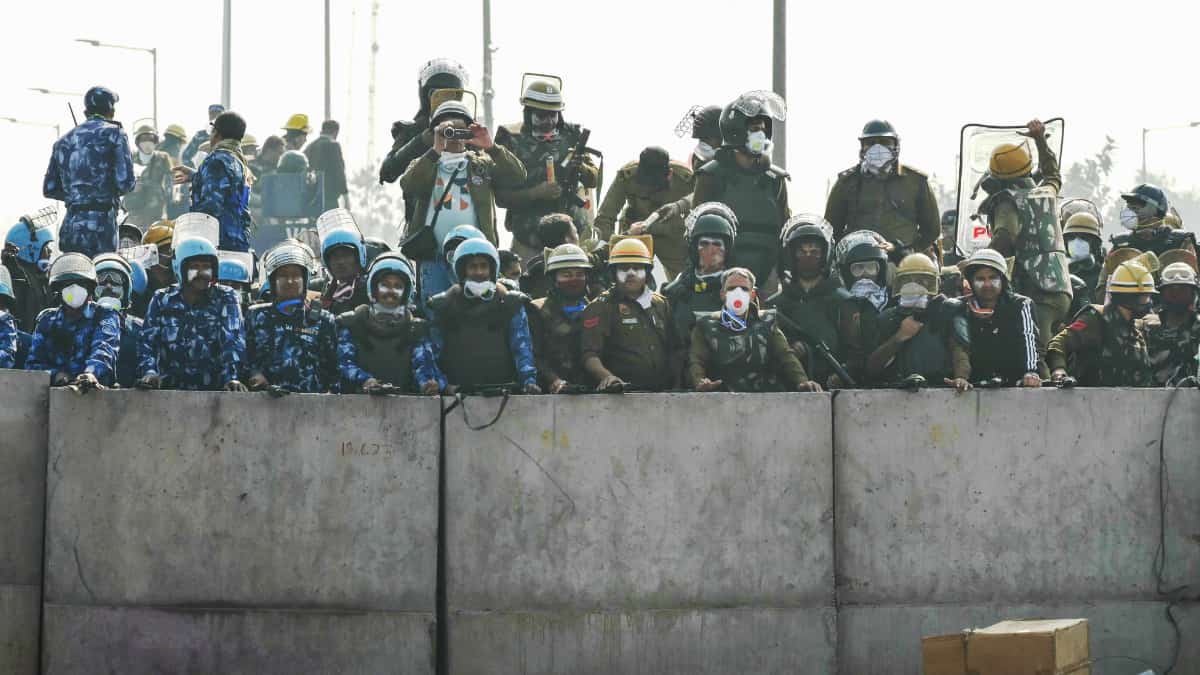
Security at Delhi border
In the wake of the protest, tight security arrangements have been made at the Tikri and Singhu Borders and the borders have been closed to prevent farmers from entering the national capital.
Concrete blocks, iron nails, walls of containers and multi-layer barricades have been placed at the Ghazipur, Singhu and Tikri borders and security personnel in anti-riot gear have been deployed in huge numbers.
The police officials are also carrying out security checks at the Shambhu border in Ambala, Haryana, on the second day of the farmers' protest.
Image shows police and Rapid Action Force (RAF) personnel blocking a highway to prevent farmers from marching towards New Delhi during north of the capital on February 14, 2024.

Delhi Traffic Police issues advisory
A traffic advisory has been issued by the Delhi Traffic Police in the wake of the farmers' protest, alerting the commuters regarding restrictions on the movement of vehicles at different borders of the national capital.
Image shows heavy traffic snarl at Delhi-Noida Chilla border ahead of farmers' 'Delhi Chalo' march, on Tuesday, February 13, 2024.
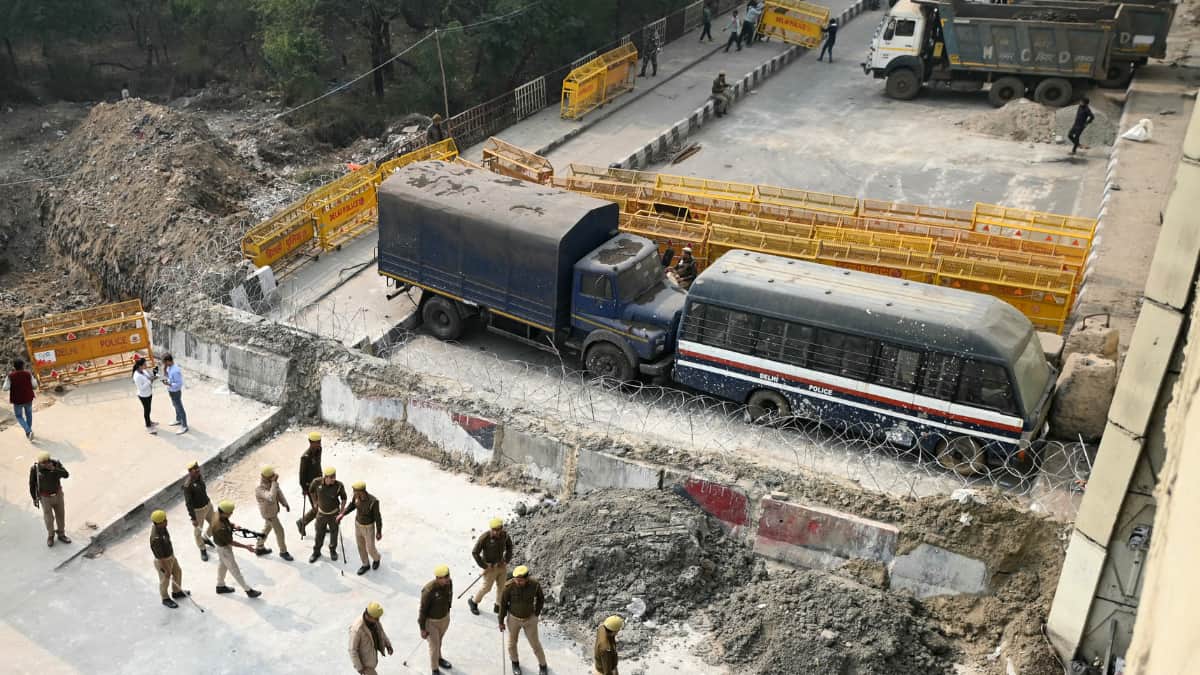
Police barricade Delhi-Uttar Pradesh border
Image shows police personnel standing guard next to a barrier and vehicles blocking a road to prevent farmers protesting from marching towards India's capital at the border between Delhi and the Indian state of Uttar Pradesh border in Ghazipur on February 14, 2024.
)
)
)
)
)