In pics | 'Fire and egg': Farmers' protest spread across Europe converges at EU summit

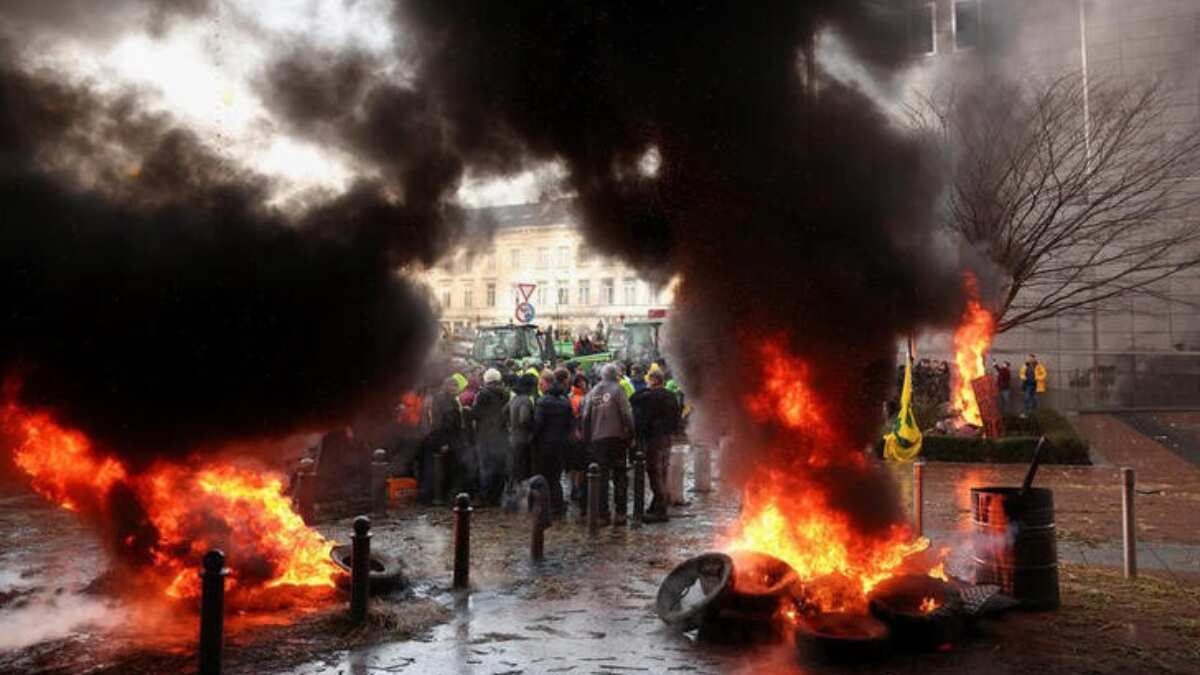
Angry farmers outside European Parliament
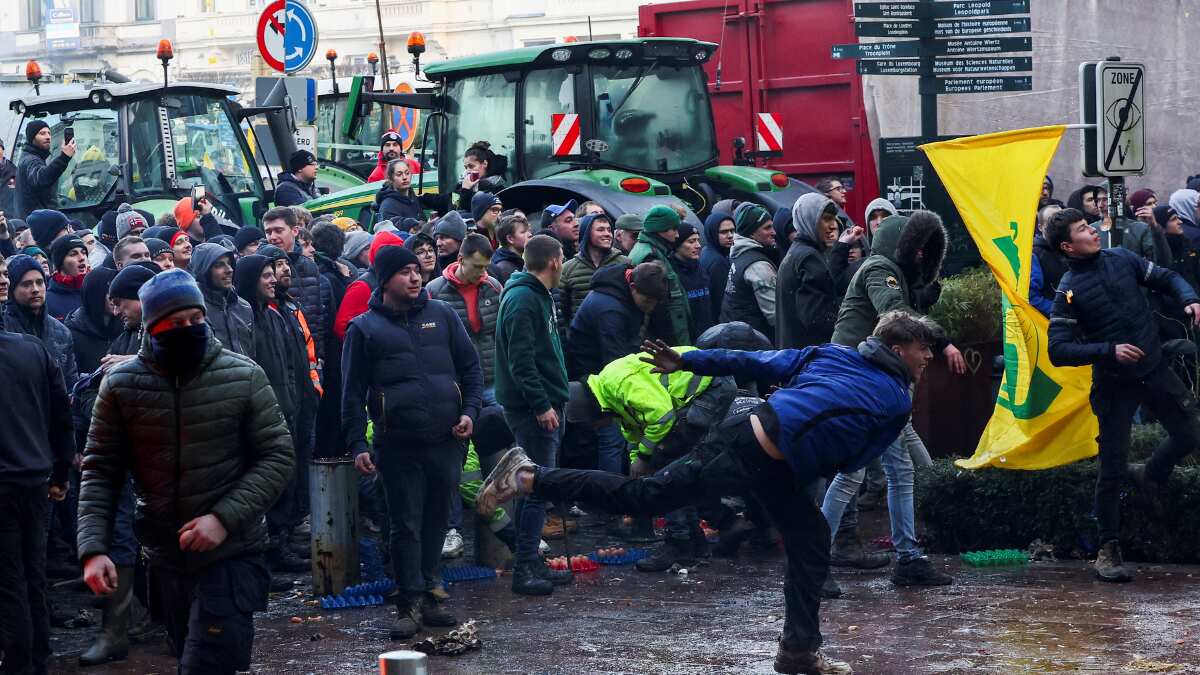
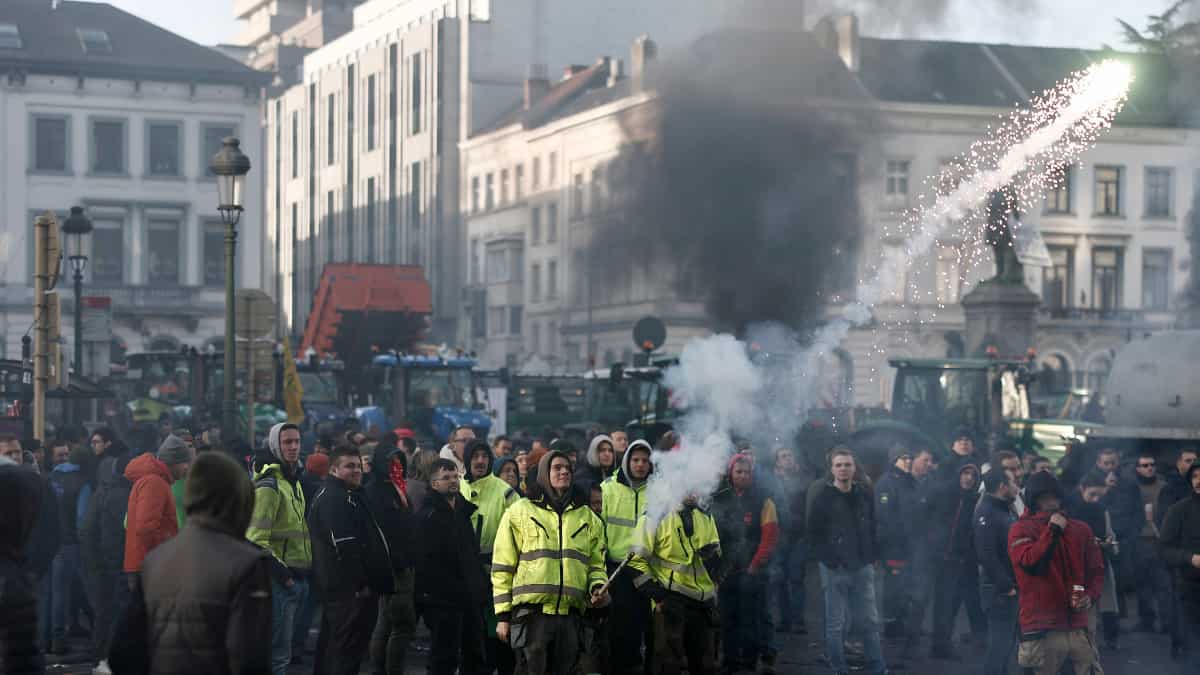
Thousands of angry farmers from across Europe started fires, threw eggs and beer bottles and even lit fireworks outside the European Parliament, on Thursday (Feb 1) in the capital city of Brussels, Belgium, in protest against taxes, rising costs and cheap imports.
The demonstration outside the European Parliament is a culmination of weeks of farmers' protests across several countries including Belgium, Portugal, Greece and Germany.
Why are the farmers protesting?
There are a number of reasons why the farmers' protest has spread across several EU nations, and while local grievances vary, the unrest has exposed tensions over the impact on farming of the EU's drive to tackle climate change and import of Ukrainian grains to help the Kyiv's war effort.
The farmers have also complained about green rules, taxes, rising costs and unfair competition from abroad.
European farmers have said that it is becoming harder than ever to make a decent living given the rise of energy and fertilizer costs due to the Russia-Ukraine war, not to mention the climate change fueled extreme weather events wreaking havoc across the continent destroying crops.
What happened in Belgian capital?
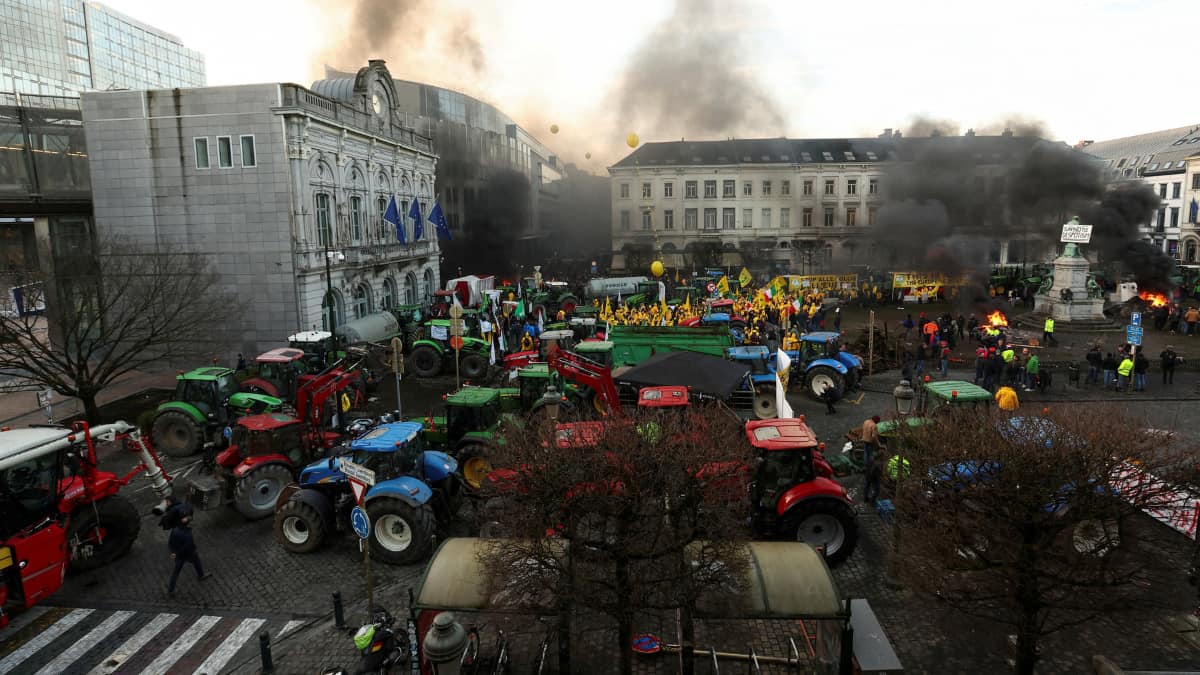
According to police estimates, about 1,300 tractors blocked major routes through the city, while angry farmers started fires outside the European Parliament and also threw eggs and stones at the building.
'We see you and we hear you'
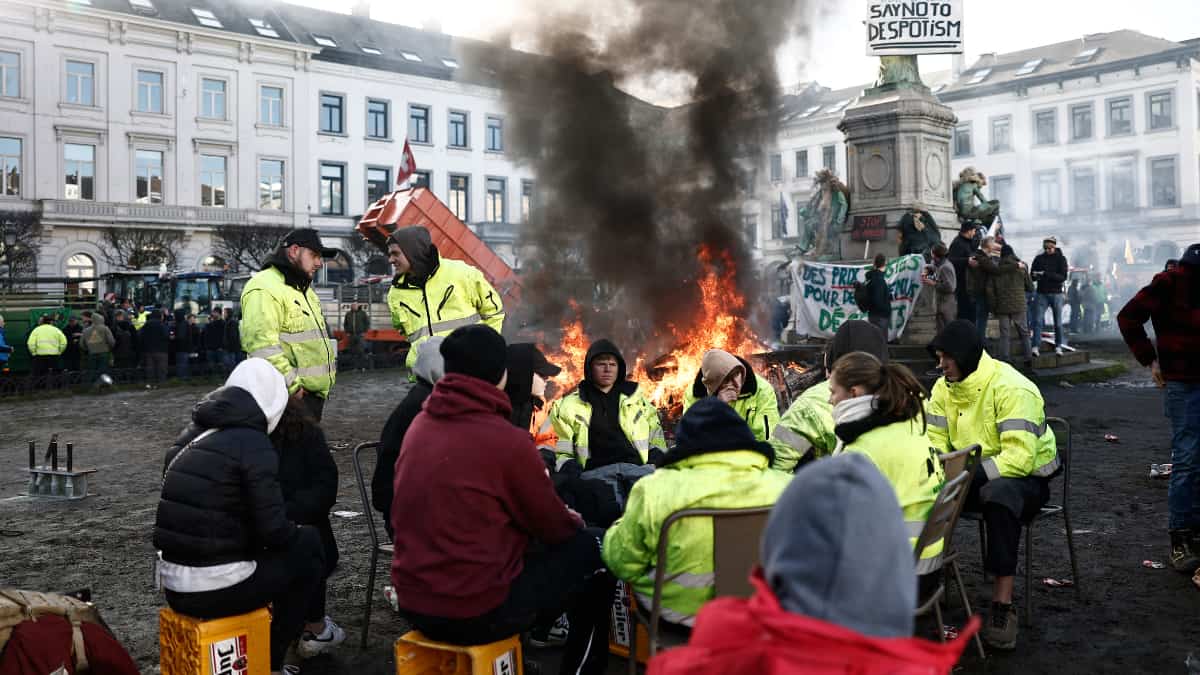
As lawmakers from across the 27-nation bloc were having a meeting inside the parliament, thick smoke from burning bales of hay hung over parts of the Belgian capital. The police also reportedly had to stop a farmer from felling a tree on the steps of the European Parliament, but they could not prevent one bronze statue being pulled off its pedestal and being burned.
European Commission chief Ursula von der Leyen and Belgium Prime Minister Alexander De Croo - who holds the EU's rotating presidency - met with European farmers' lobby COPA-COGECA after the summit of EU leaders.
Von der Leyen said the European Commission would work with Belgium on a proposal to reduce farmers' administrative burdens. "To the farmers that are outside. We see you and we hear you," European Parliament President Roberta Metsola said.
'Crazy laws'
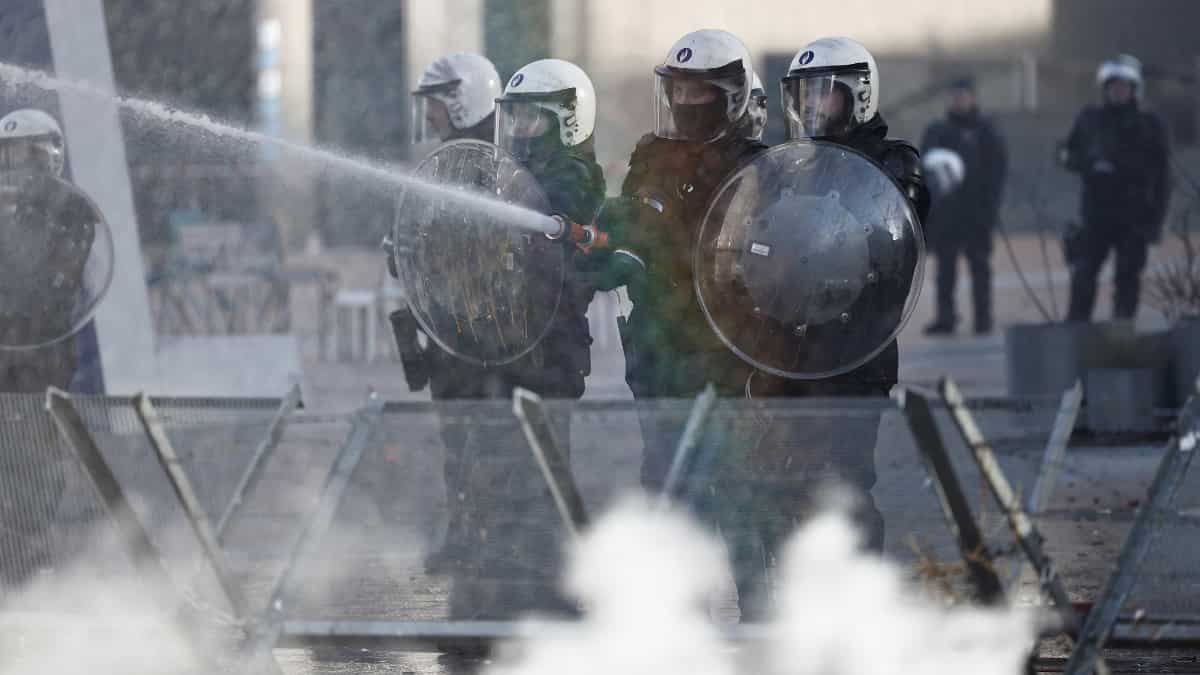
The police officers in riot gear outside the European Parliament guarded barriers where the lawmakers were due to meet, after weeks of frustration came to a head in Brussels where farmers started fires and set off fireworks as they demanded EU leaders at a summit nearby do more to help them.
"We want to stop these crazy laws that come every single day from the European Commission," Jose Maria Castilla, a farmer representing the Spanish farmers' union Asaja, said in Brussels, as quoted by Reuters.
Police fire tear gas and spray water
According to reports, small groups had tried to tear down the barriers erected in front of the parliament and the police in riot gear used tear gas and sprayed water at the farmers with hoses to push them back.
Security personnel in riot gear stood guard behind barriers where the leaders were meeting at European Council headquarters. However, as the day progressed the pockets of unrest diminished.
France's top farmers' union calls for ending blockades
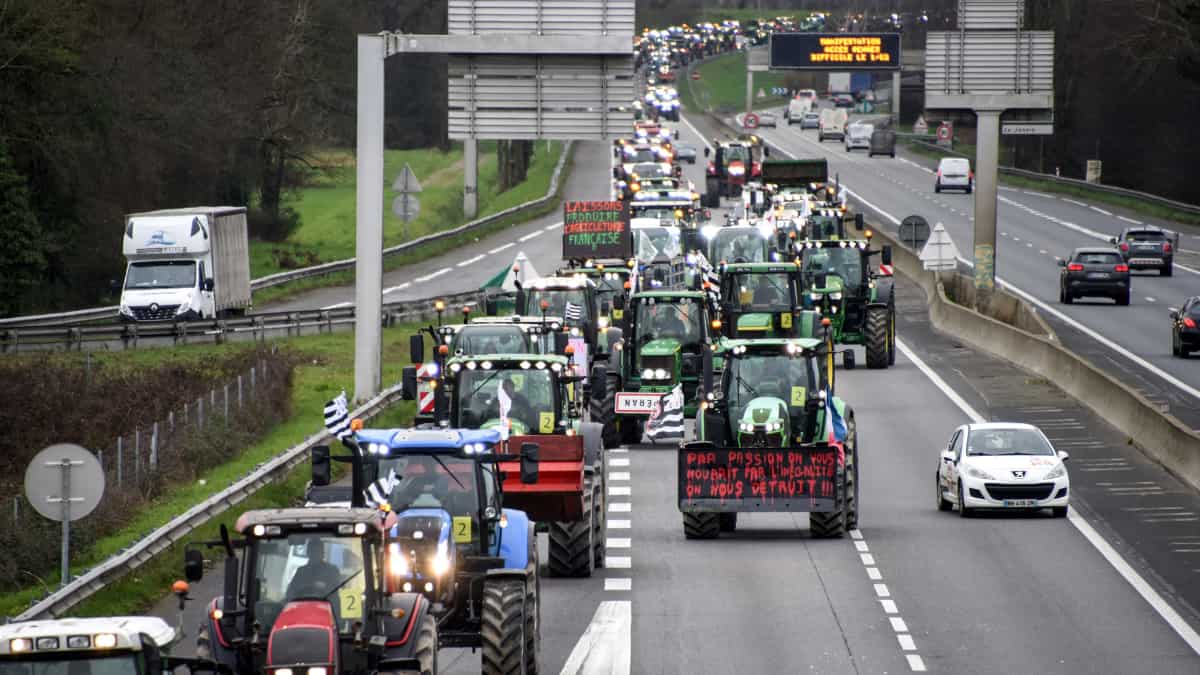
France's leading farmers' union the FNSEA along with its close ally the Young Farmers (JA) on Thursday (Feb 1), called to end nationwide roadblocks over pay, tax and regulation.
FNSEA chief Arnaud Rousseau released a statement saying that the government was "listening" to their demands after Prime Minister Gabriel Attal announced cash support and other measures for farmers.
The measures come after French farmers had stepped up their tractor protests from Monday after more than two weeks of demonstrations.
"Everywhere in Europe the same question arises: how do we continue to produce more but better? How can we continue to tackle climate change? How can we avoid unfair competition from foreign countries?," said Attal.
In response to the array of pledges Rousseau said it was "time to go home" and lift the blockades. However, both the unions warned that other types of protests would continue and they would take back to the streets if the government did not follow on its promises.
Image shows farmers driving their tractors on the ring road of Rennes, western France, on February 1, 2024, as part of nationwide protests.
Farmers protest in Greece
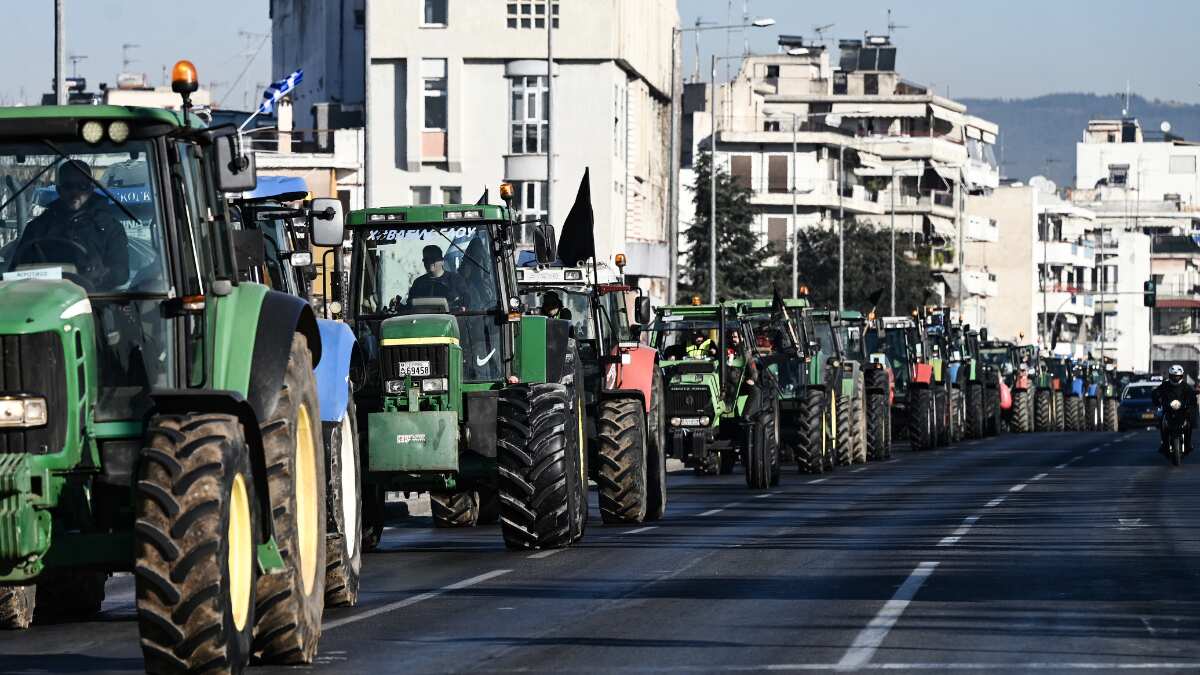
While French farmers have been asked to stop protesting, demonstrations across several other EU nations continued. In Greece, hundreds of farmers with black flags - to symbolise what they say is the death of agriculture - drove their tractors across the centre of Greece's second-biggest city Thessaloniki, on February 1.
"We hope to shake them up (with our protest), we hope they are frightened and change the laws they have enacted," farmer Vassilis Kanods said, as quoted Reuters.
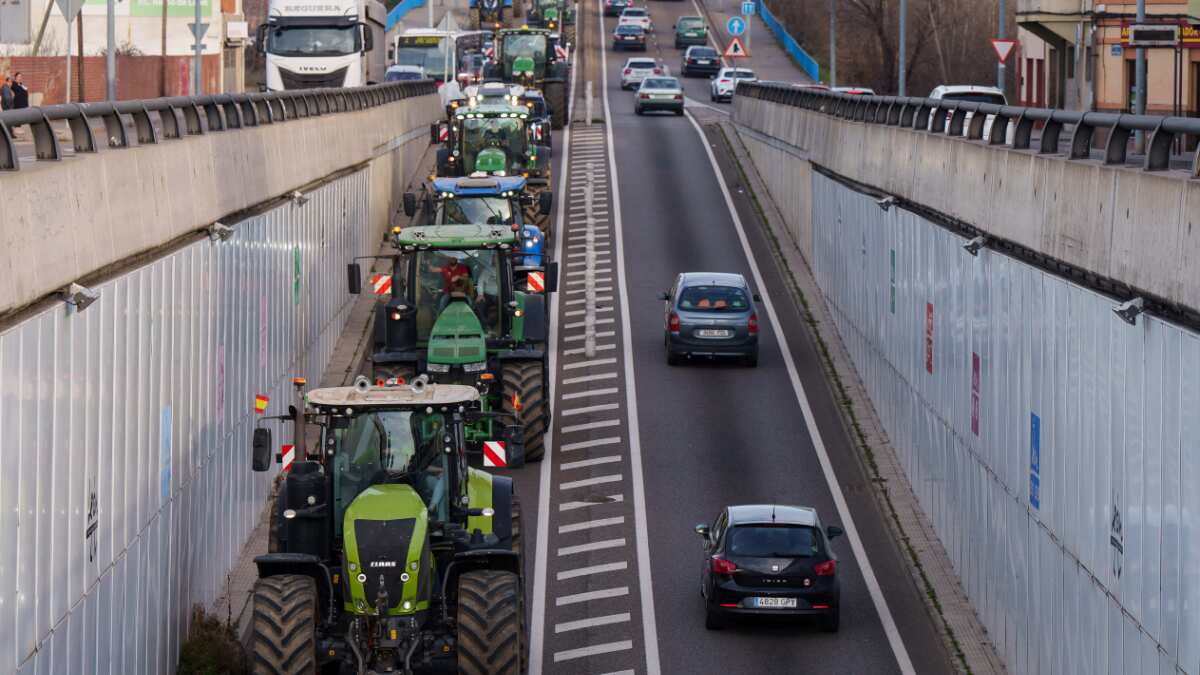
Spain's largest farmers' groups plan several protests for Feb
Spanish farmers' associations which involves largest farmers' groups - Asaja, COAG and UPA - said they were planning to take to the streets in February in protest against strict European regulations.
The three groups which share the same grievances as their peers in other European countries said environmental regulations imposed by Brussels are undermining the profitability of crops and increasing food prices.
"Mobilisations will take place as soon as possible," said Pedro Barato, president of Asaja, which represents around 200,000 farmers and cattle breeder.
Spanish transport association, Fenadismer, estimates the blockades cause daily losses of $10.84 million for Spanish companies.
Image shows Spanish farmers driving their tractors during a protest in demand of fair conditions for the agricultural sector, in Leon, northern Spain, on February 1, 2024.
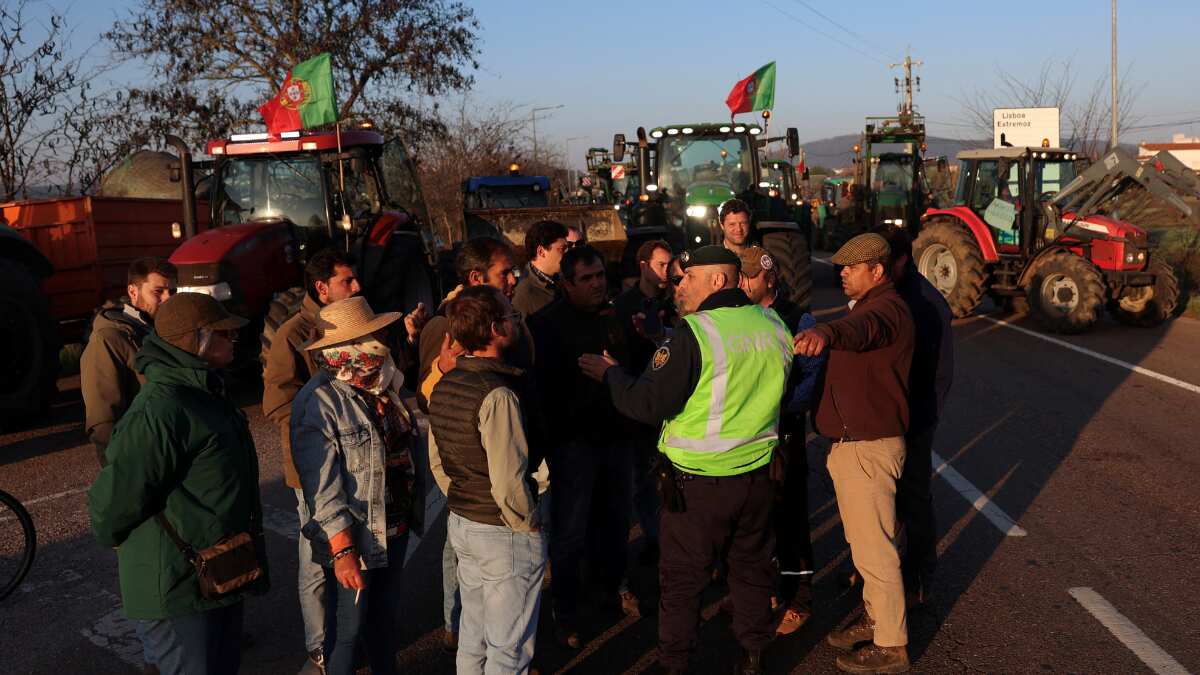
Tractor-driving Portuguese farmers block roads
In Portugal, the National Confederation of Agriculture, which represents small and medium-sized farms, said it would also organise protests, slow marches and other events, but the dates were yet to be decided. Meanwhile, Portuguese farmers used tractors to block at least three roads linking Portugal to Spain on Thursday (Feb 1), joining Europe-wide protests.
This came a day after the government announced emergency aid worth 500 million euros for farmers to try to avoid the kind of mass protests disrupting France and Belgium.
"Farmers have been very badly treated in the last few years in Portugal," said Jose Martins, a farmer protesting in Caia, citing cuts in subsidies, as quoted by Reuters. "I don’t think this is the way to deal with people, farmers are a very strong force in this country."
Image shows Portuguese farmers protest on a road near the A6 highway between Portugal and Spain in Elvas, Portugal, February 1, 2024.
)
)
)
)
)