In 300,000 years, Voyager might reach Barnard’s Star in the constellation of Ophiuchus

Barnard’s Star is famous for its rapid motion across the sky, and in recent years, astronomers have confirmed at least one exoplanet orbiting it, a potential super-Earth.

A Distant Target
Barnard’s Star is a red dwarf located about 6 light-years from Earth, in the constellation of Ophiuchus. It is the second-closest star system to us after Alpha Centauri.

Voyager’s Path
Voyager 1 and 2 are not heading directly toward Barnard’s Star, but based on their current trajectories, calculations suggest they could drift near its region in roughly 300,000 years.

Why Barnard’s Star Matters
Barnard’s Star is famous for its rapid motion across the sky, and in recent years, astronomers have confirmed at least one exoplanet orbiting it, a potential super-Earth.

A Timeframe Beyond Humanity
Even if Voyager crosses near Barnard’s Star, it will be long after human civilisation as we know it. By then, the spacecraft will be silent, its power source having decayed billions of years earlier.
The Silent Encounter
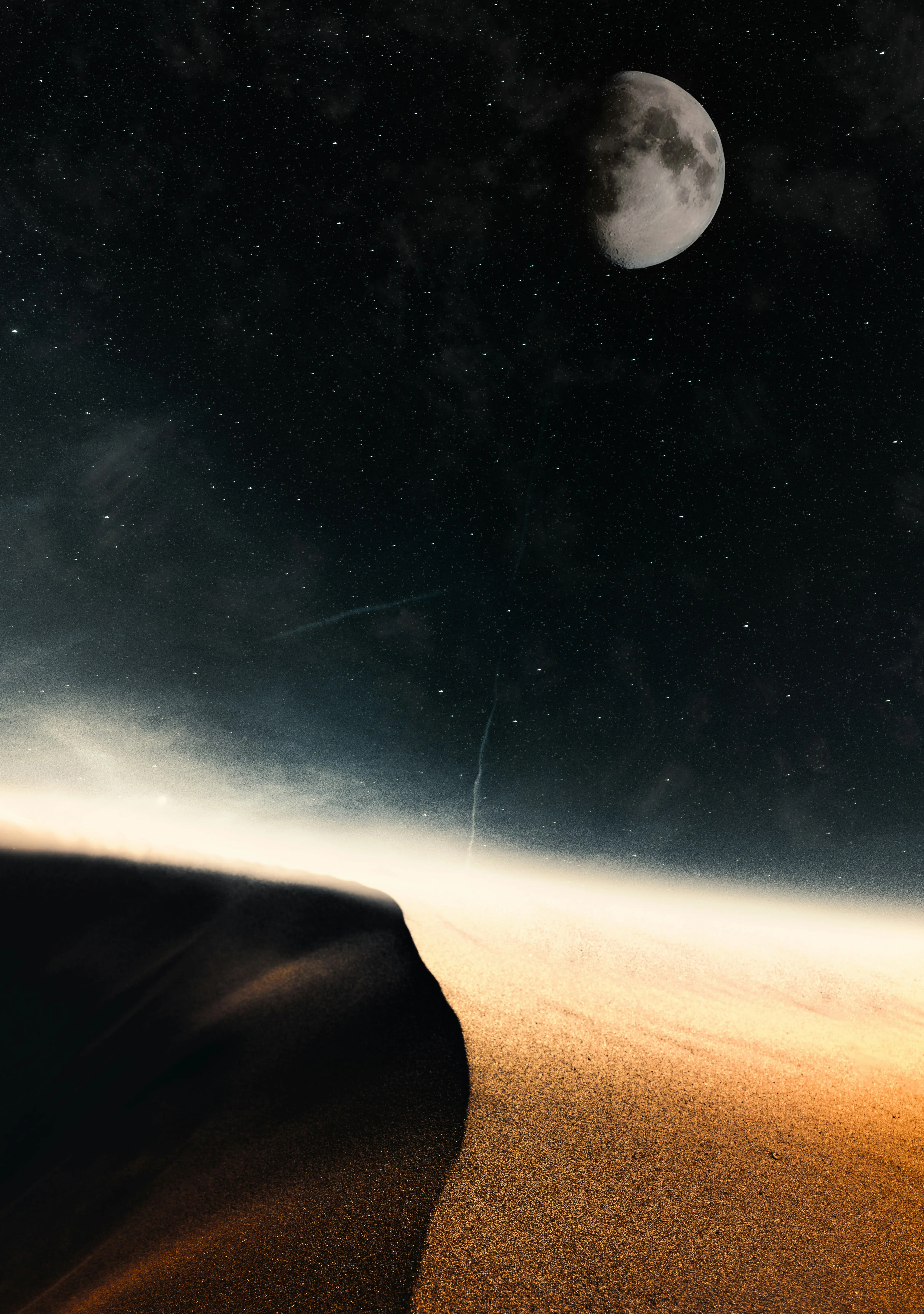
Voyager will not enter the star system with an active mission. Instead, it will pass quietly, carrying the Golden Record as a trace of Earth’s existence.
Scientific Value Today
Although we cannot wait 300,000 years for the encounter, studying Voyager’s path helps astronomers model interstellar travel and plan for future probes that may make such journeys faster.

The Legacy of Voyager
The idea that a human-made object could one day approach another star symbolises how far early space exploration has reached — even if the meeting will occur on cosmic timescales.
)
)
)
)
)