If 3I/ATLAS is artificial, who built it and when?

Could the mysterious object known as 3I/ATLAS be a relic of an ancient civilisation far older than ours? Harvard astrophysicist Avi Loeb believes it’s time science took that possibility seriously and re-examined the universe’s technological timeline.

1. A Cosmic Visitor Unlike Any Other
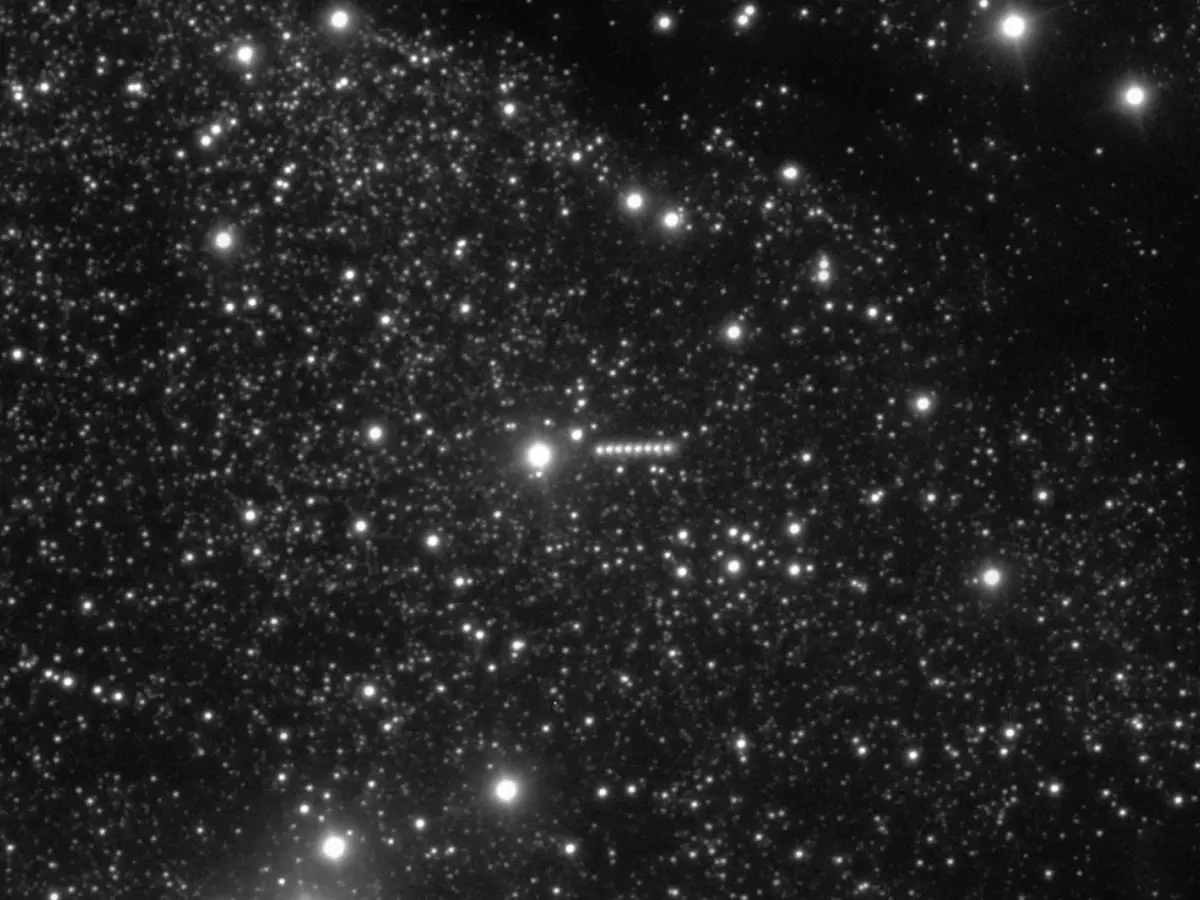
3I/ATLAS is only the third confirmed interstellar object to enter our Solar System, after ‘Oumuamua (2017) and Borisov (2019). But according to Loeb, its size, trajectory, and composition don’t fit any known natural category. “It’s behaving more like technology than geology,” he said on The Joe Rogan Experience.

2. The Time Factor: Billions of Years Ahead of Us
The Milky Way is 13.6 billion years old, about 9 billion years older than the Sun. If intelligent life evolved even a billion years before humans, it would have had plenty of time to spread technology across the galaxy. Loeb argues that 3I/ATLAS could be one such artefact, drifting for eons before crossing our path.

3. Voyager as a Model for Galactic Travel
To illustrate, Loeb points to humanity’s own probes. The Voyager 1 spacecraft, launched in 1977, has already left the Solar System and in a billion years, it could circle the galaxy. Multiply that by countless advanced civilisations over billions of years, and interstellar debris from alien technology becomes statistically plausible.

4. Clues Hidden in the Metal
Spectral studies of 3I/ATLAS revealed high concentrations of nickel but almost no iron, an alloy pattern typical in human-made aerospace materials but rare in nature. Loeb suggests this may indicate industrial production, or at least “chemical processes similar to our own engineering logic.” If correct, 3I/ATLAS may not be a comet at all but a fragment or probe casing from a machine built long before human history began.
5. How Old Could It Be?
If 3I/ATLAS came from a star system a thousand light years away, and travelled through interstellar space at its current velocity, it could be millions, even hundreds of millions of years old. Radiation damage and erosion suggest extreme age, making it older than Earth’s earliest human ancestors.

6. The Builders: Hypothetical Civilisations
Astrobiologists have proposed that any civilisation capable of interstellar engineering would likely have mastered self-replicating probes, metallic composites, and solar navigation systems. 3I/ATLAS’s precise retrograde path, aligned within 5° of the planetary plane, matches what Loeb describes as “an efficient trajectory for reconnaissance.” If such a civilisation existed, it might have launched fleets of autonomous craft millions of years ago, most of which would now appear, to us, as drifting “rocks.”

7. Why It Matters Now
Loeb argues that humanity is standing at a crossroads: we can either dismiss anomalies like 3I/ATLAS as coincidence or begin constructing a real scientific framework for detecting ancient technology.
)
)
)
)
)