How US strategy crumbled in Afghanistan as Biden's approval ratings dive

SIGAR report on US in Afghanistan
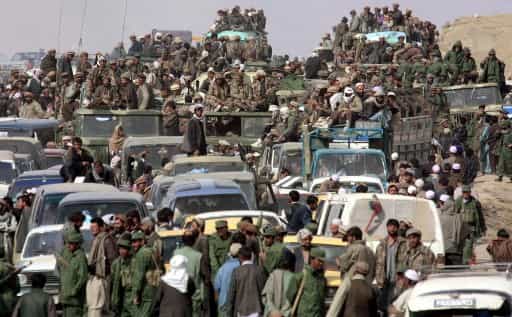
As the US pulls out of Afghanistan amid large scale chaos, the US report by Special Inspector General for Afghanistan Reconstruction(SIGAR) said there was poor division of labour resulting in weak strategy.
"While initially the US tied to destruction of al-Qaeda, the strategy grew considerably to include the defeat of the Taliban, an insurgent group deeply entrenched in Afghan communities, then expanded again to include corrupt Afghan officials who undermined US efforts at every turn," it said.
"The US government was simply not equipped to undertake something this ambitious in such an uncompromising environment, no matter the budget," the report added.
"After a decade of escalation, the United States began a gradual, decade long drawdown that steadily revealed how dependent and vulnerable the Afghan government remains," the report pointed out.
'Pervasive corruption put US funds at risk'
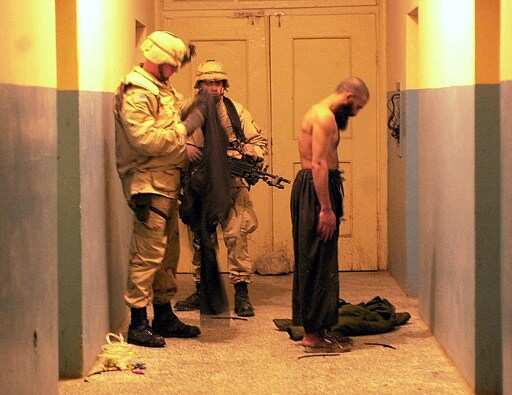
US policies emphasised that all US reconstruction projects must be sustainable, but Afghans often lacked the capacity to take responsibility for projects, the report claimed while saying that although the US government tried to help Afghan institutions build their capacity, but those institutions often could not keep up with US demands for fast progress.
"Pervasive corruption put US funds sent through the Afghan government at risk of waste, fraud, and abuse," it said.
The report said in 2009, when then-Vice President Joe Biden returned from a trip to Afghanistan, he told President Obama, “If you ask 10 of our people what we’re trying to accomplish here, you get 10 different answers. This has been on autopilot.”
In 2011, President Obama announced that all surge troops would be out by 2012 and that troops would continue coming home at a “steady pace” thereafter as “our mission [changes] from combat to support. By 2014, this process of transition will be complete.”
By 2015, President Obama implored Americans to be patient as worsening security and governance made it clear the Afghan government was often unable to take the reins, the SAGR report asserted.
Pakistan connecting
The report said the formalisation efforts were just one of the ways coalition forces and the Afghan government attempted to find a shortcut to a more secure Afghanistan.
"At several points over the last two decades, rising insecurity also forced policymakers to accept problematic compromises in the development of the country’s official uniformed security forces."
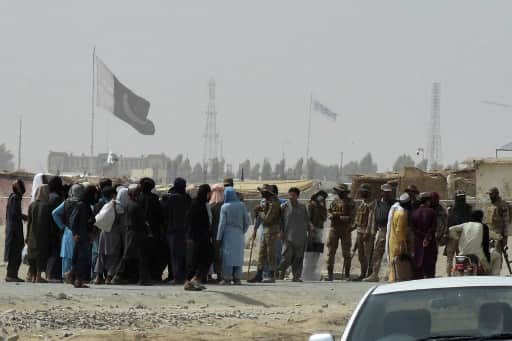
Initially, in 2002, plans called for a transition from a large aggregate of militias who had helped topple the Taliban to a smaller, professionally trained force. Then deteriorating security and threats emanating from Pakistan led to more ambitious plans for a standing army, the report said.
"Instances of Afghan military trainees going absent without leave (AWOL) in the United States increased during periods of heightened violence in Afghanistan," it stated.
Money spent, not impact achieved became the primary metric of success
The US government’s ignorance of Afghanistan’s social landscapes was not limited to complex village politics or sordid ties between insurgents and nominal US allies, the report said.
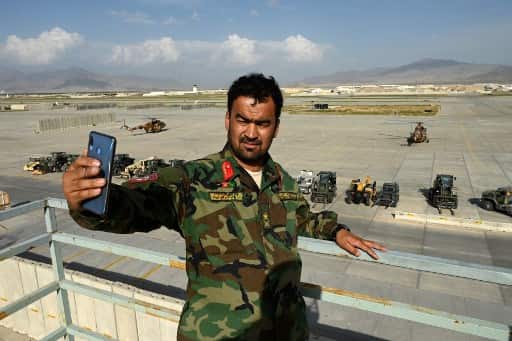
Also, advanced weapons systems, vehicles, and logistics used by Western militaries were beyond the capabilities of the largely illiterate and uneducated Afghan force, it said.
Money spent, not impact achieved became the primary metric of success.
The report compared the Afghan situation to Vietnam saying: "Rather than motivating the US government to improve, the difficulty of these missions may instead encourage US officials to move on and prepare for something new."
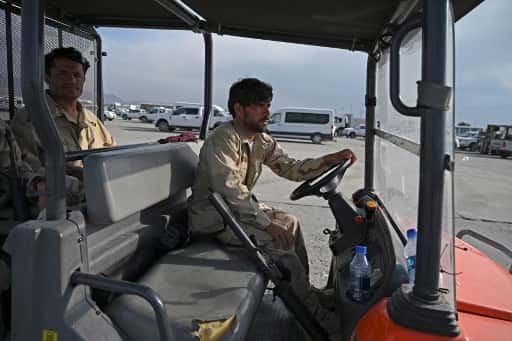
Biden's approval rating drops
According to a poll, President Joe Biden's approval rating dropped by 7 percentage points and hit its lowest level so far as the US-backed Afghan government collapsed over the weekend in an upheaval that sent thousands of civilians and Afghan military allies fleeing for their safety.
Biden had assailed the Afghan military for refusing to fight, denounced the now-ousted Afghan government and declared he inherited a bad withdrawal agreement from his Republican predecessor Donald Trump.
President Biden had come to office promoting himself as an international statesman with a steady hand on the tiller after Trump's four storm-tossed years in office.
The US president quickly rejoined international agreements abandoned by Trump and sought to rejuvenate traditional alliances that Trump had spurned.
But his first big international challenge is generating an intense political backlash as Democrats and Republicans alike raise questions about his strategy.
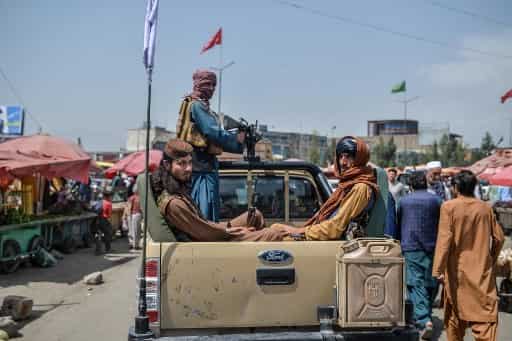
US intelligence report dismissed
A prediction by US intelligence that the Taliban could be held off for three months following US withdrawal proved to be wrong. US military commanders who sought a more deliberate approach to the withdrawal were dismissed by the Biden administration.
Members of the US Congress, increasingly frustrated with events in Afghanistan, want to investigate what went wrong.
Senator Mark Warner, the Democratic Intelligence Committee chairman, had said on Monday he intended to work with other committees "to ask tough but necessary questions" about why the United States was not better prepared for the collapse of the Afghan government.
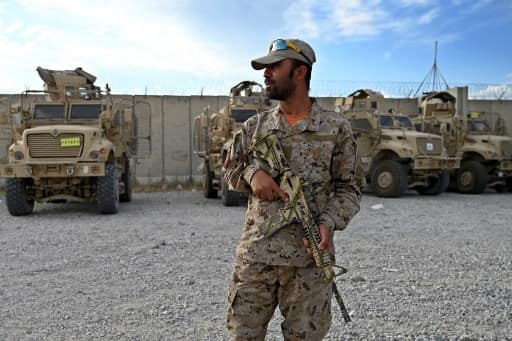
Biden manages from Camp David
Biden, managing the crisis from the presidential retreat of Camp David in Maryland's Catoctin mountains, went several days without talking to any foreign leaders about Afghanistan. He spoke to British Prime Minister Boris Johnson on Tuesday.
"The prime minister stressed the importance of not losing the gains made in Afghanistan over the last 20 years, or protecting ourselves against any emerging threat from terrorism and of continuing to support the people of Afghanistan," said a Downing Street spokesman.
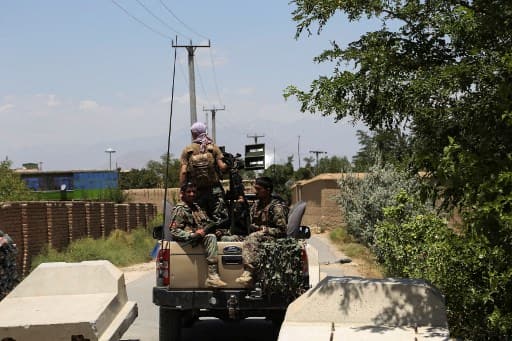
'Our hearts are heavy for Afghan people'
Former President George W Bush had began the "war on terror" in Afghanistan in response to the September 11, 2001 attacks and started a second war in Iraq in 2003. The former president sounded a note of regret in a statement with his wife, Laura Bush.
"Our hearts are heavy for both the Afghan people who have suffered so much and for the Americans and NATO allies who have sacrificed so much," they said. "The Afghans now at greatest risk are the same ones who have been on the forefront of progress inside their nation."
German President Frank-Walter Steinmeier was more direct, asserting that the Afghan turmoil 'shames' the West.
"We are experiencing a human tragedy for which we share responsibility," said President Frank-Walter Steinmeier said as NATO and US forces left Afghanistan amid chaos at Kabul airport in the last few days.
)
)
)
)
)