How the Su-30MKI survives flying through extreme weather and heavy rain

The Su-30MKI handles extreme weather through a titanium-alloy airframe, protected engine intakes, and waterproof cockpit avionics designed for heavy monsoons.
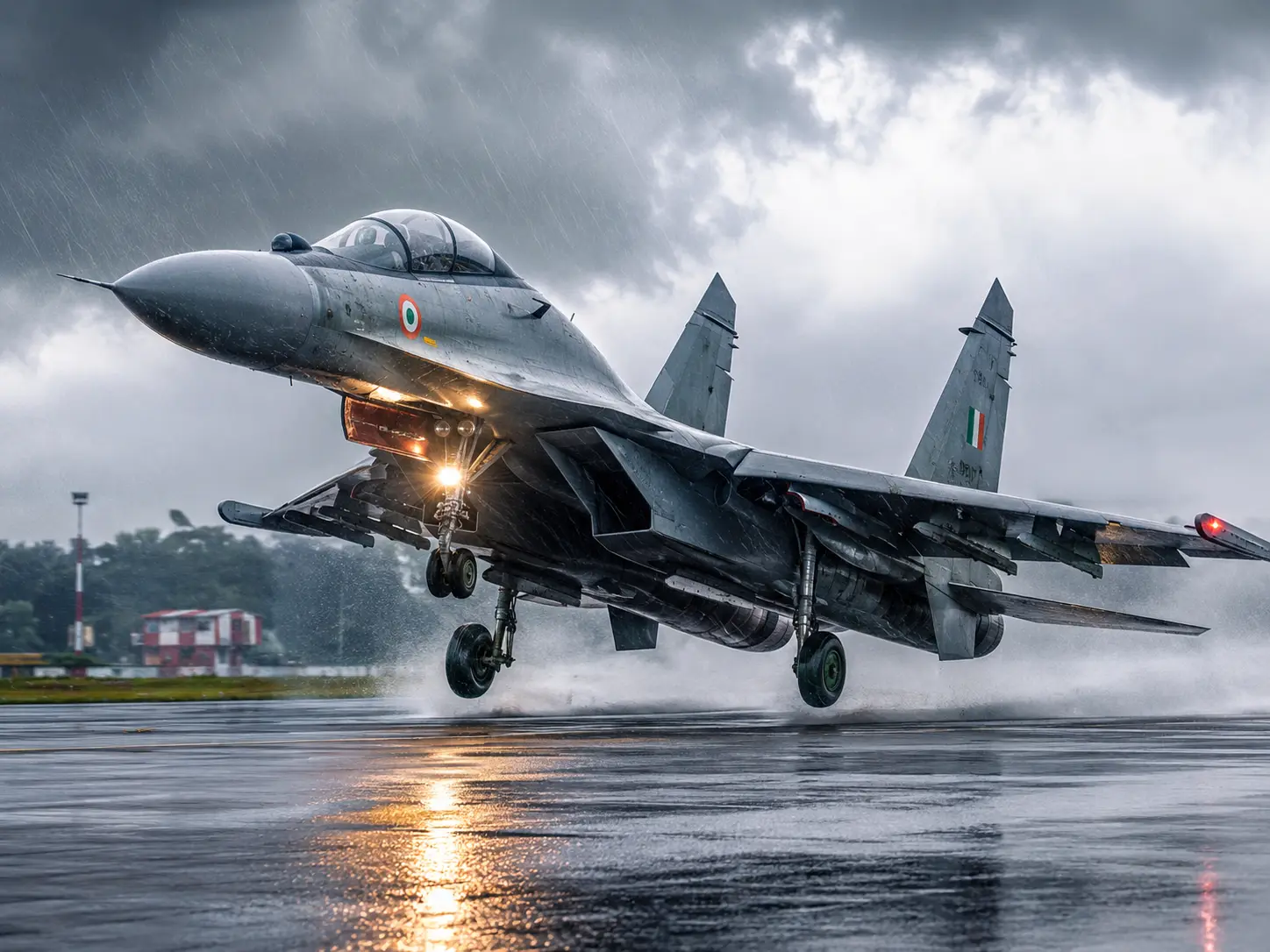
Withstanding 9G Forces
The Su-30MKI airframe is constructed using high-strength titanium and aluminium alloys to endure extreme aerodynamic loads. This robust structural framework successfully withstands violent wind shear and severe turbulence encountered during heavy monsoon storms. Consequently, the aircraft maintains complete stability when flying through sudden atmospheric pressure shifts.
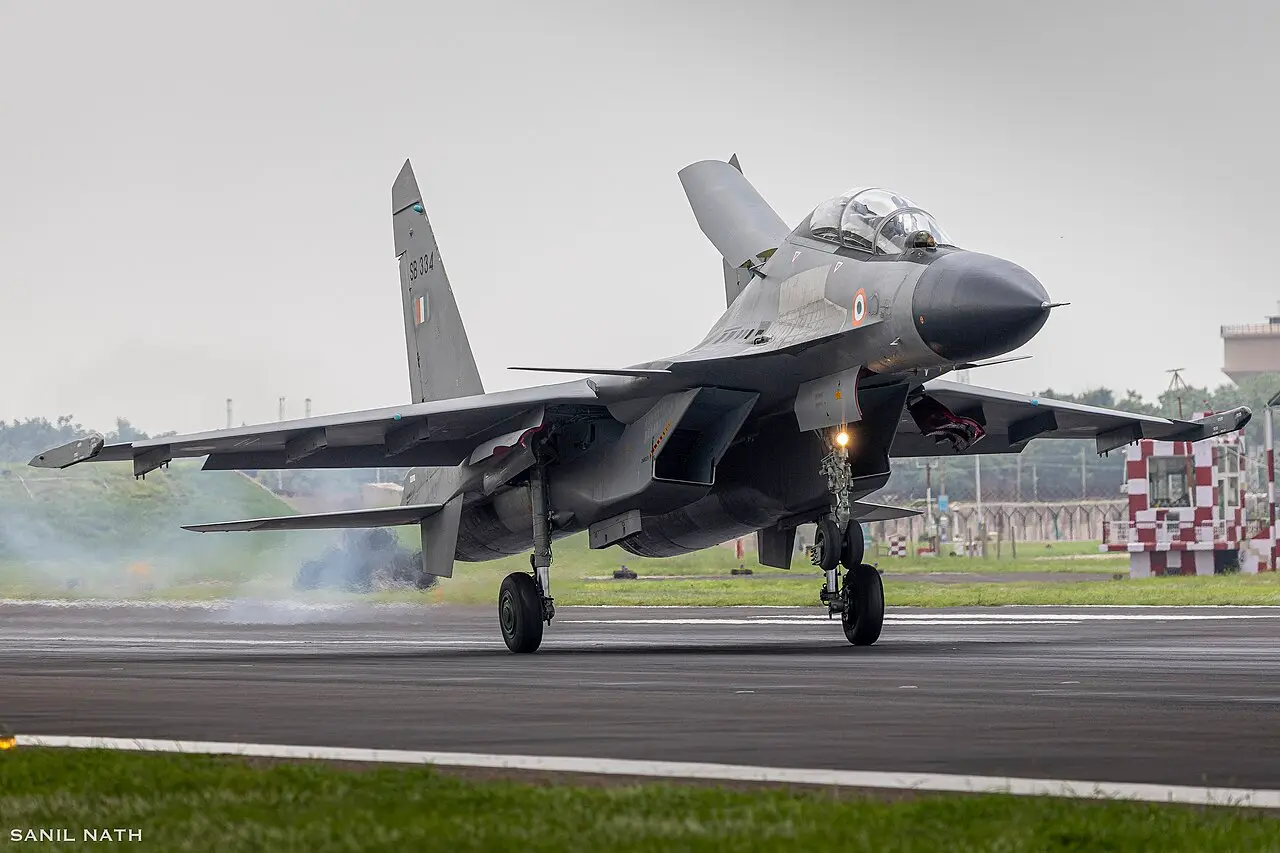
Protecting AL-31FP Engines
Heavy rainfall ingestion can cause severe compressor stalls in high-performance jet engines during low-altitude operations. The twin AL-31FP engines feature specialized intake management design to handle moisture intake efficiently. These engineering safeguards prevent water accumulation and ensure uninterrupted thrust during downpours.
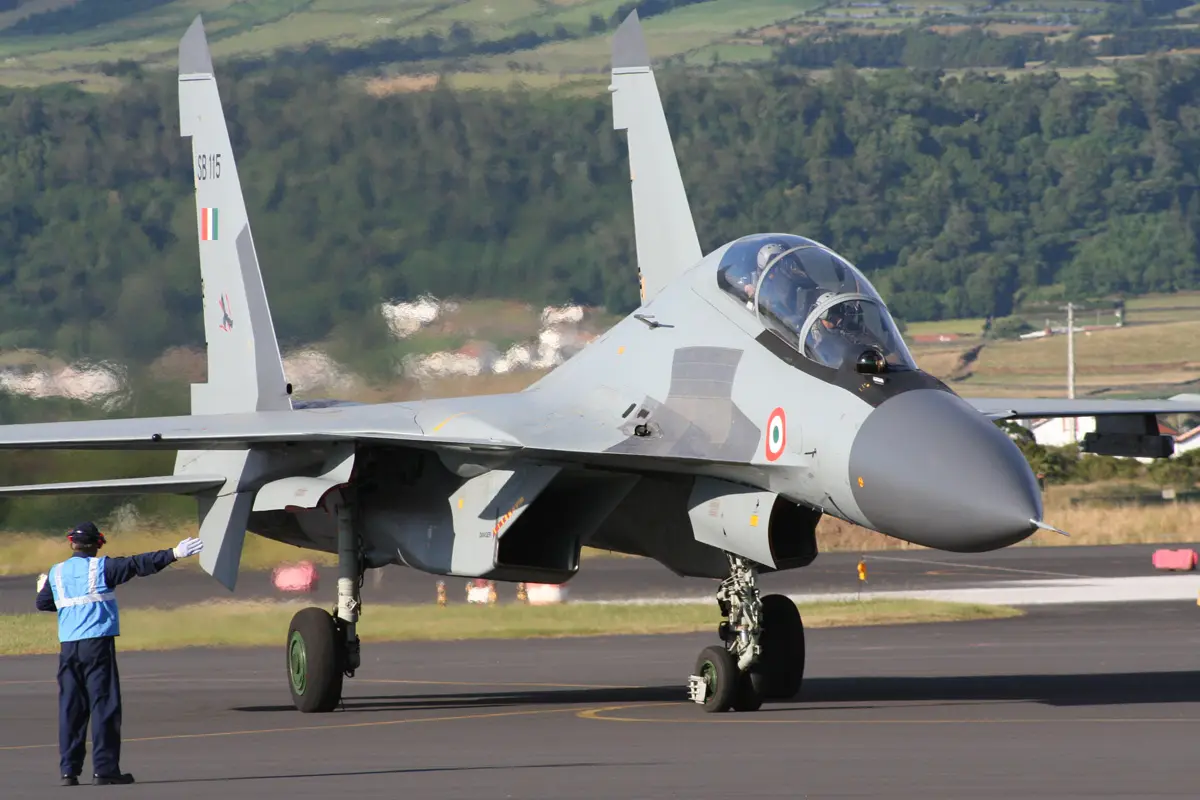
Sealed Glass Cockpit
Digital avionics and multi-function displays require absolute protection from high-altitude moisture and torrential rain infiltration. The tandem glass cockpit utilizes specialized seals and waterproof housing units for all onboard navigation instruments. This design keeps the flight deck fully operational during blinding tropical storms.
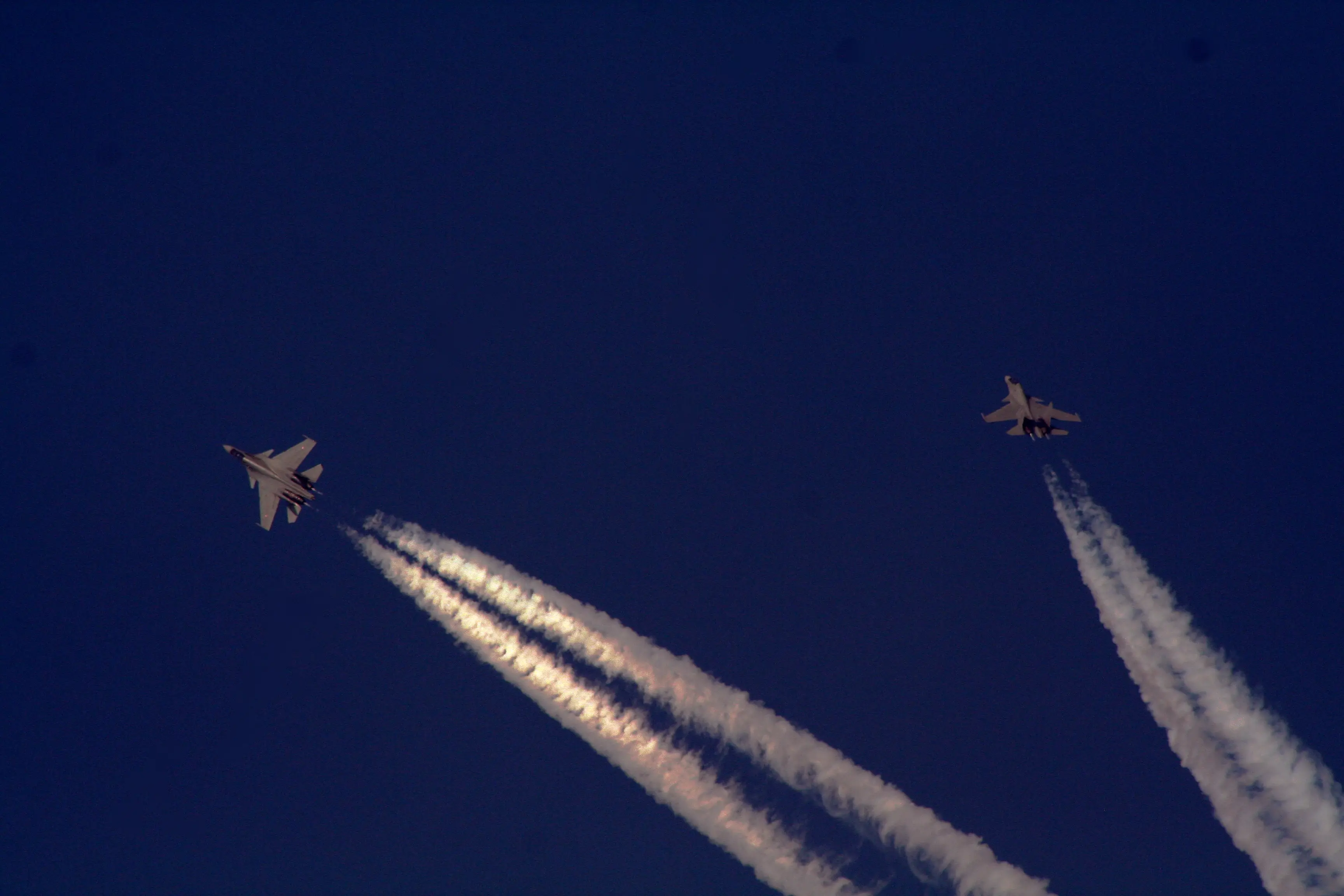
All-Weather Radar Guidance
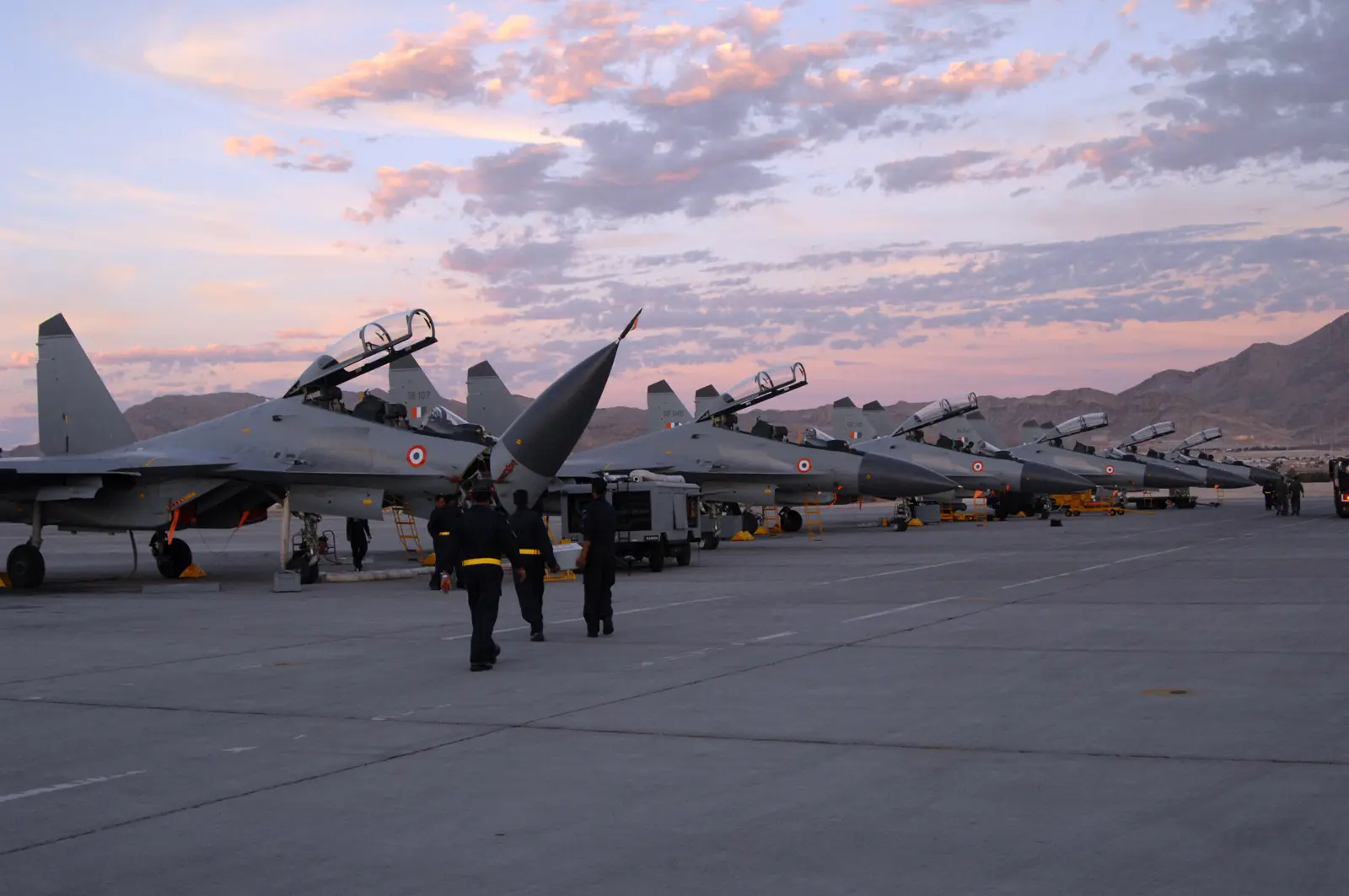
The heavy fighter relies on its advanced radar systems for precise all-weather targeting and navigation. The nose radome uses specialized composite materials that resist erosion from high-speed water droplets and ice crystals. This ensures seamless target tracking even inside zero-visibility storm clouds.
Instrument Meteorological Training
Operational protocols for Indian Air Force pilots require rigorous training for low-visibility instrument meteorological conditions. Ground crews apply specialized anti-corrosion coatings to shield external surfaces from persistent moisture and high humidity. These protective measures keep the fighter ready for rapid deployment regardless of external weather.
)
)
)
)
)