How the F-22 hides its hot jet exhaust from enemy heat-seeking missiles

The F-22 Raptor evades heat-seeking missiles by mixing hot engine exhaust with cool bypass air, using flat rectangular nozzles, and flying at supersonic speeds without afterburners.
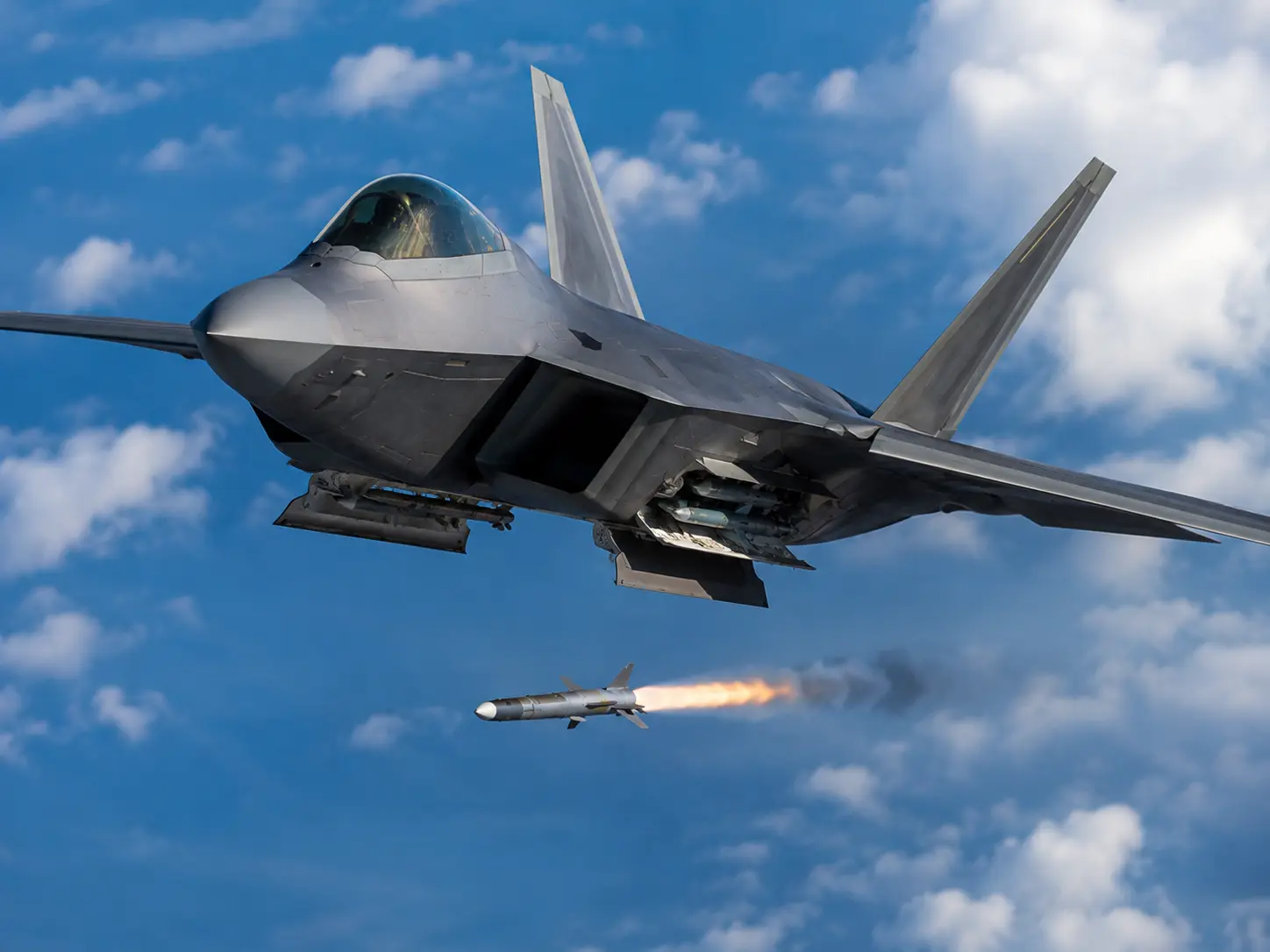
Over 1,600°C Turbine Heat
Inside the Pratt & Whitney F119 engine, turbine inlet temperatures reach extreme levels approaching 1,650 degrees Celsius during flight operations. To prevent infrared sensors from locking onto this immense thermal spike, the engine continuously bleeds cooler bypass air through internal channels. This cool air mixes directly with the hot core gases to lower the overall exhaust temperature before it exits the airframe.
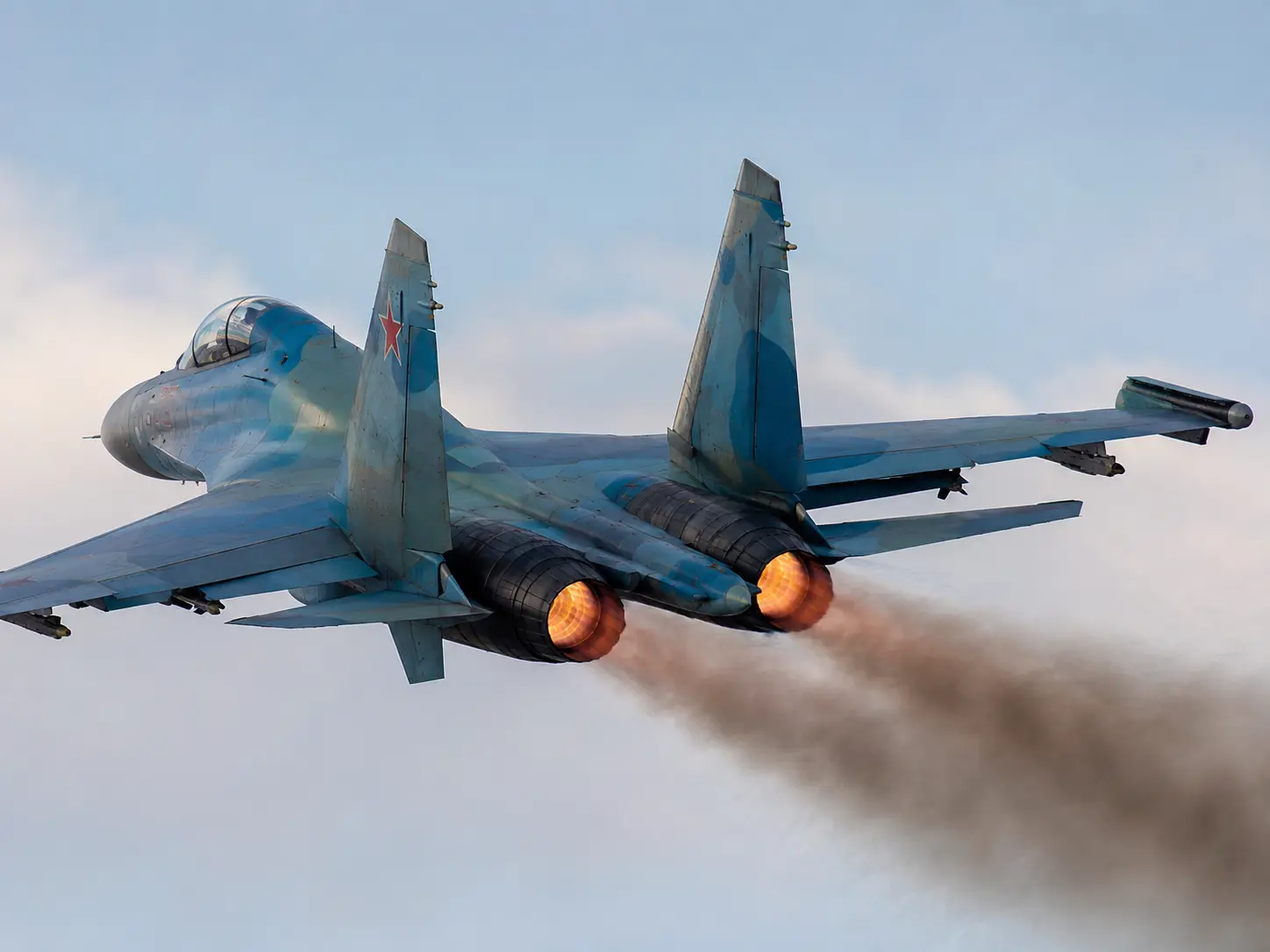
Flat 2D Rectangular Nozzles
Traditional combat jets use round exhaust nozzles that blast heat into a concentrated and highly visible cylindrical plume. The F-22 utilizes flat, two-dimensional rectangular nozzles that flatten out and spread the exiting exhaust gas over a much wider surface area. This unique geometry creates airflow vortices that rapidly mix the hot exhaust plume with freezing ambient atmospheric air.
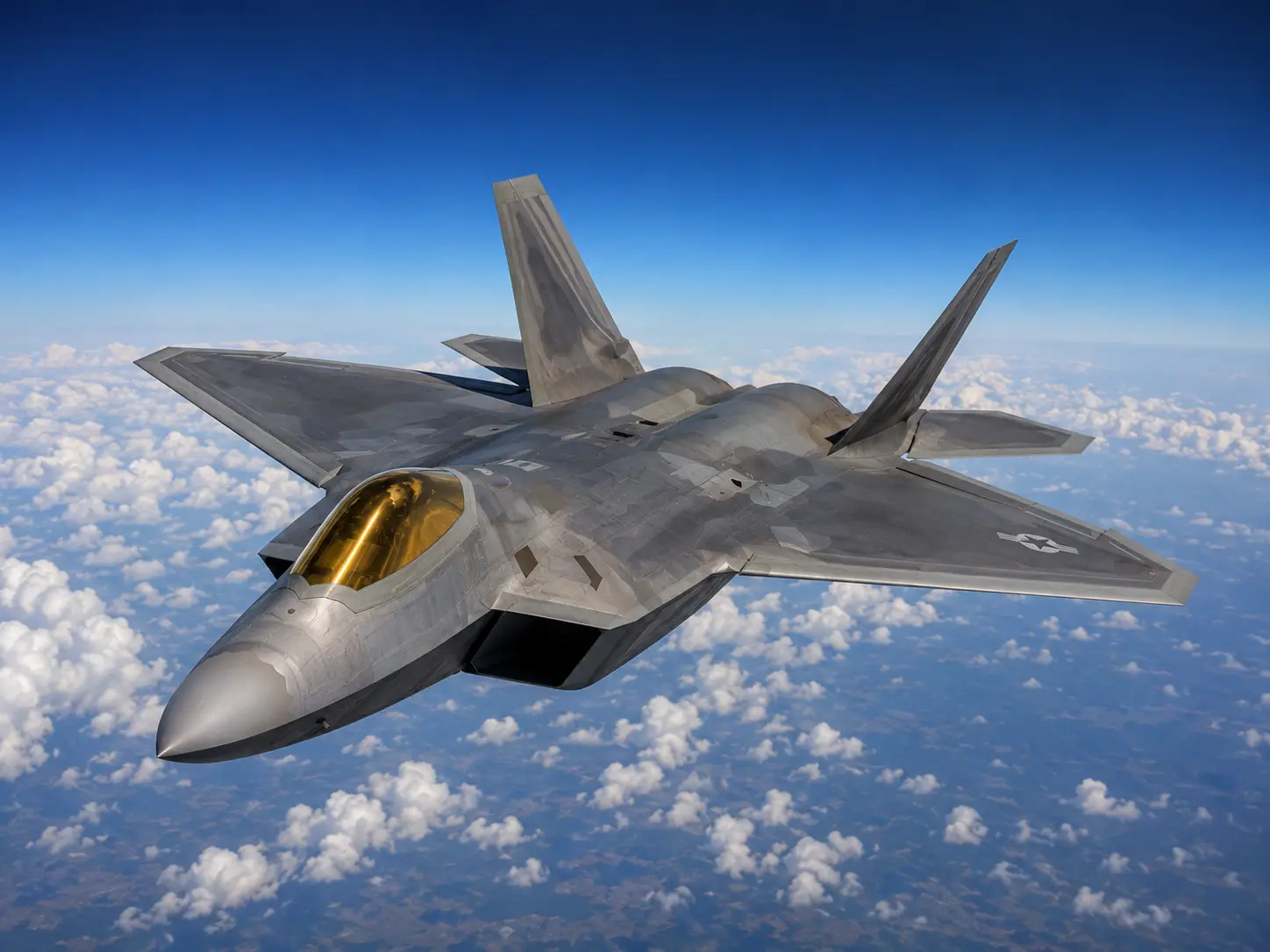
Ceramic Thermal Barrier Coatings
The engine structures and exhaust nozzles are constructed using advanced nickel-based superalloys protected by specialized ceramic thermal barrier coatings. These radar-absorbing and heat-dissipating topcoats prevent intense engine heat from accumulating across the external metal skin of the jet. Minimising surface heat emissivity denies enemy ground and airborne infrared search and track sensors a clear target lock.
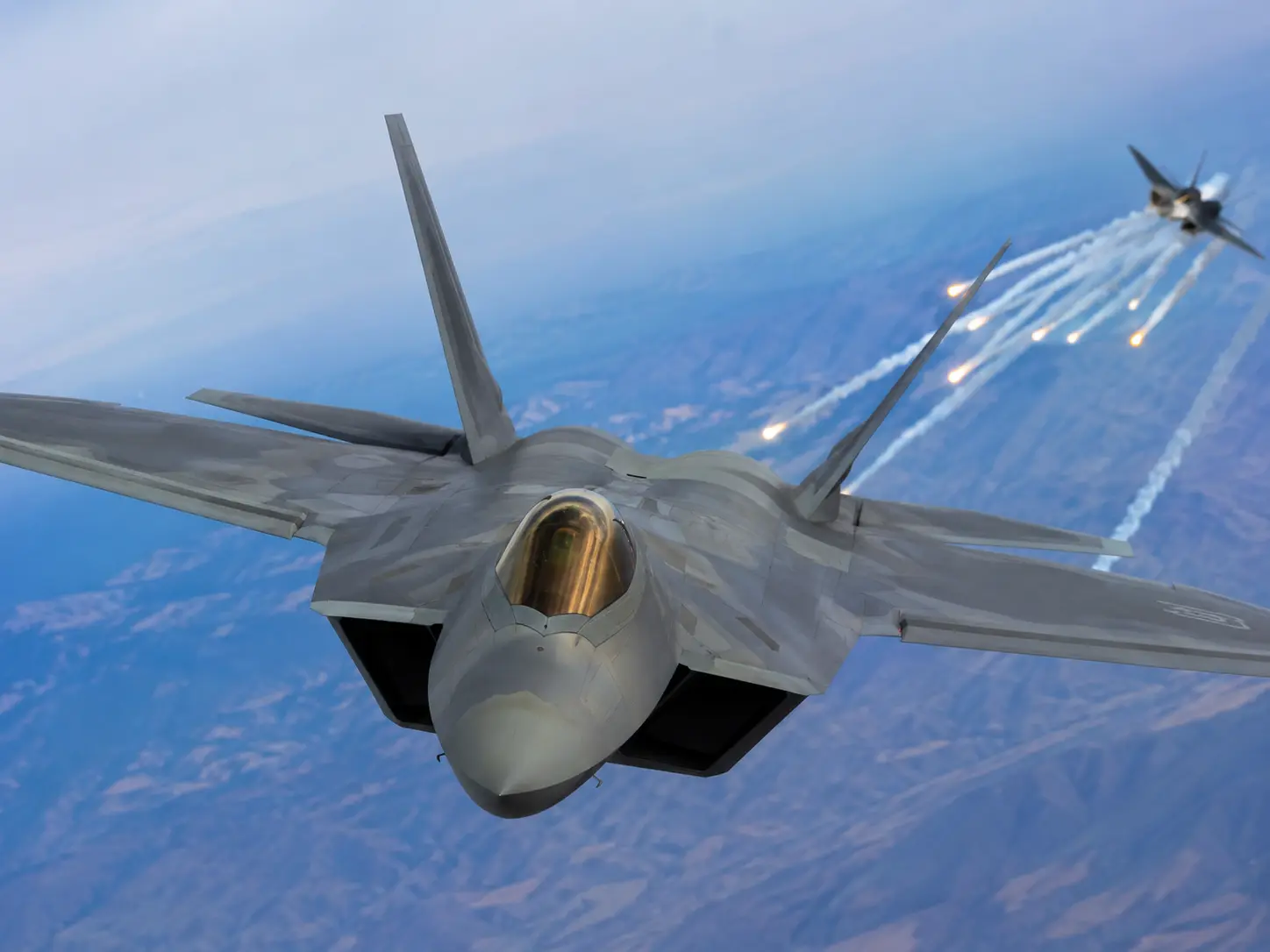
Internal Bypass Air Cooling
The F-22 engine operates with a 0.30 to 1 bypass ratio that actively routes cool air around the core propulsion hardware. This continuous airflow lowers the operational temperature of the afterburner liners and exhaust nozzle structures throughout high-speed combat manoeuvres. Keeping these outer engine assemblies thermally insulated ensures the surrounding airframe and fuselage maintain a minimal infrared signature.
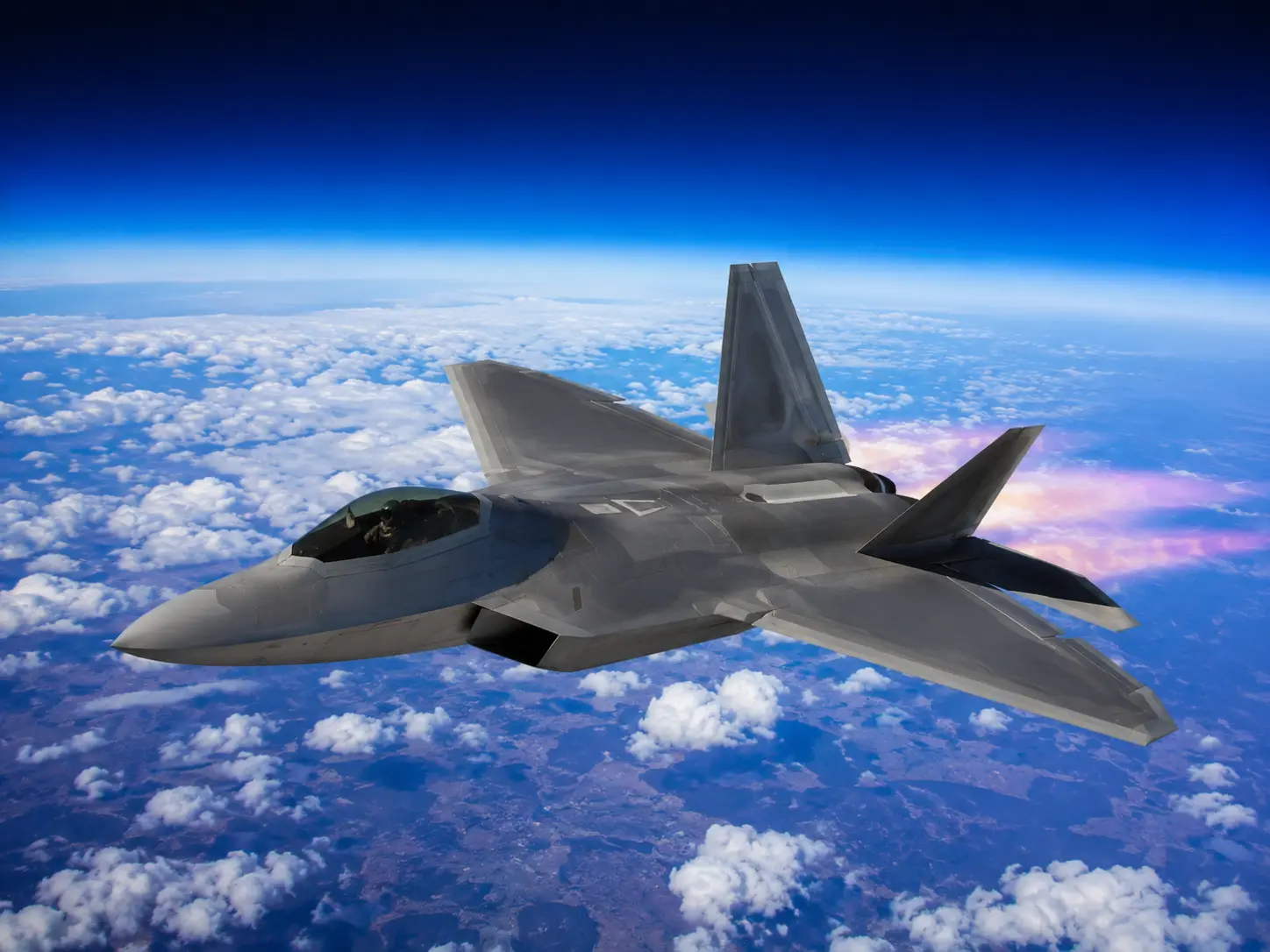
Mach 1.8 Without Afterburners
Conventional fighter jets must engage fuel-heavy afterburners to fly at supersonic speeds, creating a massive thermal plume visible for hundreds of kilometres. The F-22 achieves supercruise speeds up to Mach 1.8 using normal engine thrust alone, eliminating the need for afterburners during sustained flight. Avoiding raw fuel combustion cuts the infrared signature drastically during stealth combat missions.
)
)
)
)
)