How Taliban emerged & seized Afghanistan despite US involvement

Taliban's rule
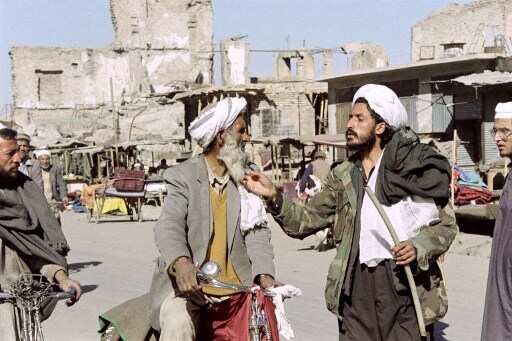
The Taliban which has now become the dominant force in Afghanistan seeking to change the power equations in the country ran one of the world's most repressive governments from 1996 to 2001.
There were public executions, stonings, strict interpretations of Sharia, or Islamic religious law, women not being allowed to work, and girls not allowed to attend school.
Women had to cover their faces and be accompanied by a male relative if they wanted to venture out of their homes. Men were not allowed to trim their beards.
Now, the group is seeking to present a more moderate face.
As he militant group seized the capital, it said, All those who have previously worked and helped the invaders (Western troops), or are now standing in the ranks of the corrupt administration of Kabul, the Islamic Emirate has opened its door for them and have announced for them amnesty."
Taliban emerges from Kandahar
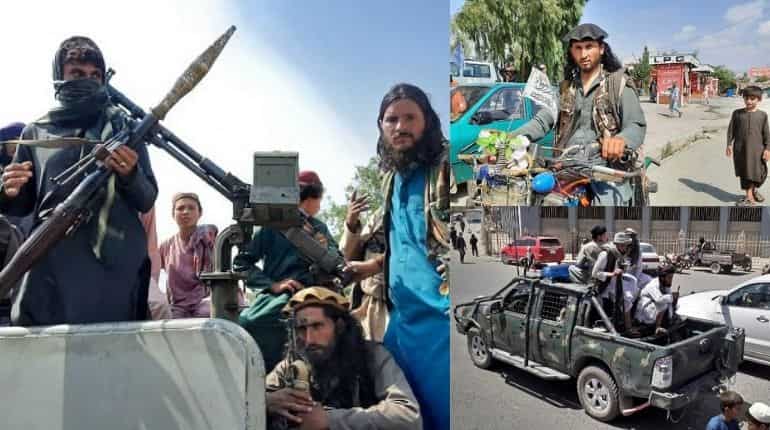
The Taliban, which means "students" in the Pashto language, emerged in 1994 around the southern Afghan city of Kandahar. It was one of the factions fighting a civil war for control of the country following the withdrawal of the Soviet Union and subsequent collapse of the government.
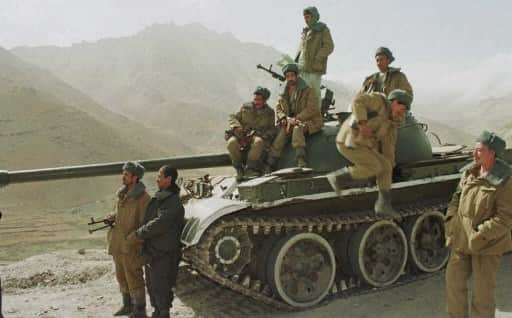
It originally drew members from so-called "mujahideen" fighters who, with support from the United States, repelled Soviet forces in the 1980s.
Within the space of two years, the Taliban gained sole control over most of the country, proclaiming an Islamic Emirate in 1996 with a harsh interpretation of Islamic law. Other mujahideen groups retreated to the north of the country.
Following the September 11, 2001 attacks in the United States by al Qaeda, US-backed forces in the north swept into Kabul in November under the cover of heavy US airstrikes.
The Taliban melted away into remote areas, where it began a 20-year-long insurgency against the Afghan government and its Western allies.
Mullah Mohammad Omar creates Taliban
The Taliban's founder and original leader was Mullah Mohammad Omar, who went into hiding after the Taliban was toppled. So secretive were his whereabouts that his death, in 2013, was only confirmed two years later by his son.
On September 12, 2001, NATO allies invoked their mutual defence clause for the first, and so far only time in the Western alliance's seven-decade history, after the September 11, 2001, attacks on the United States by al Qaeda militants.
After US-led forces defeated Taliban leaders harbouring al Qaeda founder Osama bin Laden, the architect of the September 11 attacks, NATO took command of an international coalition in 2003. It aimed to restore peace to Afghanistan and build up Afghan security forces. In 2015, the mission, known as ISAF, was replaced by a training operation, Resolute Support. As of April, it numbered around 10,000 troops from 36 nations.
The international military coalition has suffered over 3,500 fatalities since 2001 as the Taliban fought against the US coalition, among them around 2,400 Americans, according to US Congress data.
Taliban seize towns across Afghanistan
The Taliban took over the city in Nimroz province in the south, the first provincial capital to fall to the insurgents since they stepped up attacks on Afghan forces in early May.
Taliban fighters seized control of the northern city Kunduz over the weekend consisting of 270,000 people which is regarded as a strategic prize as it lies at the gateway to mineral-rich northern provinces and Central Asia.
Taliban insurgents took control of the key eastern city and capital of Nangarhar province without a fight on Sunday, leaving the territory controlled by the crumbling government to little more than the capital Kabul.
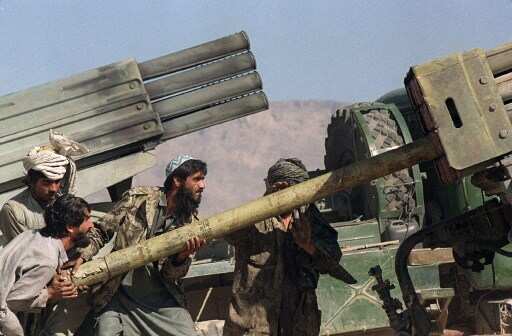
Taliban leaders who matter
Haibatullah Akhundzada: Known as the "Leader of the Faithful", the Islamic legal scholar is the Taliban's supreme leader who holds final authority over the group's political, religious, and military affairs.
Akhundzada took over when his predecessor, Akhtar Mansour, was killed in a US drone strike near the Afghan-Pakistan border in 2016. For 15 years, until his sudden disappearance in May, 2016, Akhundzada taught and preached at a mosque in Kuchlak, a town in southwestern Pakistan.
He is believed to be aged around 60 years old, and his whereabouts are unknown.
Mullah Mohammad Yaqoob:
The son of Taliban founder Mullah Omar, Yaqoob oversees the group's military operations, and local media reports have said he is inside Afghanistan.
He was proposed as overall leader of the movement during various succession tussles, but he put forward Akhundzada in 2016 because he felt he lacked battlefield experience and was too young, according to a Taliban commander at the meeting where Mansour's successor was chosen.
Yaqoob is believed to be in his early 30s.
Sirajuddin Haqqani:
The son of prominent Mujahideen commander Jalaluddin Haqqani, Sirajuddin leads the Haqqani Network, a loosely organized group that oversees the Taliban's financial and military assets across the Pakistan-Afghanistan border.
The Haqqanis are believed by some experts to have introduced suicide bombing to Afghanistan and have been blamed for several high-profile attacks in Afghanistan including a raid on Kabul's top hotel, an assassination attempt on then-President Hamid Karzai and a suicide attack on the Indian embassy.
Haqqani is believed to be in his late 40s or early 50s. His whereabouts are unknown.
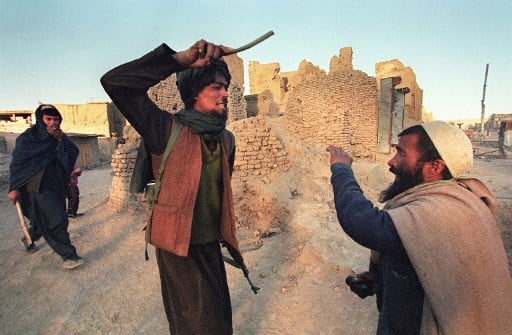
Taliban's network
Mullah Abdul Ghani Baradar:
One of the co-founders of the Taliban, Baradar now heads the political office of the Taliban and is part of the negotiating team that the group has in Doha to try and thrash out a political deal that could pave the way for a ceasefire and more lasting peace in Afghanistan. The process has failed to make significant headway in recent months.
Baradar, reported to have been one of Mullah Omar's most trusted commanders, was captured in 2010 by security forces in the southern Pakistani city of Karachi and released in 2018.
Sher Mohammad Abbas Stanekzai:
A former deputy minister in the Taliban's government before its ouster, Stanekzai has lived in Doha for nearly a decade, and became the head of the group's political office there in 2015. He has taken part in negotiations with the Afghan government, and has represented the Taliban on diplomatic trips to several countries.
Abdul Hakim Haqqani:
He is head of the Taliban's negotiating team. The Taliban's former shadow chief justice heads its powerful council of religious scholars and is widely believed to be someone whom Akhundzada trusts most.
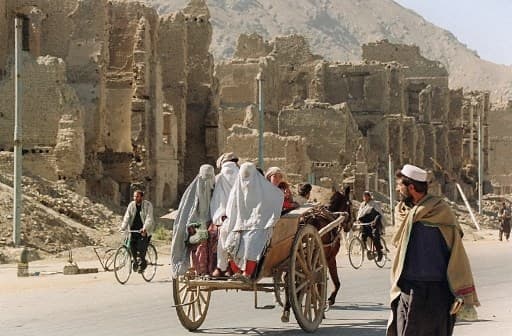
Kabul becomes vulnerable to Taliban offensive
The insurgents had earlier seized districts in Wardak province, 40 km (25 miles) from Kabul, and had taken control of districts in restive Ghazni, a key province between two roads connecting Kabul to Kandahar, the second-largest city.
In mid-June, the Taliban claimed to have captured several districts in the northern provinces of Faryab, Takhar and Badakhshan, forcing military leaders to strategically retreat from a number of areas.
As the threat over Kabul grew, Afghan authorities said they installed an anti-missile system at Kabul airport to counter incoming rockets. However, on Sunday it did not matter much as the militant group marched into the Afghanistan's capital.
In a sharp escalation over last weekend, the Taliban offensive focused on urban centres. Overnight the miltiant group launched at least three provincial capitals -- Lashkar Gah, Kandahar and Herat with Kabul becoming vulnerable.
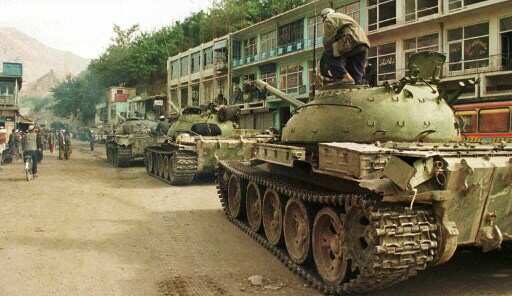
Afghanistan on Human Development Index
After it seized Kabul, the militant group assured all the diplomats, embassies, consulates and charitable workers that they won't face any problems. However, most don't believe them due to their track record.
The United States has spent more than $140 billion in overall aid for Afghanistan since 2002, according to US Congress data.
The Pentagon estimated the cost of US combat operations, including support for the Afghan forces, at more than $820 billion for the same period.
Afghanistan remains one of the poorest countries in the world. It ranks 169 of 189 countries in the Human Development Index published by the United Nations Development Programme, with an average life expectancy of 64 years and a gross national income per capita of $2,200.
)
)
)
)
)