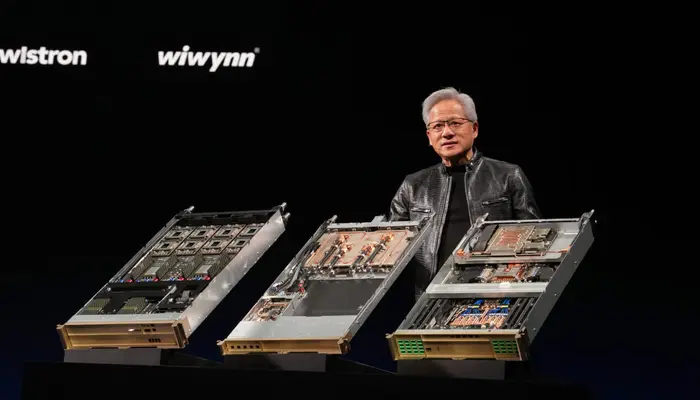
How Jensen Huang's resignation could change the global AI chip war

With Nvidia controlling roughly 80 per cent of the AI chip market, Jensen Huang's resignation after 33 years could reshape global semiconductor competition.
Opening for rival chipmakers
Nvidia controls roughly 80 per cent of the global artificial intelligence accelerator market, leaving little room for competitors. With Jensen Huang stepping down after 33 years, rivals like AMD and Broadcom have a rare opportunity to pitch their processors to nervous data centre buyers seeking supply stability.

Push for custom chips
Major cloud providers including Google, Amazon, and Microsoft already spend billions of dollars developing custom silicon to cut hardware costs. Leadership uncertainty at Nvidia may encourage these technology giants to accelerate internal chip programmes and reduce their heavy reliance on external suppliers.
Testing the CUDA moat
Nvidia's strongest competitive shield is its proprietary CUDA software ecosystem, which is used by over 5 million developers globally. While interim chief executive Colette Kress maintains operational continuity, rival open-source software tools will test whether developers remain locked into Nvidia hardware.
Shifting geopolitical chip rules
Huang served as the semiconductor industry's most prominent voice in Washington regarding export controls on advanced processors to China. His immediate departure creates a diplomatic vacuum as governments tighten restrictions on cross-border artificial intelligence hardware sales and national security reviews.
Foundry supply chain pressure
Nvidia anchors global chip manufacturing by reserving massive advanced packaging capacity at Taiwan Semiconductor Manufacturing Co. Any strategic adjustments under a permanent successor could alter production allocations, affecting how quickly both Nvidia and competing chip designers bring next-generation processors to market.