How IS-inspired local suicide bombers carried out strikes in Sri Lanka

Sri Lanka Easter day bombings
For years, Sri Lanka's Muslim community warned authorities about a firebrand cleric.
Now it seems Zahran Hashim may have played a key role in one of the worst attacks in the country's history.
A video released by the Islamic State group after it claimed responsibility for bombs that killed 359 people, appears to prominently feature Hashim.
The round-faced cleric is the only one of the eight figures whose face is uncovered.
Sri Lanka Easter day bombings
Dressed in a black tunic and headscarf, and carrying a rifle, Hashim is seen in the IS video leading seven people in a pledge of allegiance to the group's chief Abu Bakr Al-Baghdadi.
The other seven all wear the same black tunics but their faces are obscured by black-and-white chequered scarves.
Sri Lanka's government has accused Hashim indirectly, saying the Islamist group he was believed to lead the National Thowheeth Jama'ath carried out the attacks.
Hashim was identified, albeit with his name misspelt as Hashmi, by police as heading NTJ.
The IS video was the first concrete evidence of the apparently central role played by Hashim in the Easter attacks.
Sri Lanka Easter day bombings
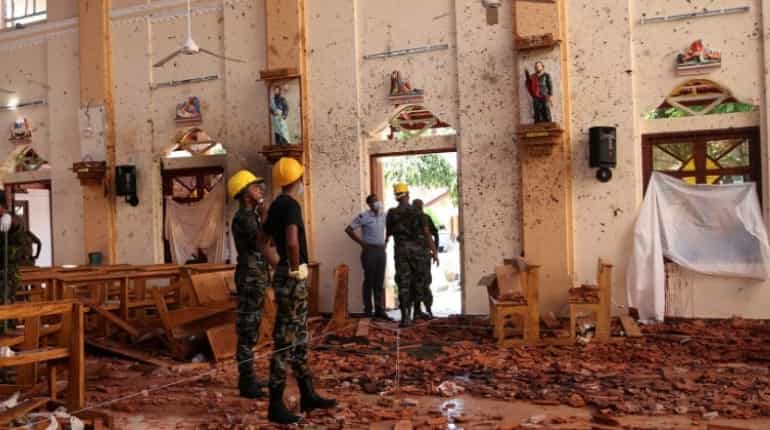
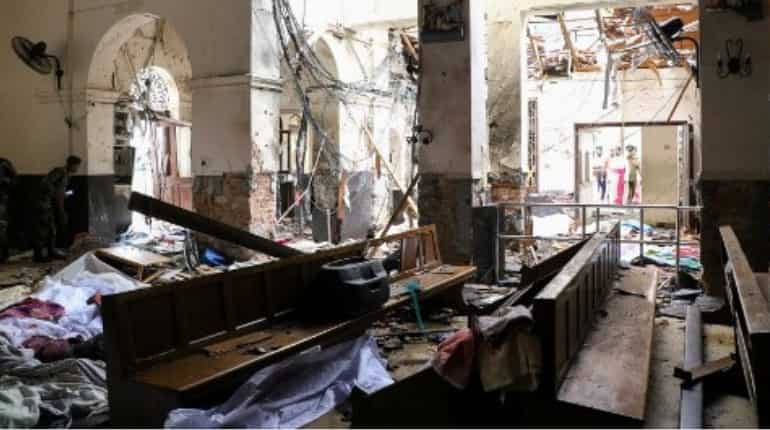
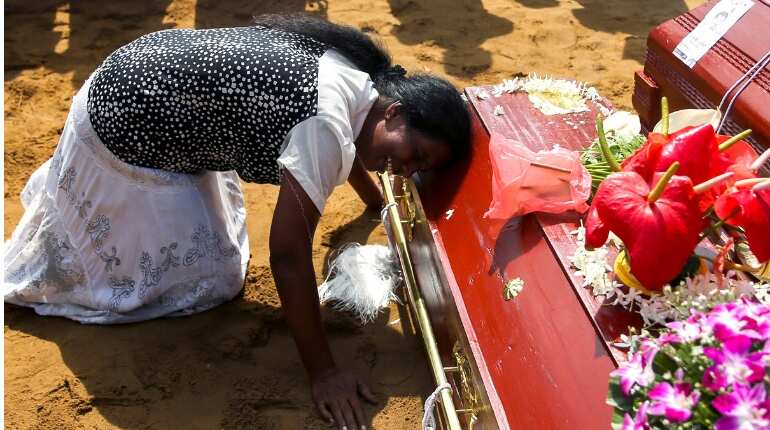
Two Muslim brothers from a wealthy Sri Lankan family plotted and carried out two of the Easter suicide blasts in Colombo that killed more than 320 people, police sources told AFP Tuesday amid growing questions on whether the attackers received foreign help.
The two sons of a Colombo spice trader were among suicide bombers who hit three churches and three luxury hotels, investigators said.
An attack on a fourth hotel failed and helped lead police to the Islamist group now blamed for the assault, they added in comments later confirmed by Prime Minister Ranil Wickremesinghe.
The brothers, whose names have not been revealed, were in their late twenties and operated their own "family cell", an investigation officer said.
The pair were members of the Islamist National Thowheeth Jama'ath (NTJ) group which the government has blamed for the attacks.
Sri Lanka Easter day bombings
Hashim was a virtual unknown before the onslaught, even inside Sri Lanka.
He had attracted several thousand followers on social media sites, including YouTube and Facebook, where he posted incendiary sermons.
In one, the cleric with an unkempt black beard, delivers an extremist diatribe against non-Muslims, with a crudely photoshopped backdrop of flags in flames.
Hilmy Ahamed, vice-president of the Muslim Council of Sri Lanka, said he had gone to local authorities with concerns about Hashim three years ago.
"This person was a loner and he had radicalised young people in the guise of conducting Koran classes," he told AFP.
"But nobody thought these people were capable of carrying out an attack of such magnitude."
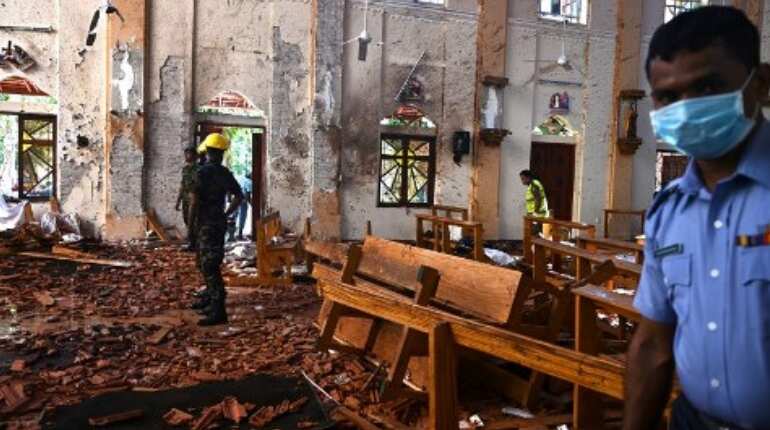
Sri Lanka Easter day bombings
Ahamed said Hashim, who has also gone by the names Mohamed Zahran and Moulavi Hashim, was around 40 years old and from the east coast region of Batticaloa.
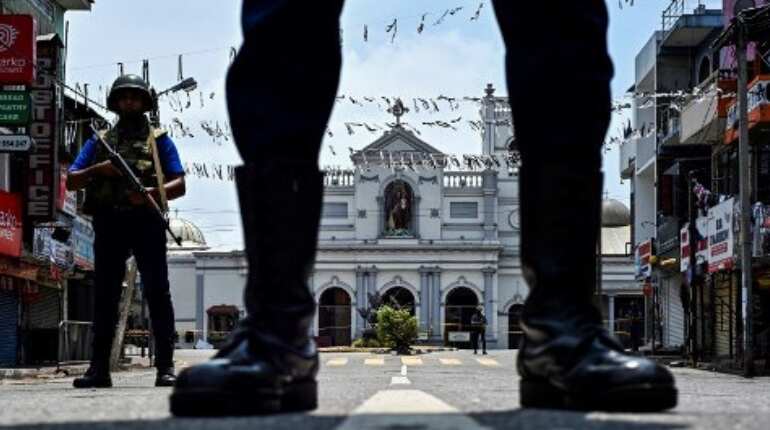
The only one of the attacks on Sunday to hit outside of the Colombo area was at the Zion Church in Batticaloa.
"Zahran belonged to an average Muslim middle-class family. He was a drop-out," said Ahamed, adding that the cleric had studied at an Islamic college in Kattankudy, a Muslim-majority city in eastern Sri Lanka.
He was considered a menace by the local Muslim community and caused trouble at Kattankudy's Thowheeth mosque.
"The mosque saw a continuous conflict with the traditional mosque-goers. Once Zahran took a sword out to kill people belonging to the traditional Muslim mosque," Ahamed said.
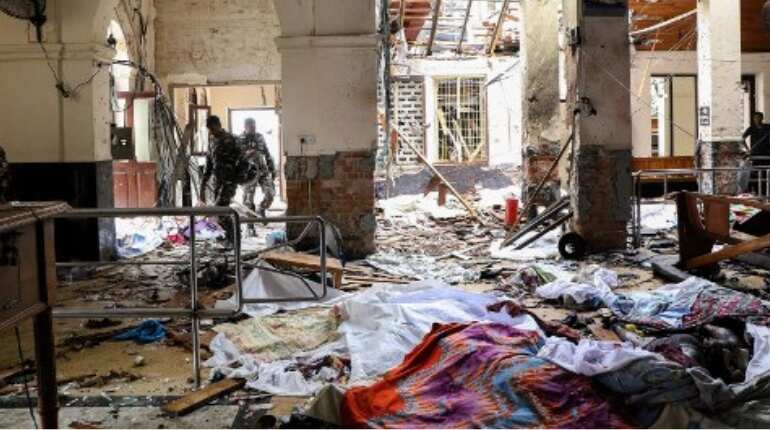
Sri Lanka Easter day bombings
Local media said Hashim formed the NTJ in Kattankudy in 2014.
There was still confusion Wednesday about whether that group or a splinter organisation, carried out the Easter attack.
"There has been a group that has split from the main body," of the NTJ, Deputy Defence Minister Ruwan Wijewardene said.
"We believe that the leader of this group has also committed suicide in one of the attacks," he added, refusing to confirm if he was referring to Hashim or someone else.
Sri Lankan officials are still investigating to what degree IS may have helped the attackers, but Ahamed said Hashim was known by the community to have international ties.
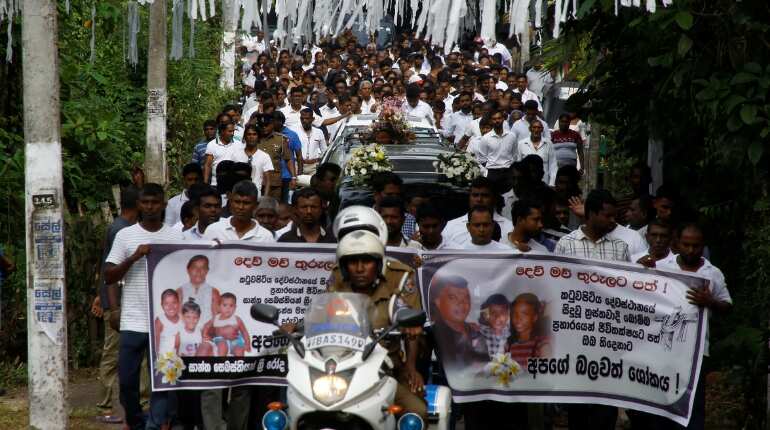
Sri Lanka Easter day bombings
"All his videos have been uploaded from India. He uses boats of smugglers to travel back and forth from southern India," he said.
"I don't know if he is dead or alive," added Ahamed.
And neither do police, who want to know if Hashim was among the suicide bombers.
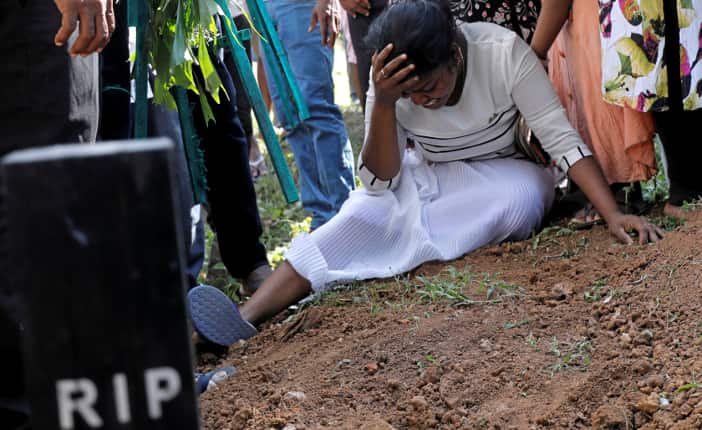
Sri Lanka Easter day bombings
On Wednesday they were carrying out DNA tests on the bodies of some of the bombers, particularly one who set off explosives at the Shangri-La hotel.
"The biggest concern is Zahran," said an officer close to the investigation.
"Anyone who can help us trace him will be doing everyone a huge favour," the official added. "We have not been able to account for him yet."
A Sri Lankan minister said the bombers may have struck in revenge for the killing of 50 worshippers in two New Zealand mosques last month.
"Some of them might have travelled abroad and come back," Wickremesinghe told a press conference.
)
)
)
)
)