How does USS Abraham Lincoln’s flight deck crew communicate without words in high-risk operations?

To maintain operational safety and lethal efficiency, the crew relies on an intricate system of visual signals. This silent language ensures that every movement, from engine start to final launch, is executed with absolute precision without the need for a single spoken word.
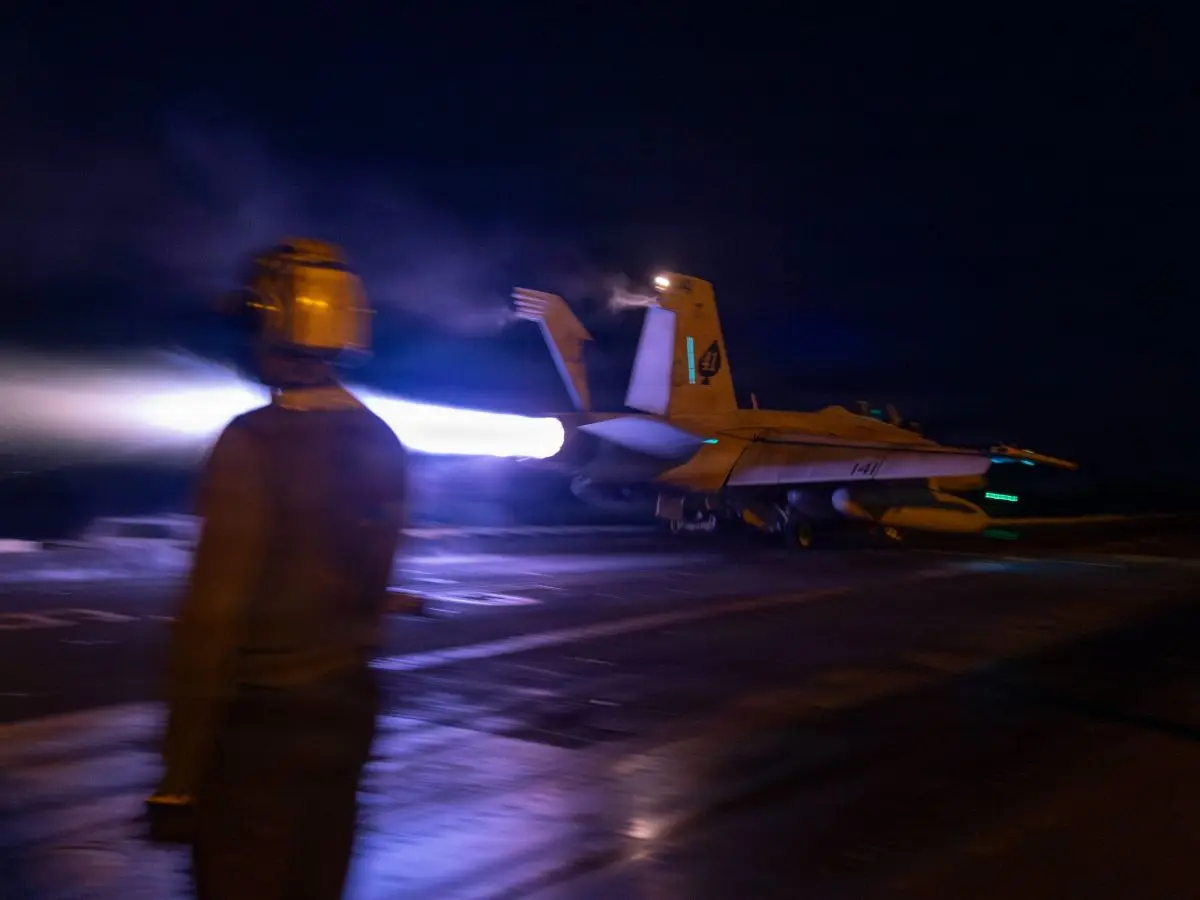
The Precision of Hand Signals on USS Abraham Lincoln
The flight deck of the USS Abraham Lincoln is one of the most hazardous and high-decibel environments on Earth. Amidst the roar of jet engines and the hiss of steam catapults, vocal communication is impossible. To maintain operational safety and lethal efficiency, the crew relies on an intricate system of visual signals. This silent language ensures that every movement, from engine start to final launch, is executed with absolute precision without the need for a single spoken word.
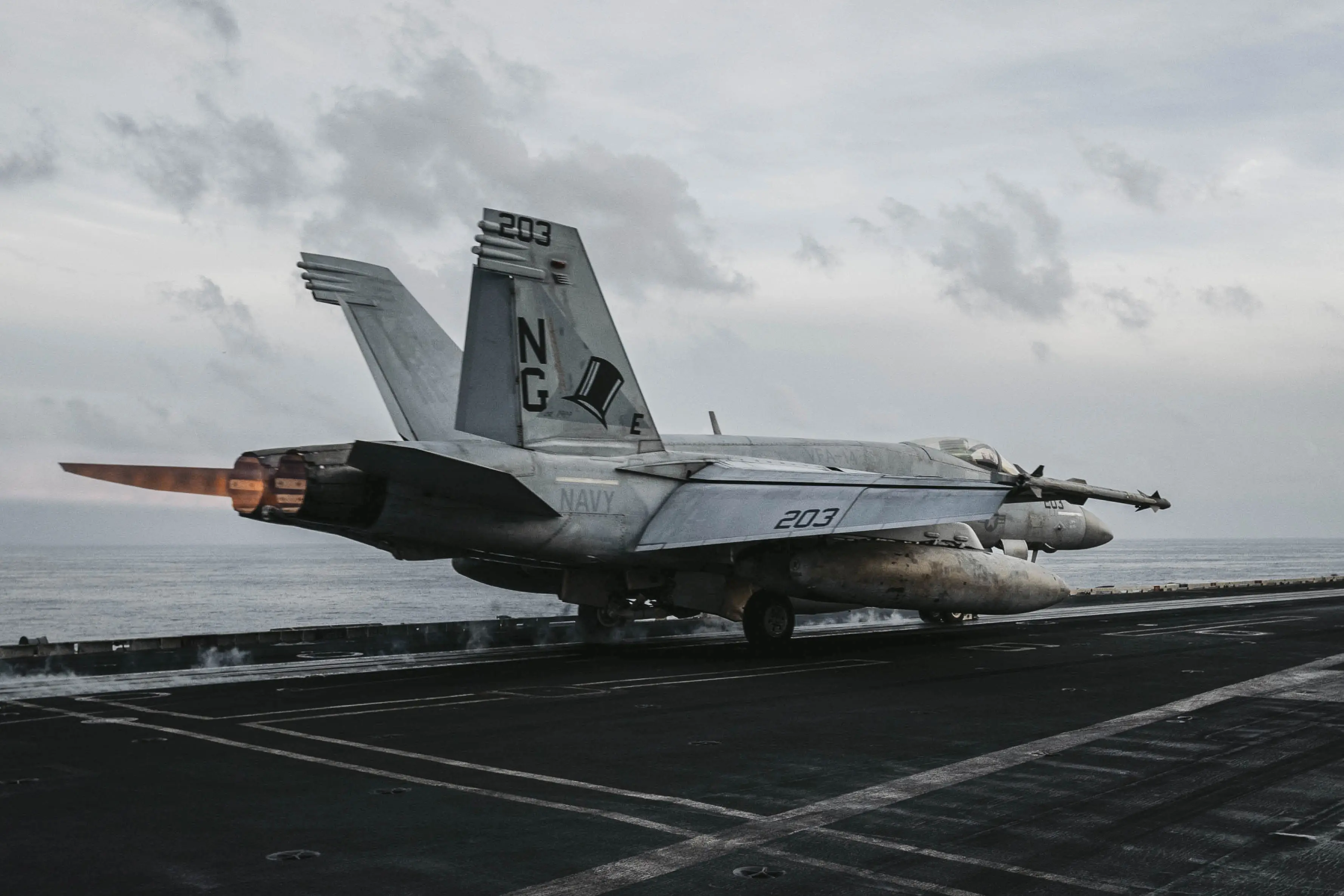
The Necessity of Non-Verbal Coordination
On a nuclear-powered aircraft carrier, noise levels frequently exceed 150 decibels, rendering radio headsets and shouting ineffective during active flight operations. Safety manuals from the Naval Safety Command emphasize that visual communication is the primary safeguard against "the chaotic nature of the deck." By using standardized hand signals, the crew eliminates the risk of auditory misinterpretation, ensuring that commands are received and acknowledged instantly across the sprawling four-acre flight deck.
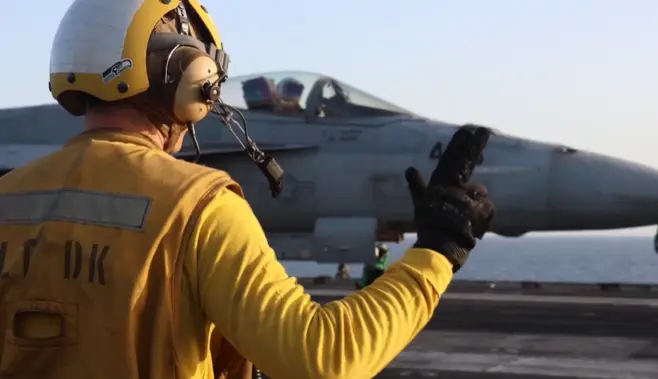
The Role of the Yellow Shirts
The Aircraft Handling Officers and Plane Directors, distinguished by their yellow jerseys, act as the conductors of this mechanical orchestra. According to AirPac’s flight deck awareness protocols, these individuals are responsible for the "positive control" of all aircraft movement. A director guides a pilot by holding their hands aloft; open palms facing the director signify the pilot should move forward, while clenched fists brought together overhead indicate an immediate requirement to stop.
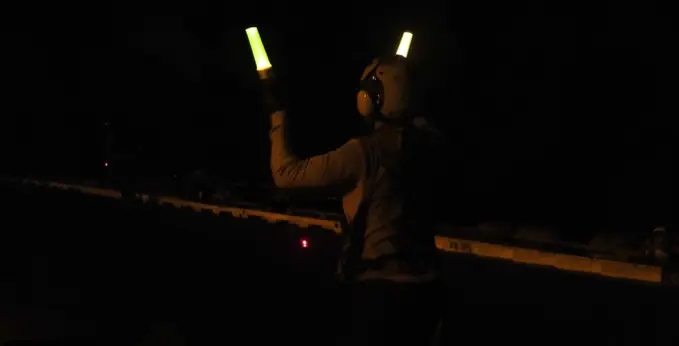
The Role of Signal Wands
During night operations or low-visibility conditions, crew members use illuminated signal wands instead of bare hand gestures. These wands are designed to improve visibility and reduce misinterpretation. Official procedures specify that different colours may be used to distinguish signals, ensuring clarity between commands issued by different personnel and preventing confusion in densely active deck zones.
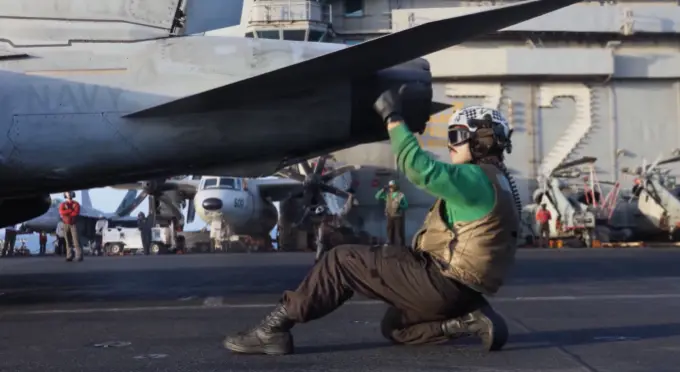
Preparing for the Catapult Launch
Before an aircraft reaches the catapult, a series of specific signals confirms the jet’s readiness. The "thumbs up" is perhaps the most vital gesture, passed from the final checker to the catapult officer to indicate the aircraft is free of defects. Conversely, if a technician identifies a leak or a loose panel, they will cross their arms in a "T" formation, signalling a "suspend" to the launch sequence until the discrepancy is resolved.
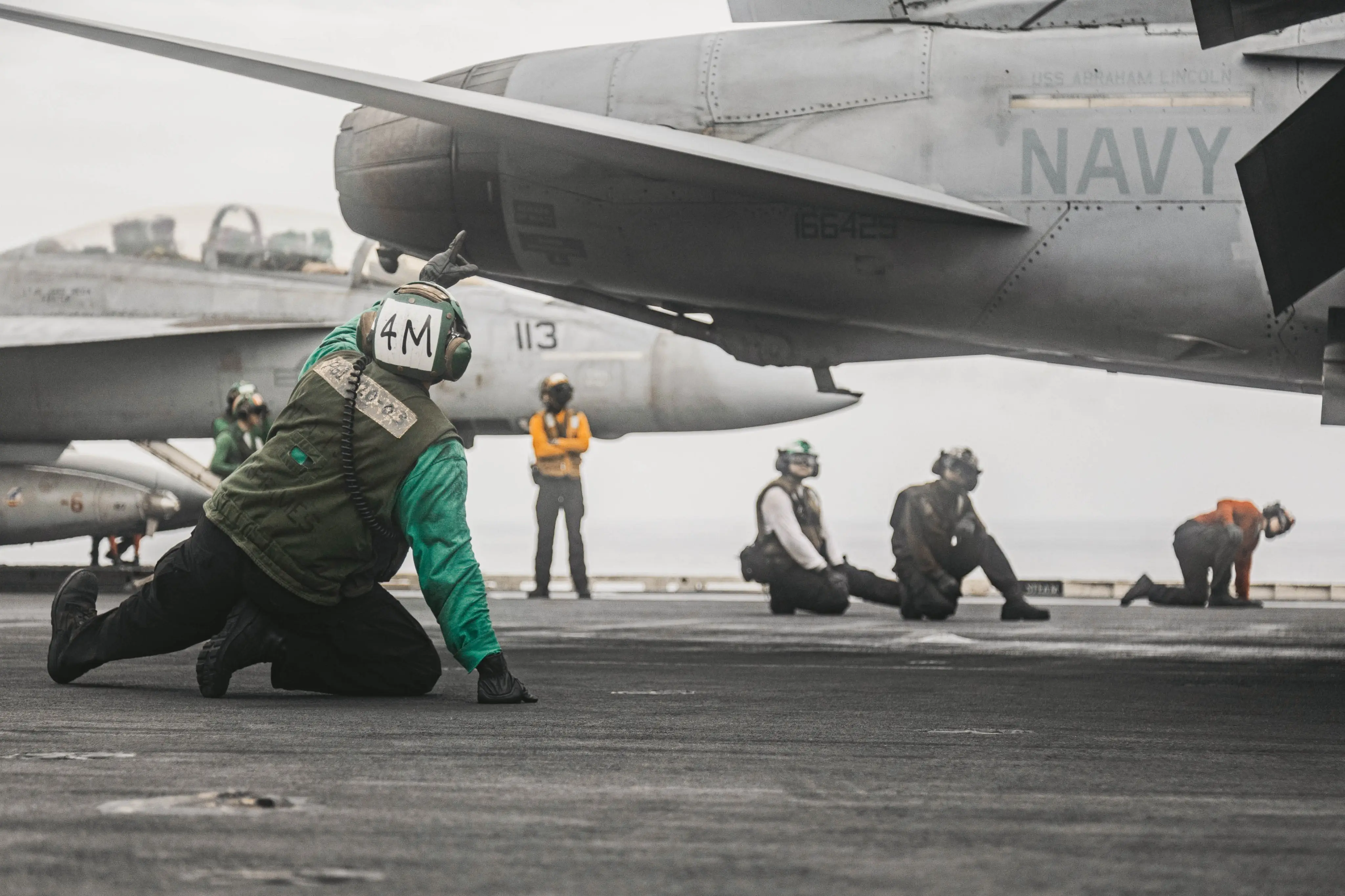
Standardisation Across the Fleet
To prevent catastrophic errors, every signal used on the USS Abraham Lincoln is identical to those used across the US Navy. This standardisation is vital because, as Naval Safety Command documentation notes, "consistency is the cornerstone of flight deck safety." Whether it is the "wind up" motion to signal an engine start or the horizontal "cut" motion across the throat to demand an immediate engine shutdown, every sailor must interpret these signs with reflexive speed.
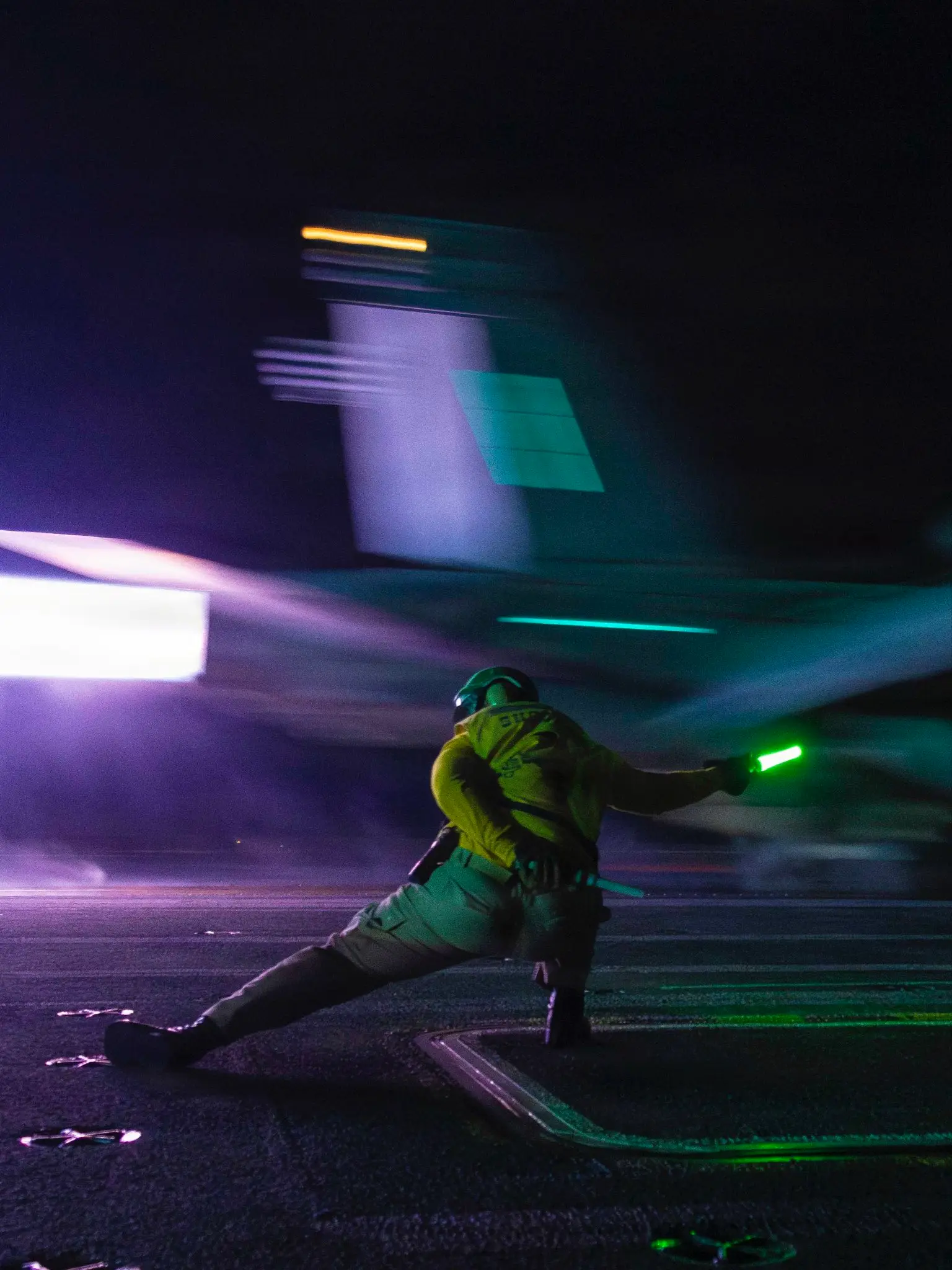
Meaning of Green Signals
Green signals are generally associated with clearance and progression. In operational terms, they indicate that an aircraft or action is authorised to proceed, such as taxi clearance or movement approval. The use of green lighting or wands provides pilots with immediate visual confirmation that conditions are safe for controlled movement under direction of flight deck personnel.
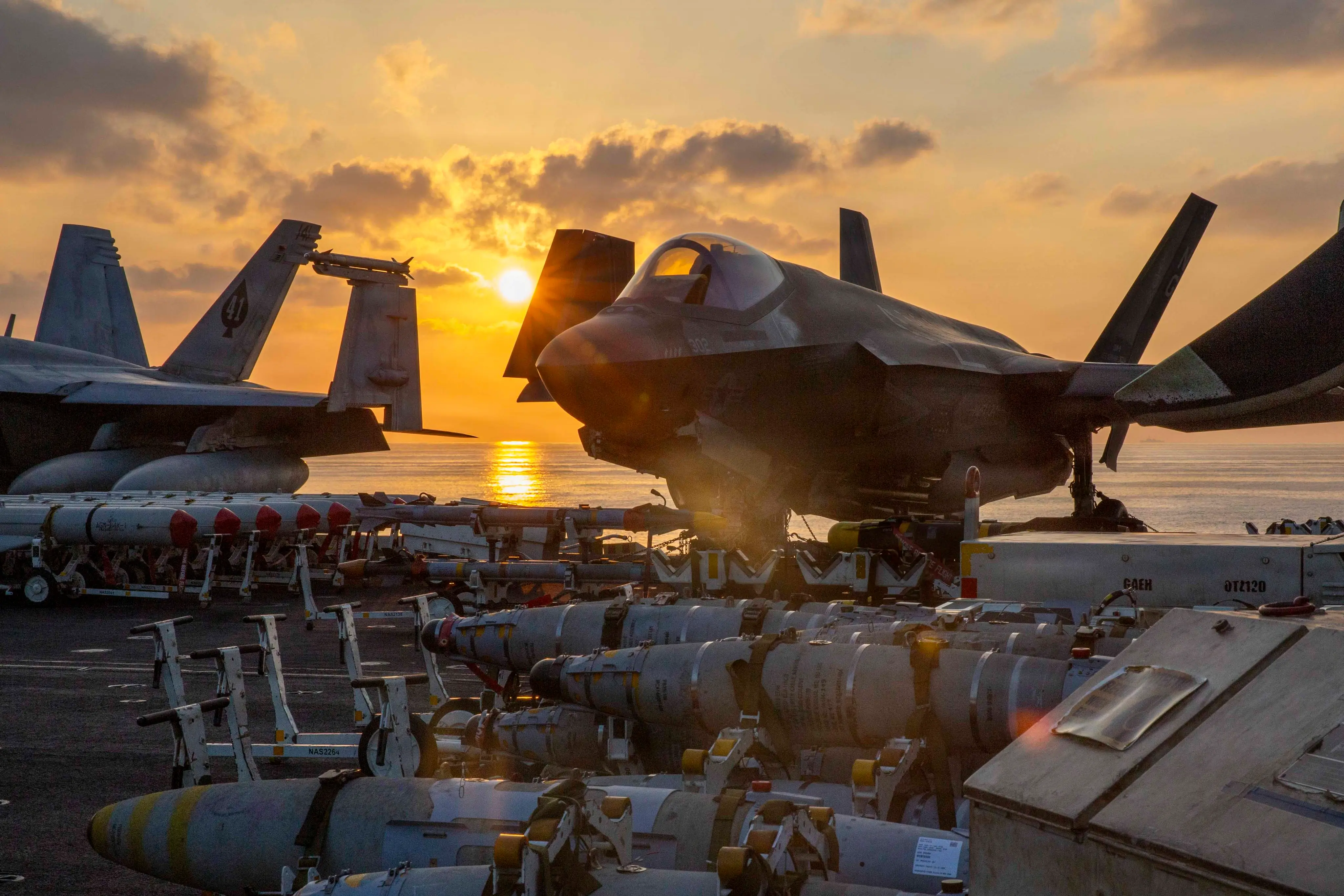
Meaning of Red Signals
Red signals are used to indicate stop, danger, or suspension of activity. On a flight deck, a red signal requires immediate halt of aircraft movement or operation. This colour is critical in preventing collisions, equipment damage, or personnel injury, especially during launch and recovery cycles where timing is precise and margins for error are minimal.
Maintaining Safety Through Visual Vigilance
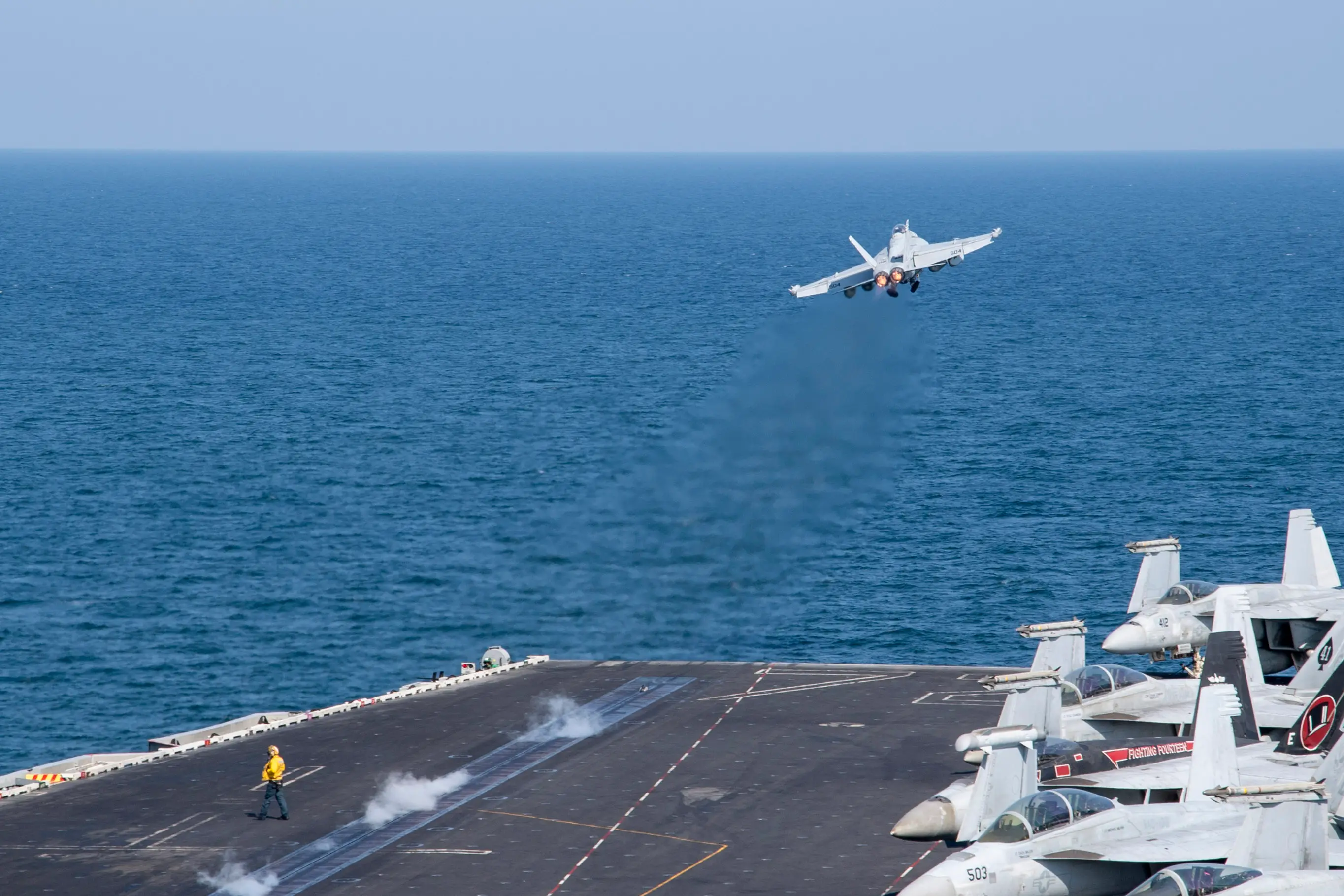
The reliance on hand signals extends beyond the launch to the recovery phase. Hook runners and plane captains use distinct gestures to confirm the arresting gear is reset. The overarching philosophy, as detailed in Navy awareness guides, is that "everyone is a safety observer." By maintaining a visual link at all times, the crew of the USS Abraham Lincoln manages to launch and recover aircraft every 45-60 seconds, turning a high-risk environment into a masterpiece of disciplined, silent coordination.
)
)
)
)
)