How coronavirus is hijacking cells in your body

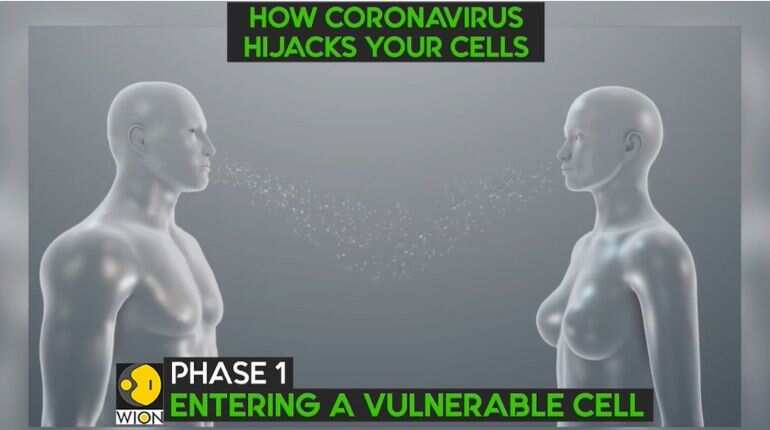
Phase one
It is named so because of the crown-like spikes that can be seen protruding from its surface. Virus is enveloped in a bubble of oily, lipid molecules which disintegrates after coming in contact with soap. It enters the body from nose, mouth and eyes where it attaches to a cell and airway that produces a protein called ACE 2.
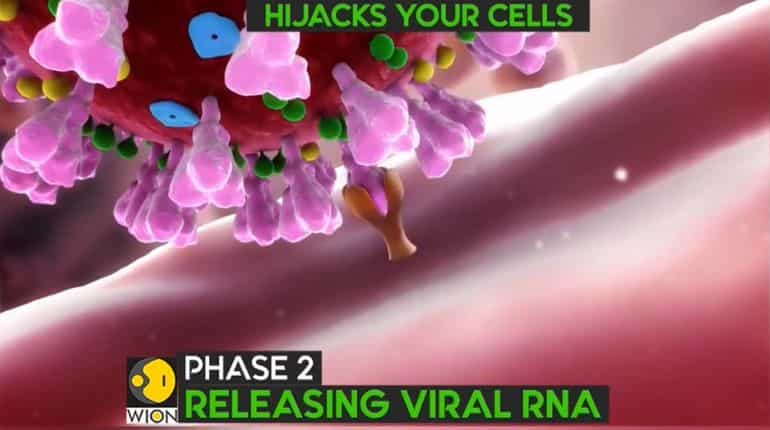
Phase two
The virus then infects the cell by fusing its oily membrane with the cell. Once inside the cell, the coronavirus releases a snippet of genetic material.
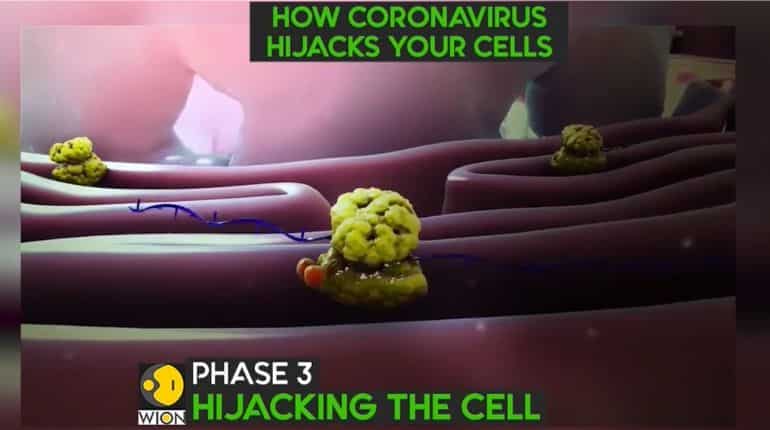
Phase three
Infection begins to manifest and begins to read the snippet of the genetic material and begins making proteins that prevent the immune system from working. It helps assemble new copies of the virus.
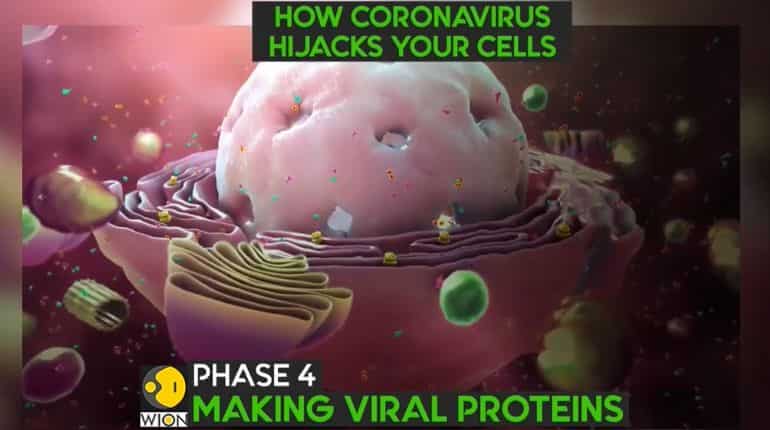
Phase four
As the infection progresses, the machinery of the cell begins to churn out spikes which helps to make more copies of the coronavirus.
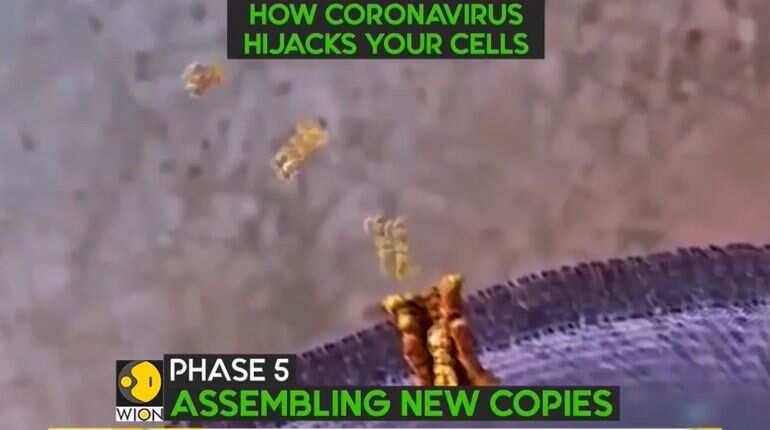
Phase five
New copies of the virus are assembled and carried to the outer edges of the cell, each infected cell then releases millions of copies of the virus before it finally breaks down and dies.
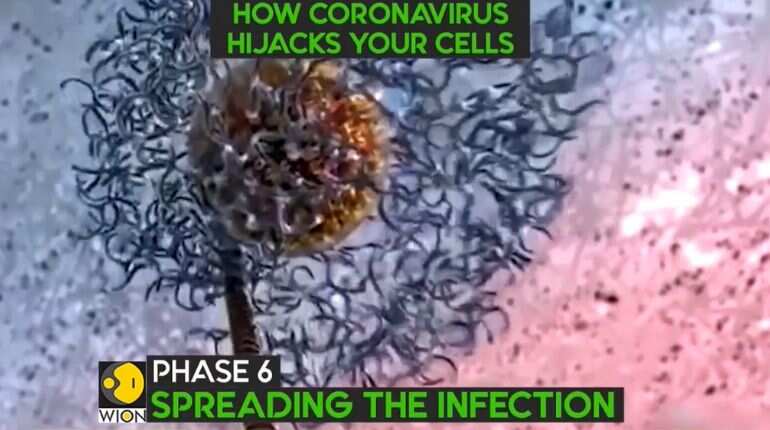
Phase six
The viruses then infect the nearby cell or end up in droplets that escape through the lungs that can spread to others.
)
)
)
)
)