How does a B-2 bomber crew survive dropping a nuclear bomb? The escape manoeuvre that gives them 90 sec to live

Dropping a nuclear bomb creates a problem for the aircraft that drops it: the explosion. A nuclear detonation produces a blast wave, a thermal pulse, and an electromagnetic pulse that can destroy an aircraft within a certain radius. The B-2 crew that releases a nuclear weapon has a finite window to get far enough away to survive. Here is the physics of nuclear escape, the specific manoeuvres the B-2 uses, and the calculations that determine whether the crew comes home.
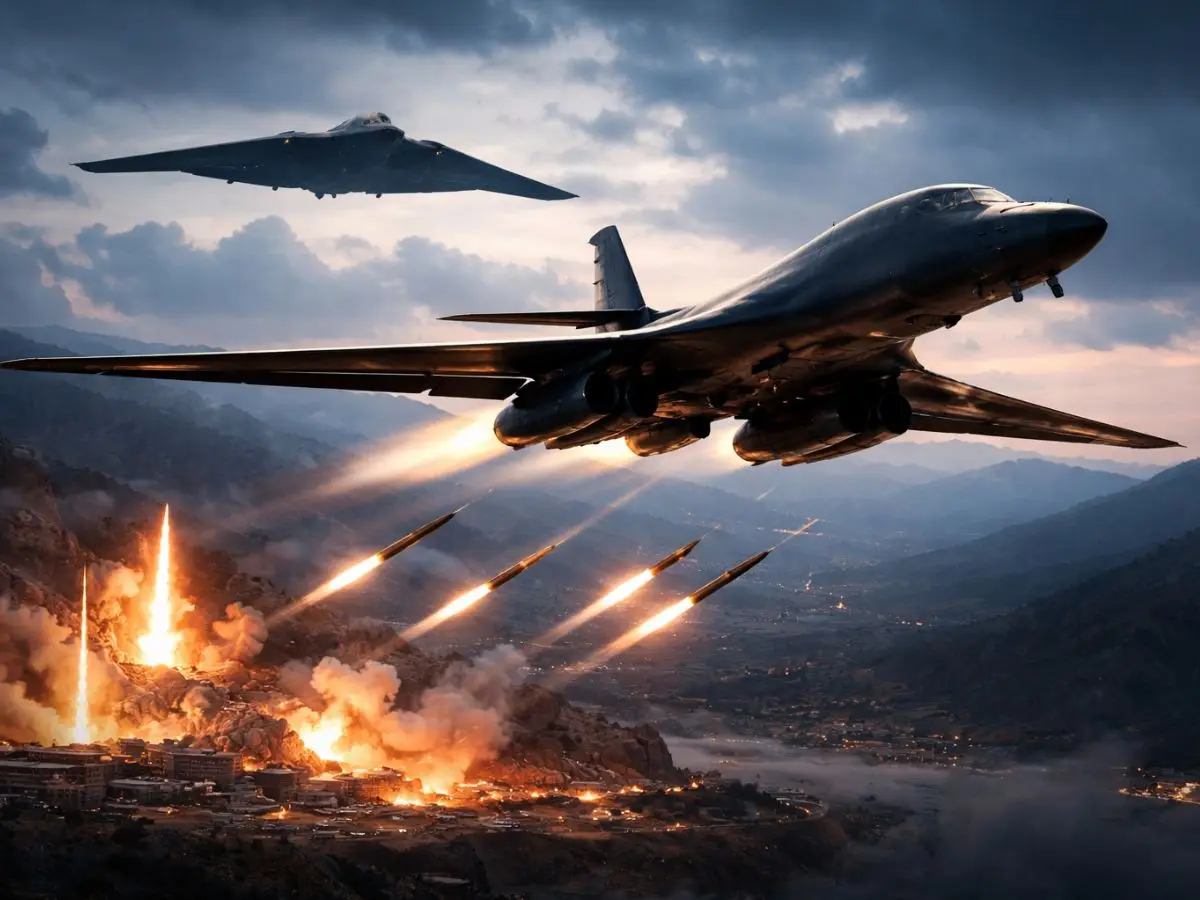
The Problem With Dropping A Nuclear Bomb
Every nuclear gravity bomb creates the same fundamental problem for the aircraft that delivers it: the weapon has to detonate, and the aircraft has to be far enough away when it does. The blast wave from even a relatively small nuclear weapon can destroy aircraft at ranges measured in miles. The thermal pulse — the flash of heat energy — can damage airframes and blind pilots at even greater distances. The aircraft cannot simply drop the weapon and fly level. It has to be moving away from the detonation point as fast as possible in the time between release and detonation.
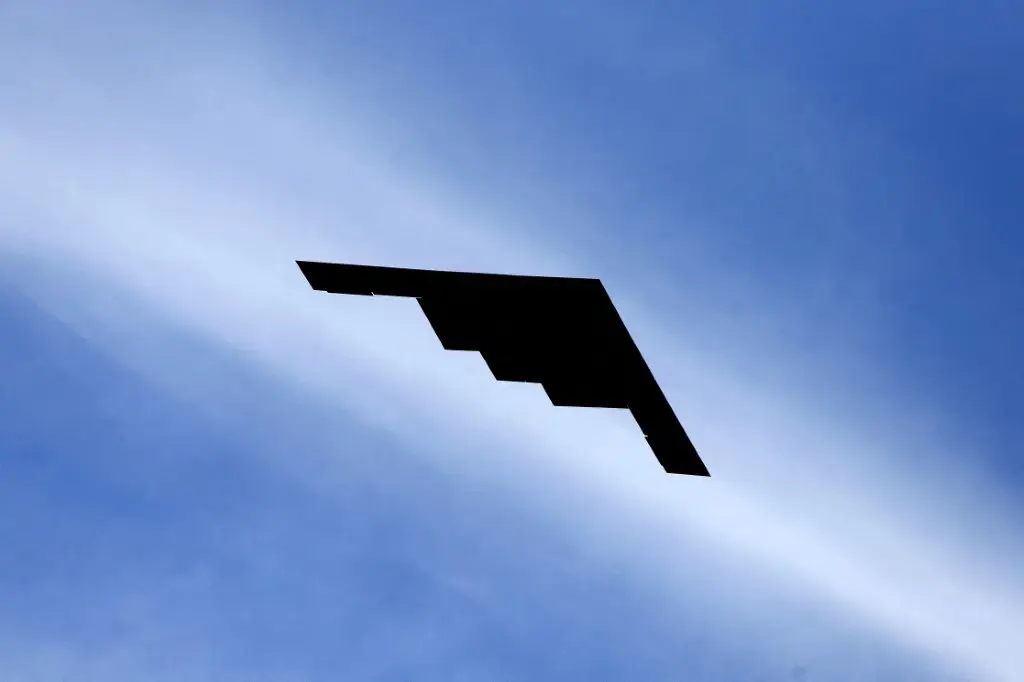
The Laydown Vs Toss Delivery Options
Nuclear gravity bombs can be delivered in two basic ways: laydown delivery, where the bomb is released at low altitude and a retarding parachute slows its descent while the aircraft escapes at low level, and toss or loft delivery, where the bomb is released while the aircraft is climbing, giving the weapon a ballistic arc that extends its flight time and range while the aircraft turns away. The B-2, operating at high altitude for stealth reasons, uses high-altitude delivery profiles that maximise the time between release and detonation — time that translates directly into distance and survivability for the crew.
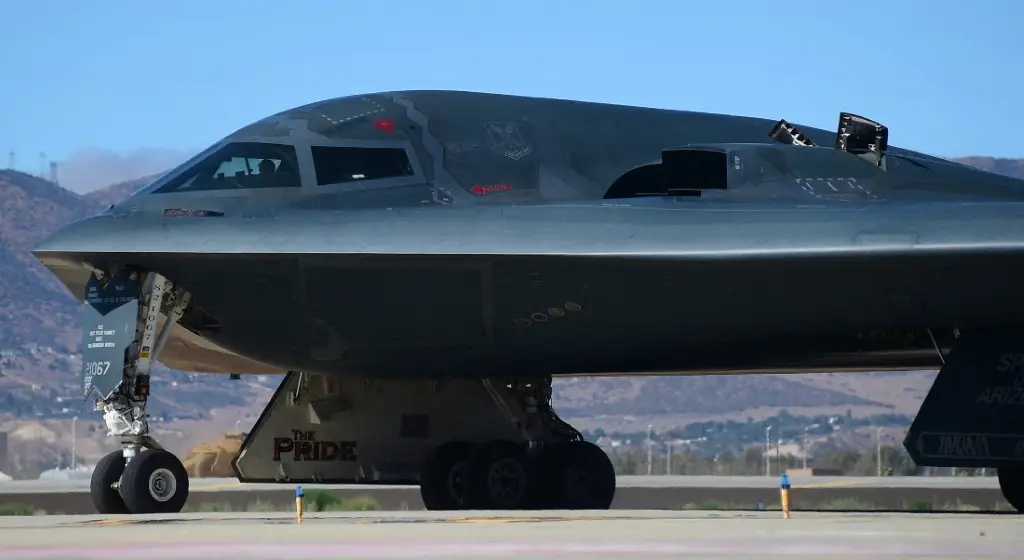
The Escape Manoeuvre
After releasing a nuclear weapon, the B-2 executes a planned escape manoeuvre — a specific sequence of turns, altitude changes, and speed increases designed to maximise the distance between the aircraft and the detonation point. The exact manoeuvre is classified, but the physics are not: the aircraft needs to be moving away from the burst point at maximum speed, ideally placing the maximum possible distance between itself and the detonation in the time available. For a B-2 releasing at high altitude with the B61-12, that window is measured in minutes for the bomb's ballistic descent — enough time to create significant separation if the manoeuvre is executed correctly.

What The Blast Wave Does To Aircraft
A nuclear blast wave is a wall of compressed air moving outward from the detonation point at initially supersonic speeds. An aircraft caught in a blast wave experiences sudden, massive overpressure and dynamic pressure forces that can structurally fail airframes, destroy control surfaces, and shatter canopies. The threshold at which an aircraft is destroyed depends on the weapon's yield and the aircraft's structural strength. Military planners calculate a safe escape distance — the range at which the blast overpressure drops below the level that would destroy the aircraft — and the escape manoeuvre is designed to achieve that distance before detonation.
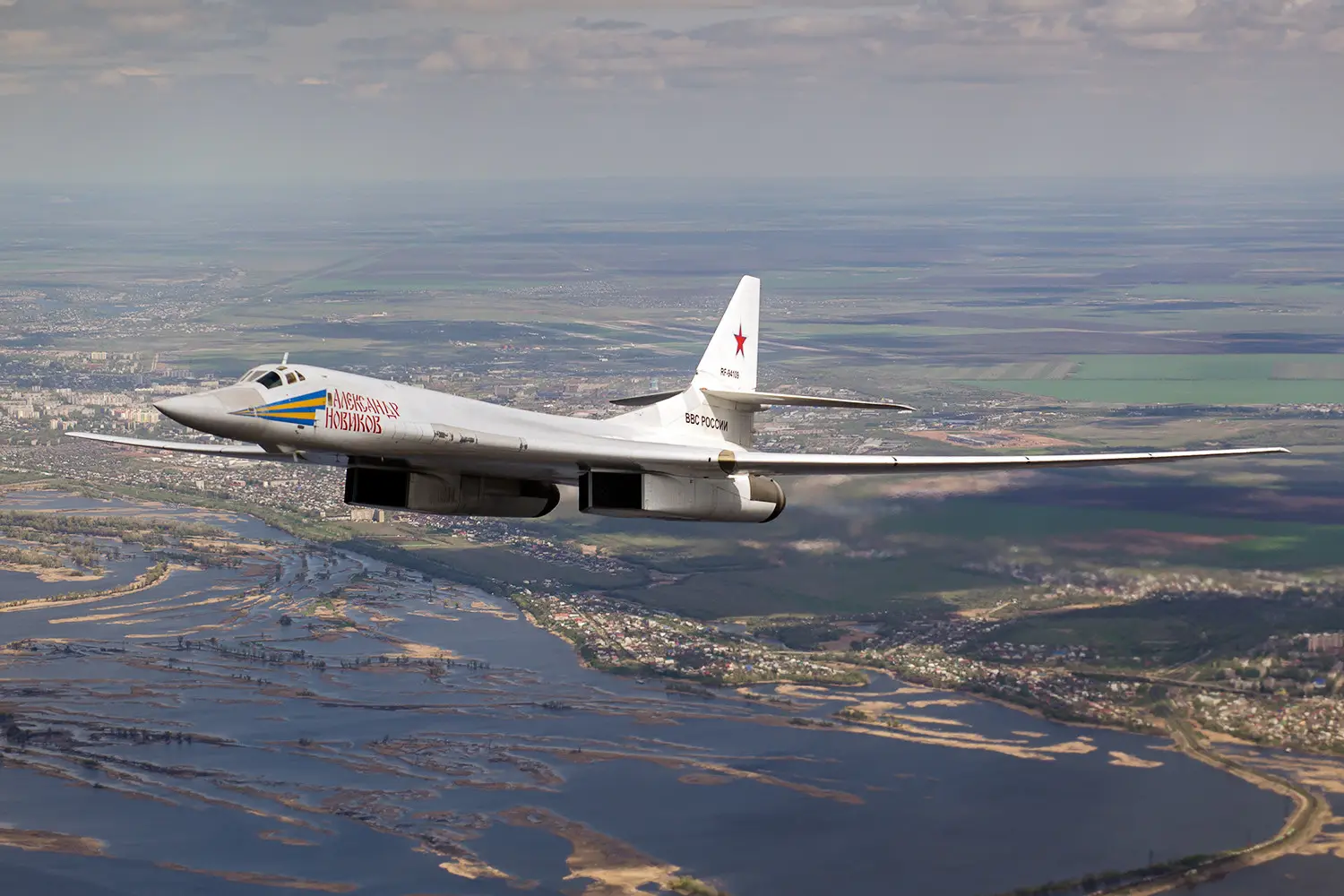
The Thermal Pulse Problem
The thermal pulse — the intense flash of heat and light emitted in the first fraction of a second after detonation — travels at the speed of light. No aircraft can outrun it. The protection against the thermal pulse is not distance but orientation: the aircraft must be positioned so that its most vulnerable surfaces — the cockpit, the fuel tanks, the leading edges — are not facing the detonation. The escape manoeuvre includes turning the aircraft so that the weapon detonates behind and below, minimising the thermal exposure to critical components. The crew may briefly experience a flash of intense light even at safe distances.
The EMP Threat
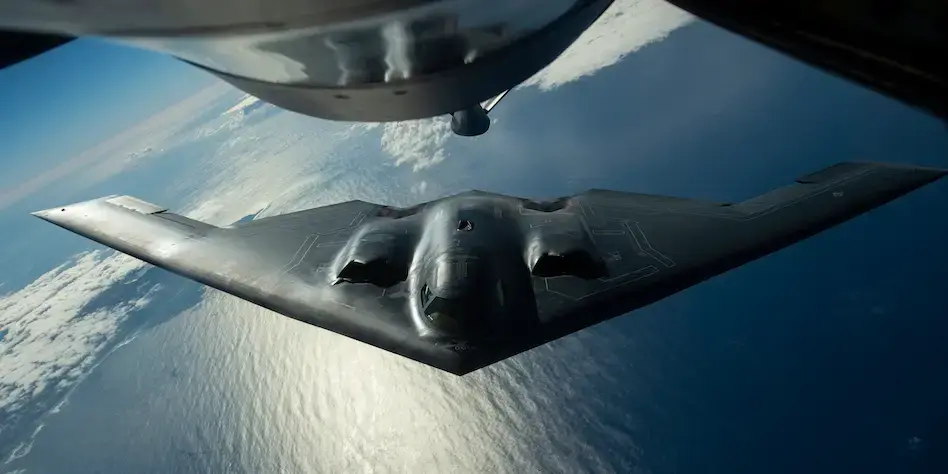
A nuclear detonation produces an electromagnetic pulse that can destroy unshielded electronics across a wide area. Military aircraft operating near a nuclear detonation are designed with EMP hardening — shielded electronics, surge protection, and redundant systems that can survive the pulse. The B-2's avionics are EMP-hardened as part of its nuclear mission certification. Without hardening, the aircraft's fly-by-wire system, navigation computers, and communications equipment would be destroyed by the EMP before the blast wave arrived — leaving the crew in an aircraft that cannot be controlled at the worst possible moment.
The Training That Prepares Crews For This
Nuclear-certified B-2 crews train for nuclear delivery profiles in simulations and in live exercises using inert training shapes that replicate the weight and aerodynamics of actual nuclear weapons. The escape manoeuvre is practiced until it is instinctive — a sequence the crew can execute correctly under the cognitive load and time pressure of an actual nuclear release. The training emphasises that the escape manoeuvre is not optional and not adjustable: it is the specific sequence of actions that the physics of survivability requires, derived from weapons effects data and verified by modelling. Deviation from it reduces the probability of survival in ways that the crew cannot compensate for.
)
)
)
)
)