G-suits, helmets & night vision goggles: The combat gear that lets fighter pilots cheat death

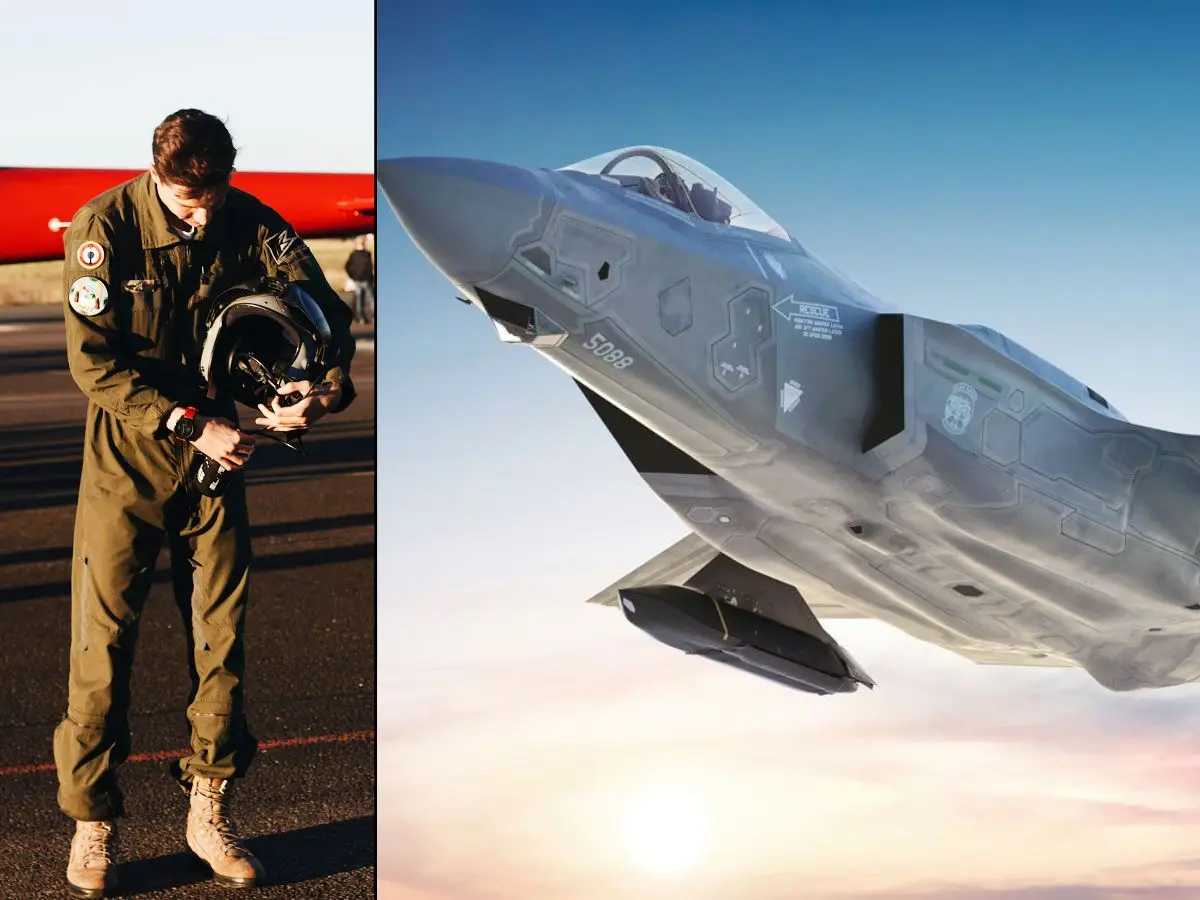
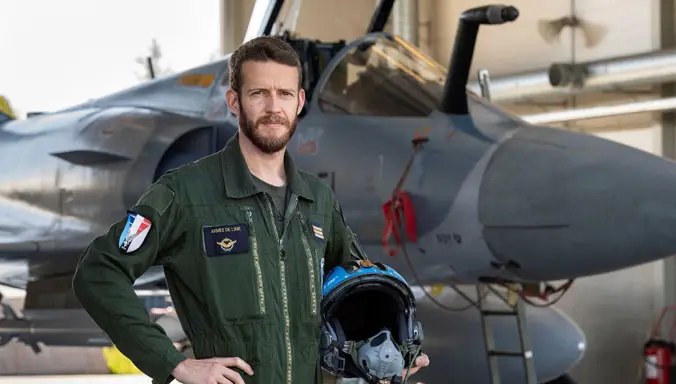
The CWU‑27/P model is standard, with multiple pockets for tools, a clear thigh pocket for maps, and a fit allowing unrestricted movement.
Flight suit rooted in history
Modern fighter pilots wear a flame‑resistant flight suit made from Nomex, a material related to nylon but with heat‑resistant properties. Originating from designs like the Sidcot suit in the First World War, the flight suit remains vital protection against cockpit fires and electrical arcs. The CWU‑27/P model is standard, with multiple pockets for tools, a clear thigh pocket for maps, and a fit allowing unrestricted movement. Flight suits today typically come in olive green or desert tan, blending durability and practicality.
Staying conscious under g‑forces
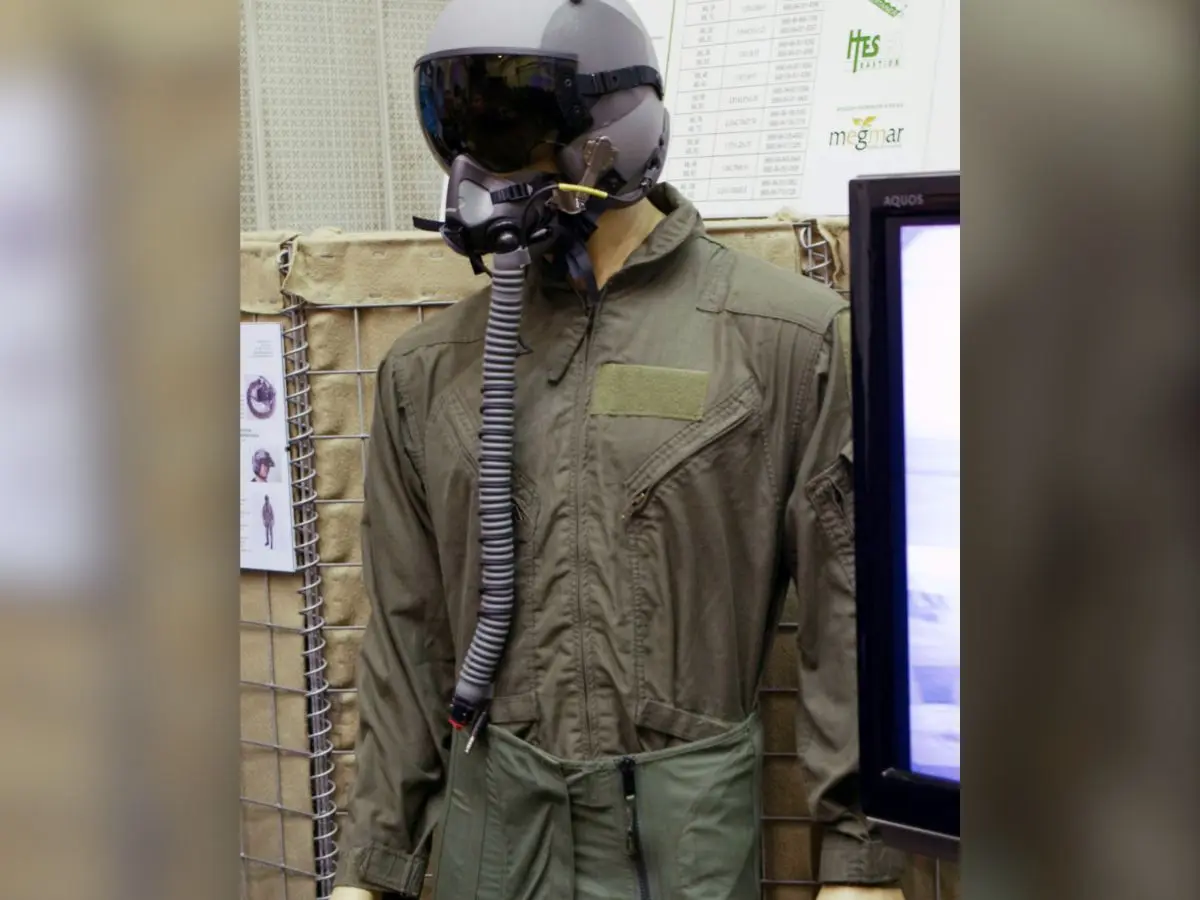
Over the flight suit, pilots wear a G‑suit (anti‑gravity suit). High‑speed manoeuvres can force blood away from the brain, risking blackout. The G‑suit has inflatable bladders that squeeze the legs and abdomen, keeping blood circulating where it’s needed most. This technology first appeared in the Second World War and remains critical in modern aerial combat.
Custom‑fitted helmets
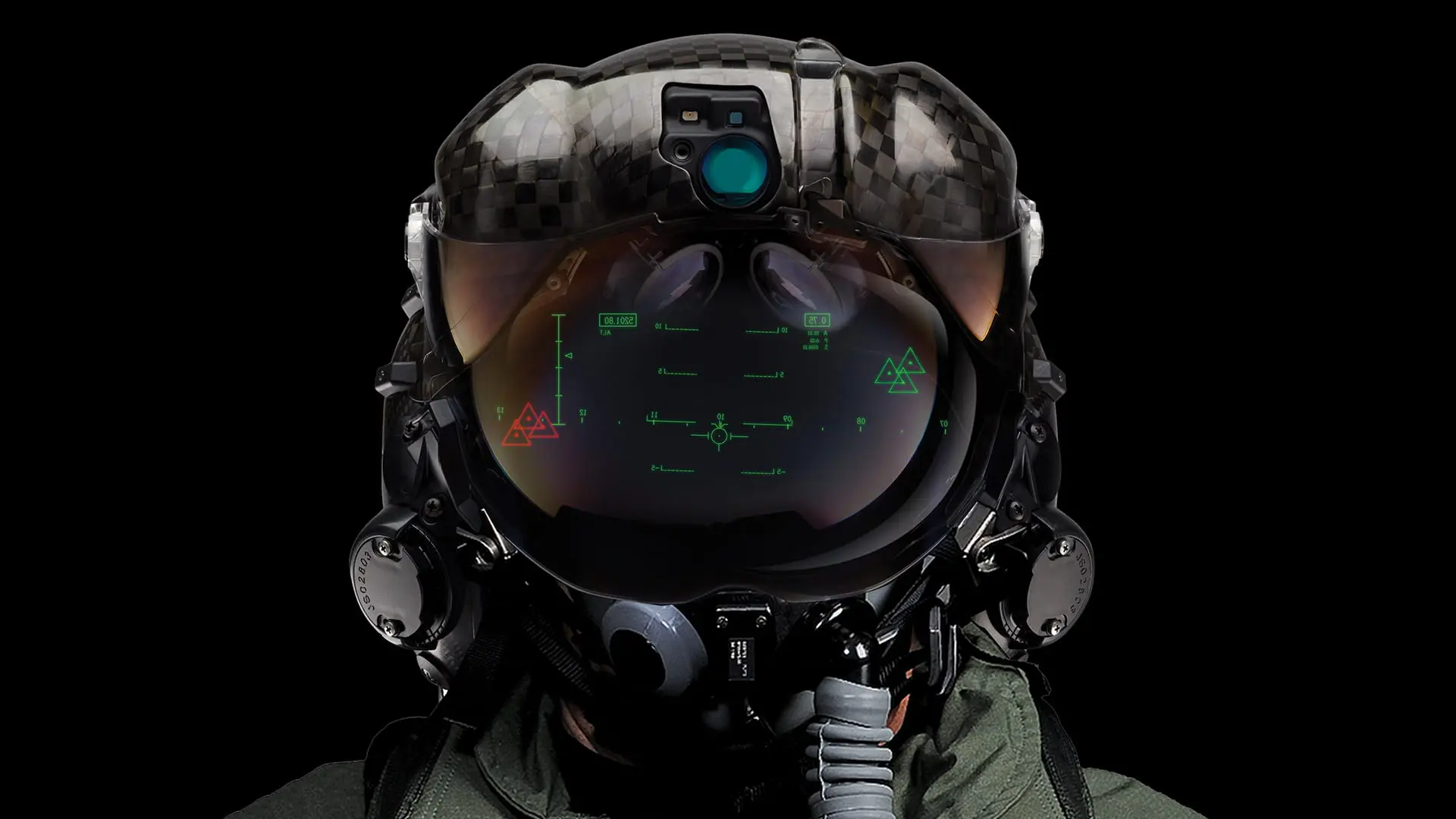
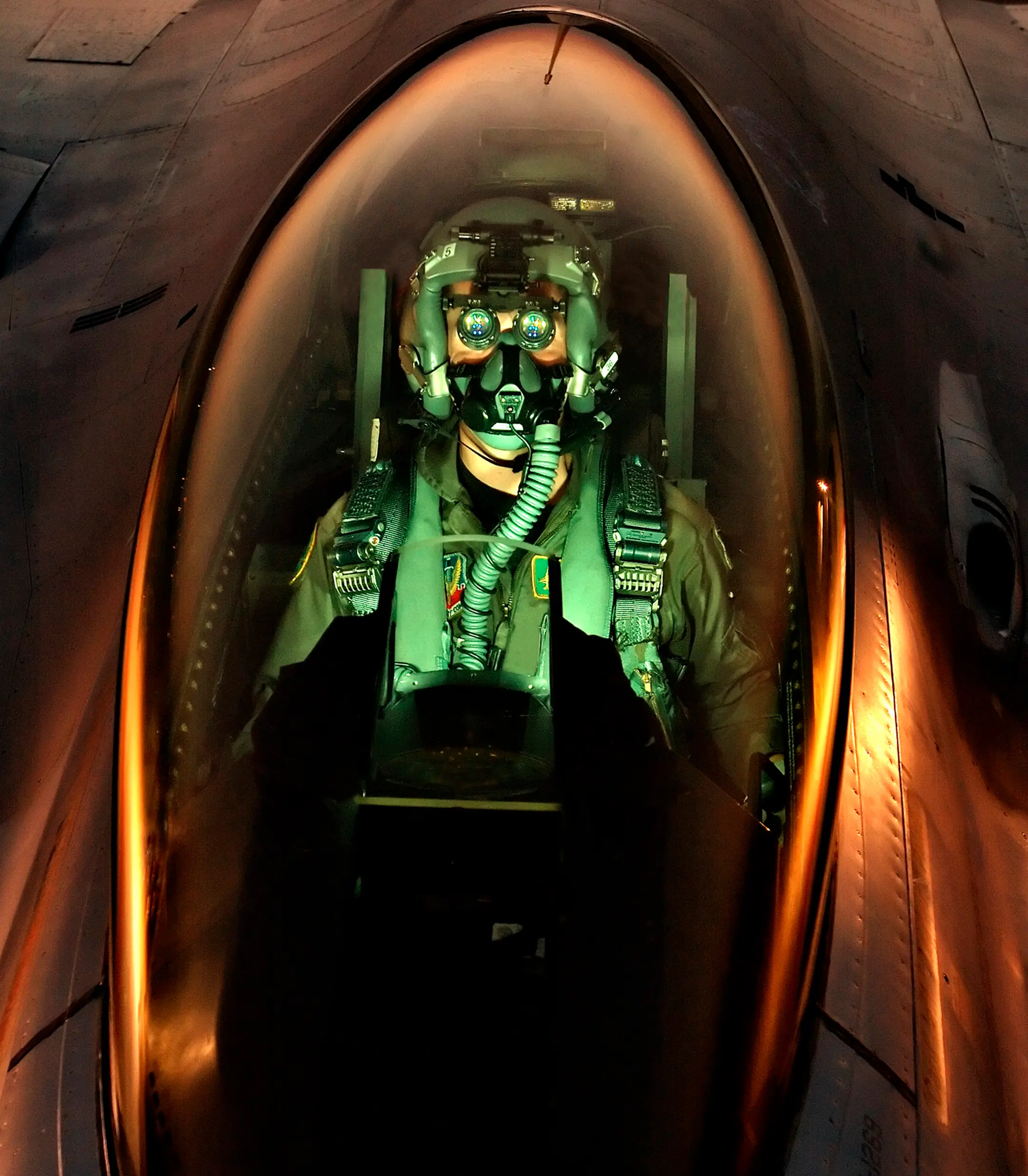
Pilots rely on helmets not just for impact protection but also for communication and situational awareness. Each helmet is tailored to the pilot’s head shape, with built‑in speakers, microphones, and a visor that shields against sunlight and laser glare. Some helmets, like the F‑35’s, cost over $400,000 due to integrated displays and camera feeds projecting real‑time images onto the visor.
Breathing at altitude
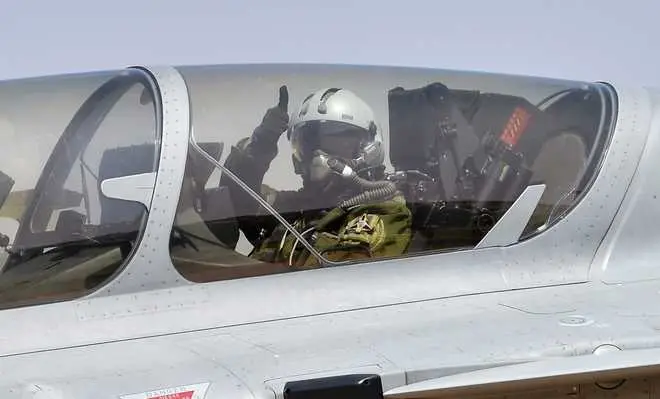
An oxygen mask is essential for high‑altitude flight where oxygen is scarce. These masks automatically adjust oxygen flow based on altitude and help counter the effects of high g‑forces. In addition to keeping pilots conscious, the masks reduce fatigue and support clear radio communication.
Night operations
Night vision goggles (NVGs) clip onto helmets for missions in darkness. They help pilots identify targets and navigate terrain by amplifying available light, often in green tones due to how human eyes perceive contrast.
Survival beyond the cockpit
In emergencies, pilots have gear designed to improve survival chances: steel‑toed boots protect feet during ejection, while an automatic flotation collar keeps them afloat at sea. Equipment like a survival radio, whistle, compass, signal flares, and folding knife is standard. Some pilots adjust gear based on terrain—like desert, jungle, or open water.
)
)
)
)
)