Future Earth? NASA's top 7 habitable exoplanets that could be humans' potential homes

The planets which are beyond our solar system are known as 'exoplanets'. Ranging from gas giants bigger than Jupiter to rocky worlds comparable in size to Earth or Mars, exoplanets come in diverse forms. Here’s a look at NASA’s top seven potentially habitable discoveries.
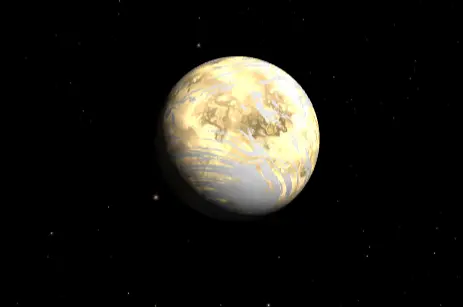
1. Kepler-186f
Discovered in 2014, Kepler-186f, which is also known as 'Earth's Twin', is the first Earth-size exoplanet found in its star's habitable zone. It is 490 light-years away.
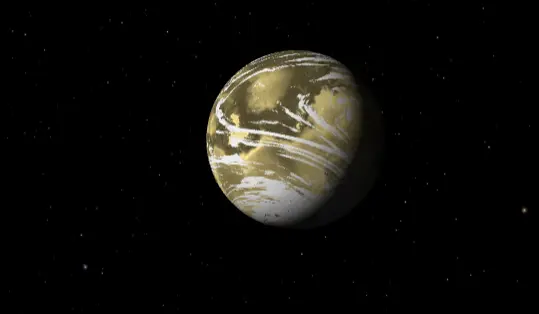
2. Kepler-22b
It is a potentially rocky exoplanet, approximately 2.4 times the size of Earth, discovered by NASA's Kepler mission. It orbits within the habitable zone of a sun-like star, 635 light-years away in the constellation Cygnus, meaning its temperature could support liquid water, a key ingredient for life as we know it.
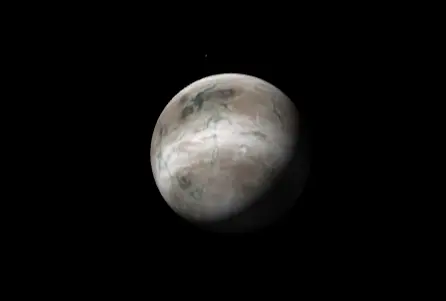
3. Kepler-452b
Dubbed as 'Earth's cousin,' Kepler-452b is an "Earth-like" exoplanet, discovered by NASA's Kepler space telescope, which is 60 per cent larger than Earth and orbits within the habitable zone of a Sun-like star, Kepler-452, located in the constellation Cygnus. It orbits its star every 385 days, similar to Earth's 365-day year, and is 1,402 light-years away.
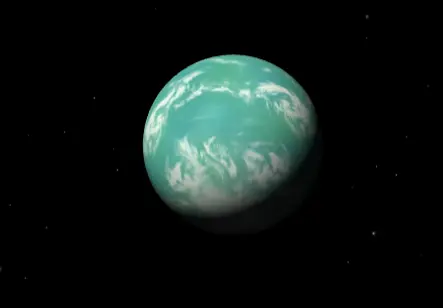
4. Kepler-442b
Kepler-442b is a super-Earth exoplanet, discovered in 2015, orbiting within the habitable zone of its K-type star, about 1,196 light-years from Earth. It is roughly 1.3 times the size and mass of Earth and is considered a good candidate for harbouring liquid water and potentially life.
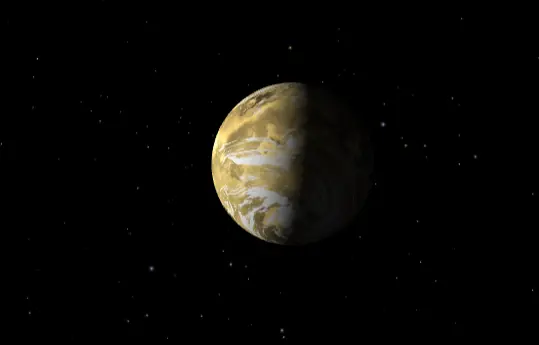
5. Kepler-62f
It is a 'Super-Earth' exoplanet, roughly 1.4 times the size of Earth, orbiting the star Kepler-62 about 982 to 1,200 light-years away in the constellation Lyra.
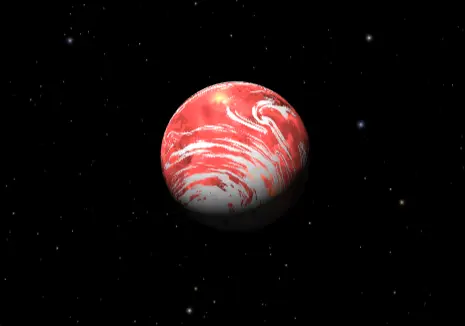
6. Proxima Centauri b
The super Earth exoplanet that orbits an M-type star has a mass of 1.07 Earths' size, which takes 11.2 days to complete an orbit of its star, and is 0.04856 AU from its star. Proxima Centauri b was discovered by NASA in 2016.
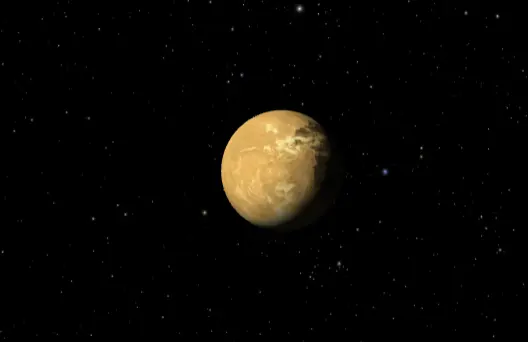
7. TOI 700 d
It is a potentially rocky, Earth-sized exoplanet discovered by NASA's TESS in 2020, orbiting in the habitable zone of its red dwarf star, TOI-700, about 101.4 light-years away. It is the outermost of the four confirmed planets in the system and receives 86 per cent of the energy Earth gets from the Sun, making it a promising candidate for potentially having liquid water on its surface.
)
)
)
)
)