From snow goggles to thermal armor: What soldiers really wear in the Arctic

Surviving the Arctic requires a sophisticated "clothing system" rather than just a thick coat. Arctic soldiers use a 7-layer system including wicking base layers, "Bunny Boots" for feet, and the puffy "Marshmallow Suit" for static warmth.
Wicking base layers Silk-weight synthetics
The first layer is critical: a thin, moisture-wicking "silk-weight" shirt and drawers. Unlike cotton, which kills by trapping sweat, these synthetic fabrics pull moisture away from the skin to prevent hypothermia during heavy physical exertion.
The ‘Marshmallow Suit’ ECWCS Level 7 Parka
For extreme static cold, soldiers don the massive, puffy "Level 7" parka and trousers, affectionately known as the "Marshmallow Suit". This outer layer is filled with high-loft insulation that retains body heat even when wet, acting as a final barrier against -50°C air.
Vapor Barrier Boots The legendary ‘Bunny Boots’
Soldiers often wear the "Extreme Cold Vapor Barrier Boot", nicknamed the "Bunny Boot" for its bulbous white appearance. These rubber boots use an insulating air vacuum to trap heat and keep feet warm even if the soldier steps into freezing water.
Trigger finger mittens Dexterity vs warmth
Gloves separate fingers and lead to frostbite, so soldiers wear thick mittens with a special "trigger finger" slot. This design keeps the hand warm by sharing body heat between fingers while still allowing the soldier to fire their weapon without exposing bare skin.
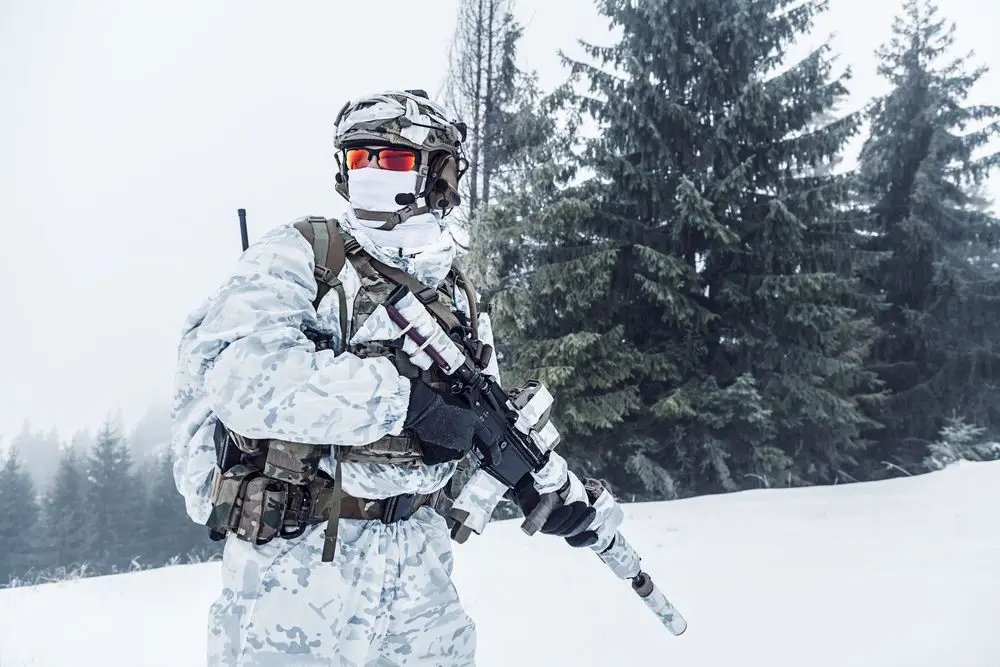
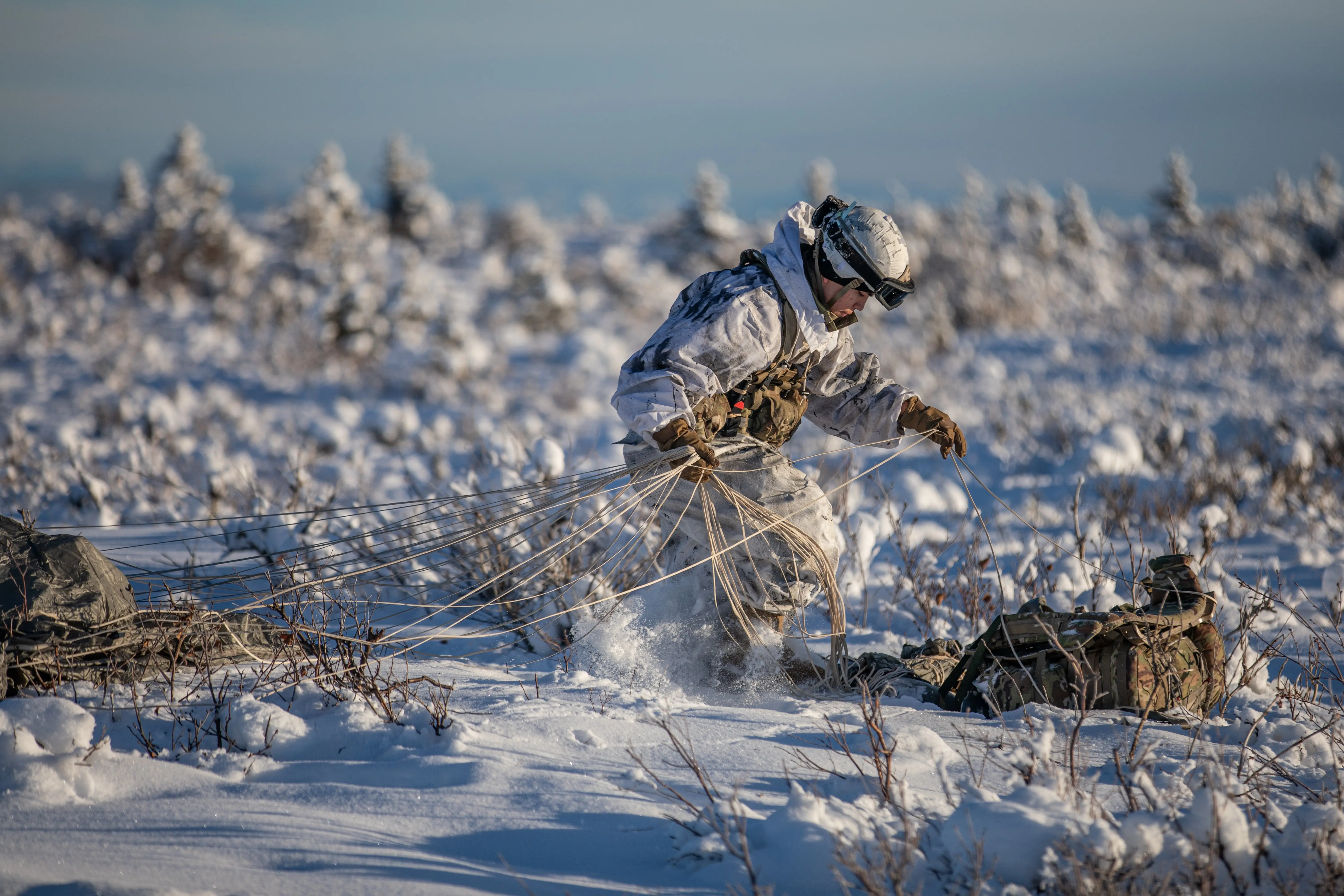
Preventing snow blindness
The sun reflecting off the ice can burn retinas in hours, causing "snow blindness". Soldiers wear ballistic-rated goggles with dark UV lenses that prevent this damage and protect eyes from high-velocity ice particles whipped up by Arctic winds.
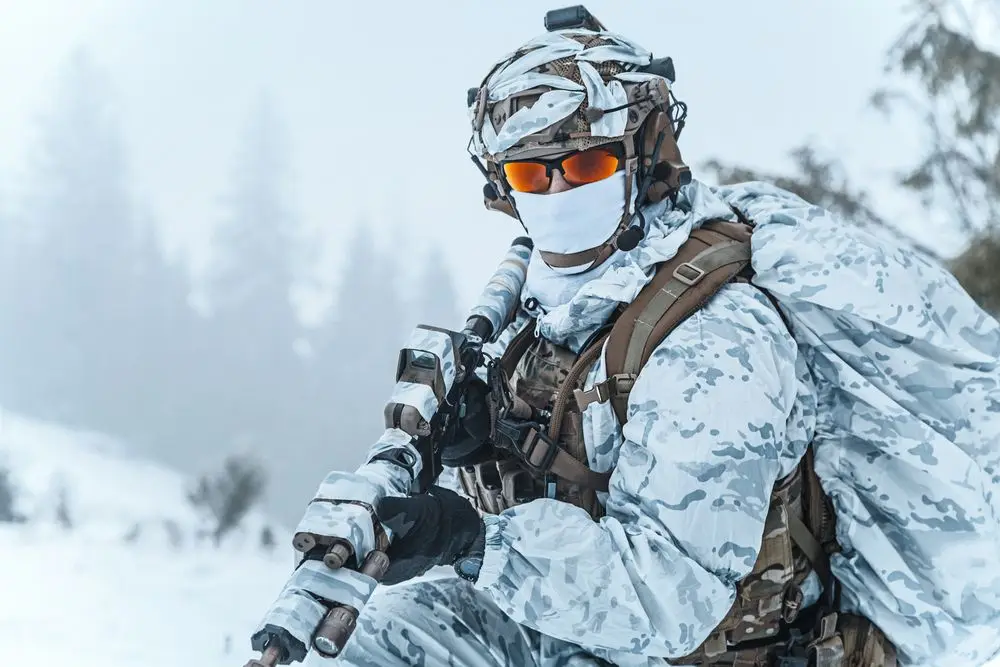
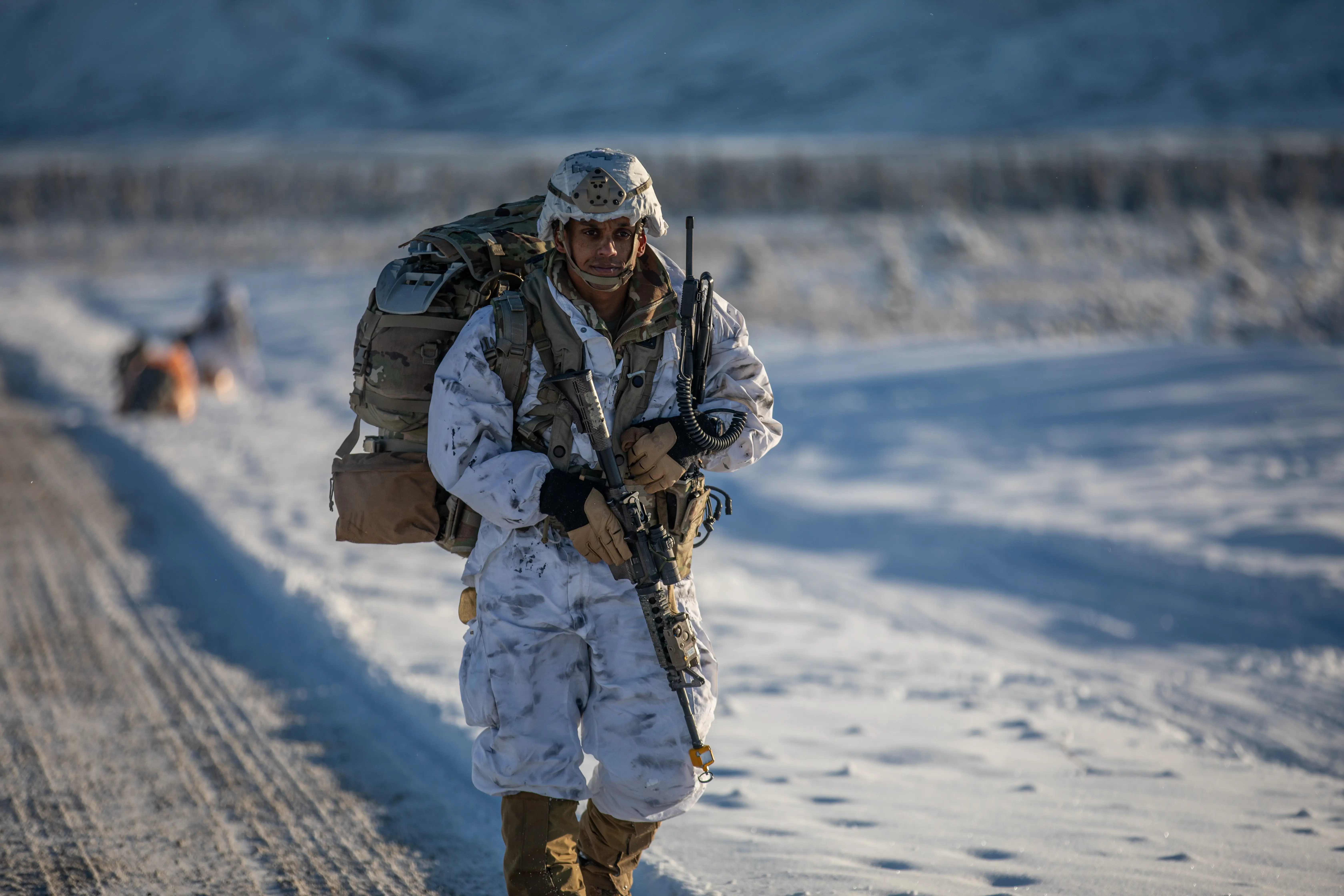
Ghostly camouflage The ‘Overwhites’
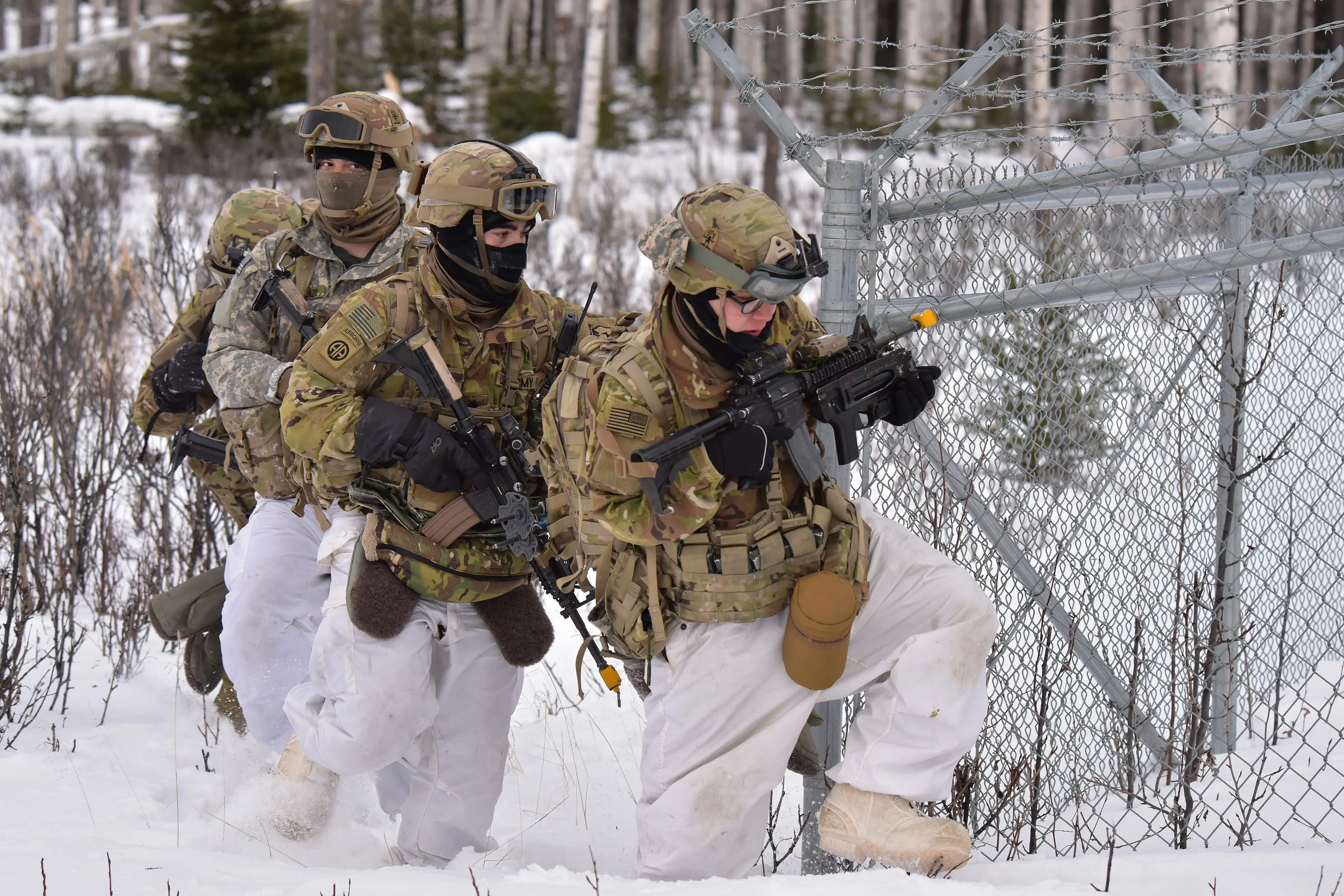
To blend into the featureless terrain, troops wear thin white nylon layers called "overwhites" on top of their body armour and green uniforms. These loose-fitting covers break up the human silhouette, making soldiers nearly invisible against the snow.
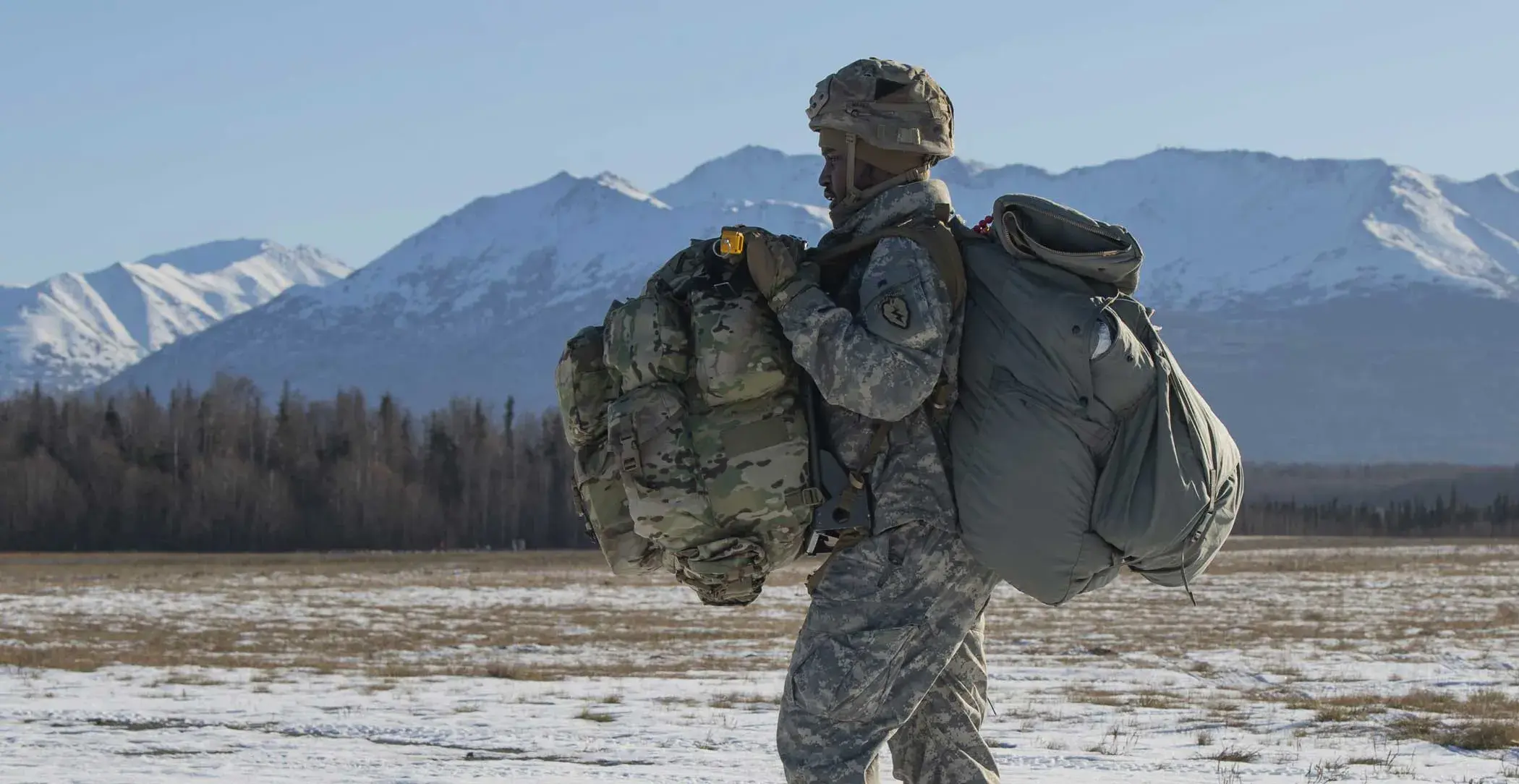
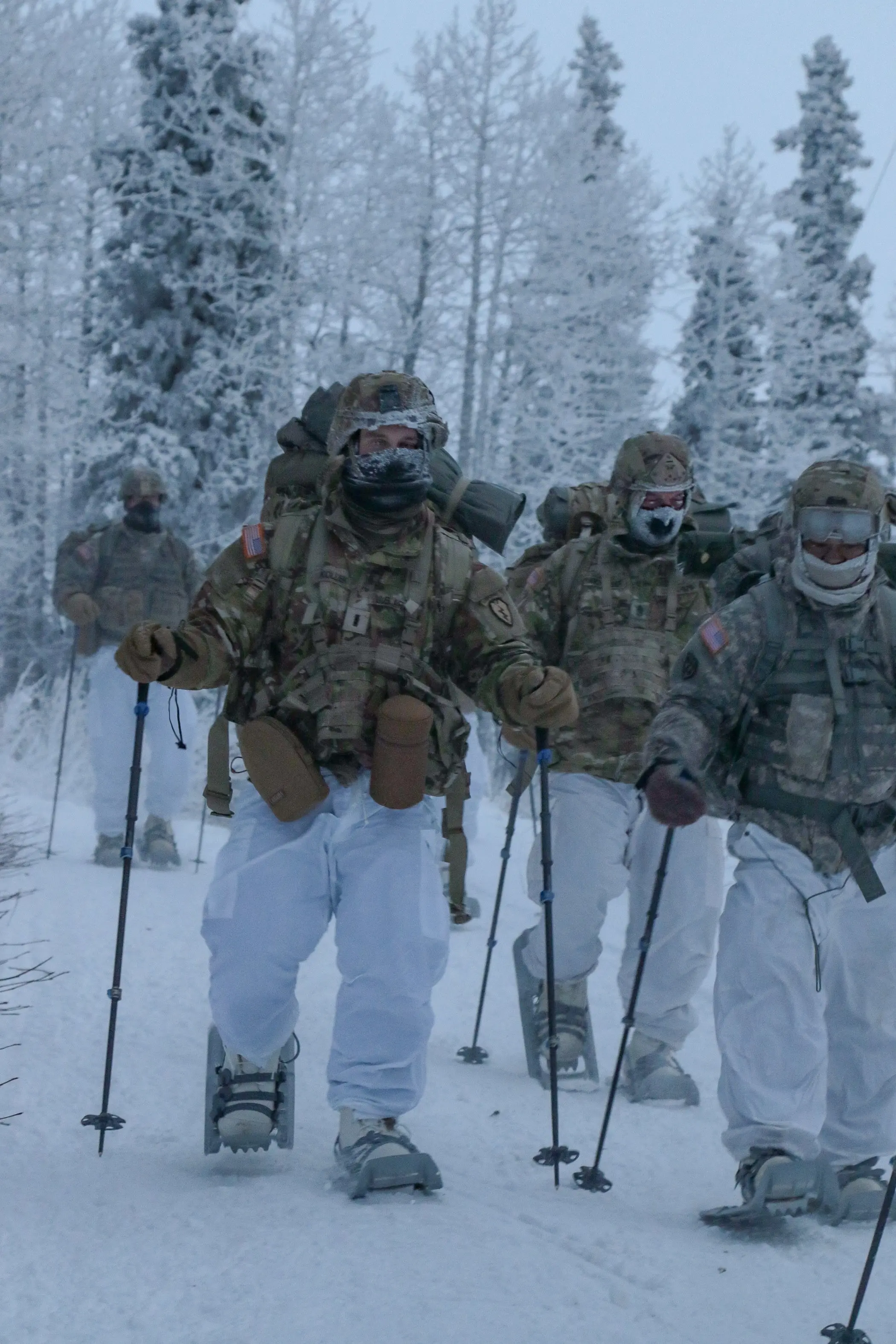
Managing the bulk ‘Be bold, start cold’
Soldiers follow the rule "be bold, start cold", stripping off heavy layers before marching to prevent sweating. They carry their thick "puffer" layers in their rucksacks, only putting them on immediately when they stop moving to trap the heat they generated.
)
)

)
)