From Prithvi to Agni: How many types of land-based nuclear missiles does India have?

When examining how many types of land-based nuclear missiles the country possesses, the picture centres around two missile families developed over several decades: the Prithvi series and the Agni series.
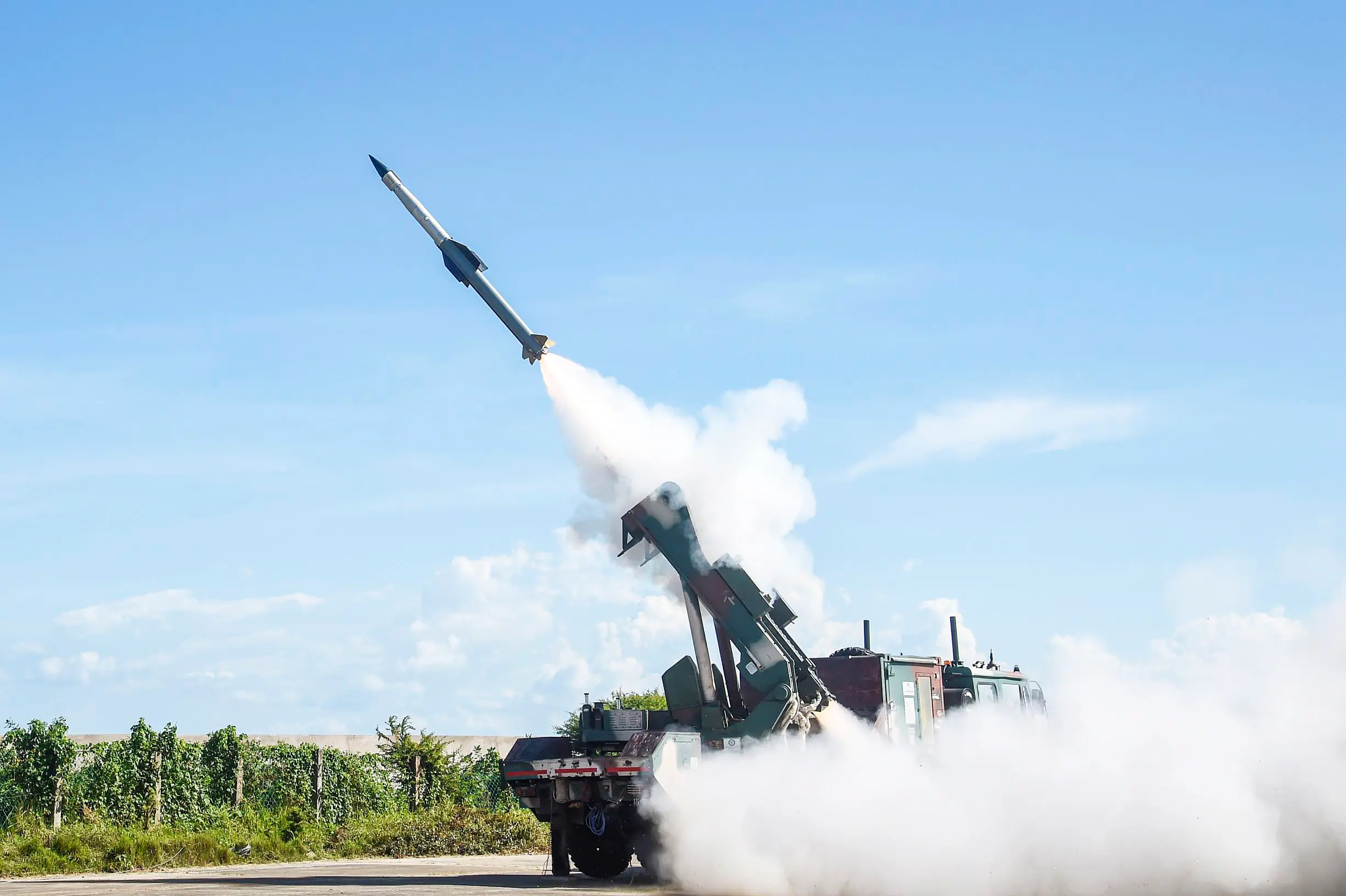
Introduction — a strategic question
India’s land-based nuclear forces form the backbone of its strategic deterrence posture. When examining how many types of land-based nuclear missiles the country possesses, the picture centres around two missile families developed over several decades: the Prithvi series and the Agni series. Together, they represent a spectrum of ranges, deployment options and strategic roles, making them critical to India’s ability to deter threats across its neighbourhood and beyond.
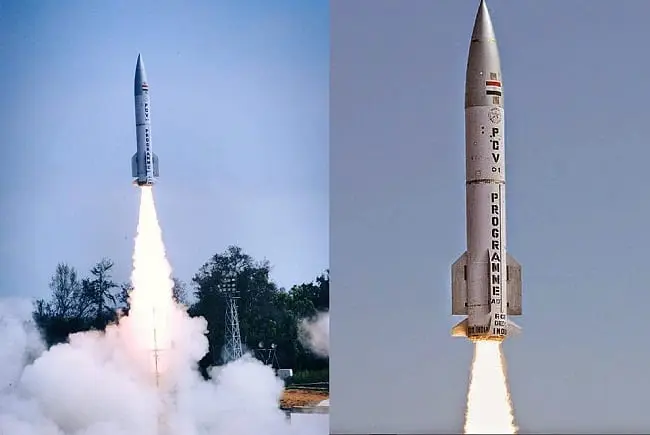
Prithvi — the tactical foundation
The Prithvi missile family was the first to enter service under India’s Integrated Guided Missile Development Programme. It is a short-range, surface-to-surface ballistic system designed for tactical battlefield use. The Prithvi-II variant, for example, is publicly described as having a range of around 350 km, and it is capable of carrying a payload of up to 500 kgs, making it suited to short-range strike and battlefield roles. Although the Prithvi family predates later developments, it continues to occupy its role as a tactical element within the broader strategic architecture.
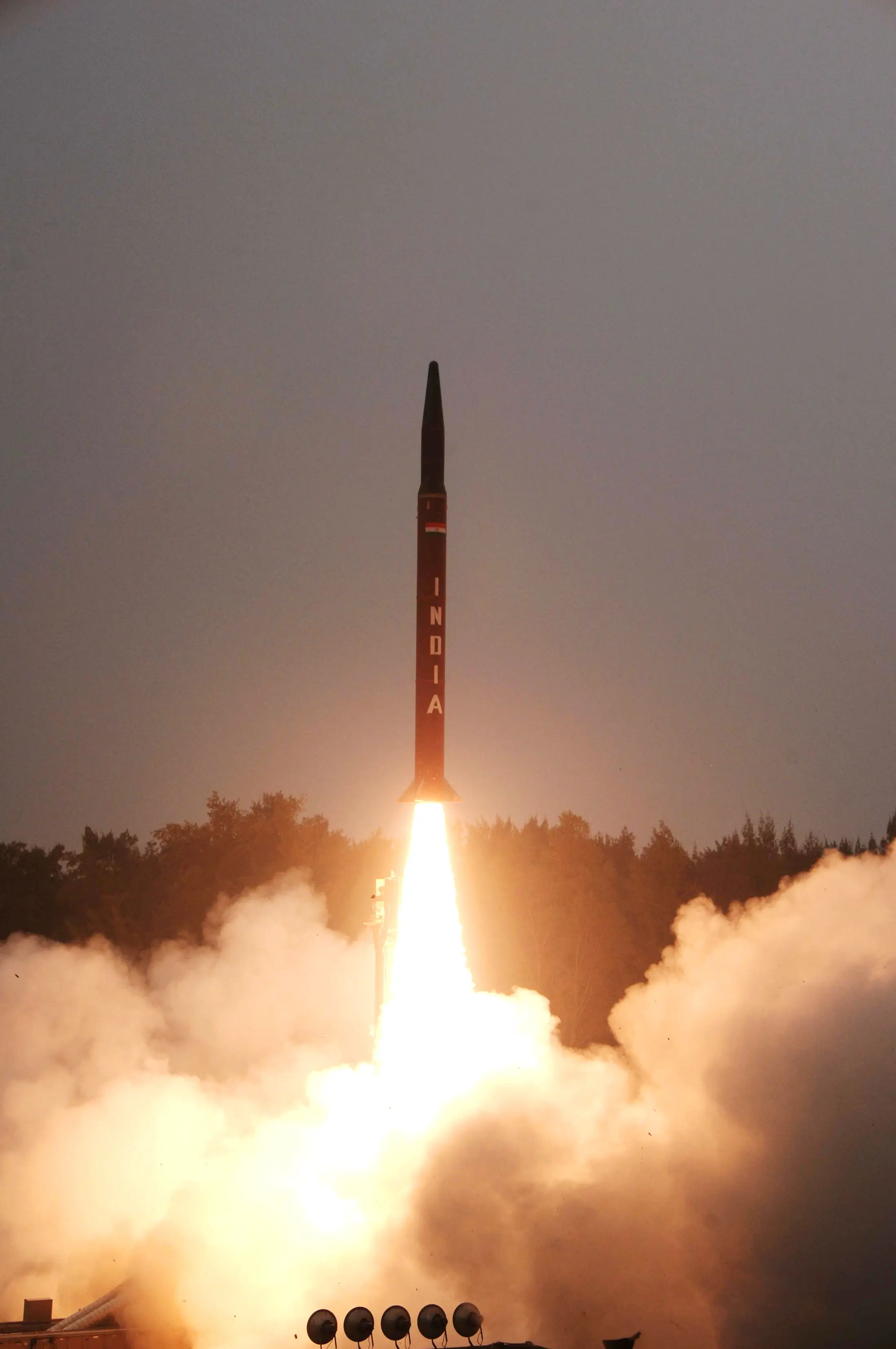
Agni-I and II — the theatre-range force
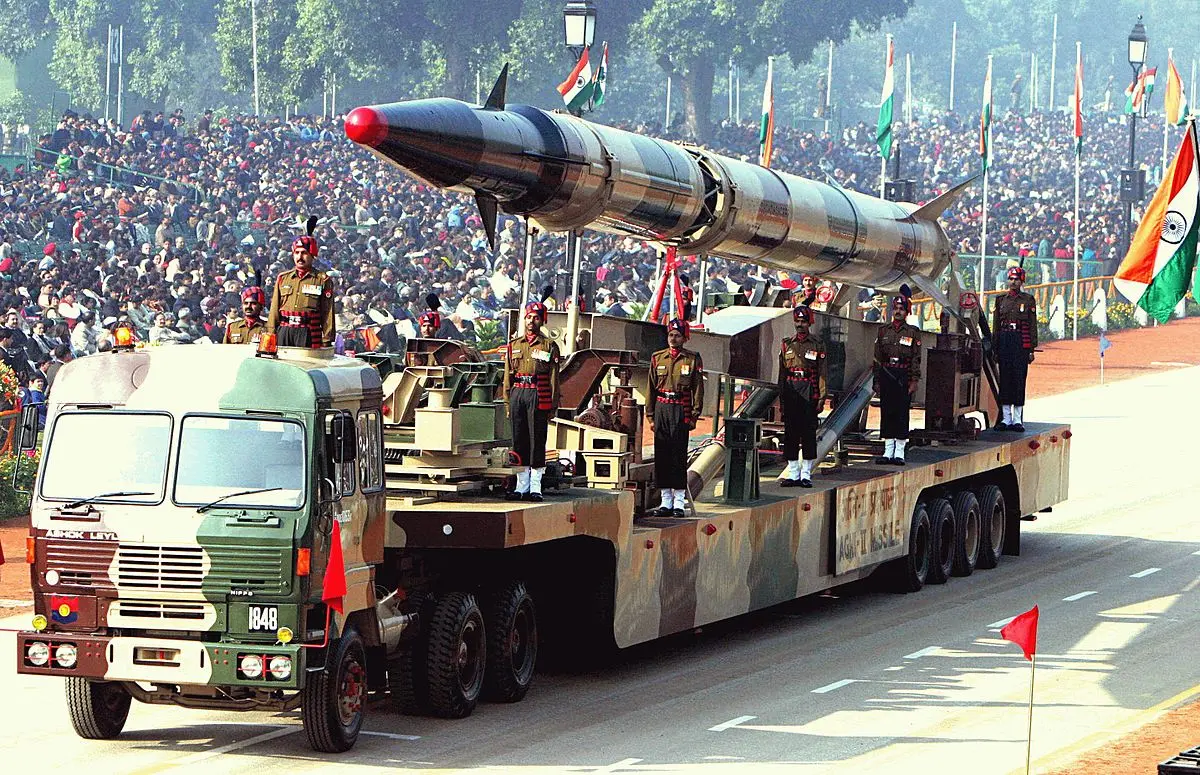
The Agni-I and Agni-II variants represent the next rung on the capability ladder. Agni-I is optimised for short-to-medium range missions, typically cited as 700 km to 1,200 km, while Agni-II extends deeper, with ranges in the region of 2,000 km to 3,500 km. Both missiles are road-mobile, designed for rapid repositioning and survivability, traits that enhance the resilience of India’s land-based strike forces.
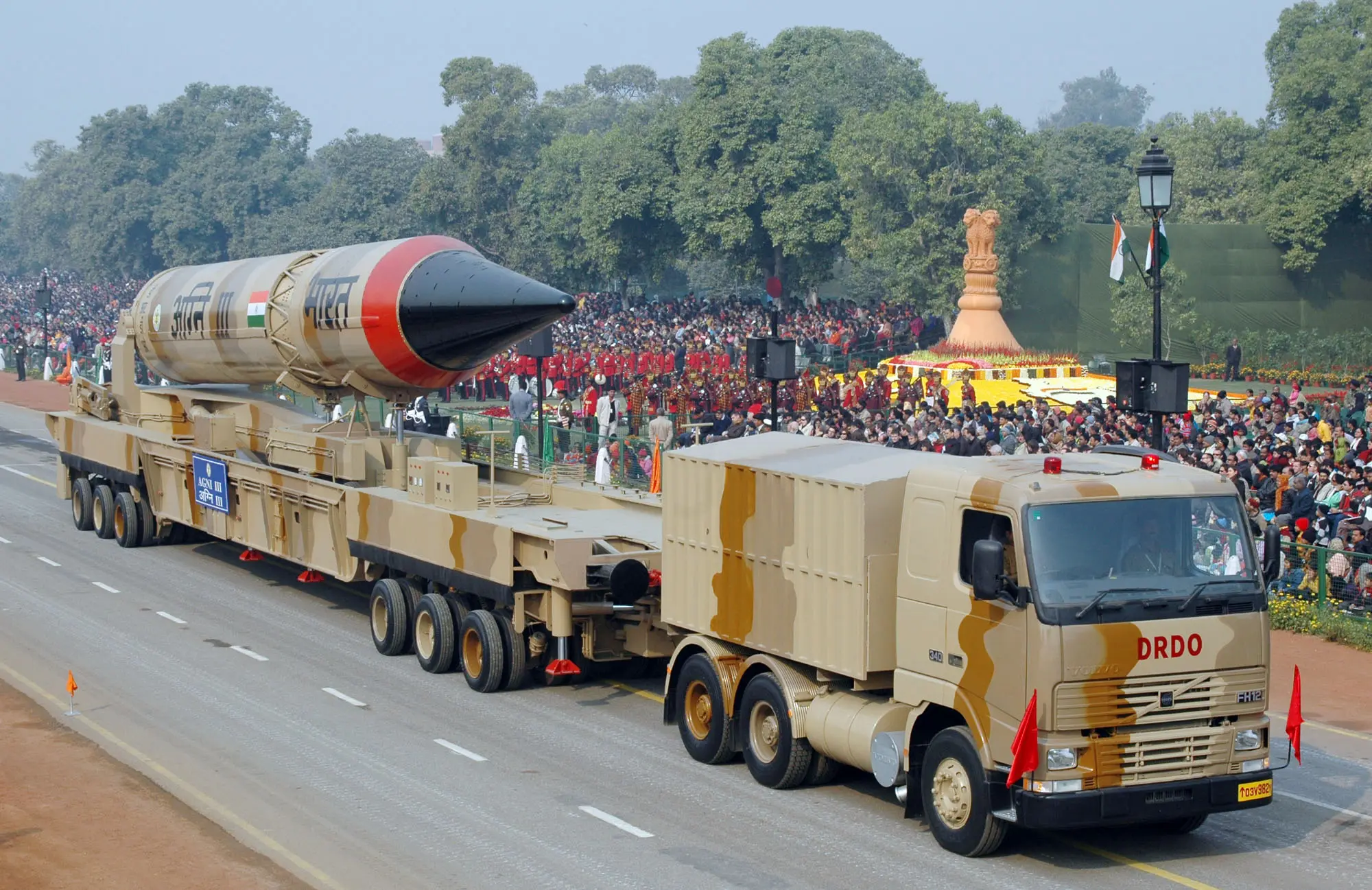
Agni-III and IV — expanding the reach
With Agni-III and Agni-IV, India entered the class of intermediate-range ballistic missiles. The Agni-III variant is described with a range of about 3,000 km to 5,000 km, while Agni-IV is cited at around 3,500 km to 4,000 km. These systems were built to reach targets at substantially longer distances with higher payload capacity and improved accuracy. The development of these variants marked a shift from simple extended reach towards greater sophistication in guidance, survivability and penetration capability.
Agni-V — the long-range frontier
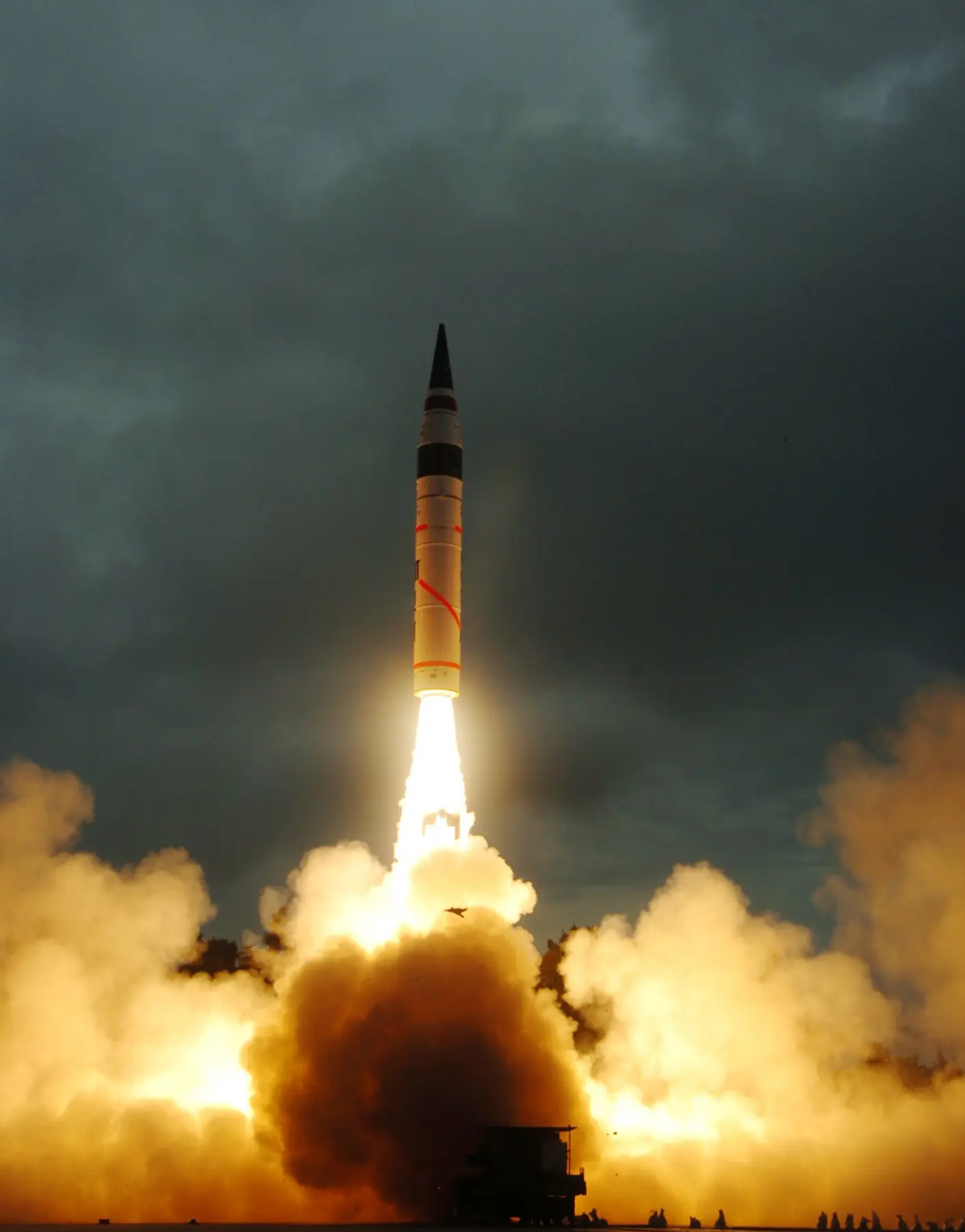
Agni-V is the most prominent and longest-range missile acknowledged publicly within India’s land-based inventory. It has been described as capably reaching around 5,000 km (and potentially up to 7,000 km or more). This breadth places a wide arc of potential strategic targets within reach. The missile also incorporates modern features such as canister-launch capability, which shortens launch time, protects the system during storage and enhances mobility.
The emerging Agni-P (Prime) — the next generation
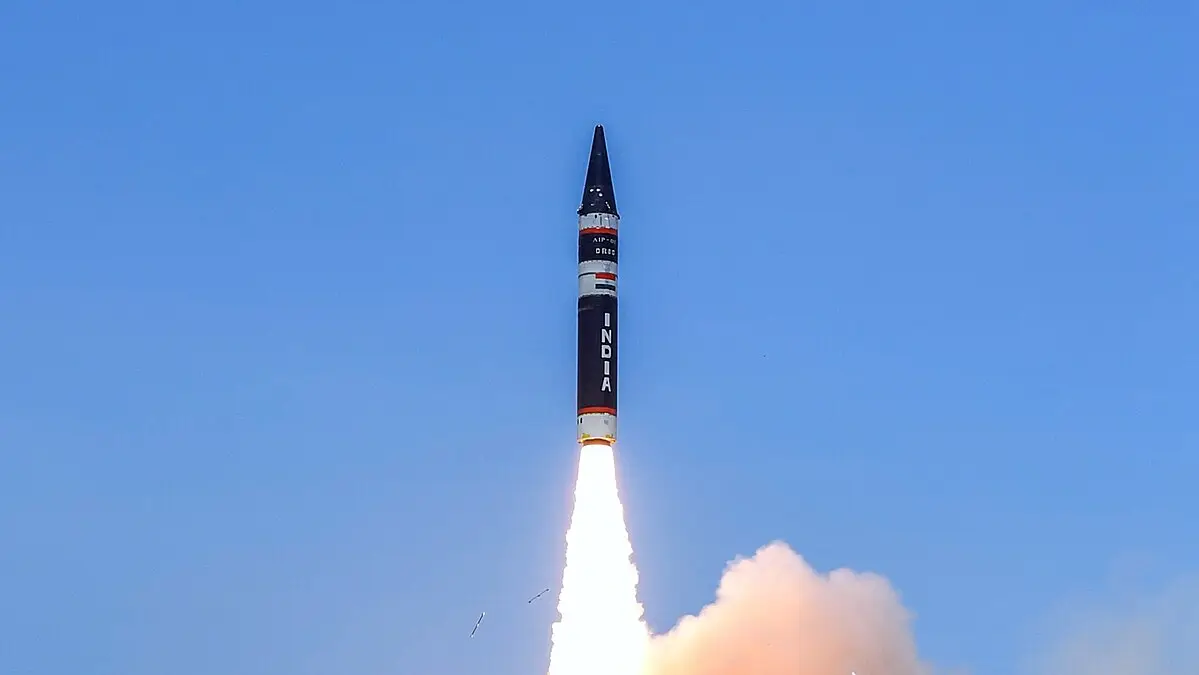
The Agni-P, often referred to as Agni-Prime, represents the evolution of the Agni family. Designed to be lighter and more accurate than earlier variants, it is intended to improve mobility and operational efficiency. The publicly cited range is around 1,000 km to 2,000 km. It is also widely discussed as a platform being refined for future technologies such as multiple independently-targetable re-entry vehicles (MIRVs), which would allow one missile to strike multiple targets.
How many types does this make?
In simple terms, India operates two named families of land-based nuclear-capable missiles: Prithvi and Agni. However, because the Agni family consists of multiple operational variants, I through V, plus the emerging Prime, most defence assessments count five main types of land-based nuclear missiles, each covering a different range band and mission role.
Conclusion — a layered deterrent
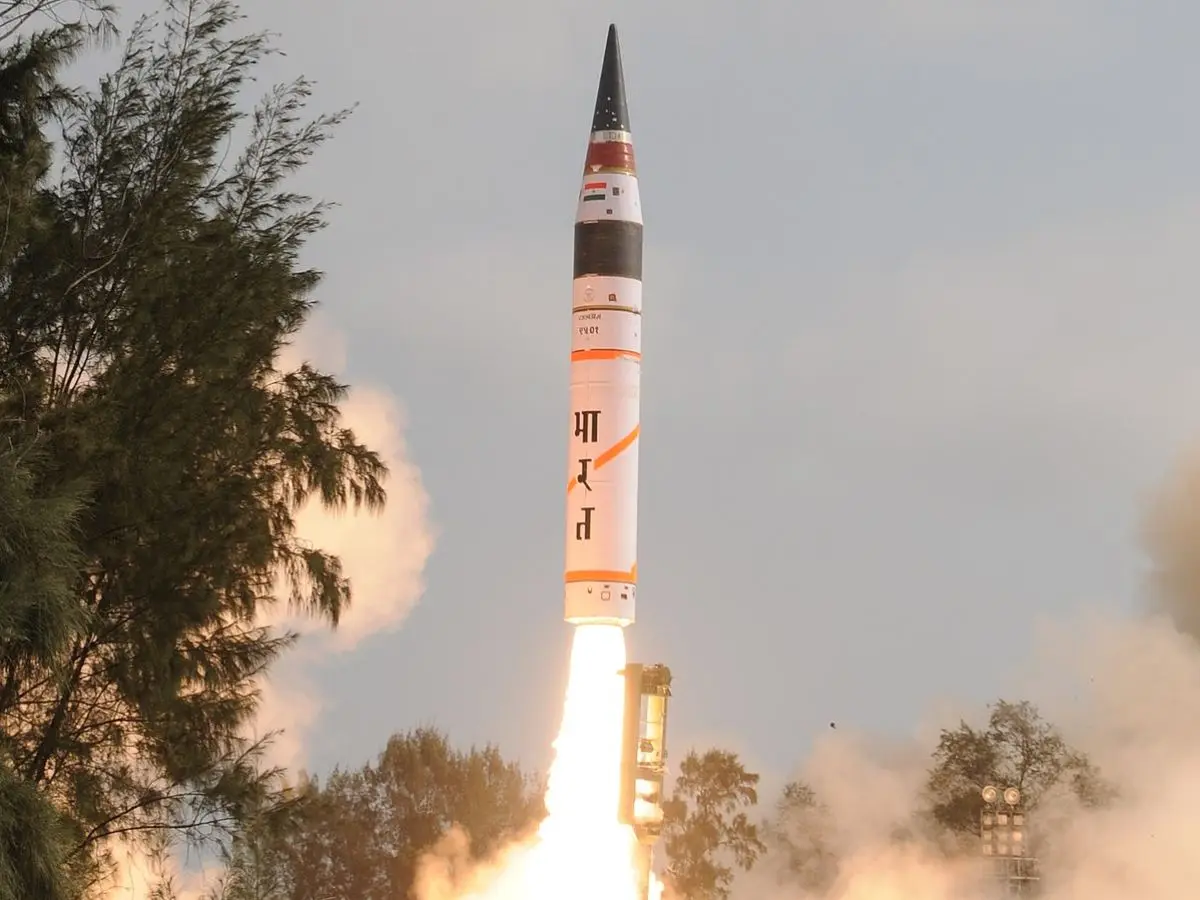
From the short-range Prithvi to the long-reach Agni-V, India’s land-based nuclear missile capability is designed to provide layered deterrence. The system combines tactical flexibility with strategic endurance, ensuring that India’s ground-launched nuclear forces remain credible, resilient and adaptable as technology advances. The number of missile types may appear modest, but the range of capability across them delivers a comprehensive strategic effect.
)
)
)
)
)