From NATO base to Arctic Routes: 6 reasons Greenland is key to US strategy and Trump ambitions

Greenland’s importance begins with its location. This self-governing Danish territory lies between North America and Europe, straddling key air and sea routes across the Arctic and North Atlantic.
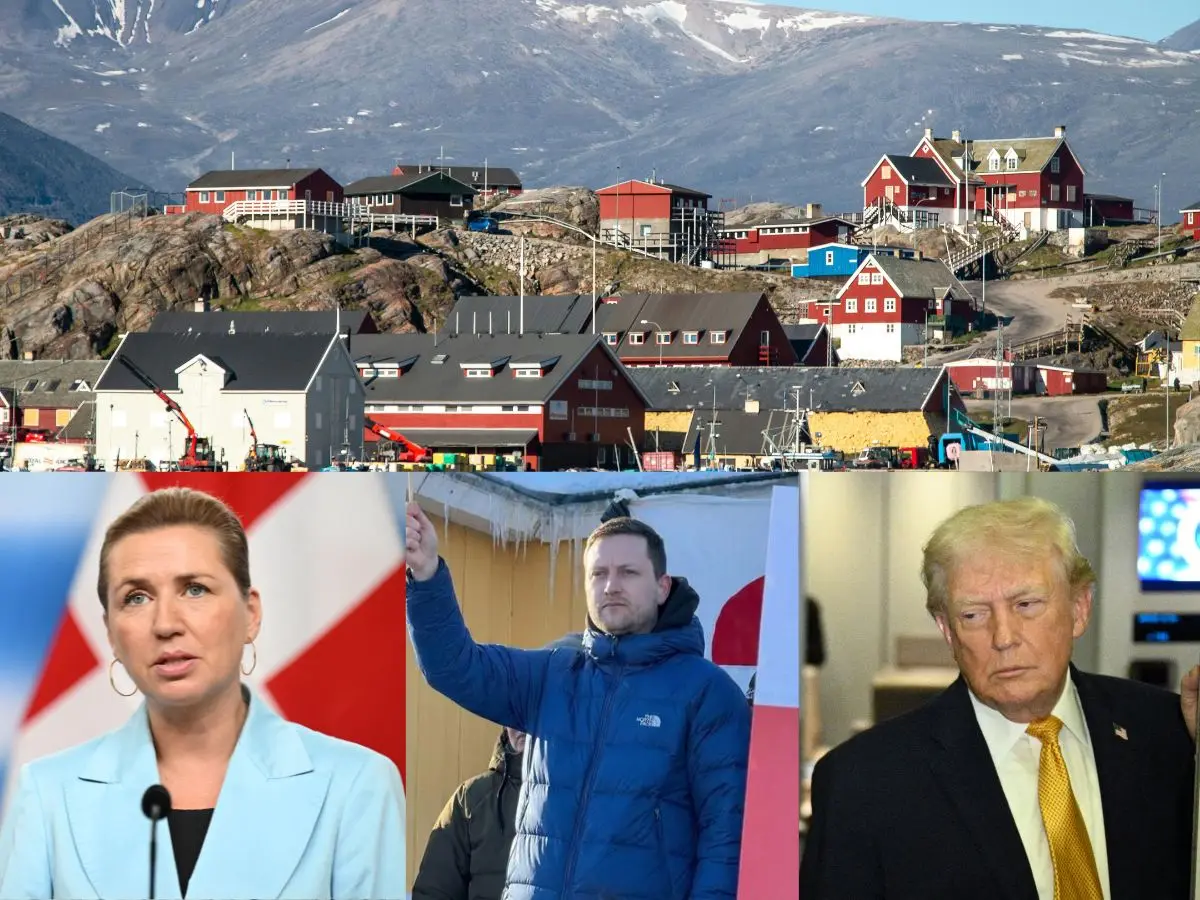
Why is Greenland so important?
Greenland has re-emerged as a geopolitical flashpoint after remarks by US President Donald Trump, who said, “We need Greenland from the standpoint of national security”. Trump's comments come a day after the US conducted a major military operation in Venezuela, capturing Venezuelan President Nicolas Maduro and his wife, Cilia Flores, in a surprise intervention that sent shockwaves across the globe. These statements made by the US President, have raised alarm in Denmark, which is responsible for the defense of Greenland, a self-governing Danish territory. The leaders of Denmark and Greenland have both urged Trump to stop threatening to take over Greenland. Yet the episode underlines how Greenland’s strategic value has grown sharply in an era of great-power competition.
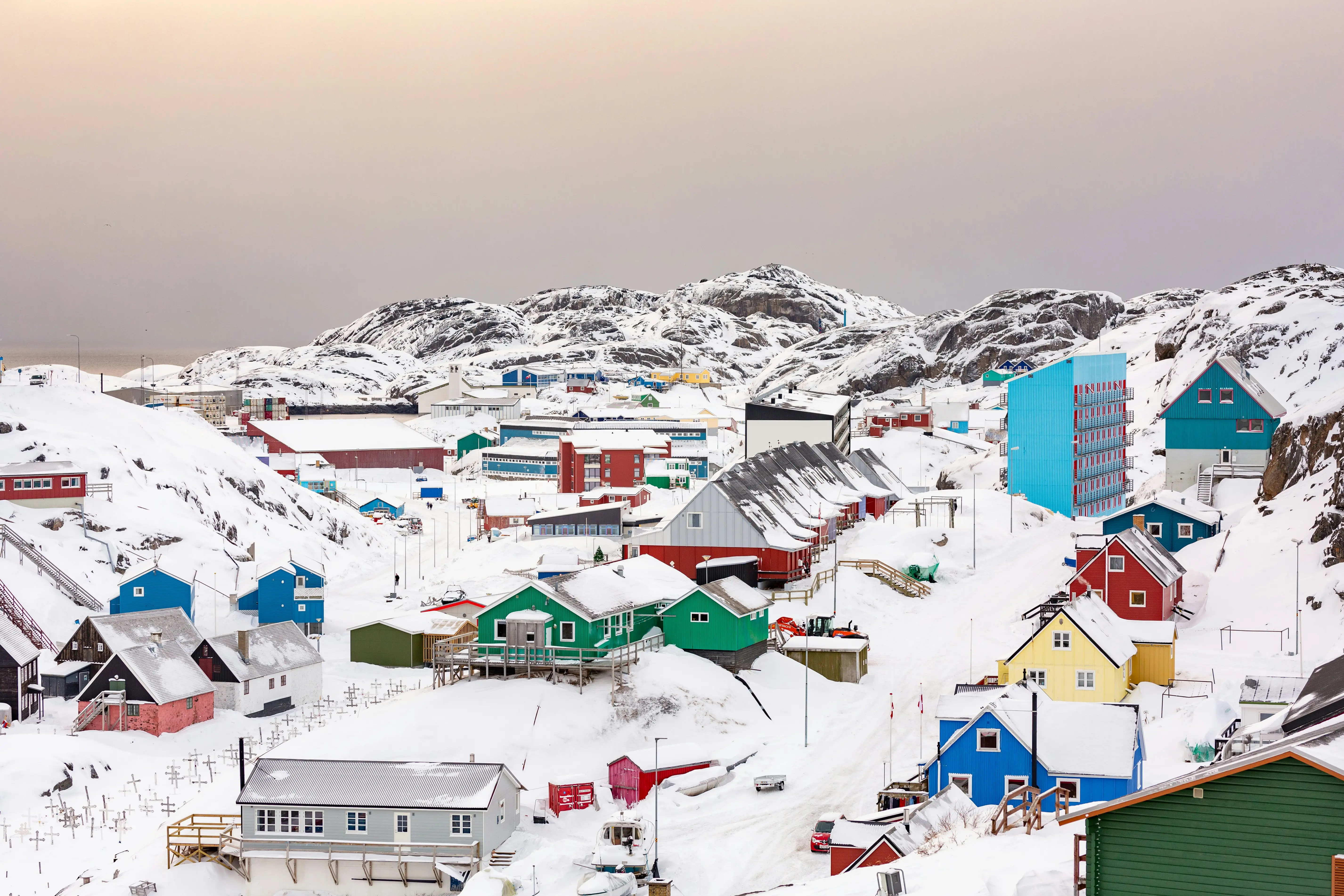
1. The location
Greenland’s importance begins with its location. This self-governing Danish territory lies between North America and Europe, straddling key air and sea routes across the Arctic and North Atlantic. During the Cold War, the US established major military infrastructure there, including the Thule Air Base, which remains vital for missile warning and space surveillance. As Arctic routes become more navigable, Greenland’s position has gained fresh military relevance.
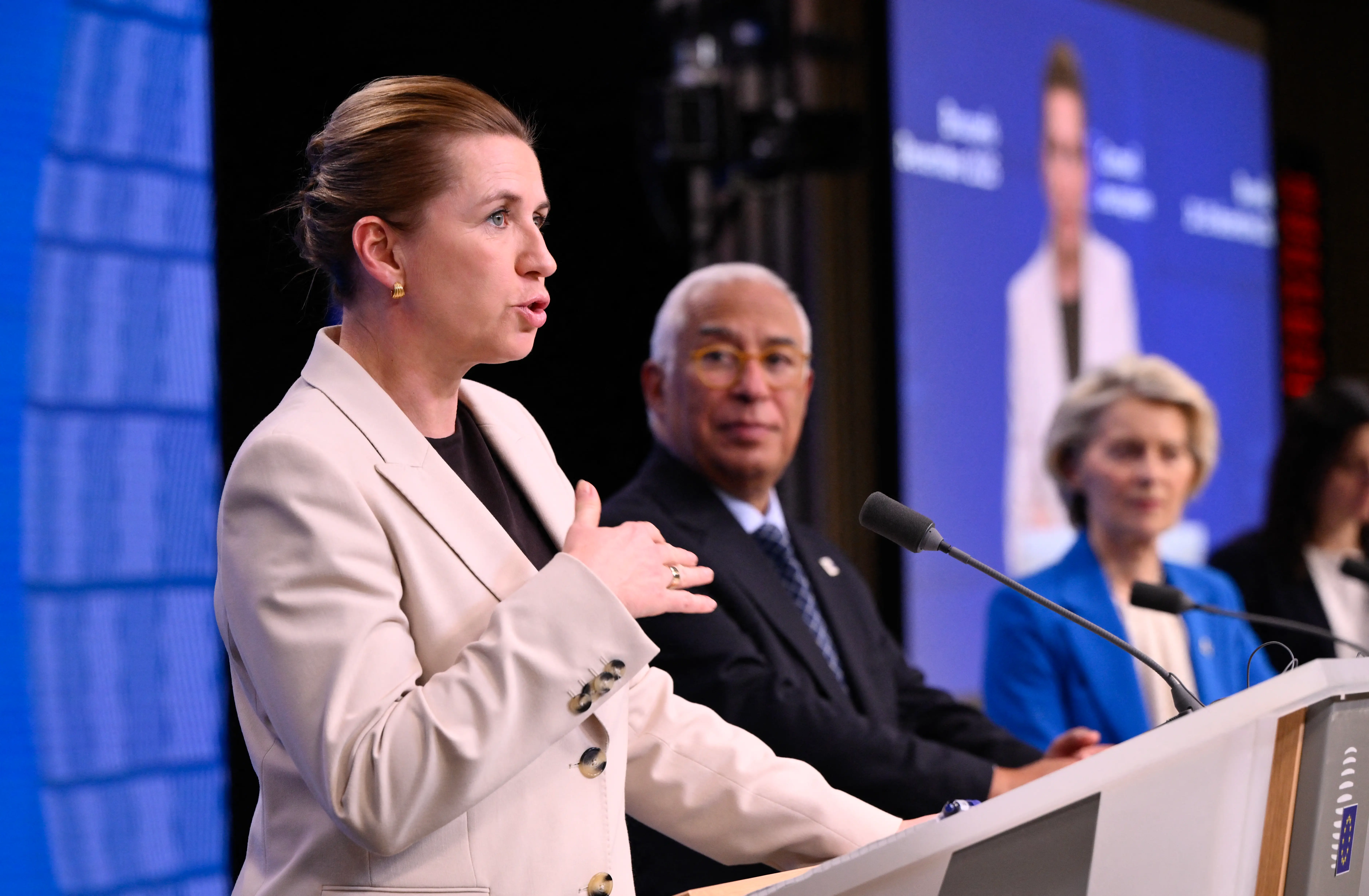
2. Emerging Arctic Shipping Corridors
Greenland lies close to several emerging Arctic shipping routes, including the Northwest Passage along Canada’s northern coast, the Northeast Passage, also known as the Northern Sea Route, along Russia’s Arctic shoreline, and the future Trans-Arctic or Transpolar Route across the central Arctic Ocean. As sea ice continues to retreat, these passages are expected to become increasingly viable for commercial shipping.
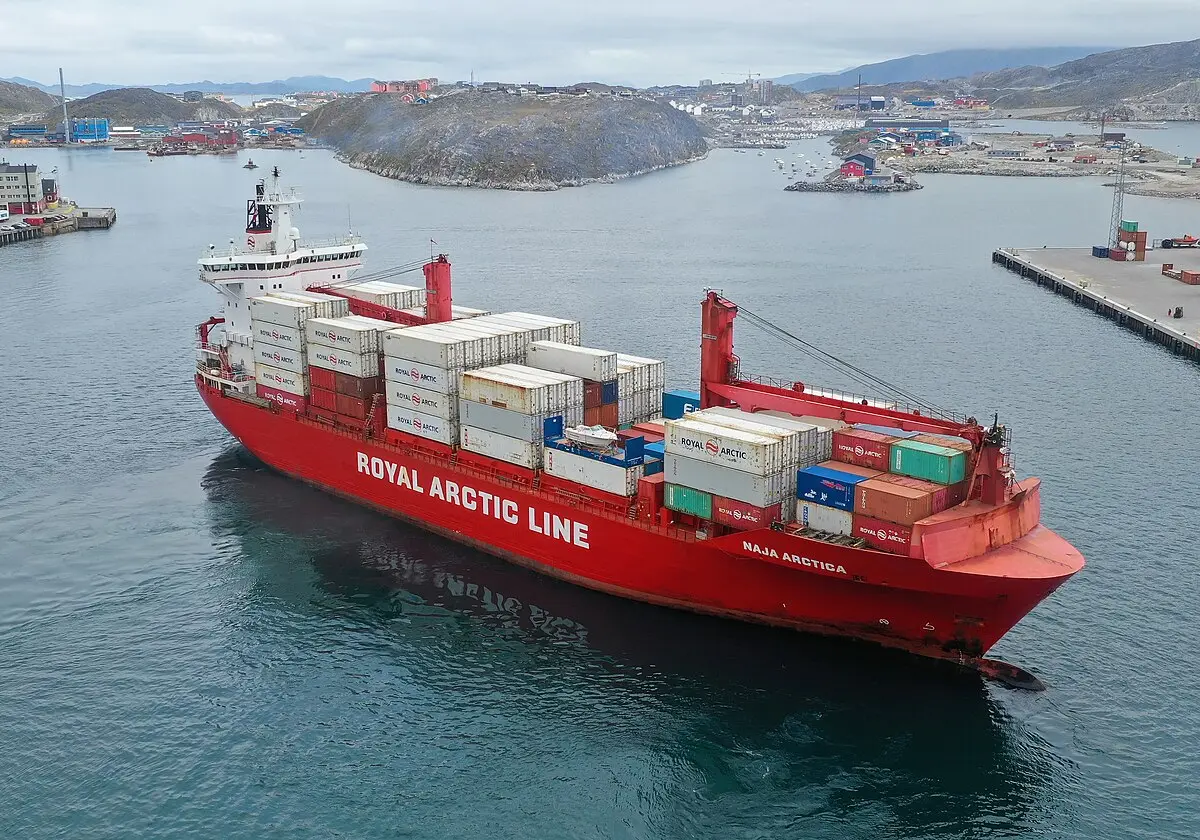
3. The Strategic Importance of the GIUK Gap
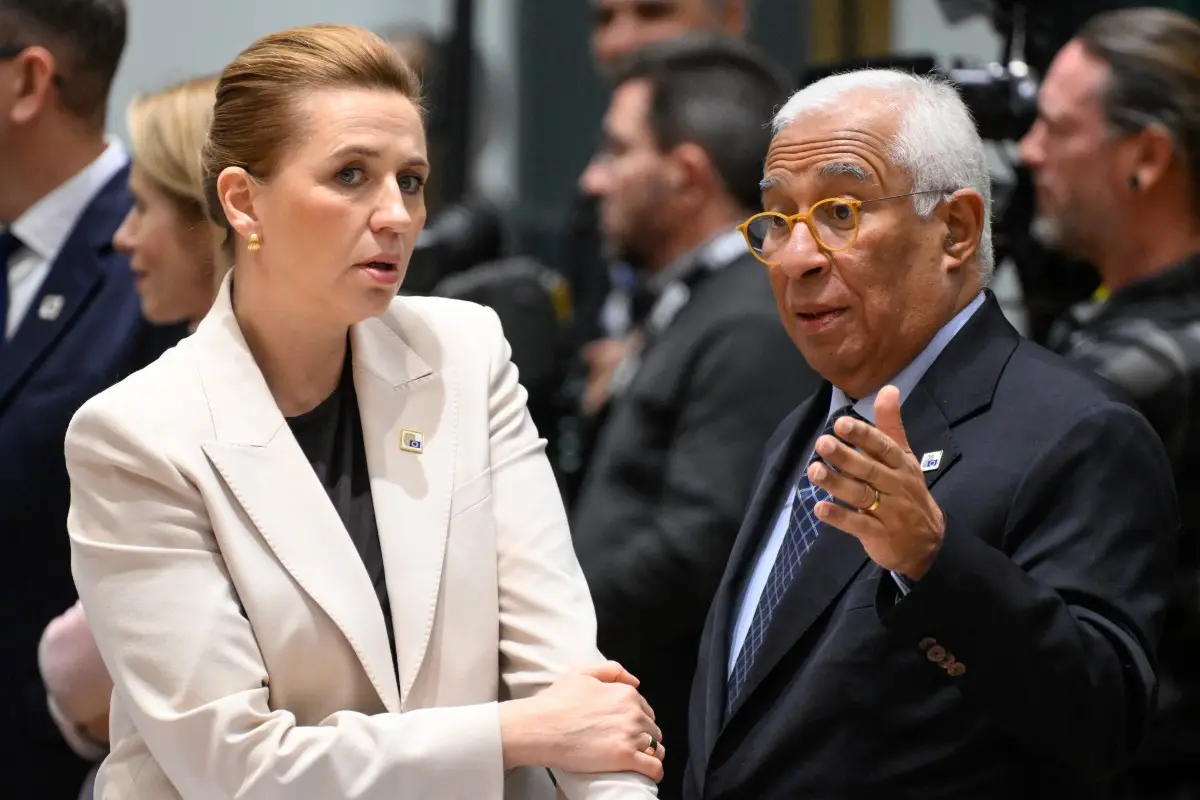
According to a document shared by the European Parliament, Greenland also sits within the Greenland-Iceland-United Kingdom (GIUK) gap, a critical stretch of the North Atlantic that serves as a gateway between the Atlantic Ocean and the Arctic, and between North America and Europe. Control of this corridor allows NATO to monitor and manage maritime traffic, safeguard vital sea lanes and detect underwater and subsurface threats, including increasingly frequent Russian hybrid activities. In the event of a conflict, the GIUK gap would be central to the rapid movement and reinforcement of NATO forces across the Atlantic.
4. A Strategic NATO Stronghold in the Arctic
Greenland is part of NATO and has had a defence agreement with the United States, through Denmark, since 1951. The island hosts the Pituffik Space Base, a key US installation supporting NATO’s missile defence and space surveillance. Its Arctic location is ideal for operating polar-orbiting satellites used for early missile warning, intelligence, navigation and space monitoring, making the base central to NATO’s deterrence and defence in the High North.
5. Resources beneath the ice
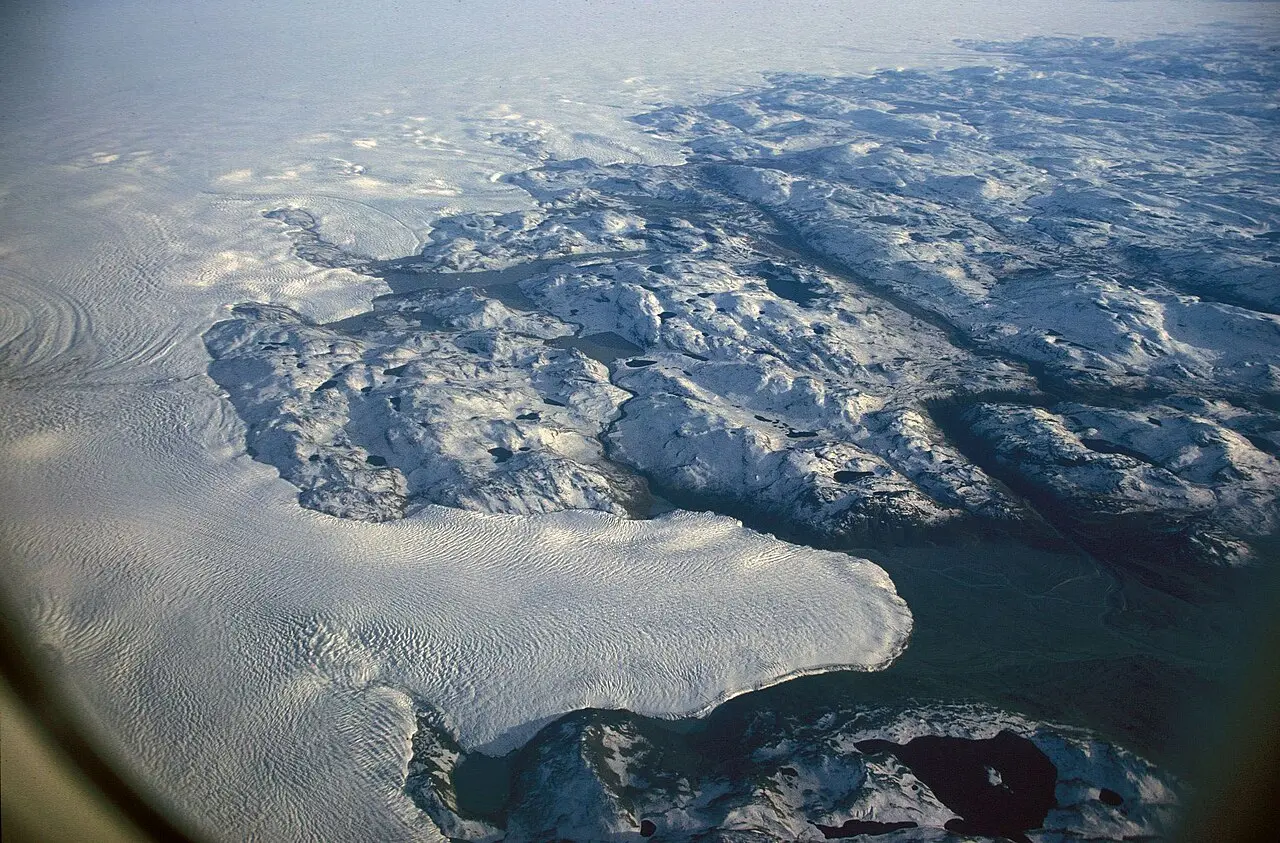
Greenland is rich in untapped mineral resources, including rare earth elements essential for modern technologies, as well as potential oil and gas reserves. A 2023 report published by the Geological Survey of Denmark and Greenland (GEUS) found the island has 25 of the 34 critical minerals identified in the EU's official critical raw materials list, this includes graphite, lithium and rare earth minerals. Additionally, according to Benchmark Minerals Intelligence, 43 of the 50 minerals deemed critical to US national security and economic stability may also be found on the island. Development has been slow due to harsh conditions and environmental concerns, but global demand has sharpened strategic interest. Control over supply chains for critical minerals has become a central geopolitical issue.
6. A complex colonial and political history
Greenland was a Danish colony until 1953, when it became a district of Denmark. A 2009 agreement granted it the right to declare independence, though it remains heavily dependent on Danish subsidies. Questions of sovereignty and self-determination remain central to Greenlandic politics.
Katie Miller's post
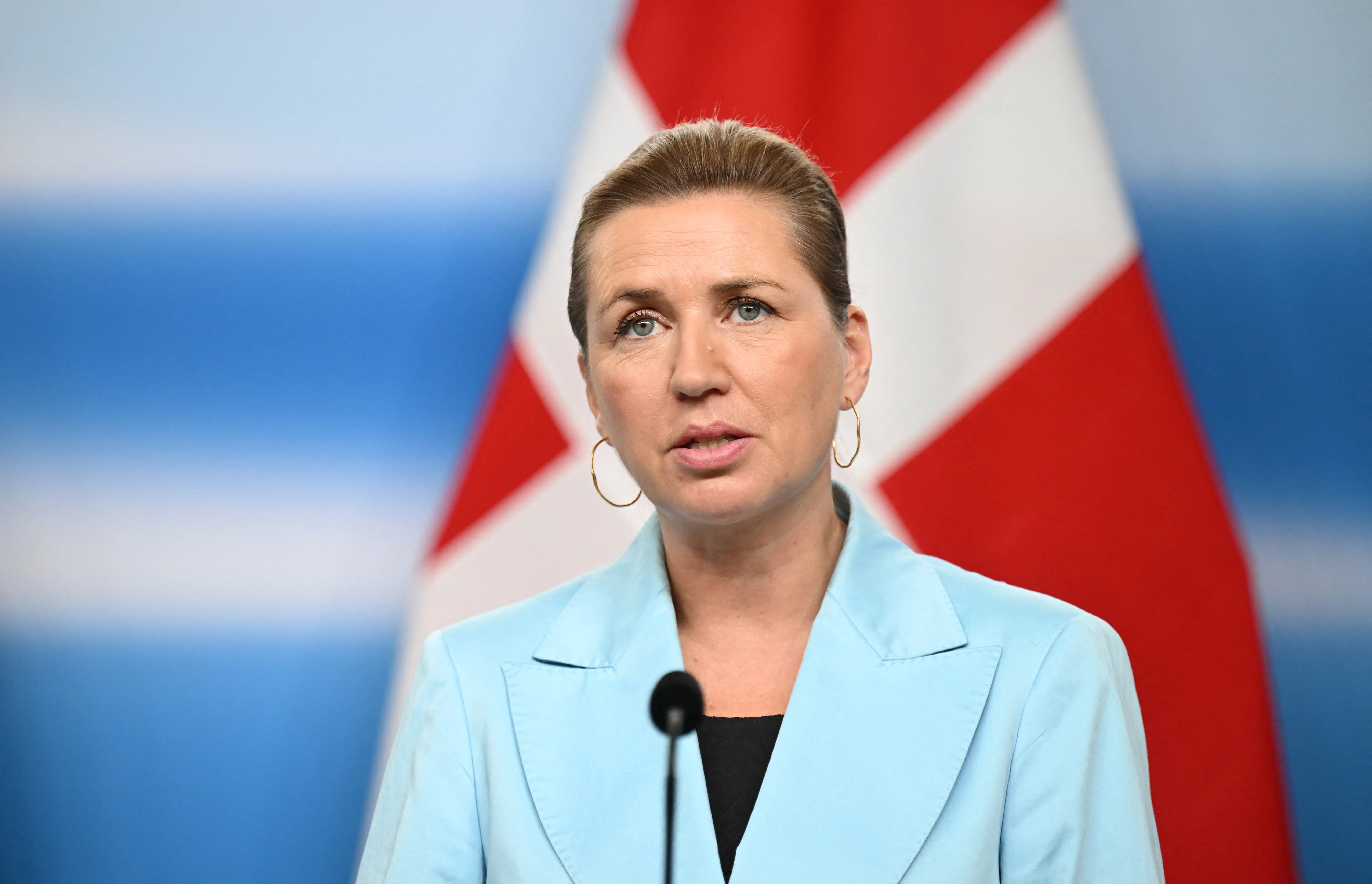
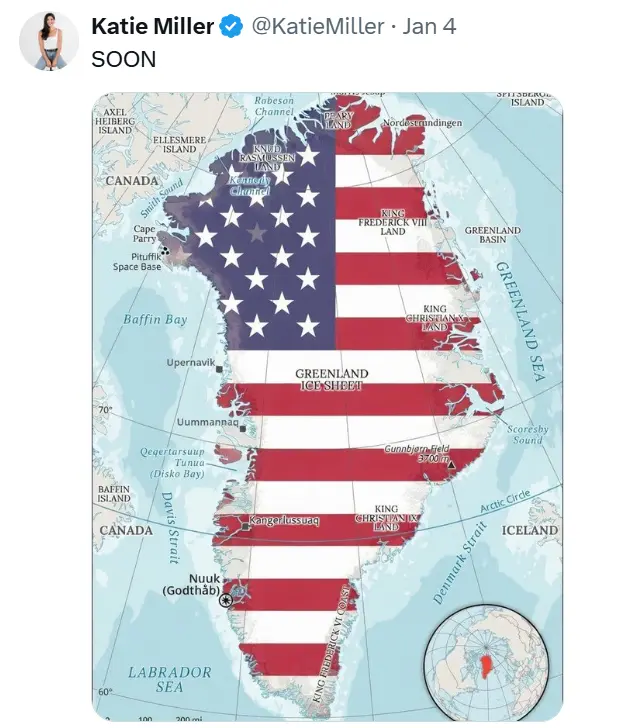
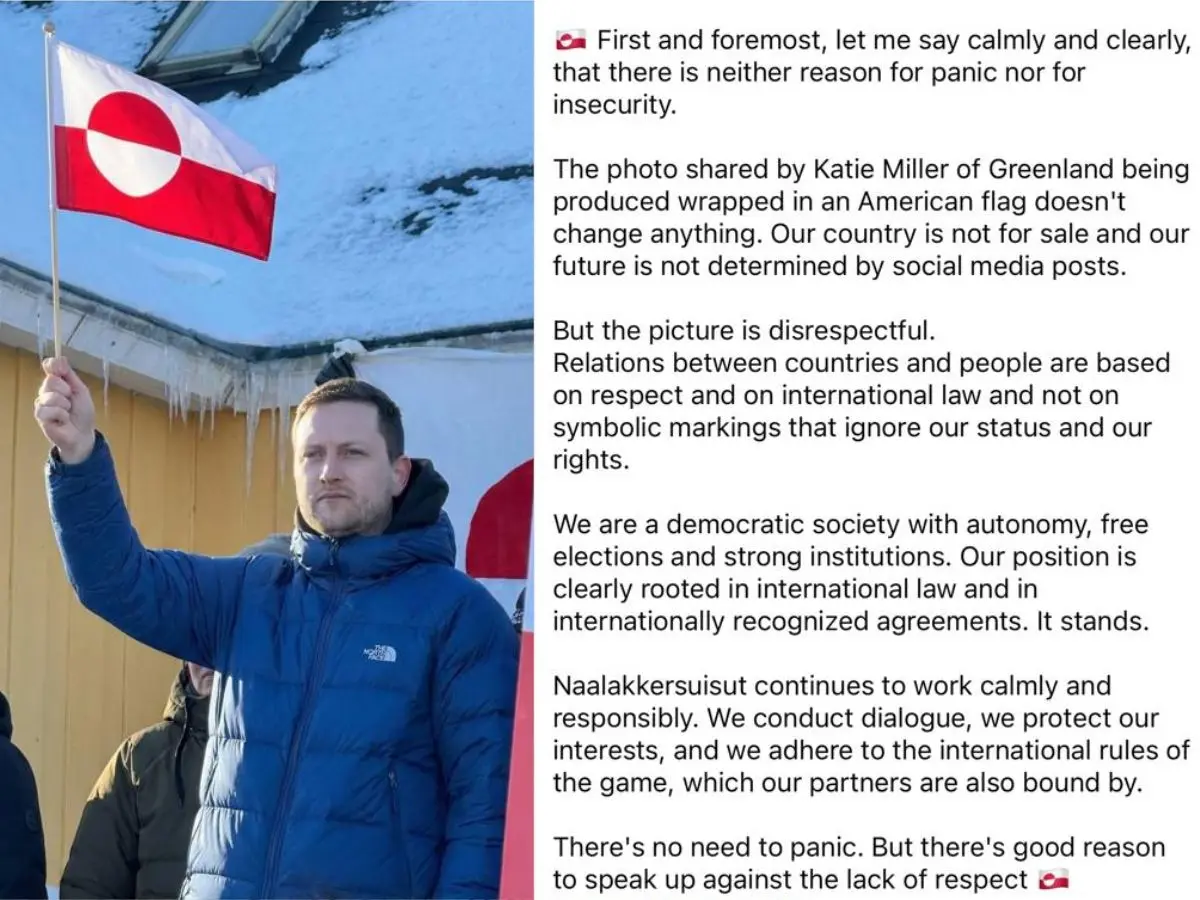
Denmark’s Prime Minister, Mette Frederiksen, said it made 'absolutely no sense' to discuss the United States taking over Greenland, adding that Washington had 'no right to annex any of the three nations in the Danish kingdom'. Earlier, Katie Miller, the wife of Trump’s deputy chief of staff Stephen Miller, posted an image of Greenland coloured as the American flag with the word 'SOON'.
Firm resistance from Denmark and Greenland
Greenland’s Prime Minister, Jens-Frederik Nielsen, condemned the rhetoric as disrespectful and reiterated that the island was 'not for sale'. Last year, all five parties represented in Greenland’s parliament publicly rejected any proposal for the territory to become part of the United States.
)
)
)
)
)