From Iraq to Afghanistan: 5 missions where the USS Abraham Lincoln played a decisive role

Commissioned in 1989, the carrier operates as a floating airbase, capable of sustained strike operations, maritime security, and humanitarian missions without reliance on regional bases. It has participated in some of the most important operations in US naval history.
Introduction
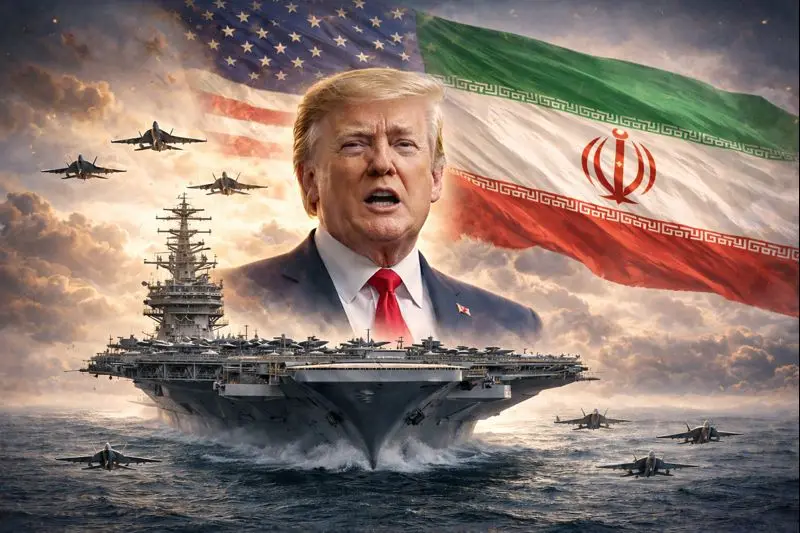
The USS Abraham Lincoln is heading to the Middle East amid escalating US–Iran tensions, serving as a deliberate signal of military readiness rather than a purely diplomatic gesture from US President Donald Trump. With concerns mounting over a potential US strike, the aircraft carrier and its accompanying warships have reportedly positioned themselves near Iranian waters. In response to the heightened concerns of a possible strike, Iranian authorities on Sunday, unveiled a massive mural on a central Tehran billboard, delivering a direct warning to the United States. The mural showed an aircraft carrier with damaged and exploding fighter planes on its flight deck The artwork had the slogan: “If you sow the wind, you will reap the whirlwind.”
A carrier at the heart of US naval power
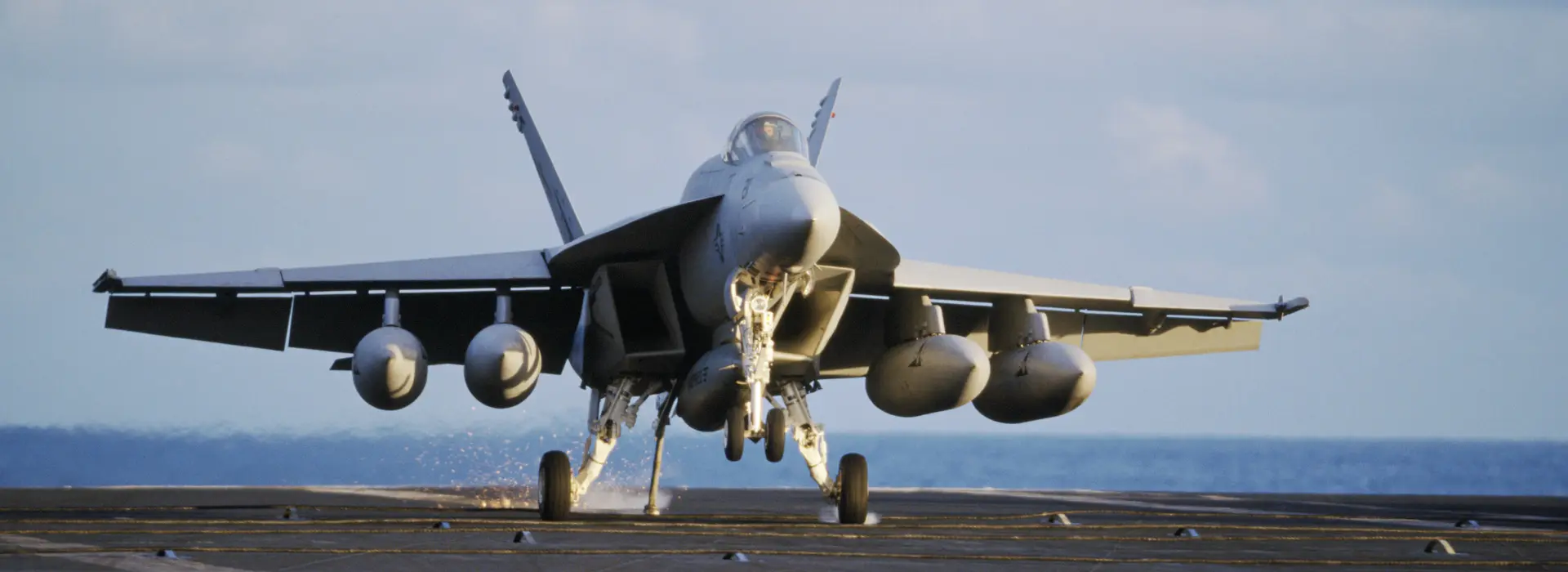
USS Abraham Lincoln (CVN-72), a Nimitz-class nuclear-powered aircraft carrier homeported in San Diego, has been central to projecting American naval power in the Middle East. Named to honor the nation’s 16th president, CVN-72 is the second ship in the US Navy to bear his name. Measuring around 1,092 feet in length with a beam of around 250 feet, the USS Abraham Lincoln aircraft carrier displaced 97,500 tons. Commissioned in 1989, the carrier operates as a floating airbase, capable of sustained strike operations, maritime security, and humanitarian missions without reliance on regional bases. It has participated in some of the most important operations in US history:
Operation Fiery Vigil
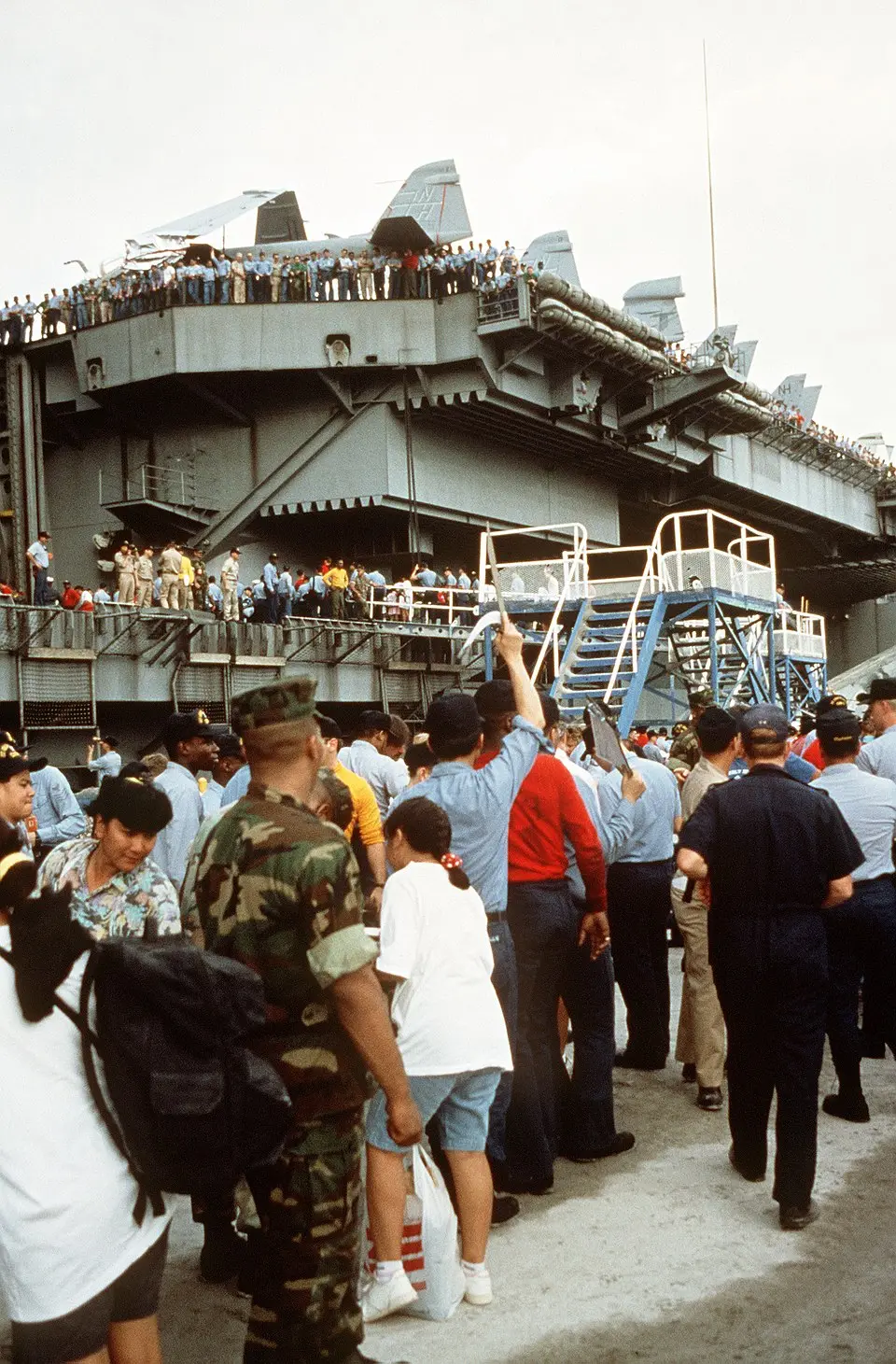
From June 17-23 1991, the ship was enroute to the Indian Ocean to support evacuations following the eruption of Mt. Pinatubo on Luzon Island, in Philippines. The operation became the largest peacetime evacuation of active duty military personnel and family members in history. The 'Abe' led a 23-ship armada that sealifted 20,000 evacuees. The armada moved nearly 45,000 people from the Subic Bay Naval Station to the Visayas Province port of Cebu.
Operation Desert Storm and Southern Watch
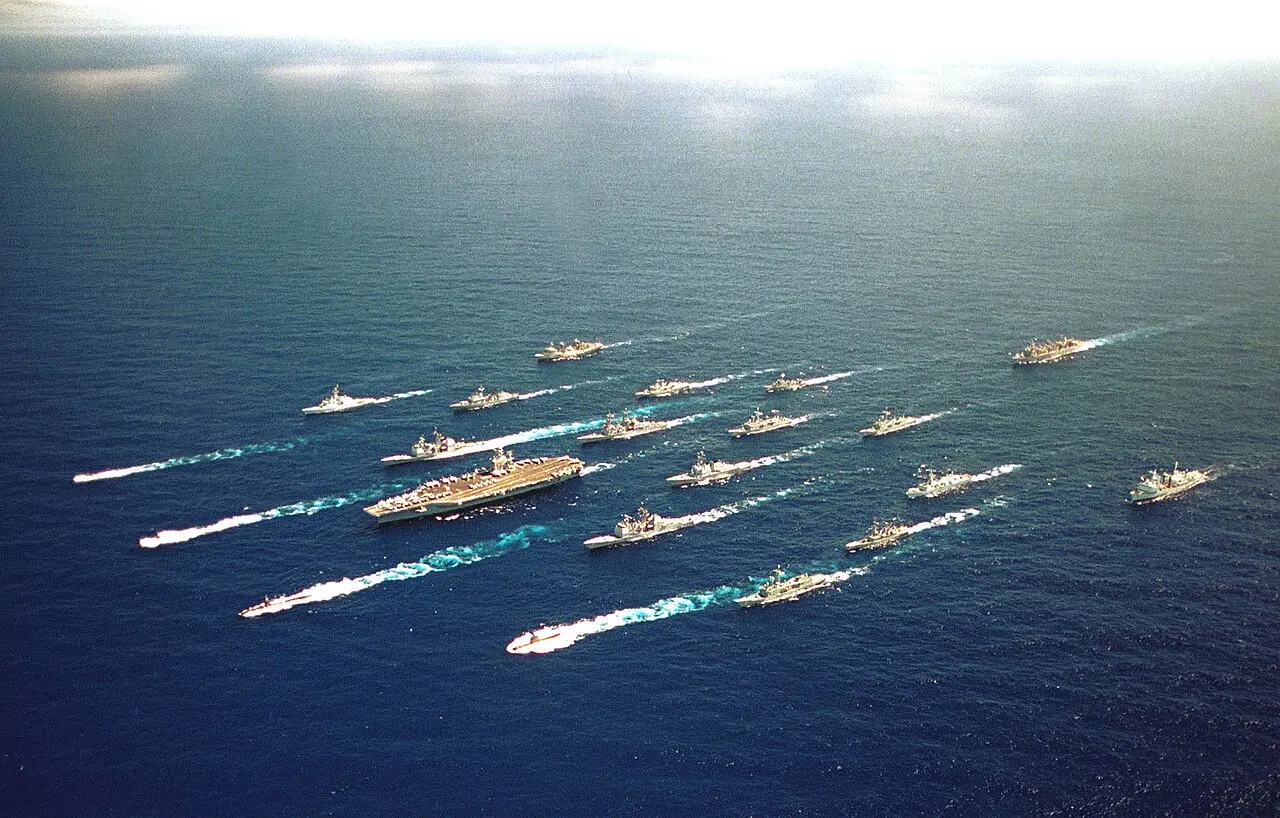
Following the 1991 Gulf War, Abraham Lincoln deployed with Carrier Air Wing Nine (CVW-9) to enforce 'no-fly zones' over southern Iraq and conduct precision airstrikes against Iraqi targets. Its aircrafts flew 975 continuous sorties in support of Operation Southern Watch in Iraq, demonstrating the carrier’s ability to maintain air superiority while supporting coalition forces.
Operation Enduring Freedom
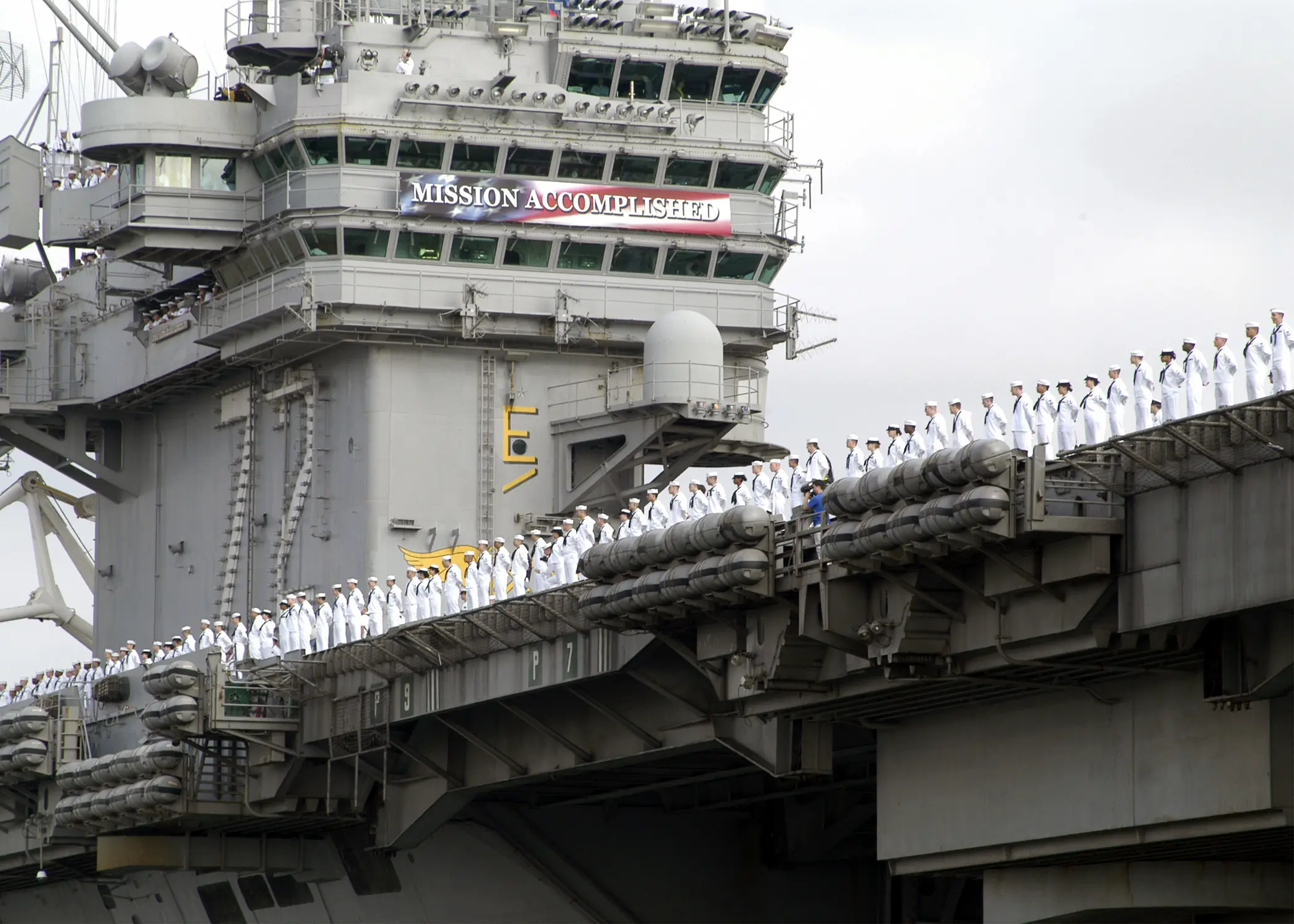
The USS Abraham Lincoln (CVN-72) departed for a deployment on July 20, 2002, and was later ordered to the Arabian Sea, where it spent a 10-month deployment supporting Operation Enduring Freedom and subsequently Operation Iraqi Freedom. Aircraft from the Abraham Lincoln flew more than 597 combat sorties in Afghanistan in support of US and coalition ground forces supporting Operation Enduring Freedom against Taliban and al-Qaeda positions. Although, USS Theodore Roosevelt was a primary carrier deployed in the early stages of the operation.
Operation Iraqi Freedom
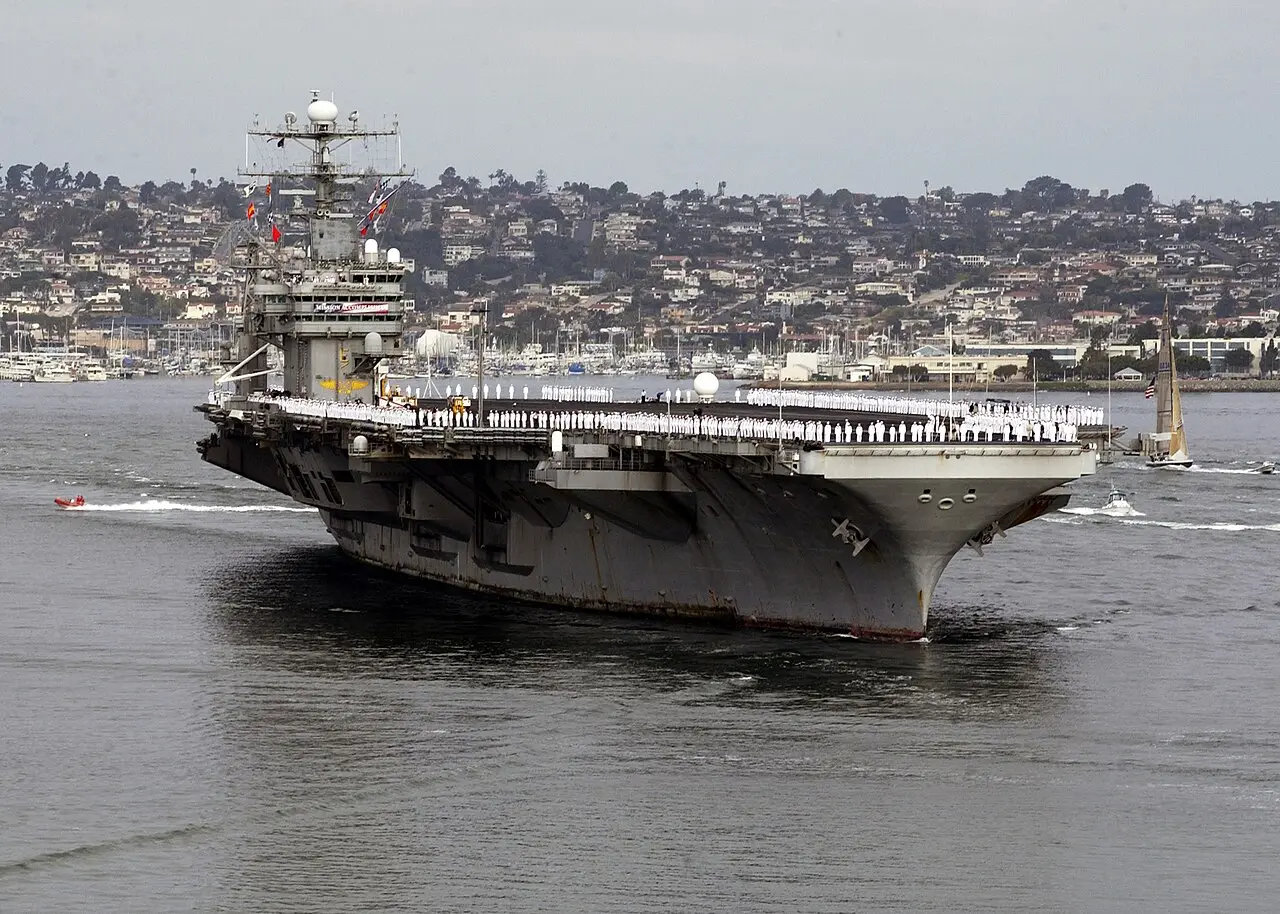
In 2003, Abraham Lincoln played a pivotal role in the invasion of Iraq. Aircraft from the carrier launched hundreds of sorties, supporting ground troops with close air support and targeting critical infrastructure. The carrier’s ability to operate continuously for months offshore highlighted its endurance and strategic flexibility. Aircrafts from the Abraham Lincoln flew 1558 sorties in support of Operation Iraqi Freedom.
Power projection and rapid response
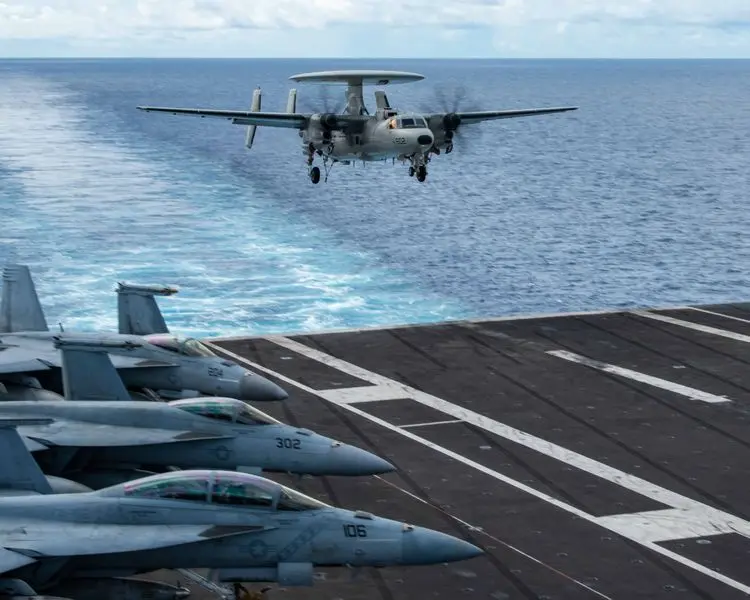
The Carrier Air Wing 9 (CVW-9) of the US Navy is attached to Carrier Strike Group (CSG) 3 and flagship USS Abraham Lincoln (CVN 72), and consists of eight squadrons flying F-35C Lightning II, F/A-18E/F Super Hornets, EA-18G Growlers, E-2D Hawkeyes, CMV-22B Ospreys and MH-60R/S Sea Hawks. Thus, USS Abraham Lincoln combines stealth, electronic warfare, early warning, and anti-submarine capabilities.
)

)
)
)