From Gnats and MiG‑21s to Rafales: How the Indian Air Force transformed its fighter jets over the decades

India’s ambition to create an indigenous fighter aircraft finally took shape with the HAL Tejas, which entered operational service in 2016.
Beginnings: Post‑Independence Pioneers
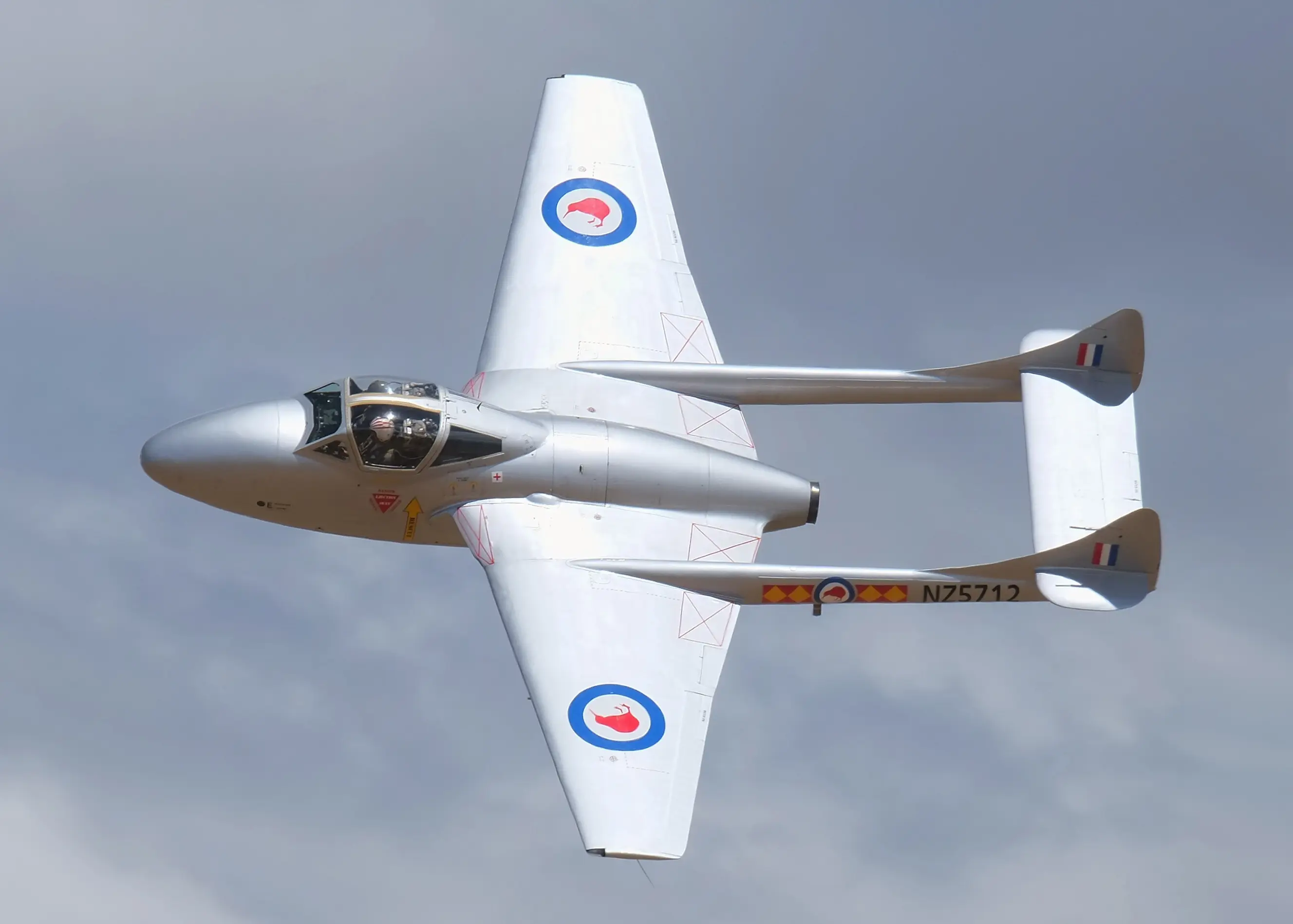
At the time of independence in 1947, the Indian Air Force (IAF) inherited propeller‑driven aircraft such as the Hawker Tempest and Spitfire. The shift to jet power came swiftly with the induction of the de Havilland Vampire in 1953, India’s first operational jet fighter. The Vampire set the stage for a modern air force and soon saw action in the 1965 conflict with Pakistan, although by then it was largely replaced by more advanced types. Compact and reliable, the Vampire was powered by a Goblin turbojet engine offering a top speed of around 880 km/h. Though modest by today’s standards, it marked a vital leap from piston‑engine aircraft, giving the IAF its first taste of jet operations and setting the foundation for more advanced fighters.
The Iconic Hunters and Gnats
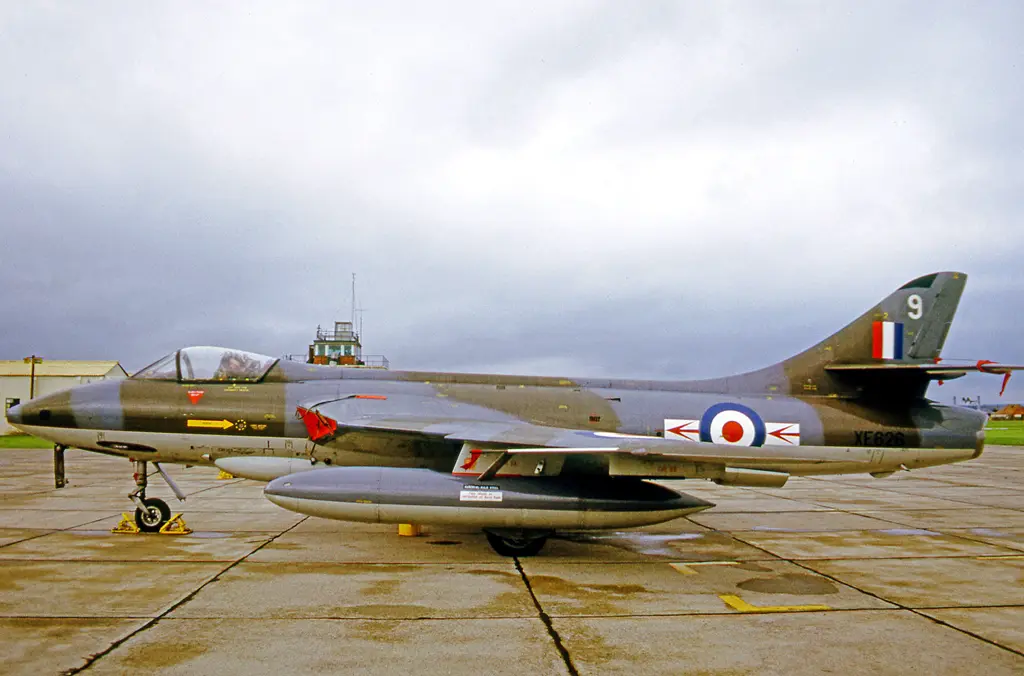
The 1950s and 1960s marked the induction of two iconic fighters into the Indian Air Force: the Hawker Hunter and the Folland Gnat. The Hunter quickly earned a reputation for its rugged build and formidable ground‑attack capability. In contrast, the lightweight Gnat, weighing just over 5,000 kg when fully loaded, became legendary for its exceptional agility and compact size, which made it hard to track and target. Powered by a Rolls‑Royce Orpheus engine, it could exceed speeds of 1,000 km/h. The Gnat rose to fame during the 1965 Indo‑Pakistan War, where it outmanoeuvred the larger and more heavily armed Pakistani F‑86 Sabres, a feat that earned it the enduring nickname 'Sabre Slayer'. Together, these aircraft helped cement the IAF’s reputation for daring and skill in aerial combat.
Supersonic Era: MiG‑21 and Beyond
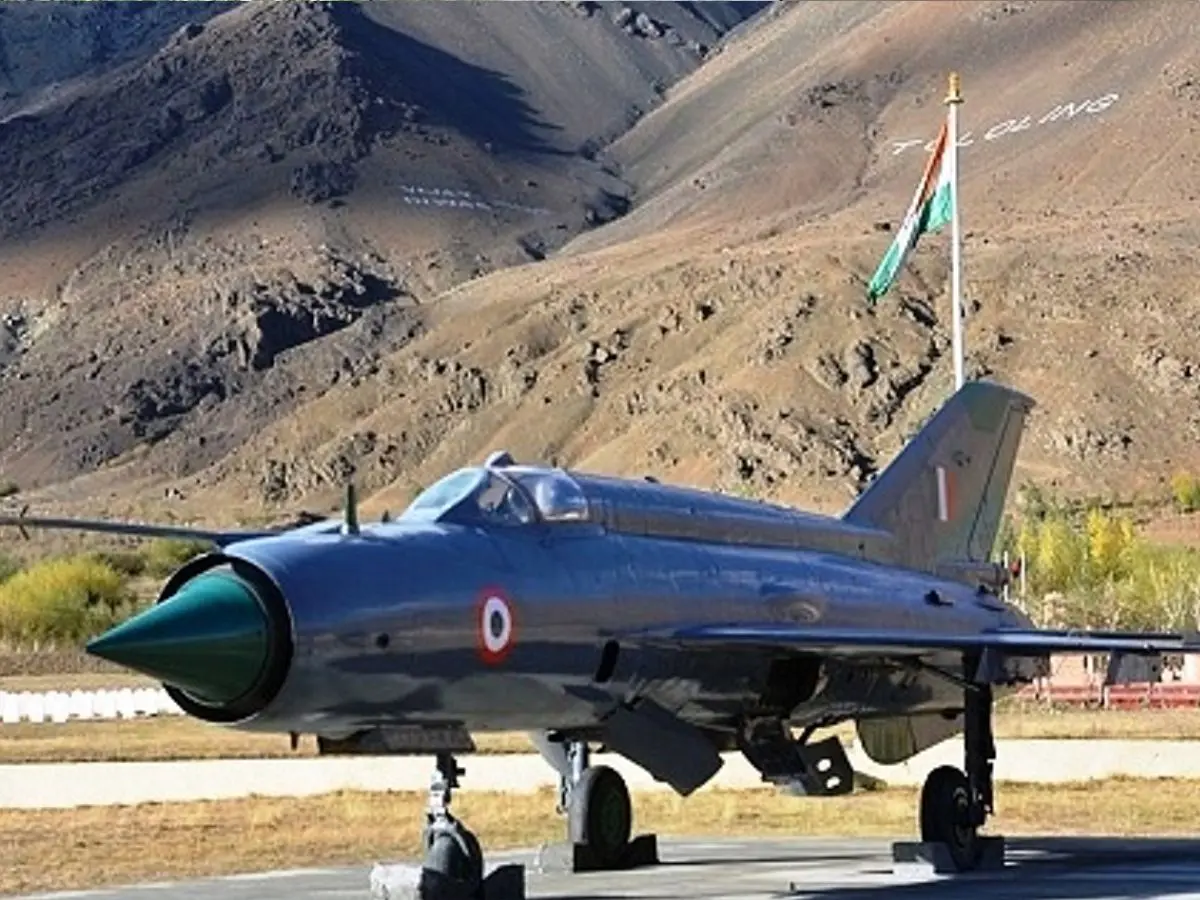
India entered the supersonic era in 1963 with the induction of the Soviet‑designed MiG‑21. Compact, swift and relatively economical, the MiG‑21 swiftly became the backbone of the Indian Air Force, with more than 800-1000 aircraft eventually produced under licence by Hindustan Aeronautics Limited (HAL), forming one of the world’s largest MiG‑21 fleets. Capable of reaching speeds above Mach 2 (around 2,100 km/h), its slender delta‑wing design allowed rapid climbs and high‑speed interceptions. Initially equipped with basic radar and heat‑seeking missiles, later variants incorporated more advanced avionics to enhance combat effectiveness. The MiG‑21 proved its worth during the 1971 Indo‑Pakistan War, where it achieved several aerial victories and played a decisive role in asserting air superiority. Remaining in frontline service for decades, it became an enduring symbol of India’s leap into modern jet‑age warfare. However, the IAF is preparing to retire its fleet of MiG-21 in September.
Power and Versatility: Mirage 2000 and MiG‑29
India’s ambition to create an indigenous fighter aircraft finally took shape with the HAL Tejas, which entered operational service in 2016. Lightweight and highly manoeuvrable, the Tejas boasts a composite airframe that reduces radar signature, digital fly‑by‑wire controls, a modern radar system and a glass cockpit. Conceived to replace ageing MiG‑21 squadrons, it offers a blend of agility and advanced avionics suited to contemporary combat requirements. Though its numbers remain limited for now, the Tejas stands as a milestone in India’s pursuit of defence self‑reliance, symbolising a transition from decades of dependence on foreign imports to home‑grown aerospace capability.
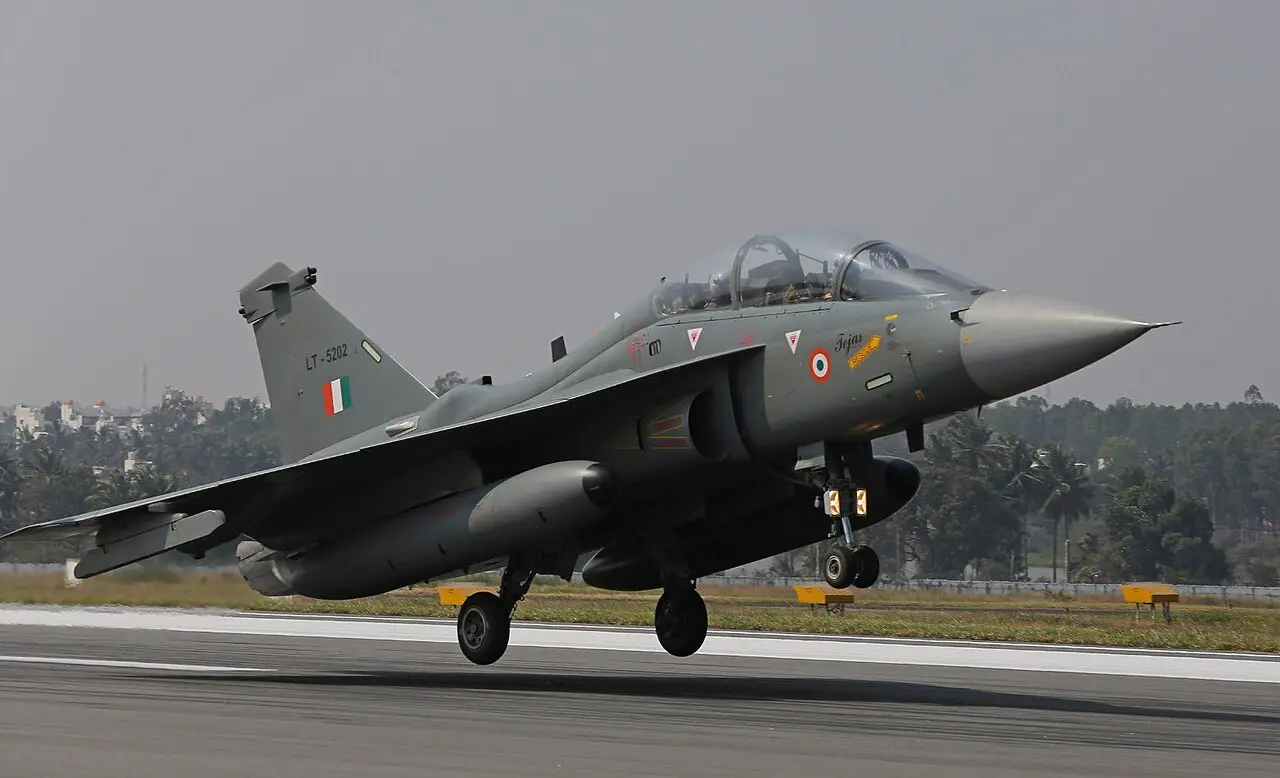
Indigenous Effort: Tejas Light Combat Aircraft
India’s ambition to design and build its own fighter aircraft culminated in the HAL Tejas, which entered service in 2016. Lightweight and highly agile, the Tejas is equipped with a modern radar, digital fly‑by‑wire controls, advanced avionics and a composite airframe that helps reduce its radar signature. Intended to replace the ageing MiG‑21 squadrons, this multirole fighter marks a major step towards defence self‑reliance after decades of reliance on foreign imports. Although its fleet size remains limited for now, the Tejas symbolises India’s growing indigenous aerospace capability and commitment to modernising its air force with home‑grown technology.
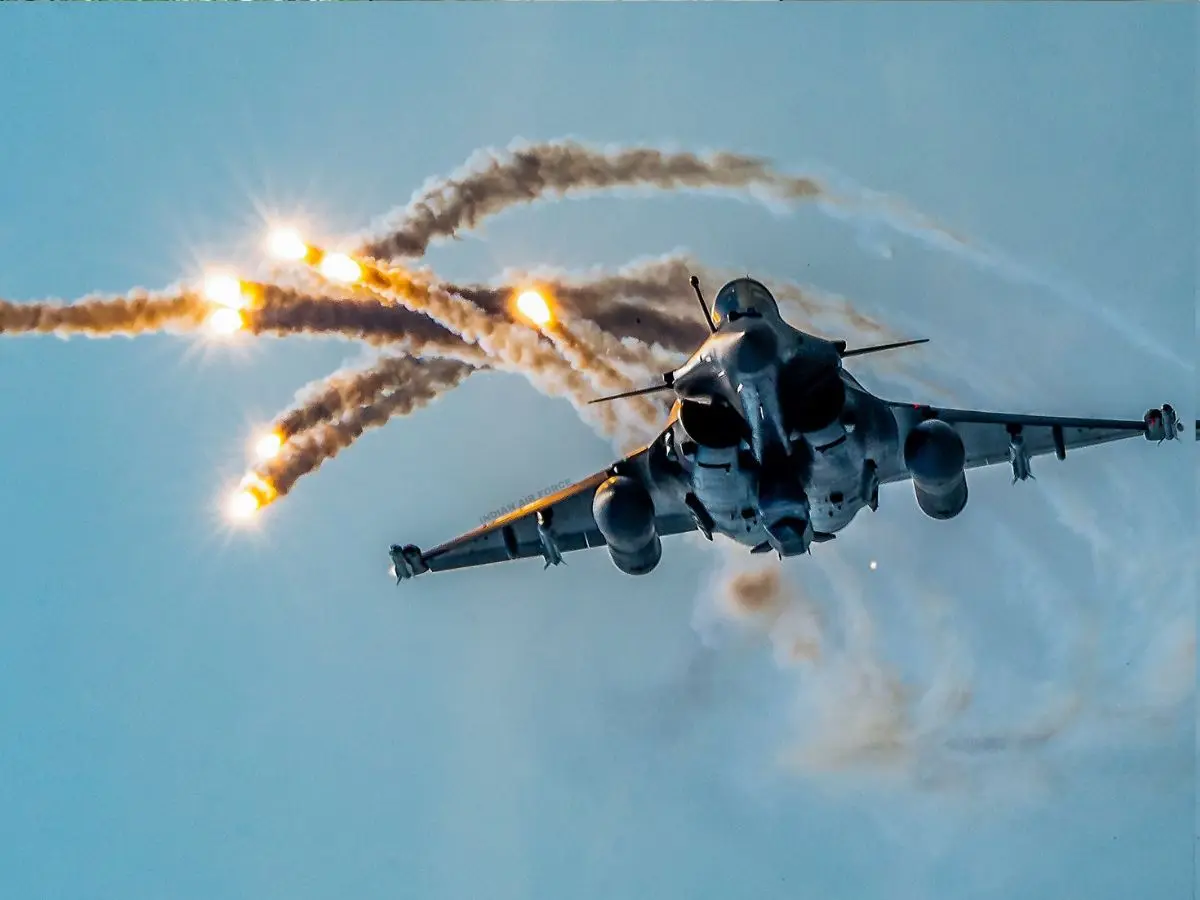
The Modern Heavyweights: Sukhoi Su‑30MKI and Rafale
The current backbone of the Indian Air Force is the twin‑engine Sukhoi Su‑30MKI, inducted from 2002 onwards. Specially customised for Indian requirements, it features thrust‑vectoring nozzles that enable exceptional manoeuvrability, a long‑range radar, and a payload capacity exceeding 8,000 kg, making it equally adept in air superiority and ground‑attack roles. In 2020, the IAF further modernised its fleet with the induction of the French Dassault Rafale. This twin‑engine multirole fighter combines an active electronically scanned array (AESA) radar, advanced electronic warfare systems and precision‑guided munitions. Together, these aircraft have significantly enhanced India’s deterrence posture and rapid response capability, ensuring the IAF remains a modern and versatile fighting force.
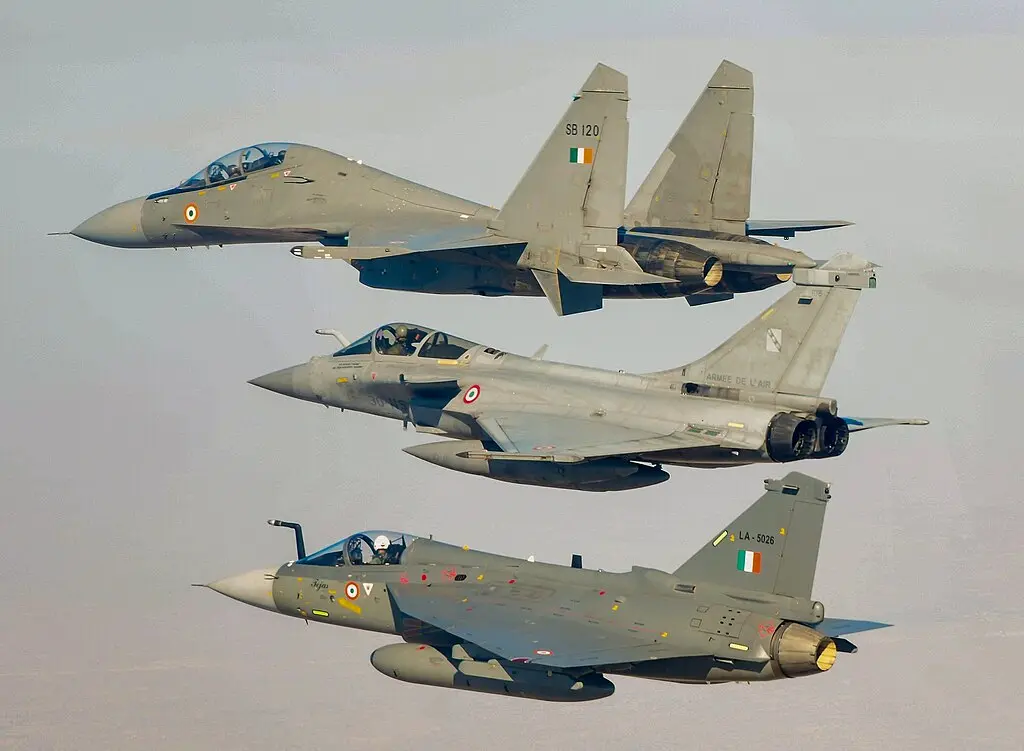
A Legacy of Adaptation
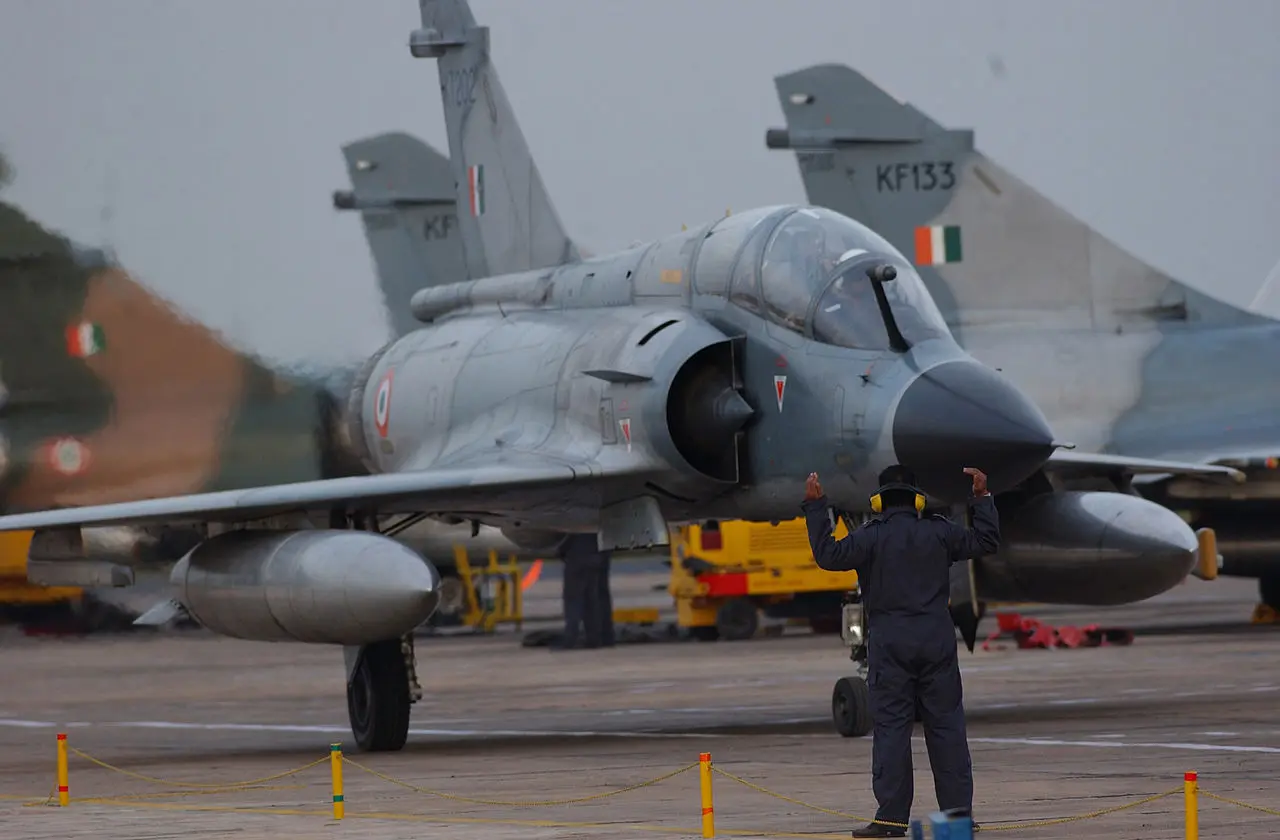
From British‑built Hunters to Russian MiGs and French Mirages, the IAF’s fighter fleet reflects a history of adaptation and technological evolution. Today, with indigenous projects like the Tejas and newer acquisitions like the Rafale, the IAF continues to combine legacy strength with modern capability, standing ready to face tomorrow’s challenges.
)
)
)
)
)